-
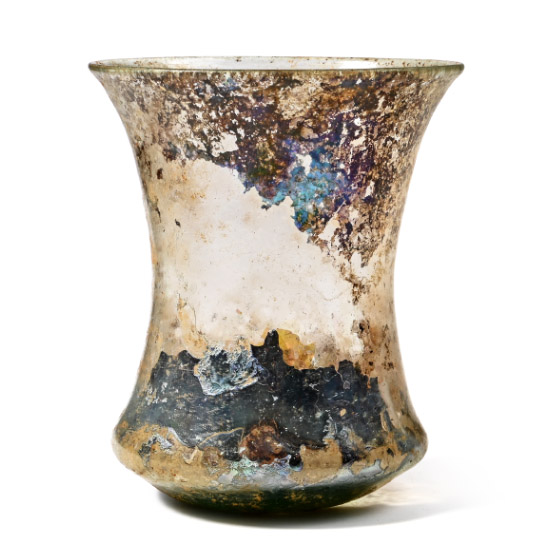
Roman Iridescent Glass Rounded Bottom Beaker
1st century A.D.Estimate: £300 - 400 (+bp*)
Opening Bid: £150
Cotton-reel-shaped body with a slightly rounded base. 52.7 grams, 10.2 cm
Acquired in the 1990s from London dealerships and auction houses. From the Lonson collection. -
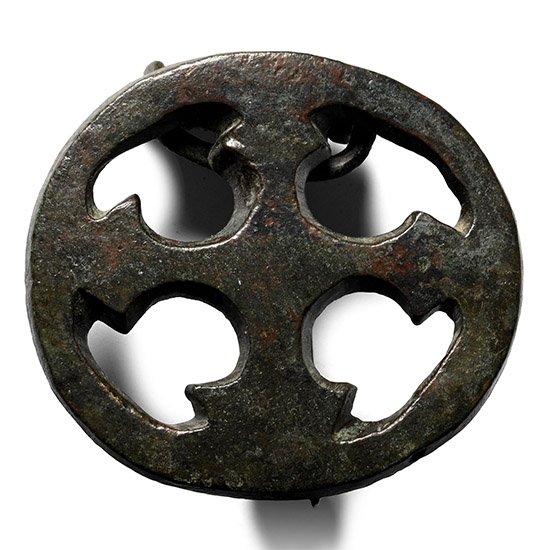
Roman Bronze Cross Plate Brooch
1st-4th century A.D.Estimate: £80 - 100 (+bp*)
Bids: 1 | Current Bid: £5
Openwork brooch with a wide border and central cross, pin and catchplate on the reverse. 21.9 grams, 36 mm
Ex German art market, 2000s. Acquired from an EU collector living in London. From the collection of a Surrey, UK, gentleman. -
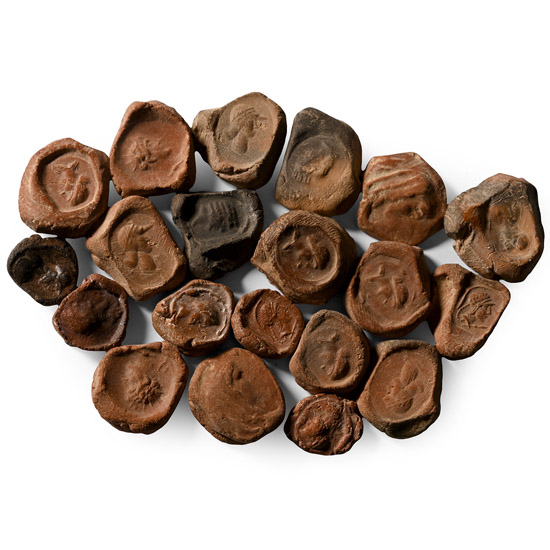
Roman Terracotta Bullae, Tesserae or Token Group
3rd century B.C.-1st century A.D.Estimate: £100 - 140 (+bp*)
Bids: 2 | Current Bid: £15
A mixed group of ceramic bullae, tesserae or theatre tokens bearing low-relief motifs, mainly consisting of profile busts of deities. 37 grams total, 14-23 mm
From the private collection of a European gentleman (1942-2024), formed since the 1970s.
The term 'tessera' was used in Roman times to convey the Greek term σύμβολον (token). Small tiles are known as tokens, often shaped like coins, made of metal (copper, lead, iron), clay, bone, wood, or glass, stamped as well as engraved. The tokens, however, are not exclusively coin-shaped, as the Latin term 'tessera' refers to a four-sided shape. Tokens and tesserae seem to have been used both in Athens and Rome for the distribution of goods. According to written sources, the term ‘token’ is identified with credentials of the official authorities. They have also been interpreted as tokens of identity, as entrance tickets to theatre performances, tribunals or assemblies of citizens, archival material of seal engraving, as pawns in games, Charon’s obols and even as amulets. -
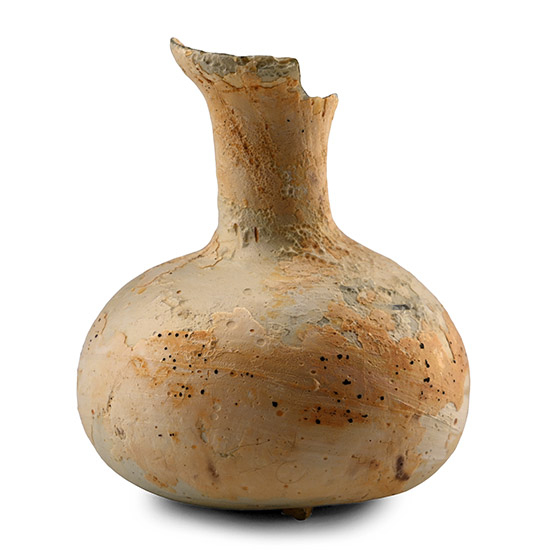
Roman Opaque White Glass Unguentarium
1st-4th century A.D.Estimate: £120 - 170 (+bp*)
Opening Bid: £67
Squat in profile with tall, trumpet-style neck and everted rim. 10.4 grams, 41 mm
From a specialist collection of glass, acquired from dealerships during the 1990s. -
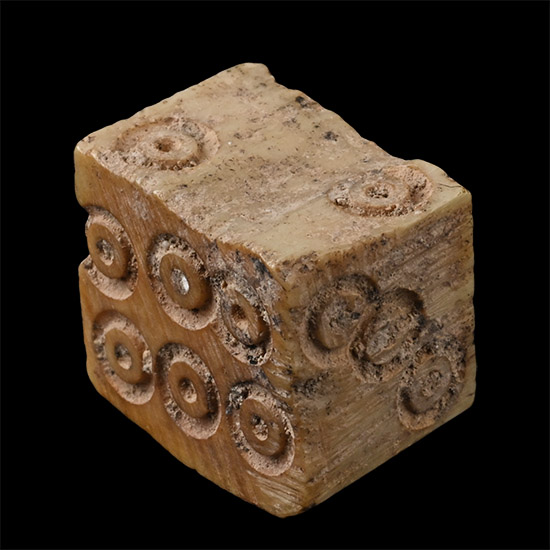
Roman Bone Gaming Die
Circa 1st-4th century A.D.Estimate: £70 - 90 (+bp*)
Bids: 1 | Current Bid: £5
Polygonal die with ring-and-dot markings arranged 1:6, 2:5, 3:4. 2.9 grams, 13 mm
Ex Cambridgeshire, UK, collection, 1990s. -
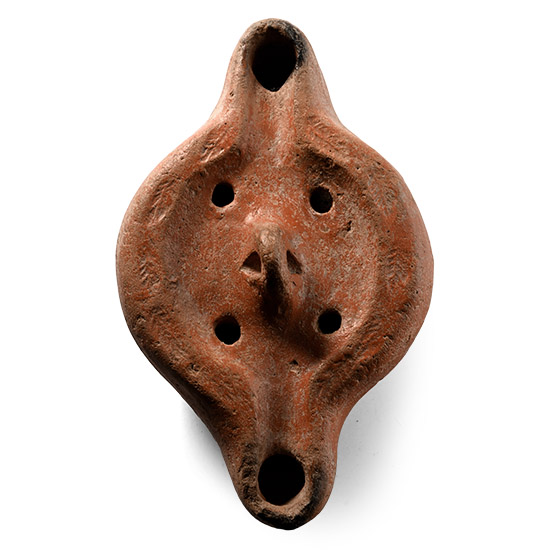
Large Roman Terracotta Ring Suspension Lamp
2nd-3rd century A.D.Estimate: £120 - 170 (+bp*)
Opening Bid: £50
Large oil lamp with two nozzles and four filler holes surrounding a central loop, inked collector's number '414' on the base. 217 grams, 15 cm
Ex important German collection, 1960-1990. -
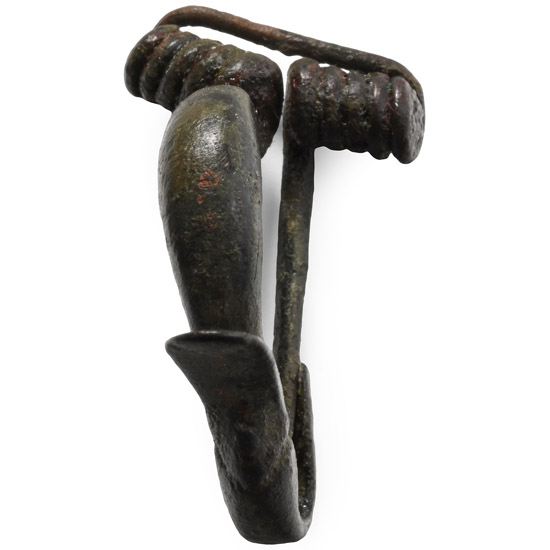
Romano-Celtic Bronze Duck Head Bow Brooch
2nd-3rd century A.D.Estimate: £40 - 60 (+bp*)
Bids: 1 | Current Bid: £5
Comprising a deep bow and a recurved footplate formed as a duck's head, with a coiled pin. 6.37 grams, 27 mm
From the private coin collection of a West London, UK, gentleman, formed since the mid 1980s. -
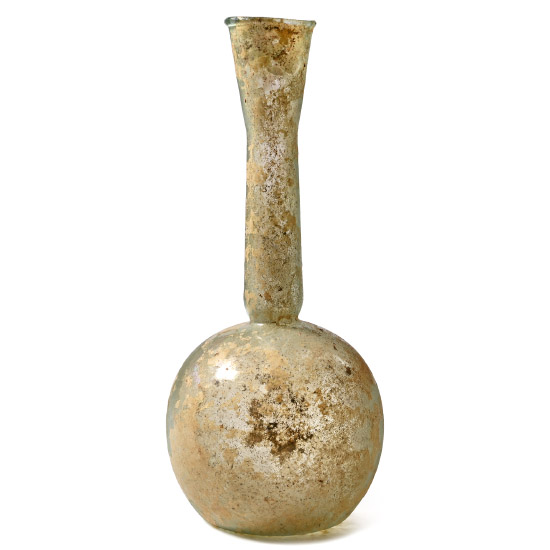
Roman Bulbous Glass Bottle with Tall Neck
3rd-4th century A.D.Estimate: £300 - 400 (+bp*)
Opening Bid: £150
Large bottle with bulbous body and a tall tubular neck with a gently flaring mouth. 43.4 grams, 19 cm
Acquired in the 1990s from London dealerships and auction houses. From the Lonson collection. -
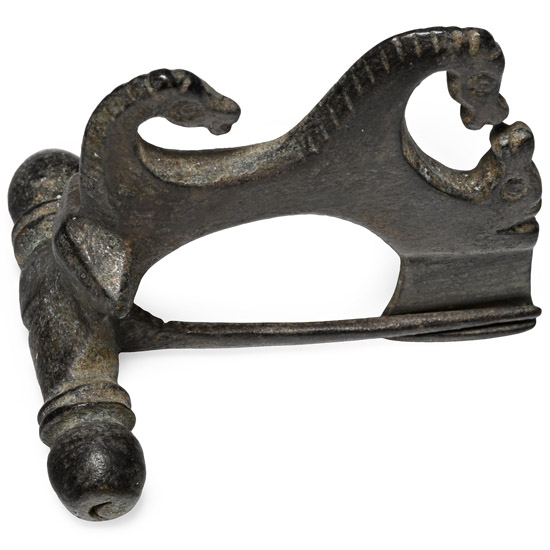
Roman Bronze Triple-Horse Brooch
2nd-3rd century A.D.Estimate: £80 - 100 (+bp*)
Bids: 4 | Current Bid: £20
Bow brooch formed as a horse with a second horse-head to the tail, third opposing horse head forming the catch, the hind legs extending to a T-shaped bar for the hinged pin. 16.79 grams, 34 mm
From the private coin collection of a West London, UK, gentleman, formed since the mid 1980s. -
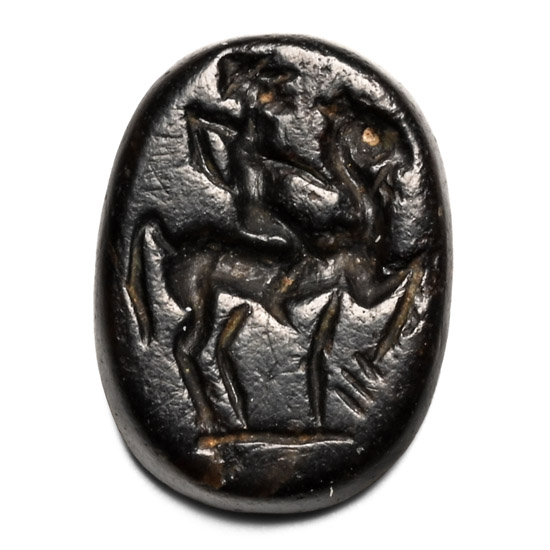
Roman Black Gemstone with Horseman
2nd-3rd century A.D.Estimate: £200 - 300 (+bp*)
Bids: 2 | Current Bid: £16
Ellipsoid type with incuse design of a horseman in profile advancing on a baseline; supplied with a museum-quality impression. 0.44 grams, 12 mm
From the private collection of a European gentleman (1942-2024), formed since the 1970s. -
.jpg)
Roman Jasper Gemstone with Helmetted Bust
2nd-3rd century A.D.Estimate: £80 - 100 (+bp*)
Bids: 2 | Current Bid: £15
Ellipsoid in plan with incuse profile bust, bearded and wearing a crested helmet 0.47 grams, 11 mm
Property of a European gentleman, acquired from the estate of a London collector (formed before 2000). -
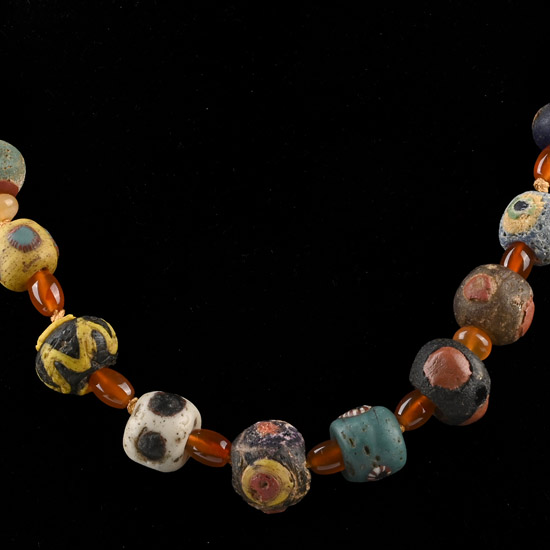
Roman and Later Glass 'Eye' Bead Necklace
3rd-4th century A.D. and laterEstimate: £350 - 450 (+bp*)
Bids: 2 | Current Bid: £250
Designer necklace composed of alternating 'eye' and other polychrome glass beads alternating with polished carnelian beads, restrung and with a hook-and-loop clasp. 99 grams, 53 cm
London, UK gallery, 1971-early 2000s. Private collection, London, UK.

