-
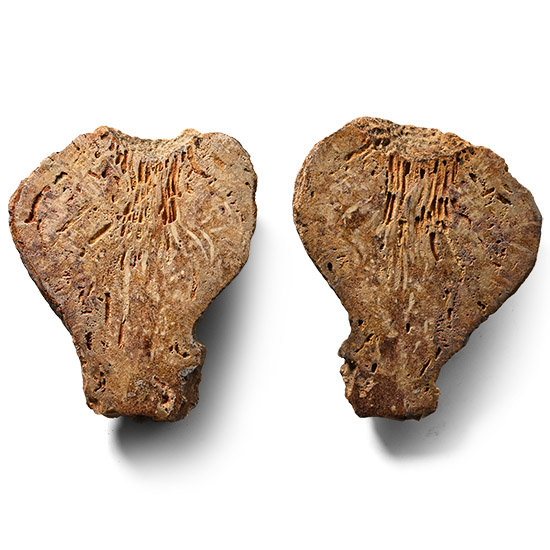
Cut and Polished Fossil Seed in Nodule
Eocene Period, circa 58-36 million years B.P.Estimate: £20 - 30 (+bp*)
Opening Bid: £5
The seed cut in half through the middle, exposing the internal structure. 370 grams total, 94 mm each
From London Clay, Isle of Sheppey, Kent, UK. From the private collection of Kenneth Machin (1936-2020), Buckinghamshire, UK; his collection of antiquities and natural history was formed since 1948; thence by descent. -
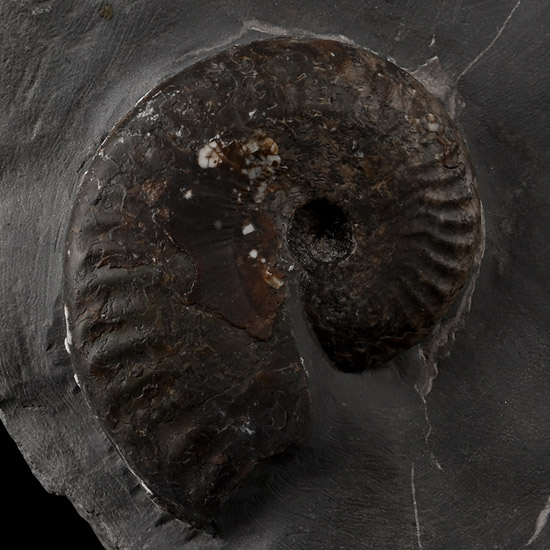
Fossil Ammonite on Matrix
Jurassic Period, Toarcian Stage, circa 180 million years B.P.Estimate: £30 - 40 (+bp*)
Opening Bid: £5
Large nodule with a single Eleganticeras ammonite specimen. 1.59 kg, 11.5 cm
From a Lincolnshire, UK, collection. -
![Group of Ten [10] Cut and Polished Agate Geode Slices](https://timelineauctions.com/upload/images/items/small/256009-s.jpg)
Group of Ten [10] Cut and Polished Agate Geode Slices
Estimate: £20 - 30 (+bp*)
Opening Bid: £5
Comprising ten polished transparent to translucent slices, one showing interesting 'eye' formations, some with enhanced colouring. 593 grams total, 7.9-11.5 cm
From Brazil. Ex Mineral Imports, London, UK. Gregory, Bottley & Lloyd (Gregory's), Harwich, UK. -
.jpg)
Mosasaur 'Marine Dinosaur' Tooth with Root
Cretaceous Period, circa 145-66 million years B.P.Estimate: £40 - 60 (+bp*)
Opening Bid: £5
A Mosasaur prognathodon tooth with some root, showing good enamel; repaired. 120 grams, 13.2 cm
From a Cambridgeshire, UK, collection. -
![Large Group of One Hundred [100] Amethyst Crystal Pieces](https://timelineauctions.com/upload/images/items/small/255960-s.jpg)
Large Group of One Hundred [100] Amethyst Crystal Pieces
Estimate: £20 - 30 (+bp*)
Opening Bid: £5
Comprising one hundred rich purple specimens, including some pyramidal terminations. 1.05 kg total, 22-38 mm
From Brazil. Ex Mineral Imports, London, UK. Gregory, Bottley & Lloyd (Gregory's), Harwich, UK. -
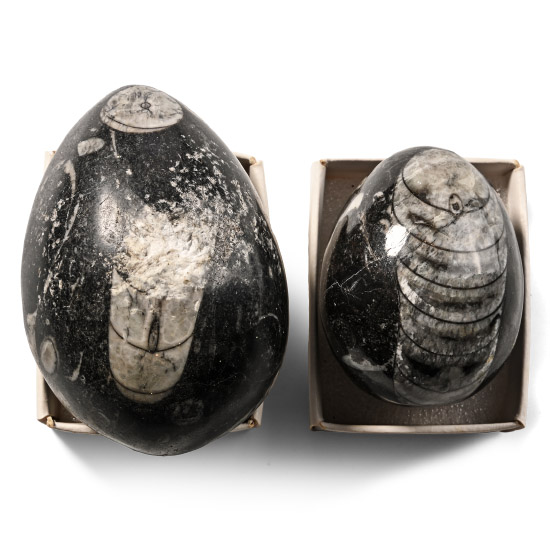
Polished Fossil Orthoceras Egg Pair
Devonian Period, circa 417-354 million years B.P.Estimate: £20 - 30 (+bp*)
Opening Bid: £5
Comprising two polished fossiliferous eggs, each showing a partial Orthoceras specimen. 300 grams total, 49-67 mm
From the private collection of Kenneth Machin (1936-2020), Buckinghamshire, UK; his collection of antiquities and natural history was formed since 1948; thence by descent. -
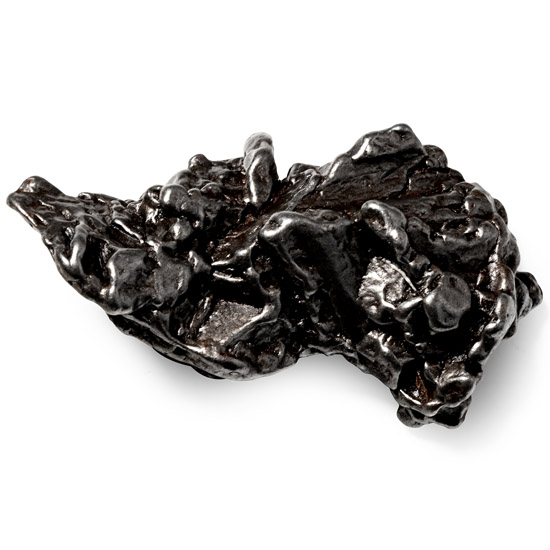
Large Campo Del Cielo Meteorite
Fell 6000-5000 years B.P.Estimate: £100 - 140 (+bp*)
Bids: 6 | Current Bid: £35
A nickel-iron meteorite (IAB). 89.2 grams, 61 mm
From a Lincolnshire, UK, collection.
A crater field of roughly 26 craters was found in the vicinity of this crater, which is estimated to date to 4-5 thousand years BP. The age of the meteorite itself is thought to be c.4.5 billion years, formed as part of the development of this solar system. The largest two fragments, the 30.8-ton Gancedo and 28.8-ton El Chaco, are among the heaviest meteorite masses ever recovered on Earth. In 1576, the governor of a province in Northern Argentina commissioned the military to search for a large mass of iron, which it was believed the local people claimed had fallen from the sky and which they used for their weapon production. The expedition discovered a large mass of metal, which was assumed to be an iron mine, and brought back a few samples, which were described as being of unusual purity. Following the legends, in 1774, Don Bartolomé Francisco de Maguna rediscovered the iron mass. He himself did not believe that the stone had fallen from the sky and assumed that it had formed by a volcanic eruption. However, he sent the samples to the Royal Society of London. In 1990, it became protected by law. -
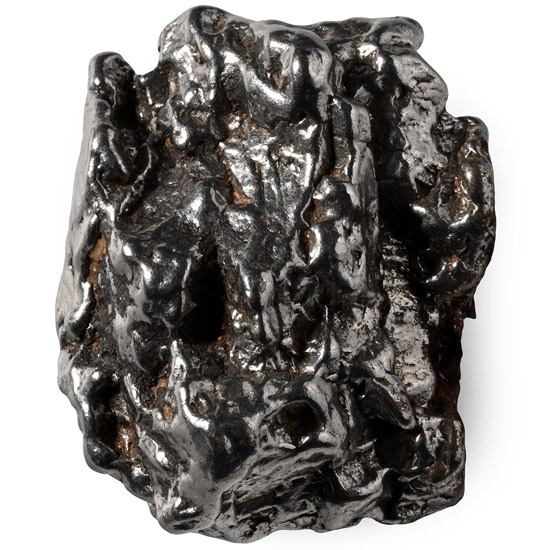
Large Campo Del Cielo Meteorite
Fell 6000-5000 years B.P.Estimate: £80 - 100 (+bp*)
Bids: 3 | Current Bid: £15
A nickel-iron meteorite (IAB). 91 grams, 40 mm
From a Lincolnshire, UK, collection.
A crater field of roughly 26 craters was found in the vicinity of this crater, which is estimated to date to 4-5 thousand years BP. The age of the meteorite itself is thought to be c.4.5 billion years, formed as part of the development of this solar system. The largest two fragments, the 30.8-ton Gancedo and 28.8-ton El Chaco, are among the heaviest meteorite masses ever recovered on Earth. In 1576, the governor of a province in Northern Argentina commissioned the military to search for a large mass of iron, which it was believed the local people claimed had fallen from the sky and which they used for their weapon production. The expedition discovered a large mass of metal, which was assumed to be an iron mine, and brought back a few samples, which were described as being of unusual purity. Following the legends, in 1774, Don Bartolomé Francisco de Maguna rediscovered the iron mass. He himself did not believe that the stone had fallen from the sky and assumed that it had formed by a volcanic eruption. However, he sent the samples to the Royal Society of London. In 1990, it became protected by law. -
![Group of Twenty [20] Cut and Polished Malachite Eye Sections](https://timelineauctions.com/upload/images/items/small/256022-s.jpg)
Group of Twenty [20] Cut and Polished Malachite Eye Sections
Estimate: £30 - 40 (+bp*)
Bids: 3 | Current Bid: £17
Comprising twenty botryoidal malachite specimens showing 'eye' motifs. 243 grams total, 18-38 mm
From the Democratic Republic of the Congo. Ex Mineral Imports, London, UK. Gregory, Bottley & Lloyd (Gregory's), Harwich, UK. -
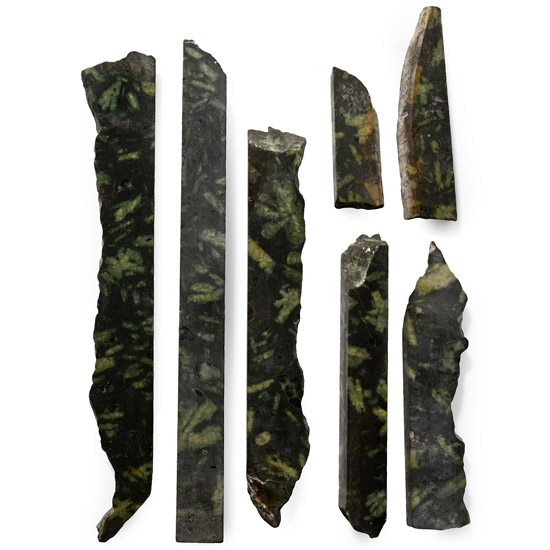
Historic Roman 'Spartan Basalt' Cut Green Porphyry Strip Group
Estimate: £80 - 100 (+bp*)
Bids: 3 | Current Bid: £55
Cut and polished sections, mined in Greece, cut and polished on both sides, probably recycled material mined in ancient Roman times. 225 grams total, 4.4-15.1 cm
Ex Mineral Imports, London, UK. Gregory, Bottley & Lloyd (Gregory's), Harwich, UK.
Also known as Lapis Lacedaemonius and Porfido Verde Antico, a type of green porphyry quarried in Greece. Spartan basalt is a form of andesite or volcanic rock known today only from a single source in the village of Krokees on the Peloponnese in Greece. In addition, ancient sources mention a quarry of Lapis Lacedaemonius in Taygetus. -
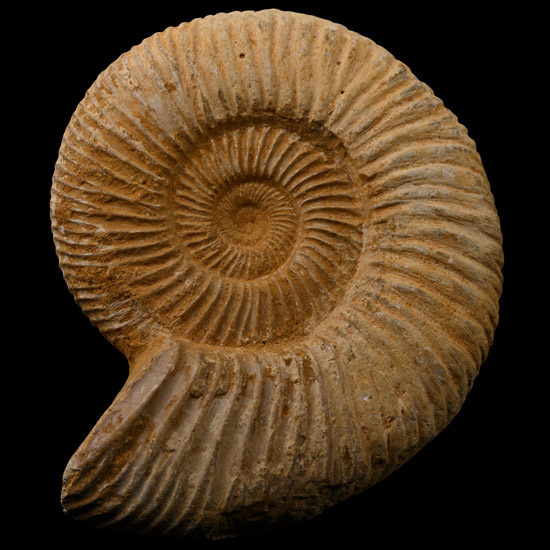
Fossil Perisphinctid Ammonite
Jurassic Period, circa 174-145 million years B.P.Estimate: £20 - 30 (+bp*)
Bids: 1 | Current Bid: £5
Perisphinctid indogermanus fossil ammonite showing clear ribbing on both sides. 154 grams, 87 mm
From a Lincolnshire, UK, collection. -
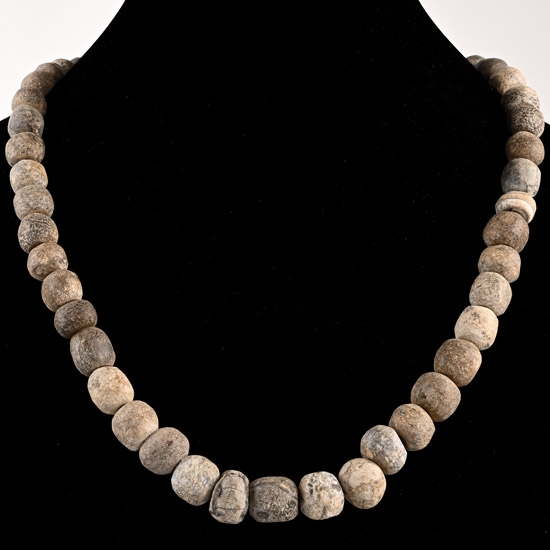
Woolly Mammoth Bone Bead Necklace String
Pleistocene Epoch, 2.6 million-11,700 years B.P.Estimate: £60 - 80 (+bp*)
Opening Bid: £5
Restrung, using recently polished oblate Mammuthus primigenius bone beads. 146 grams total, 57 cm
From a UK collection formed in the early 2000s. Property of an Essex, UK, gentleman.
The mammoth lineage branched from the Asian elephant around 6 million years ago, and later on the Woolly Mammoth, Mammuthus primigenius, evolved in eastern Siberia. Woolly mammoths, being slightly smaller than living African elephants, were foragers and ate grass, as well as small, nutritious flowering plants that flourished in the environment where they lived. They may also have used their curved tusks to dig through snow and eat plants that other foragers were unable to reach.

