-
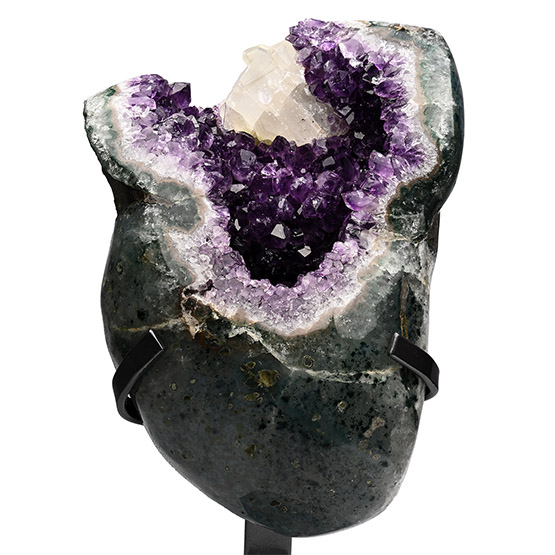
Polished Amethyst Crystal Geode Display with Calcite
Circa 140-120 million years B.P.Estimate: £1,000 - 1,400 (+bp*)
Opening Bid: £550
The outer layer of green celadonite beautifully polished, the interior with dark purple prismatic amethyst crystals, and at the top, an aggregate of white rhombohedral calcite crystals; mounted on a custom-made display stand. 5.68 kg, 27 x 20 x 10 cm
From Artigas, Uruguay. Property of a London lady. -
![Group of Three [3] Large Pale Amethyst and Quartz Crystal Sections](https://timelineauctions.com/upload/images/items/small/255968-s.jpg)
Group of Three [3] Large Pale Amethyst and Quartz Crystal Sections
Estimate: £30 - 40 (+bp*)
Opening Bid: £5
Comprising three geode sections, two with pale purple amethyst crystals and one with almost colourless quartz crystals. 1.63 kg total, 9.1-17.6 cm
From Brazil. Ex Mineral Imports, London, UK. Gregory, Bottley & Lloyd (Gregory's), Harwich, UK. -
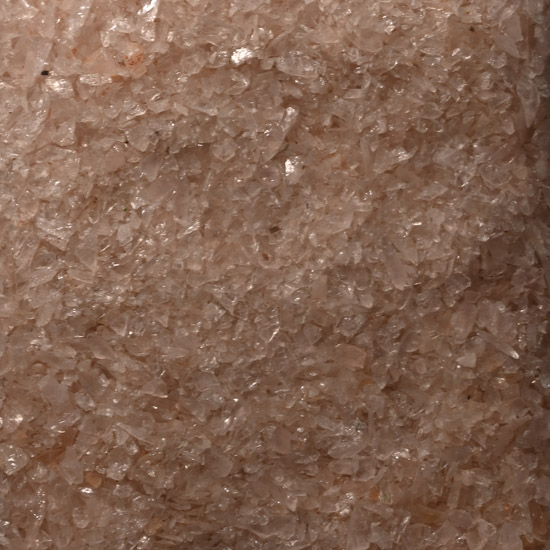
2 Kg of Rose Quartz Fragments
Estimate: £30 - 40 (+bp*)
Opening Bid: £5
Large quantity of pale pink rose quartz chips. 2 kg total, 1-27 mm
Ex Mineral Imports, London, UK. Gregory, Bottley & Lloyd (Gregory's), Harwich, UK. -
![Group of Twenty [20] Large Rock Crystal Point Display Specimens](https://timelineauctions.com/upload/images/items/small/256047-s.jpg)
Group of Twenty [20] Large Rock Crystal Point Display Specimens
Estimate: £30 - 40 (+bp*)
Bids: 1 | Current Bid: £5
Comprising twenty prismatic points, some twinned or with parallel growth. 1.57 kg total, 4.7-10.7 cm
From Brazil. Ex Mineral Imports, London, UK. Gregory, Bottley & Lloyd (Gregory's), Harwich, UK. -
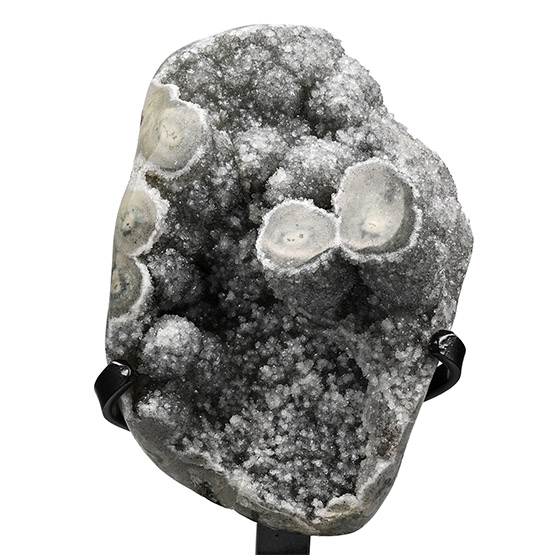
Druzy Quartz Geode Display
Circa 140-120 million years B.P.Estimate: £1,000 - 1,400 (+bp*)
Opening Bid: £550
An exquisite formation of grey and white druzy quartz on a geode section, a pair of cut stalagmite 'eyes' on one side with polished upper face showing the layered structure; mounted on a custom-made display stand. 3.85 kg, 23 x 18 x 15 cm, 29 cm including stand
From Artigas, Uruguay. Property of a London lady. -
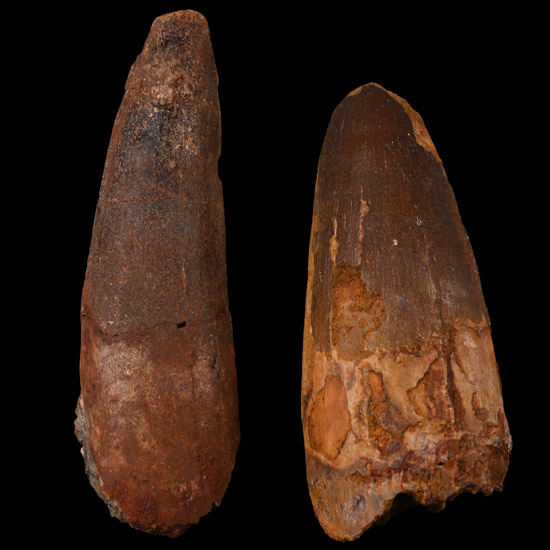
Spinosaurus Dinosaur Fossil Tooth Group
Cretaceous Period, circa 125-113 million years B.P.Estimate: £20 - 30 (+bp*)
Bids: 1 | Current Bid: £5
Comprising two tapering teeth with brown enamel; repaired and restored. 82 grams total, 65-76 mm
From a Lincolnshire, UK, collection.
The Spinosaurus was both a beachcomber-type scavenger and an active hunter, taking small stranded Plesiosaurs, Pterosaurs, turtles and large fish; adults weighed up to 21 tonnes and grew up to 18 meters long. -
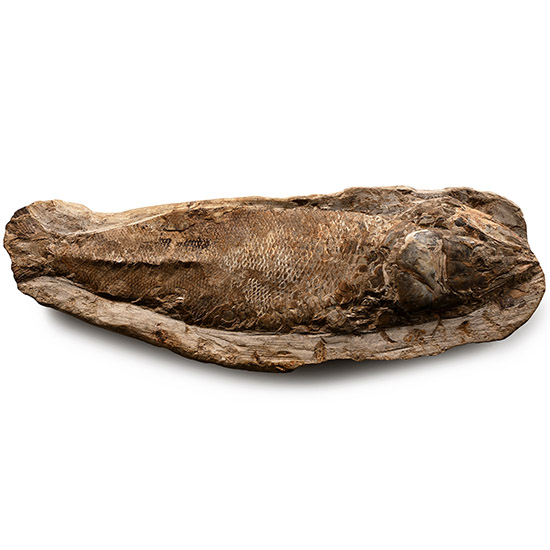
Large Fossil Fish in Matrix
Cretaceous Period, circa 122-119 million years B.P.Estimate: £50 - 70 (+bp*)
Bids: 2 | Current Bid: £10
Showing good scale detailing, possibly Rhacolepis buccalis. 935 grams, 26 cm
From a deceased estate of a gentleman collector from the Wirral Penninsula. -
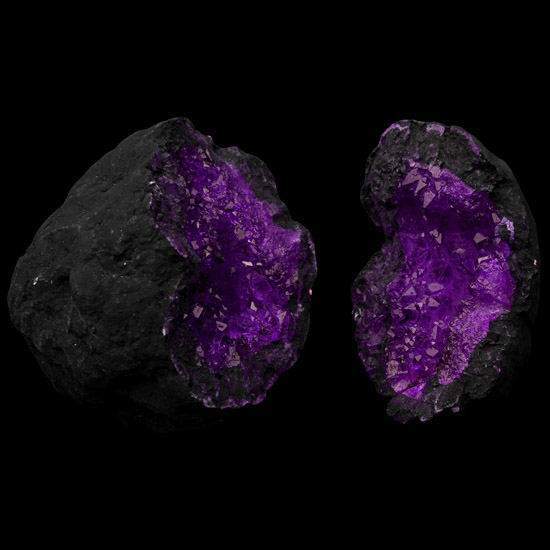
Coloured Quartz Composite Nodule
Estimate: £20 - 30 (+bp*)
Bids: 1 | Current Bid: £5
Composite nodule with enhanced vibrant purple crystals. 187 grams total, 58-60 mm
From a Cambridgeshire, UK, collection. -
![Box of Nineteen [19] Large Rose Quartz Specimens](https://timelineauctions.com/upload/images/items/small/256040-s.jpg)
Box of Nineteen [19] Large Rose Quartz Specimens
Estimate: £30 - 40 (+bp*)
Opening Bid: £5
Boxed group of vibrant pink rose quartz specimens. 5.4 kg total, 5.7-10.9 cm
From Brazil. Ex Mineral Imports, London, UK. Gregory, Bottley & Lloyd (Gregory's), Harwich, UK. -
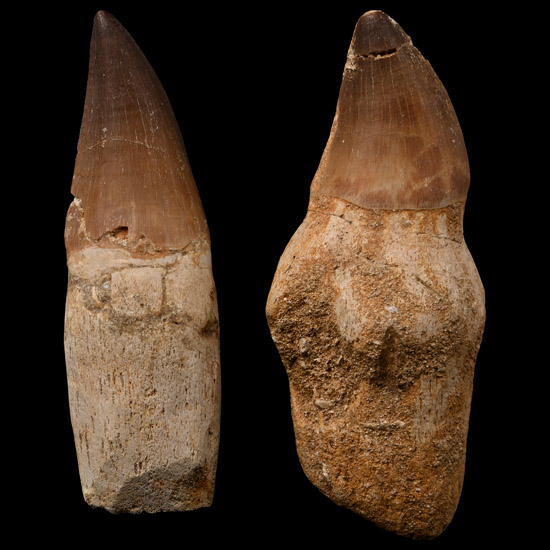
Fossil Mosasaur 'Marine Dinosaur' Tooth Pair
Cretaceous Period, circa 145-65 million years B.P.Estimate: £40 - 60 (+bp*)
Bids: 1 | Current Bid: £5
Comprising two teeth showing good brown enamel, repaired. 74 grams total, 75-78 mm
From a Cambridgeshire, UK, collection.
The Mosasaur is an extinct, large marine reptile dinosaur with an elongated body, long snout and paddle-like limbs. Found worldwide, they competed with other well-known sea predators of the Late Cretaceous, such as plesiosaurs and ichthyosaurs, for food, existing primarily on a diet of ammonoids, cuttlefish and fish. -
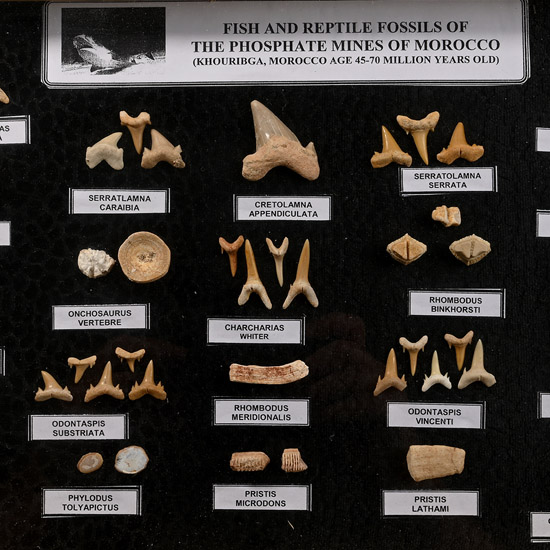
Fossil Shark's Teeth in Display Case
Cretaceous-Eocene Period, circa 70-45 million years B.P.Estimate: £50 - 70 (+bp*)
Bids: 1 | Current Bid: £5
A glazed display case with mounted specimens of various teeth, vertebrae and ray palates, with identifying labels. 927 grams total, 34.6 x 24.6 cm
From a Cambridgeshire, UK, collection. -
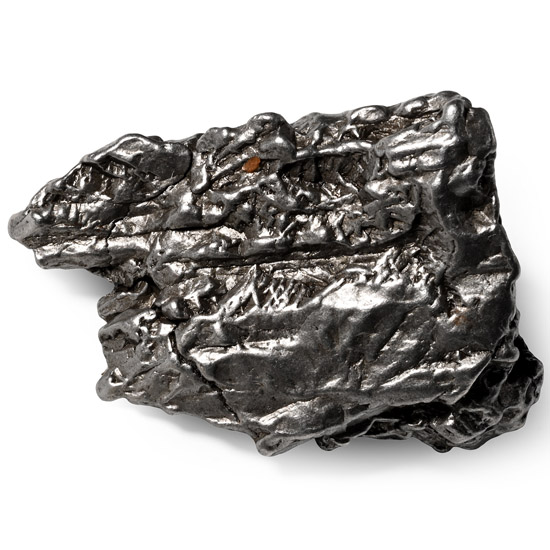
Large Campo Del Cielo Meteorite
Fell 6000-5000 years B.P.Estimate: £100 - 140 (+bp*)
Bids: 4 | Current Bid: £25
A nickel-iron meteorite (IAB). 90.1 grams, 43 mm
From a Lincolnshire, UK, collection.
A crater field of roughly 26 craters was found in the vicinity of this crater, which is estimated to date to 4-5 thousand years BP. The age of the meteorite itself is thought to be c.4.5 billion years, formed as part of the development of this solar system. The largest two fragments, the 30.8-ton Gancedo and 28.8-ton El Chaco, are among the heaviest meteorite masses ever recovered on Earth. In 1576, the governor of a province in Northern Argentina commissioned the military to search for a large mass of iron, which it was believed the local people claimed had fallen from the sky and which they used for their weapon production. The expedition discovered a large mass of metal, which was assumed to be an iron mine, and brought back a few samples, which were described as being of unusual purity. Following the legends, in 1774, Don Bartolomé Francisco de Maguna rediscovered the iron mass. He himself did not believe that the stone had fallen from the sky and assumed that it had formed by a volcanic eruption. However, he sent the samples to the Royal Society of London. In 1990, it became protected by law.

