-
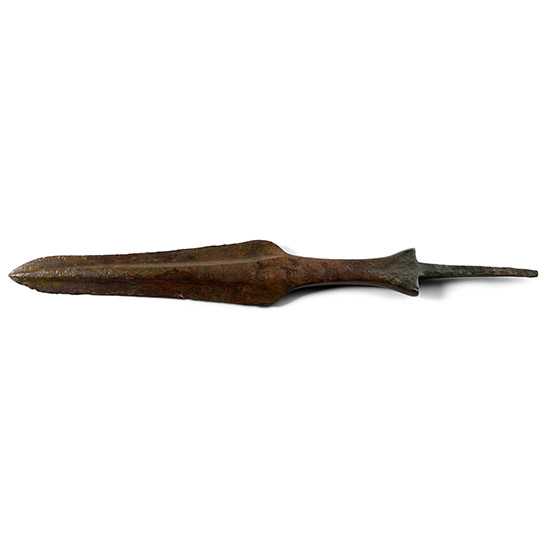
Large Western Asiatic Bronze Spearhead
Early 1st millennium B.C.Estimate: £150 - 200 (+bp*)
Opening Bid: £75
The blade with rounded shoulders, the raised midrib extending to the shaft, a rectangular-section tang below. 400 grams, 33.8 cm
Ex Abelita family collection, 1990s. -
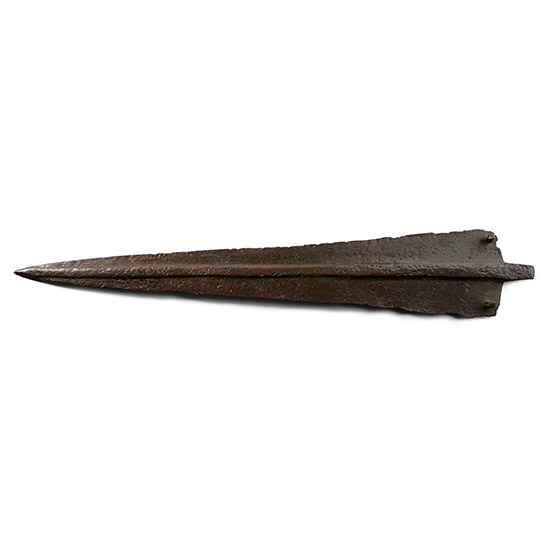
Large Western Asiatic Bronze Dagger
2nd-1st millennium B.C.Estimate: £200 - 300 (+bp*)
Opening Bid: £100
Triangular blade with raised midrib and a short tang. 134 grams, 28.4 cm
Ex Abelita family collection, 1990s. -
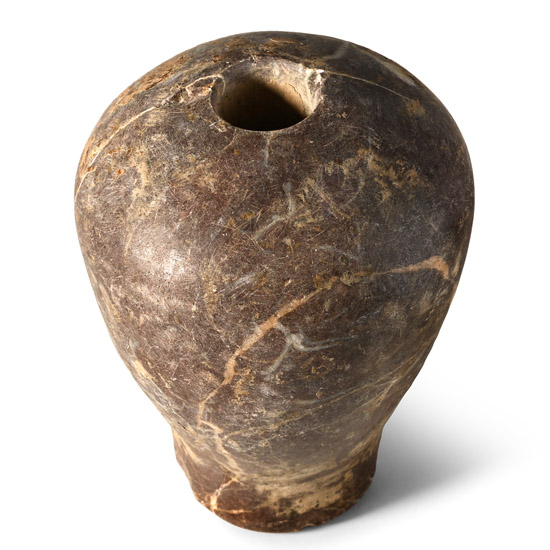
Western Asiatic Polished Stone Macehead
3rd-2nd millennium B.C.Estimate: £80 - 100 (+bp*)
Opening Bid: £44
With a globular body and a short cylindrical socket. 335 grams, 78 mm
From the collection of a London, UK, gentleman, 1990s. -
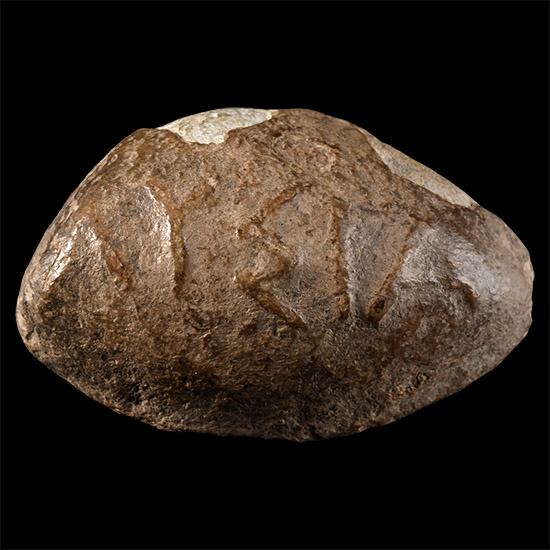
Greek Lead Slingshot with Inscription
3rd-1st century B.C.Estimate: £60 - 80 (+bp*)
Bids: 2 | Current Bid: £5
Lenticular type with casting seam to the rim, raised legend 'ΛΥΣΙΑ' (commander's name, Lisia) on one side. 39.1 grams, 29 mm
Ex German art market, 2000s. Acquired from an EU collector living in London. From the collection of a Surrey, UK, gentleman. -
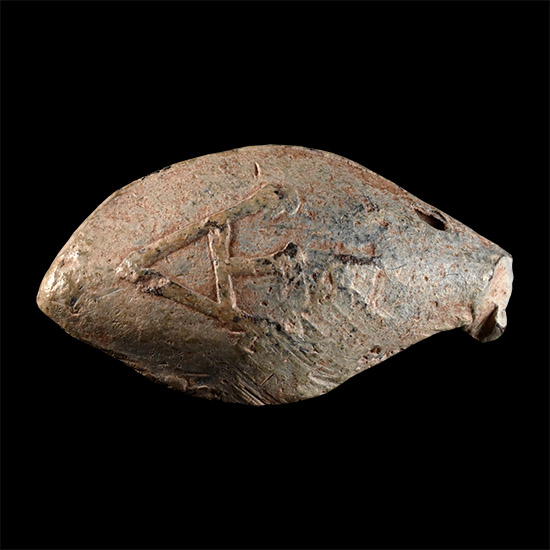
Greek Lead Slingshot with Alpha
1st century B.C.Estimate: £100 - 140 (+bp*)
Opening Bid: £50
Lenticular type with casting seam to the rim, raised iconic Greek letter A (alpha) on one side, and the other with raised pellets. 30.9 grams, 33 mm
Ex German art market, 2000s. Acquired from an EU collector living in London. From the collection of a Surrey, UK, gentleman. -
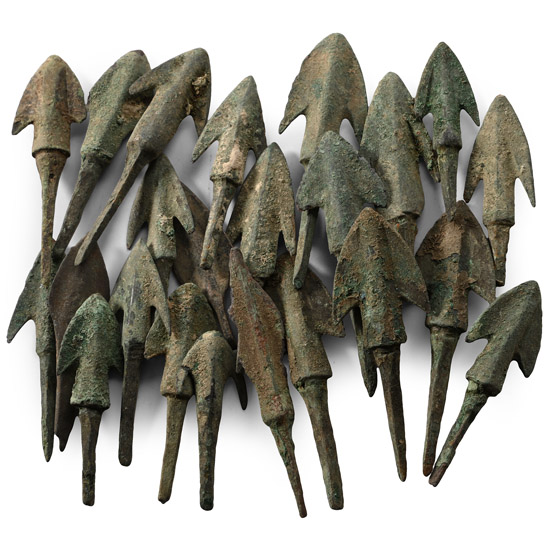
Western Asiatic Bronze Arrowhead Collection
2nd-1st millennium B.C.Estimate: £100 - 140 (+bp*)
Bids: 3 | Current Bid: £90
Comprising tanged arrowheads, most with barbs. 114 grams total, 36-53 mm
Ex London, UK, collection, 1990s. -
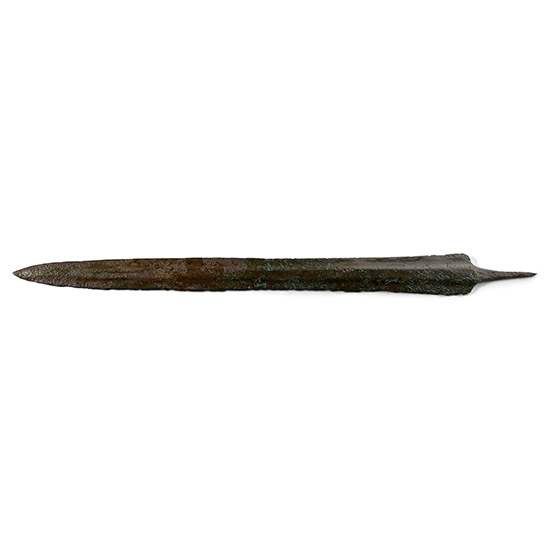
Large North-West Persian Bronze Dirk
Early 1st millennium B.C.Estimate: £150 - 200 (+bp*)
Opening Bid: £75
Slender blade with raised midrib and a short tang. 217 grams, 39.7 cm
Ex Abelita family collection, 1990s. -
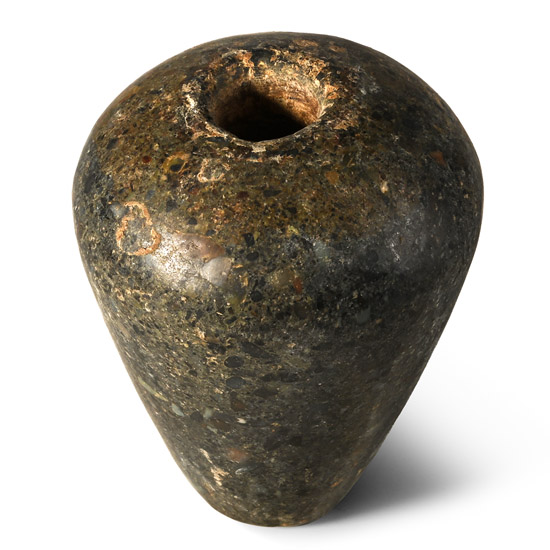
Western Asiatic Polished Stone Macehead
3rd-2nd millennium B.C.Estimate: £80 - 100 (+bp*)
Opening Bid: £44
Ovoid body with circular socket. 435 grams, 86 mm
From the collection of a London, UK, gentleman, 1990s. -
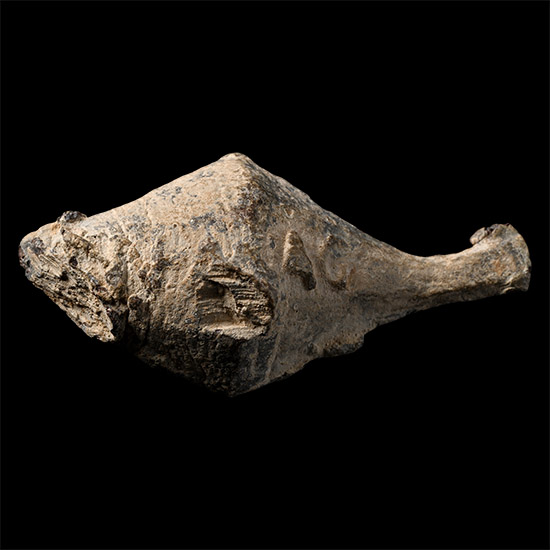
Roman Lead Cnaeus Pompey Battle of Munda Slingshot
Circa 46 B.C.Estimate: £150 - 200 (+bp*)
Bids: 2 | Current Bid: £10
Facetted lentoid-section sling shot (glans) with inscription in Latin letters 'CN' (Cneius) 'MAG' (Magnus) on one side, and 'IMP' for 'IMPERATOR' (victorious general) to the other side, i.e., Gnaeus Pompeius Magnus Imperator (Pompey the Great the victorious general). 71.2 grams, 51 mm
Previously from a private Spanish collection. Ex London, UK, gentleman. Accompanied by a copy of a Spanish export licence.
The shot (Völling type 1C) is marked with the abbreviated name of Gnaeus Pompey; it was used in quantity at the Battle of Monda (or Munda) against Julius Caesar, 17th March 45 BC. The projectiles could be of different material: in lead (glandes) or in pottery or stone (lapides missiles). Sometimes they were signed with the name of the general, as is our specimen. -
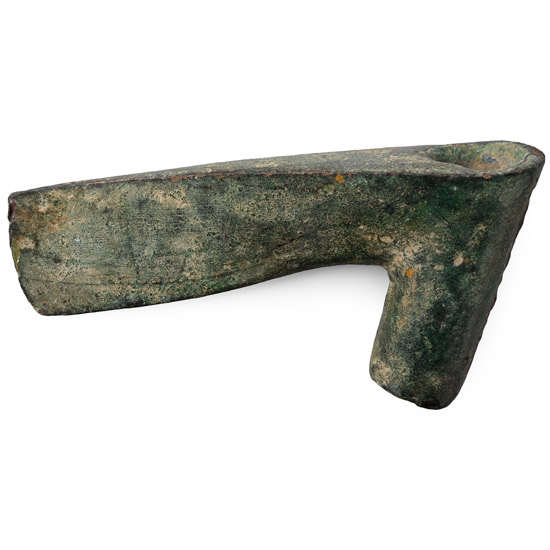
Luristan Bronze Axehead
2nd-1st millennium B.C.Estimate: £100 - 140 (+bp*)
Opening Bid: £50
With a narrow, slightly angled blade and a tubular socket. 374 grams, 13.1 cm
Ex Abelita collection, 1990s. -
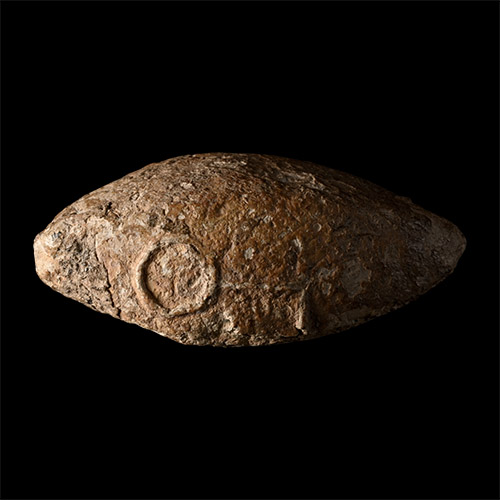
Greek Lead Slingshot with Monogram
3rd-1st century B.C.Estimate: £60 - 80 (+bp*)
Bids: 1 | Current Bid: £5
Lenticular type with casting seam to the rim, raised monogram (caduceus?) on one side. 30.6 grams, 33 mm
Ex German art market, 2000s. Acquired from an EU collector living in London. From the collection of a Surrey, UK, gentleman. -
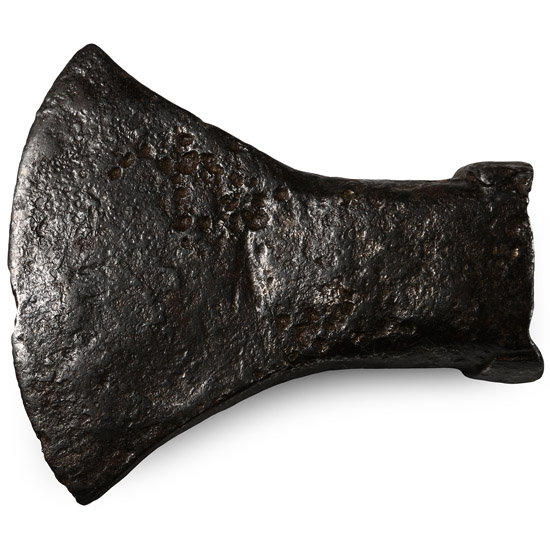
Celtic Iron Open Socketted Splayed Axehead
Late Hallstatt-Early La Tene Period, circa 450 B.C.Estimate: £50 - 70 (+bp*)
Bids: 5 | Current Bid: £43
Curving blade and a rectnagular-section socket with thickened rim. 332 grams, 10.7 cm
Ex M. Spiegelberg collection, since 1989-1992; thence by descent. Accompanied by a copy of a previous yellow cataloguing slip.

