-
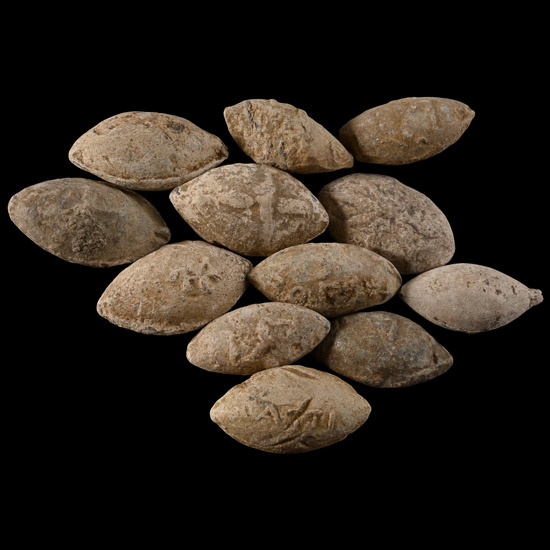
Greek Lead Slingshot Collection
3rd-2nd century B.C.Estimate: £60 - 80 (+bp*)
Bids: 8 | Current Bid: £60
Mainly biconical types, some with raised lettering and other ornament; supplied with old collector's record tickets. 411 grams total, 29-32 mm
Acquired on the UK art market before 2000. Property of a Middlesex gentleman. -
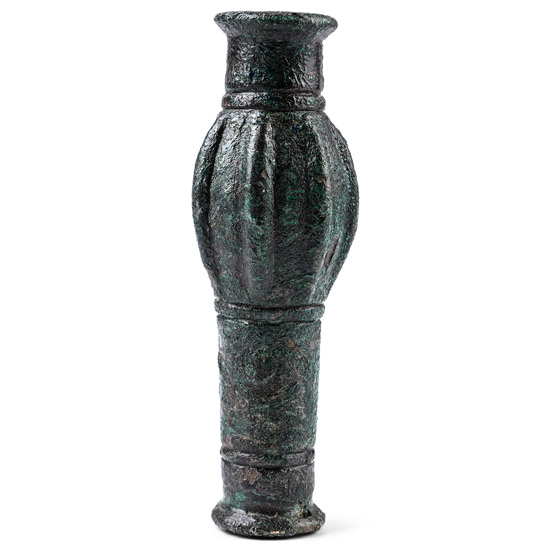
Western Asiatic Bronze Macehead
2nd-1st millennium B.C.Estimate: £180 - 240 (+bp*)
Opening Bid: £90
Comprising a cylindrical shaft with flared mouth, rounded flanges around the bulb, and horizontal stepped collars. 263 grams, 13.4 cm
Ex Abelita family collection, 1980s-2000s. -
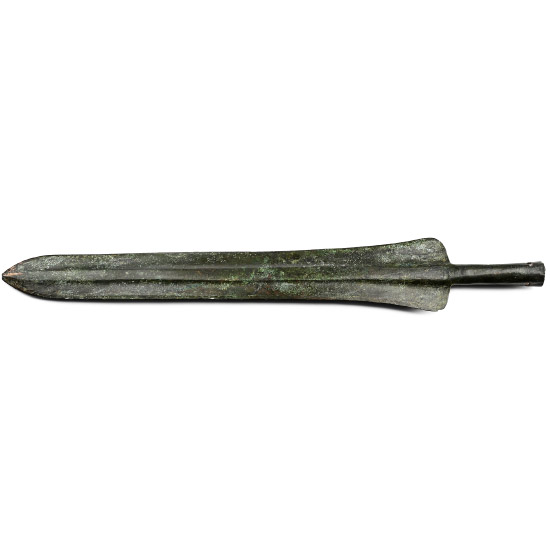
Luristan Bronze Socketted Spearhead
Circa 1800 B.C.Estimate: £150 - 200 (+bp*)
Bids: 1 | Current Bid: £5
Slender blade with a raised midrib and tubular socket. 222 grams, 36.5 cm
From the collection of Martin Doyle, Leverstock, UK, 1980s-2000s. -
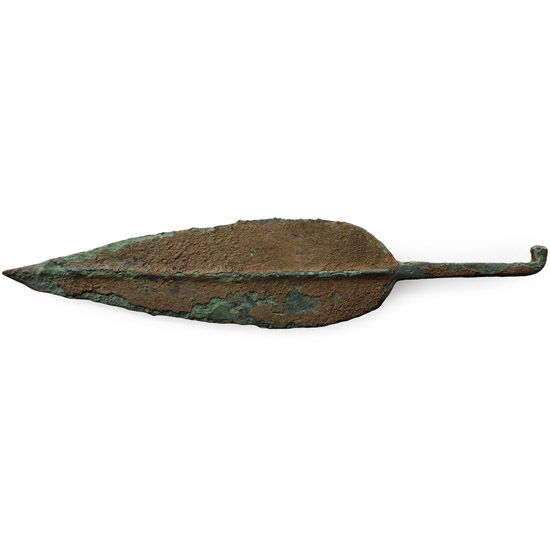
Luristan Bronze Tanged Spearhead
14th-10th century B.C.Estimate: £100 - 140 (+bp*)
Opening Bid: £50
Large leaf-shaped blade with a narrow midrib and a rectangular-section tang with bent finial. 275 grams, 30.4 cm
Ex Abelita collection, 1990s. -
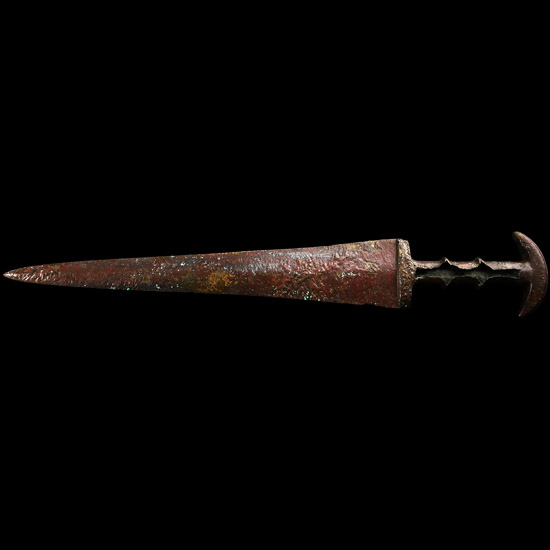
Luristan Bronze Short Sword with Crescent-Shaped Pommel
10th century B.C.Estimate: £400 - 600 (+bp*)
Bids: 1 | Current Bid: £250
Comprising a triangular blade with integral ribbed handle and a crescentic pommel. 450 grams, 40 cm
Ex Abelita family collection, 1980s-2000s.
These kinds of bronze daggers or dirks, typical of Marlik culture, were cast in a one piece mould according to Negahban, although in some specimens the guard was later cast into the blade. The separate sets of encircling ribs on the grips are again typical of swords from the Marlik area. In our specimen the grip is opened on one side to receive organic filling. -
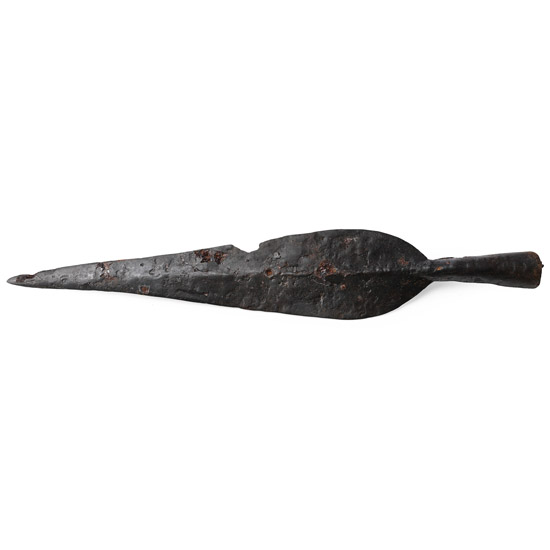
Iron Age Celtic Socketted Iron Spearhead
2nd-1st century B.C.Estimate: £200 - 300 (+bp*)
Bids: 1 | Current Bid: £50
With a slender heart-shaped blade, thick midrib, flared closed socket. 120 grams, 28 cm
From a 1980s collection. Ex North West London gallery. with TimeLine Auctions, 22-27 May 2018, no.1480. Private collection, Suffolk. -
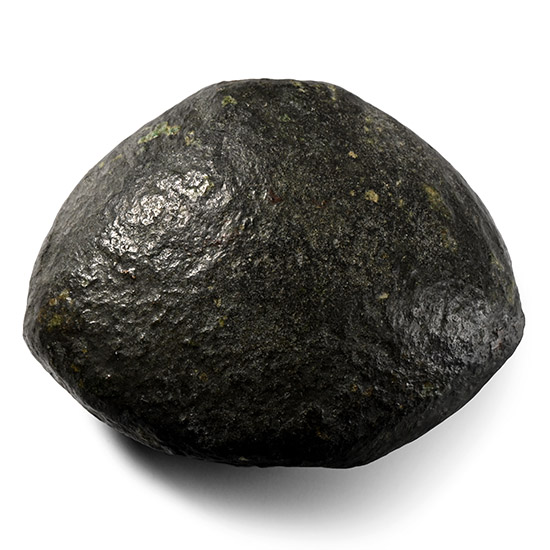
Medieval Bronze Dagger Pommel
Circa 12th-14th century A.D.Estimate: £40 - 60 (+bp*)
Opening Bid: £5
Lentoid in section, brazil-nut type with vertical slot to accept the tang. 79 grams, 38 mm
Found UK. Property of an Essex, UK, gentleman. -
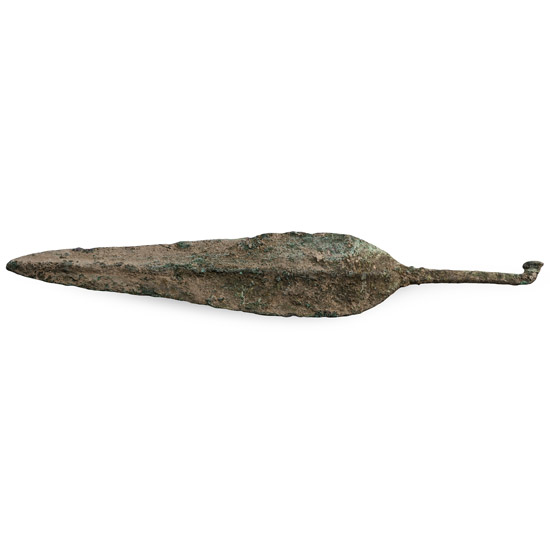
Large Luristan Bronze Tanged Spearhead
Bronze Age, 2nd millennium B.C.Estimate: £150 - 200 (+bp*)
Opening Bid: £50
Leaf-shaped blade with prominent midrib extending to a square-section tang. 512 grams, 37 cm
From a UK collection formed in the 1980s. Property of an Essex, UK, gentleman. -
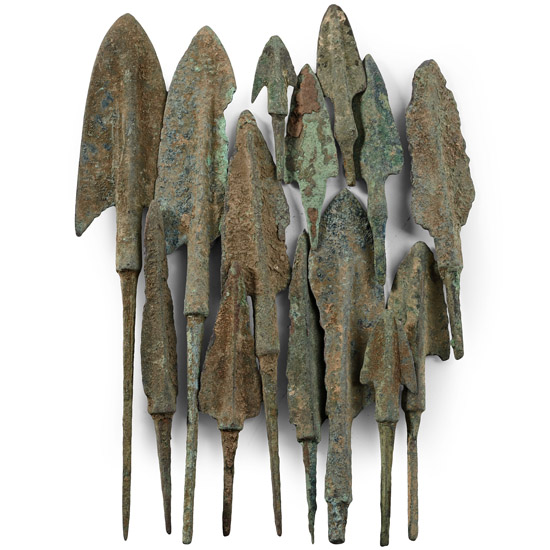
Western Asiatic Bronze Arrowhead Collection
2nd-1st millennium B.C.Estimate: £100 - 140 (+bp*)
Opening Bid: £50
Comprising fourteen tanged arrowheads, mainly barbed and leaf-shaped types. 260 grams total, 5-17 cm
Ex London, UK, collection, 1990s. -
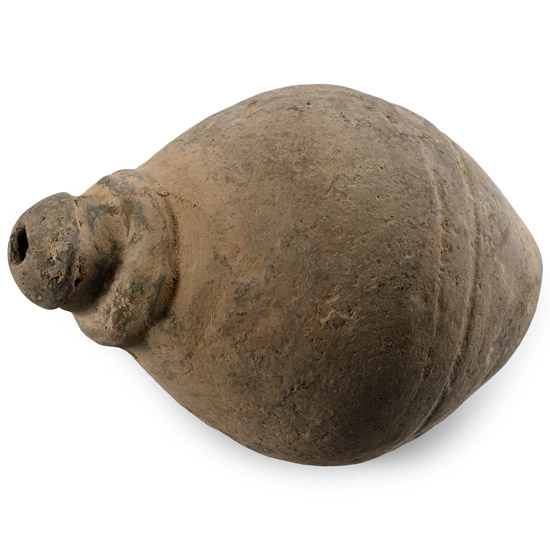
Byzantine 'Greek Fire' Ceramic Fire Bomb or Hand Grenade
9th-11th century A.D.Estimate: £80 - 100 (+bp*)
Bids: 2 | Current Bid: £5
Piriform body with tiered neck and domed filler-hole; intended to be filled with explosive liquid and a wick, and used as a hand grenade. 788 grams, 15.1 cm
From an important specialist collection, London, UK, 1990s. Accompanied by an academic paper by military specialist Dr Raffaele D'Amato, dated 15 July 2019 and titled 'Eastern Roman Empire - Greek Fire Bomb or Hand Grenade (μεσαίον kακάβιον) 9th-11th century AD'.
Apart from the use of siphons or manual flame-throwers called cheirosiphona, special corps of Roman soldiers employed terracotta grenades, in the form of small jars, abundantly evidenced in archaeological excavations. They were called μεσαία kακαβιά or κυτροκακάβια, where the former had a bulbous shape and the latter a more cylindrical form. -
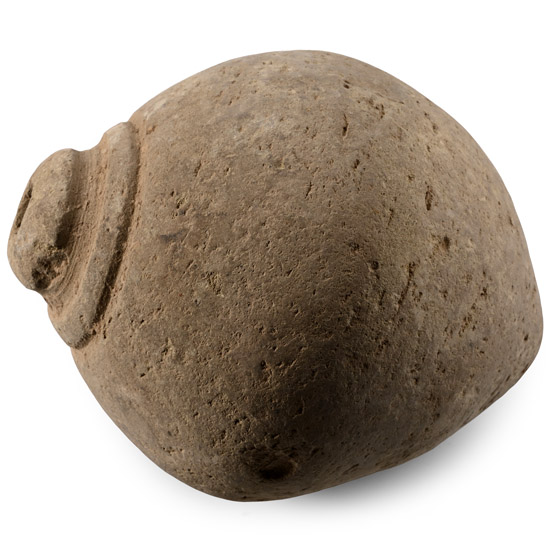
Byzantine 'Greek Fire' Ceramic Fire Bomb or Hand Grenade
9th-11th century A.D.Estimate: £80 - 100 (+bp*)
Opening Bid: £5
Ovoid body with pointed base and domed filler-hole; intended to be filled with explosive liquid and a wick, and used as a hand grenade. 510 grams, 11.9 cm
From an important specialist collection, London, UK, 1990s. Accompanied by an academic paper by military specialist Dr Raffaele D'Amato, dated 15 July 2019 and titled 'Eastern Roman Empire - Greek Fire Bomb or Hand Grenade (μεσαίον kακάβιον) 9th-11th century AD'.
Apart from the use of siphons or manual flame-throwers called cheirosiphona, special corps of Roman soldiers employed terracotta grenades, in the form of small jars, abundantly evidenced in archaeological excavations. They were called μεσαία kακαβιά or κυτροκακάβια, where the former had a bulbous shape and the latter a more cylindrical form. -
.jpg)
Turkish Iron Dagger with Brass Hilt and Scabbard
Mid 20th century A.D.Estimate: £40 - 60 (+bp*)
Bids: 1 | Current Bid: £5
Two-edged jambiya with narrow curved blade, two deep fullers and punched detailing with inset turquoise-coloured pellet; brass bolster and applied bone panels to the grip, silver facing to pommel; brass sheath with low-relief foliage and figural ornament, suspension rings. 211 grams, 23.2 cm
Previously acquired on the UK art market in the early 2000s. This item is for collection from our premises only.

