-
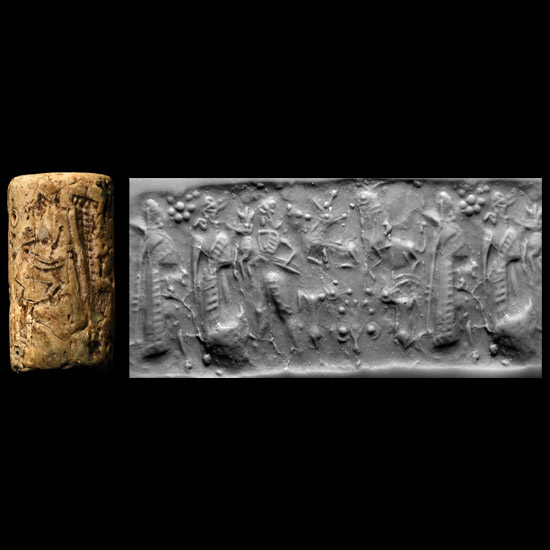
Western Asiatic Buff Steatite Cylinder Seal with Figural Scene
900-700 B.C.Estimate: £150 - 200 (+bp*)
Bids: 5 | Current Bid: £60
Frieze with two opposed standing figures wearing floor-length robes with fringed edges, ovicaprids and other beasts in the field; supplied with a museum-quality impression. 6.69 grams, 28 mm
From the private collection of a European gentleman (1942-2024), formed since the 1970s. -
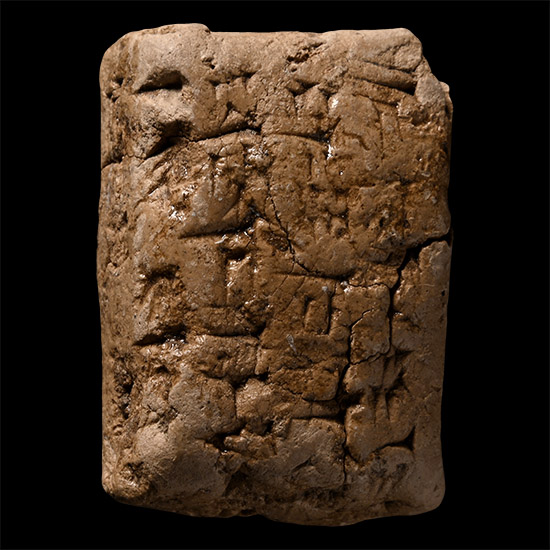
Mesopotamian Terracotta Cuneiform Tablet
Early 2nd millennium B.C.Estimate: £100 - 140 (+bp*)
Bids: 5 | Current Bid: £50
Small rectangular tablet with impressed text on four sides. 24.1 grams, 37 mm
Specialised collection of cuneiform texts, the property of a London gentleman and housed in London before 1992. Thence by descent to family members. Examined by Professor Wilfrid George Lambert FBA (1926-2011), historian, archaeologist, and specialist in Assyriology and Near Eastern archaeology, in the late 1980s and early 1990s. This small collection is exceptional for the variety of types, including some very rare and well preserved examples. -
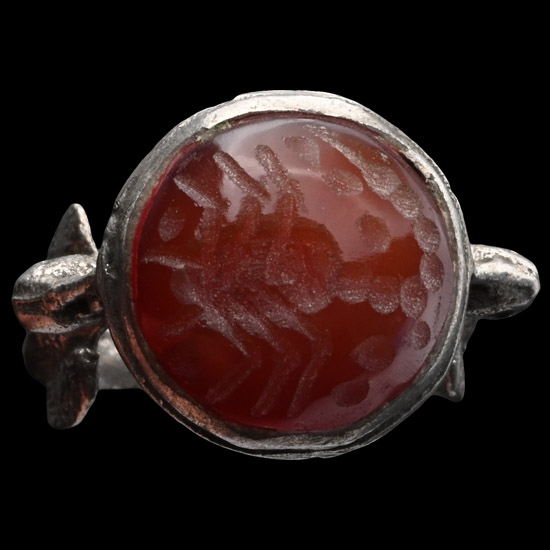
Bedouin Ring with Birds on Shoulders
Circa 18th-19th century A.D.Estimate: £40 - 60 (+bp*)
Opening Bid: £5
White metal ring with the shoulders formed as birds with spread wings, conical bezel set with a carnelian cabochon engraved with a scorpion. 10.16 grams, 32.39 mm overall, 18.05 mm internal diameter (approximate size British P, USA 7 1/2, Europe 16.23, Japan 15)
Ex English collection of Mr A.H.D. Accompanied by a previously illustrated catalogue card with provenance. -
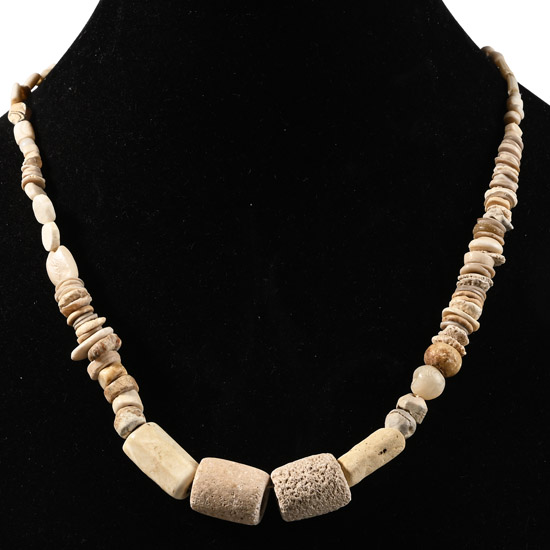
Western Asiatic Glass and Other Bead Necklace String
1st millennium B.C. and laterEstimate: £50 - 70 (+bp*)
Bids: 1 | Current Bid: £5
Graduated group of glass, stone and shell beads with four larger feature beads at the centre; restrung. 47.1 grams, 45.5 cm
Acquired in the 1990s. Ex London, UK, collection. -
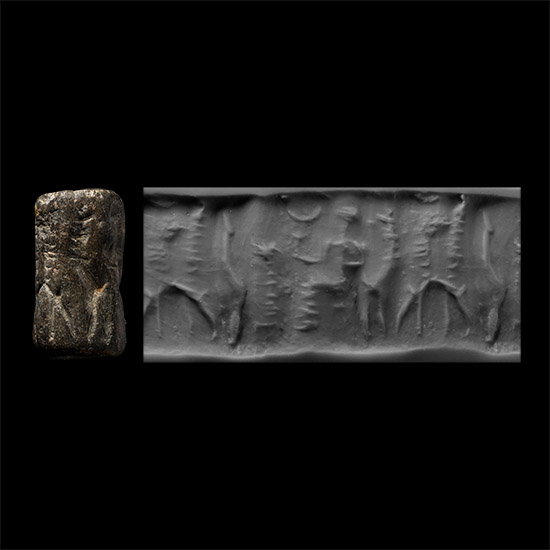
Western Asiatic Steatite Cylinder Seal with Deity and Beasts
Circa 1500 B.C.Estimate: £100 - 140 (+bp*)
Bids: 2 | Current Bid: £30
Showing a crescent moon and a standing beast, unusual filler motifs including a snake, an altar and a seated deity with a fringed skirt; supplied with a museum-quality impression. 3.65 grams, 20 mm
From the private collection of a European gentleman (1942-2024), formed since the 1970s. Accompanied by a previous typed catalogue slip with collection no.50. -
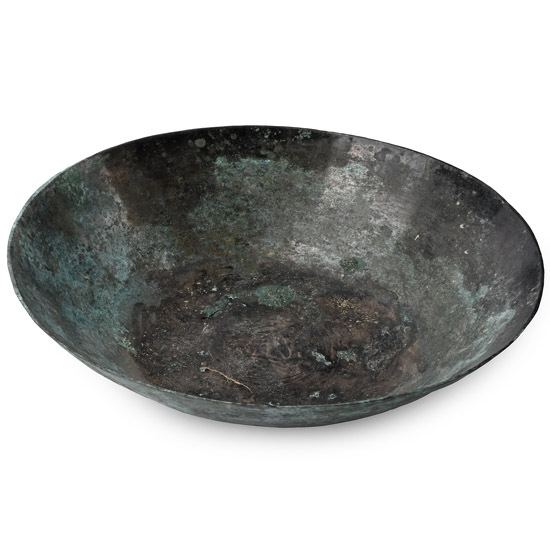
Sasanian Bronze Bowl
Circa 4th-6th century A.D.Estimate: £80 - 100 (+bp*)
Bids: 2 | Current Bid: £5
Shallow sheet-bronze bowl with sloping walls and flattened base. 123 grams, 14.6 cm wide
From a London, UK, collection, 1990s-2010. -
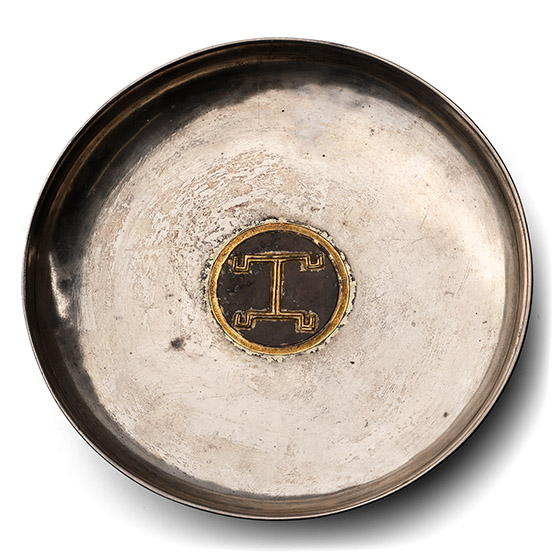
Post Sasanian Silver Footed Dish with 'Tamga'
Circa 8th-10th century A.D. or laterEstimate: £1,500 - 2,000 (+bp*)
Opening Bid: £800
Discoid footed dish with raised rim, central tondo with parcel-gilt ring and 'tamga' motif. 466 grams, 22 cm
Private collection, UK. Accompanied by an academic report by Dr Raffaele D’Amato. This lot has been checked against the Interpol Database of stolen works of art and is accompanied by search certificate number no.13029-247330.
During the Sasanian Empire, the North Iranian ‘tamgas’ became ‘Neshan’ or seals and heraldic symbols of nobility and military personnel, worn on their dress, horses, standards and personal belongings like this vessel. This characteristic continued during the early Muslim domination. Among the Neshan published by Christensen, one particular ‘tamga’, related to an unknown Sasanian clan, recalls exactly half of the one impressed on the present example (Farrokh, 2005, p.23 no.5). -
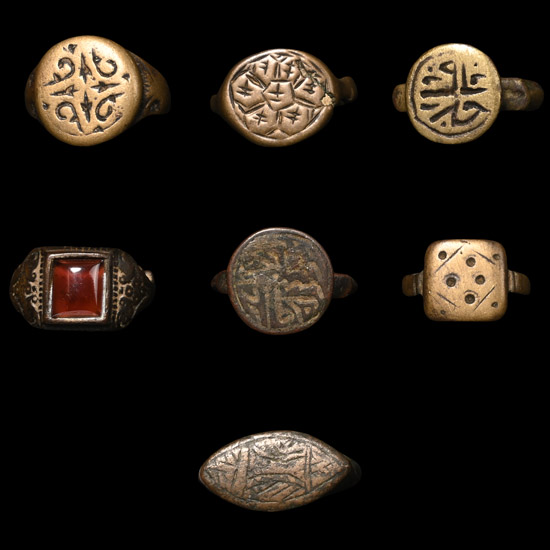
Western Asiatic Bronze Ring Collection
Circa 16th-18th century A.D.Estimate: £60 - 80 (+bp*)
Bids: 3 | Current Bid: £12
Mixed group of seven rings, one set with a carnelian cabochon. 49 grams total, 20-28 mm
Acquired in the late 1980s-early 1990s. Private collection, London, UK. -
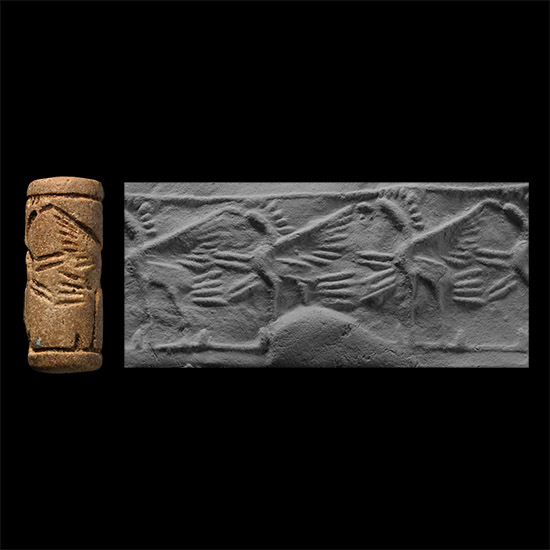
Neo-Assyrian Buff Stone Cylinder Seal with Gryphons
Circa 800-700 B.C.Estimate: £40 - 60 (+bp*)
Bids: 2 | Current Bid: £16
Fragmentary seal with flying gryphons; supplied with a museum-quality impression. 2.36 grams, 24 mm
From the private collection of a European gentleman (1942-2024), formed since the 1970s. Accompanied by a previous typed catalogue slip with collection no.80. -
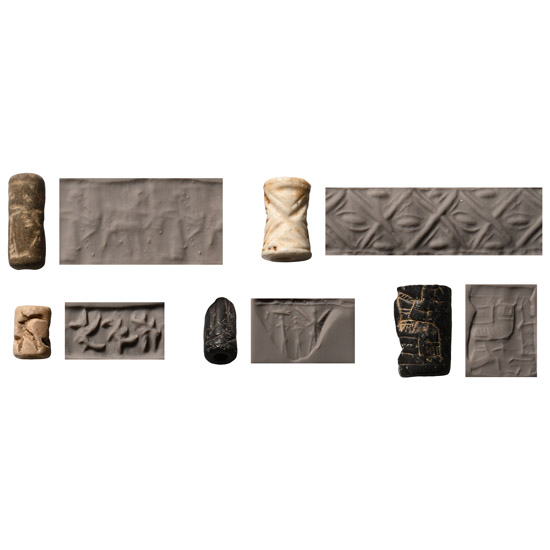
Western Asiatic Stone Cylinder Seal Group
3rd-1st millennium B.C.Estimate: £100 - 140 (+bp*)
Bids: 3 | Current Bid: £12
Comprising: a white stone cylinder seal with lozenges and 'eye' motifs; a brown stone cylinder seal with a standing robed figure and a standing quadruped; a small cream cylinder with three deeply carved motifs; a black stone fragment showing the body of a seated figure; a black stone cylinder seal fragment showing a winged genie and two smaller standing figures; supplied with museum-quality impressions. 16.03 grams total, 13-25 mm
From the private collection of a European gentleman (1942-2024), formed since the 1970s. -
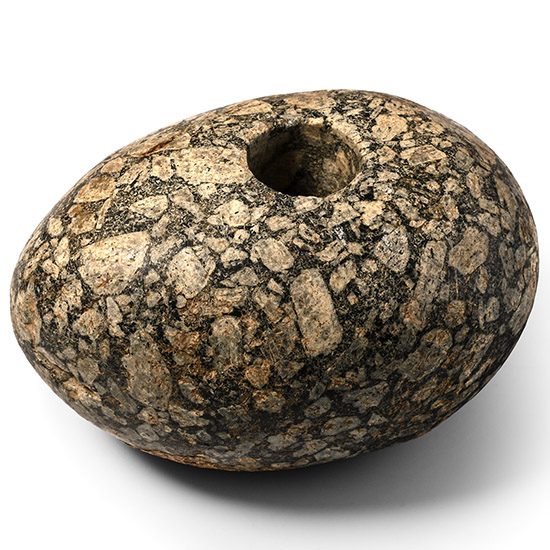
Western Asiatic Stone Macehead
4th millennium B.C.Estimate: £400 - 600 (‡+bp*)
Opening Bid: £200
Oval in plan with a tapering drilled central socket. 360 grams, 81 mm
Ex private collection, Contessa L.G., since the 1980s. Private collection, acquired in 1999.
The mace was a close-combat weapon consisting of a short handle and a massive striking element—the head, a striking weapon capable of inflicting severe contusions and internal fractures. Although a very archaic and rather primitive weapon, the mace was nevertheless widely used in the ancient East. Its sacred and representative role was particularly significant. Due to its shape, it symbolised the owner's masculinity and was therefore one of the primary insignia of power, symbolising the inseparability of its civil, military, and sacred-magical essences—ensuring the functioning and reproduction of the collective and the conditions for its existence. This is why we so often encounter ‘ceremonial’ maces, especially those made of stone—in this case, undoubtedly a ritual material. However, it must be said that stone, as a material for a mace head, was in no way inferior to metal in terms of combat qualities, while being much more labour-intensive to manufacture, which was precisely what appealed to the ritual, symbolic role of this weapon. -
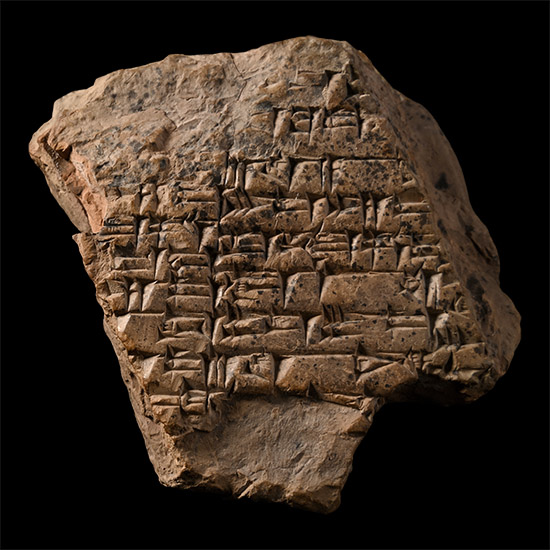
Ur III Terracotta Cuneiform Tablet Fragment
Circa 21st century B.C.Estimate: £70 - 90 (+bp*)
Bids: 15 | Current Bid: £120
Polygonal fragment with densely arranged impressed cuneiform text on one side. 67 grams, 74 mm
London, UK, art market, 1980s. Private collection, London, UK.

