
Ancient Art, Antiquities, Books, Natural History, Stamps & Coins

-
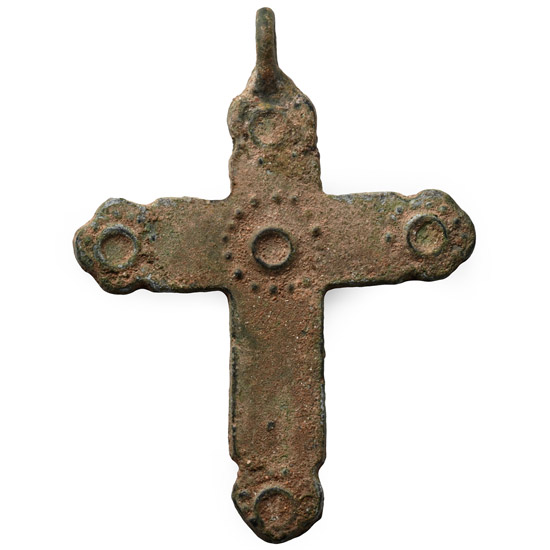
Byzantine Bronze Long Cross Pendant
Circa 12th-14th century A.D.Estimate: £40 - 60 (+bp*)
Bids: 1 | Current Bid: £5
Flat in section cross pommee, each arm with ring surrounded by pellets at the outer end and similar to the centre; integral loop. 16.3 grams, 65 mm
Private collection, 1980s. Acquired on the UK art market. Private collection, London, UK. -
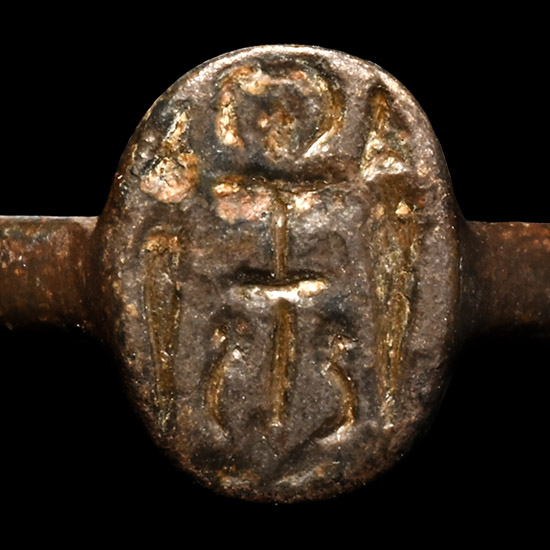
Byzantine Bronze Ring with Archangel Michael
6th-7th century A.D.Estimate: £40 - 60 (+bp*)
Opening Bid: £5
Ellipsoid bezel with incuse winged and nimbate figure facing. 2.97 grams, 21.83 mm overall, 17.69 mm internal diameter (approximate size British N 1/2, USA 6 3/4, Europe 14.35, Japan 13)
From the private collection of a European gentleman (1942-2024), formed since the 1970s. -
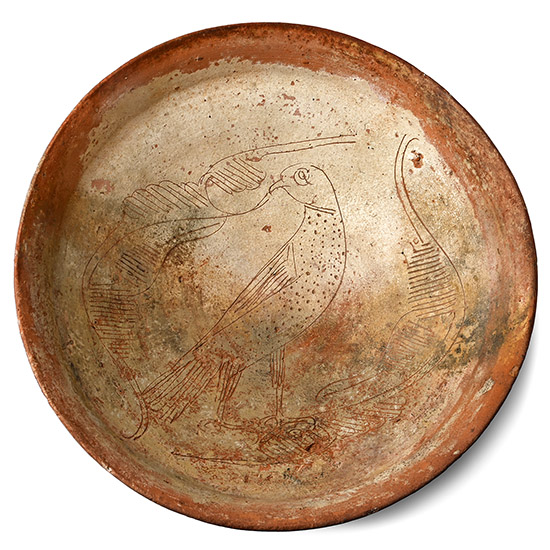
Byzantine Terracotta Sgrafitto Dish with a Falcon Among Leafy Branches
Perhaps Corinth, mid-12th century A.D.Estimate: £500 - 700 (+bp*)
Bids: 3 | Current Bid: £45
Broad and squat with carination to the exterior face, and a broad foot ring; cream glaze with sgraffito design of a delineated falcon in profile, surrounded by leafy branches and holding one of the branches in its hooked beak. 1.04 kg, 26.3 cm
Private collection (L.v.L.), Rhineland-Pfalz, Germany, acquired between 1960s-1980s.
In the Byzantine Empire, and even more so in the Islamic world, hunting falcons were a symbol of wealth and high status. The spectrum of designs in which they are to be found on 12th-century Byzantine pottery, in particular, offers a forceful testament both to the cultural reach of such vessels during the period and to the skill of the potters who were able to produce large numbers of beautifully worked slipware vessels destined for marine trade. The present example is likely to have been discovered in the late 1960's, when it is thought a 12th-century shipwreck laden with slipware vessels was excavated off the coast of Izmir. -
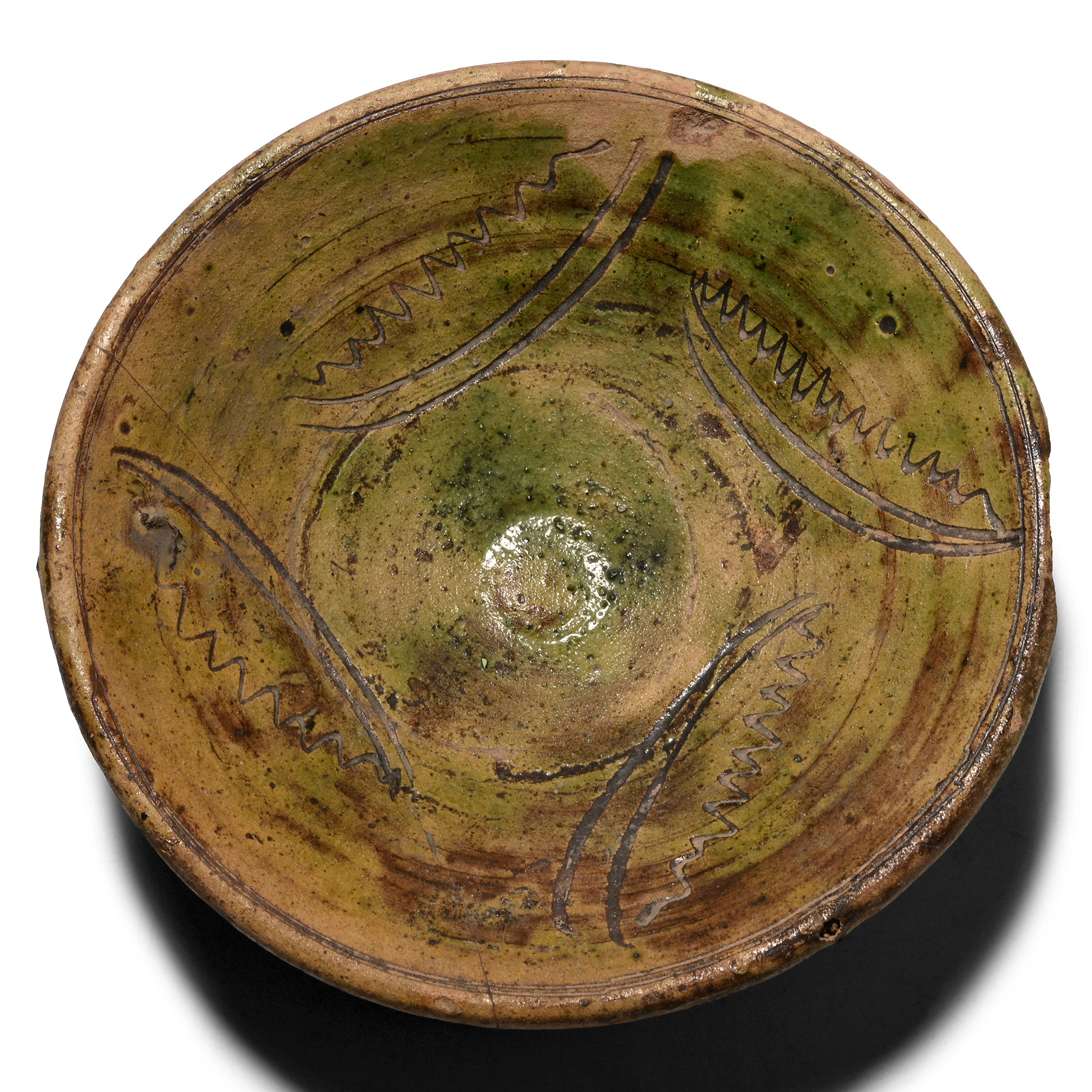
Byzantine Green Glazed Sgraffito Footed Bowl
13th-14th century A.D.Estimate: £200 - 300 (+bp*)
Bids: 2 | Current Bid: £10
Shallow type with dished body and ring to underside; rounded rim and incised border, four sgraffito crescent motifs with undulating line above each. 301 grams, 16 cm wide
From the private collection of Peter Clayton, FCILIP, Dip, Arch, FSA, FRNS, Hemel Hempstead, Hertfordshire, UK; formed since the late 1950s. -
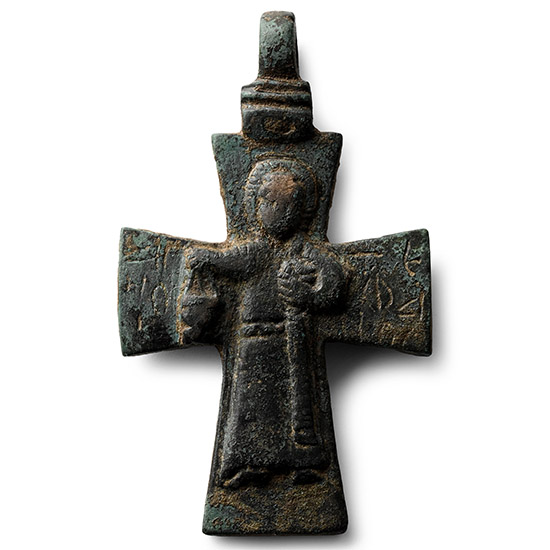
Byzantine Bronze Cross Pendant with Reverse Inscription
10th-12th century AD.Estimate: £150 - 200 (+bp*)
Bids: 1 | Current Bid: £5
Heavy cross pendant showing a nimbate robed figure on one side holding a staff and a thurible, a Greek inscription on the reverse. 36 grams, 65 mm
Acquired on UK art market in the 1990s. Property of a Middlesex gentleman. -
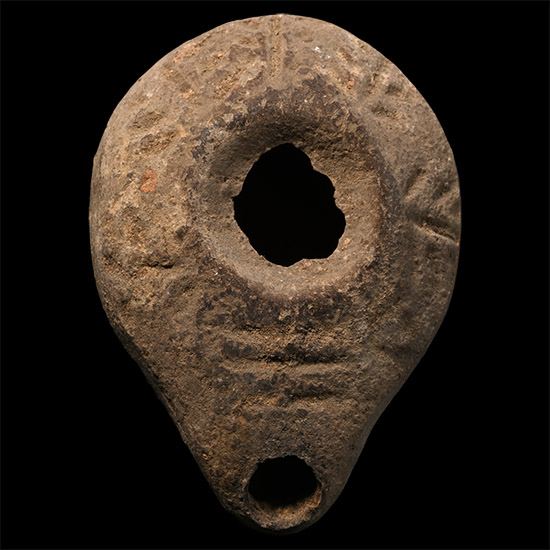
Byzantine Terracotta Oil Lamp
Holy Land, circa 7th century A.D.Estimate: £30 - 40 (+bp*)
Bids: 1 | Current Bid: £5
Piriform oil lamp with low-relief leaf decoration. 58 grams, 89 mm
Ex J. Zadok & Sons, 18, King David Road, Jerusalem, Israel. From the property of a late Lincolnshire, UK, gentleman; thence by descent. Accompanied by a certificate of antiquity issued by J. Zadok & Sons. -
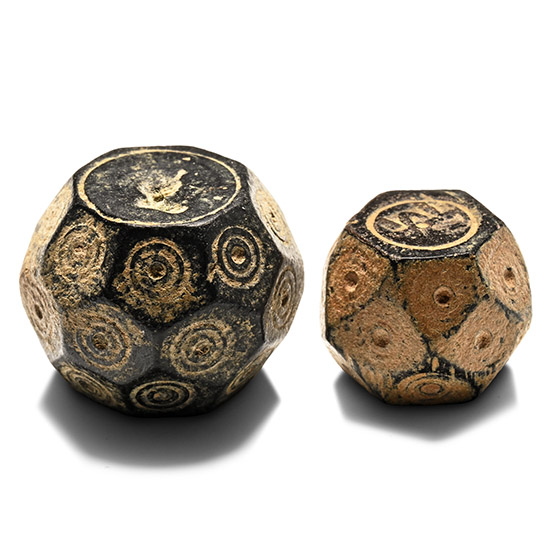
Byzantine Bronze Weight Group
Circa 8th-12th century A.D.Estimate: £100 - 140 (+bp*)
Opening Bid: £50
Comprising two polygonal weights, each with a ring-and-dot design on the polygonal faces. 44.3 grams total, 16-19 mm
London gentleman's collection, 1970-1990s, by descent. -
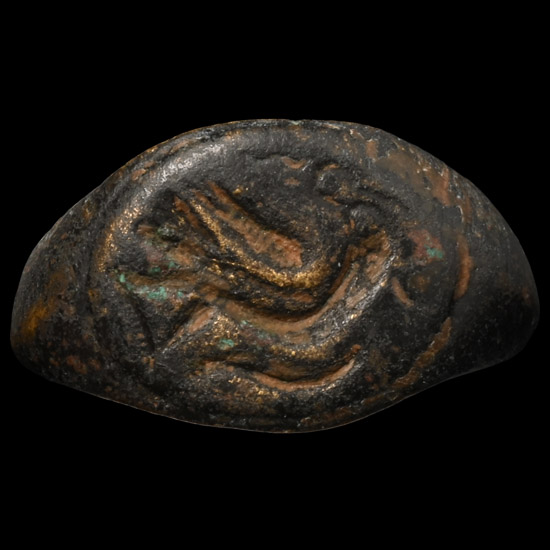
Byzantine Bronze Ring with Dove
Circa 6th-7th century A.D.Estimate: £40 - 60 (+bp*)
Opening Bid: £5
Ellipsoid plaque with incuse perching dove, head turned to the rear with a wreath in its beak. 3.99 grams, 21.35 mm overall, 16.82 mm internal diameter (approximate size British I 1/2, USA 4 1/2, Europe 8.07, Japan 7)
From the private collection of a European gentleman (1942-2024), formed since the 1970s. -
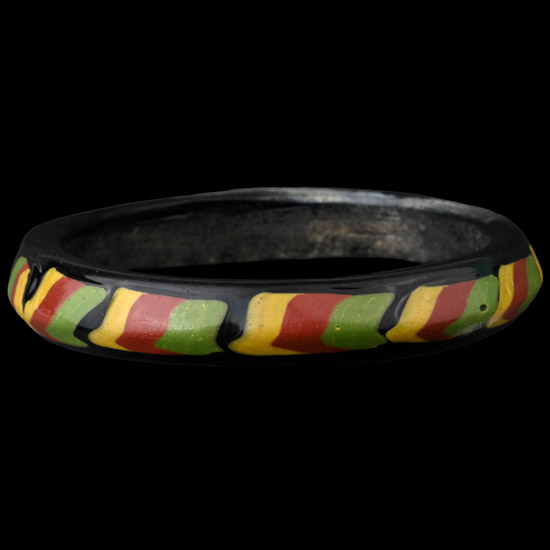
Byzantine Period Mosaic Glass Bangle
Circa 8th-12th century A.D.Estimate: £60 - 80 (+bp*)
Bids: 1 | Current Bid: £5
Square-section hoop from black glass with green, red and yellow decoration to the outer face. 50.4 grams, 89 mm
From the collection of a gentleman born in the late 19th century, formed 1940s-1970s. From an old Staffordshire family collection; thence by descent. -
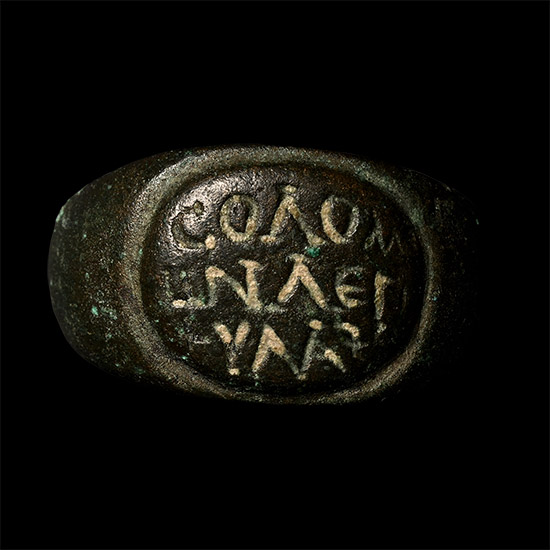
Byzantine Bronze Ring with Inscription
5th-7th century A.D.Estimate: £80 - 100 (‡+bp*)
Bids: 1 | Current Bid: £40
With raised disc to the bezel, incised enigmatic legend 'COΛON / ΠΝΛΕΜ / YΛA'. 6.23 grams, 21.12 mm overall, 16.62 mm internal diameter (approximate size British I, USA 4 1/4, Europe 7.44, Japan 7)
Private collection, USA and Switzerland, before 1992; thence by descent. -
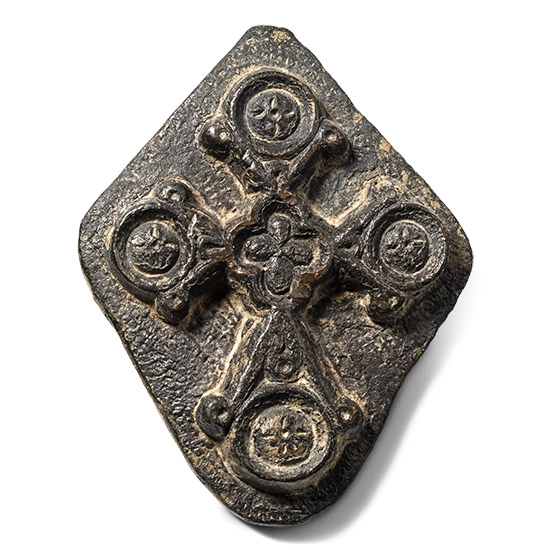
Byzantine Bronze Cross Pendant Repousse Matrix
6th-7th century A.D.Estimate: £400 - 600 (+bp*)
Bids: 1 | Current Bid: £5
Lozengiform matrix with a raised expanding arm cross with a central disc with a cross motif and each arm ending on a round disc with a cross motif. 80.6 grams, 56 mm
Acquired on UK art market in the 1990s. Property of a Middlesex gentleman. -
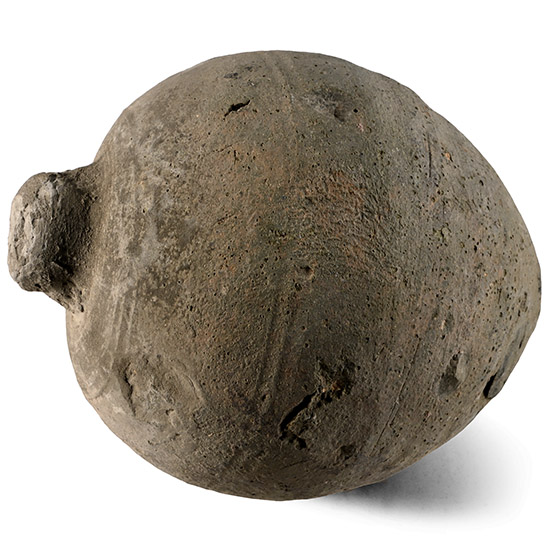
Byzantine 'Greek Fire' Ceramic Fire Bomb or Hand Grenade
9th-11th century A.D.Estimate: £70 - 90 (+bp*)
Bids: 1 | Current Bid: £5
Bulbous body with rounded base and domed filler hole, impressed circumferential bands on the body; intended to be filled with explosive liquid and a wick, and used as a hand grenade. 919 grams, 13 cm
Ex important collection of weaponry, London, UK, 1980-1990s. Accompanied by an academic paper by military specialist Dr Raffaele D'Amato, dated 15 July 2019 and titled 'Eastern Roman Empire - Greek Fire Bomb or Hand Grenade (μεσαίον kακάβιον) 9th-11th century AD'.
Apart from the use of siphons or manual flame-throwers called cheirosiphona, special corps of Roman soldiers employed terracotta grenades, in the form of small jars, abundantly evidenced in archaeological excavations. They were called μεσαία kακαβιά or κυτροκακάβια, where the former had a bulbous shape and the latter a more cylindrical form.
