
Ancient Art, Antiquities, Books, Natural History, Stamps & Coins

-
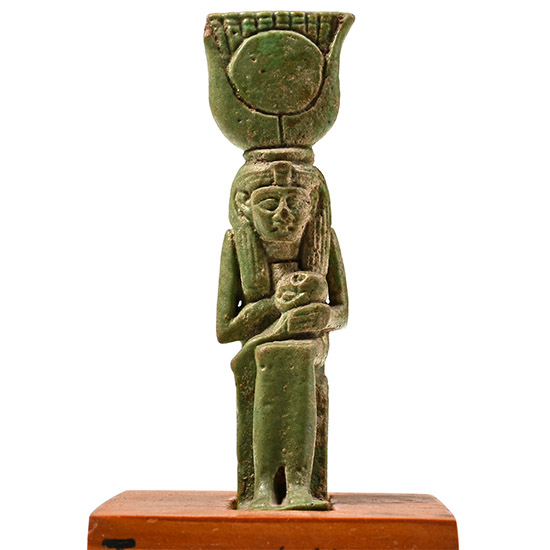
Egyptian Green Glazed Faience Amulet of the Goddess Isis with Horus
Late Period, 26th Dynasty, circa 600-700 B.C.Estimate: £400 - 600 (+bp*)
Bids: 1 | Current Bid: £5
Figurine of Isis nursing Horus, seated with a sun disc and a horned headdress; dorsal pillar with hieroglyphic text; suspension hole pierced through the back of the headdress; on a display stand with the legend 'Isis and Horus XXVI Dynasty'. 36.12 grams total, 80 mm including stand
Acquired Herne Bay High Street, circa June 1957, for £1.00. From the private collection of Peter Clayton, FCILIP, Dip, Arch, FSA, FRNS, Hemel Hempstead, Hertfordshire, UK; formed since the late 1950s. Accompanied by an old handwritten information card by Peter Clayton, collection no.3.
Isis, one of the principal goddesses of the Egyptian pantheon, was revered as the divine mother, protector of kingship, and mistress of magic. As Osiris's wife and Horus's mother, she embodied maternal care, resurrection, and cosmic order, playing a central role in mythological narratives of death and renewal. Isis lactans statuettes, in particular, emphasise intimate maternal interaction, embodying the protective and regenerative aspects of the Isis-Horus myth. Such bronzes were widely dedicated in temple contexts and domestic shrines, where they served as votive objects invoking divine protection, healing, and royal legitimacy. -
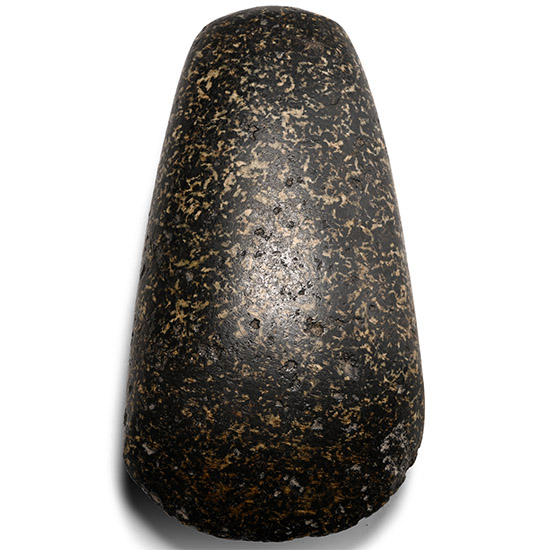
Egyptian Stone Age Diorite Polished Axehead
Early Dynastic Period, circa 3,000 B.C.Estimate: £400 - 600 (+bp*)
Opening Bid: £5
Polished to a high standard with curved cutting edge. 551 grams, 12.7 cm
Acquired Glyn Antiques, Portabello Road, 26 November 1960, for £2.00. From the private collection of Peter Clayton, FCILIP, Dip, Arch, FSA, FRNS, Hemel Hempstead, Hertfordshire, UK; formed since the late 1950s. Accompanied by an old handwritten information card by Peter Clayton, collection no.78.
The great British Egyptologist Flinders Petrie recovered numerous polished stone axes from various sites in Egypt. Flint was rarely used, though it was popular for other tools. Instead, other hardstones were favoured (Petrie, W.M.F., Prehistoric Egypt, London, 1920, p. 24, for a brief discussion; pl. XXVII, for illustrated examples). -
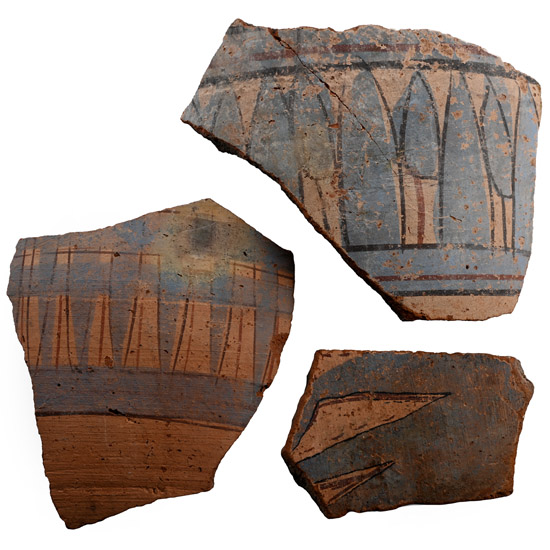
Large Egyptian Painted Bowl Fragments
New Kingdom, 18th Dynasty, Amarna Period, 1379-1362 B.C.Estimate: £80 - 100 (+bp*)
Opening Bid: £5
Three substantial fragments from blue-painted vessels, two with stylised floral motifs and one with a fragment of figurative decoration. 300 grams total, 8.3-13.2 cm
Acquired circa 1979. From the private collection of Peter Clayton, FCILIP, Dip, Arch, FSA, FRNS, Hemel Hempstead, Hertfordshire, UK; formed since the late 1950s.
The distinctive blue colour on these pottery fragments derives from a cobalt-and-aluminium slip that reacts during firing. The designs could incorporate floral, geometric, and figurative motifs (for an illustrated discussion of the technical production of blue-painted pottery, see Seyfried, F. (ed.), In the Light of Amarna: 100 Years of the Nefertiti Discovery, Berlin, 2012, pp. 132-135. -
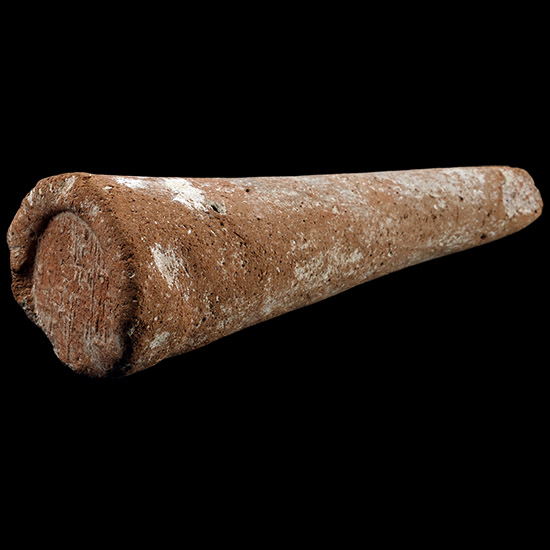
Egyptian Terracotta Funerary Cone of Qenamun
New Kingdom, mid-18th Dynasty, circa 1479-1425 B.C.Estimate: £400 - 600 (+bp*)
Bids: 3 | Current Bid: £110
Complete cone, preserving its slender tapering form, with the flat circular end faintly impressed with four horizontal lines of abraded hieroglyphic text reading: 'An offering which the king gives to Osiris, lord of eternity, may he give a voice offering of all good purified things, for the ka of the scribe of documents of the god's wife, Qenamun, true of voice'. 450 grams, 21.4 cm
Acquired from Abdoul Rassoul on the West Bank at Luxor, 1974-1980, when a guest lecturer. From the private collection of Peter Clayton, FCILIP, Dip, Arch, FSA, FRNS, Hemel Hempstead, Hertfordshire, UK; formed since the late 1950s.
Qenamun's title indicates that he was responsible for the legal correspondence, decrees, and official documentation issued by or sent to the institution of the royal priestess of Amun. Although abraded, this cone is clearer in certain areas of the inscription than the one recorded by Davies and Macadam in their 1957 catalogue of funerary cones. Qenamun's tomb in the Theban necropolis has not yet been identified. -
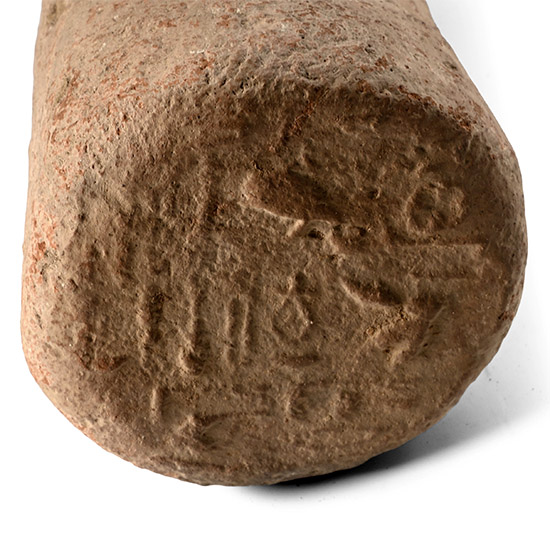
Egyptian Terracotta Funerary Cone of User(amun)
New Kingdom, 18th Dynasty, circa 1479-1425 B.C.Estimate: £300 - 400 (+bp*)
Bids: 3 | Current Bid: £55
Large portion of the tapering cone with the circular flat end bearing the impressed stamp, with three horizontal groups of hieroglyphs reading: 'Hereditary prince, count chancellor of the king of Lower Egypt, sole companion, overseer of the city, vizier, User(amun), true of voice'. 596 grams, 11.2 cm
Acquired from Abdoul Rassoul on the West Bank at Luxor, 1974-1980 when a guest lecturer. From the private collection of Peter Clayton, FCILIP, Dip, Arch, FSA, FRNS, Hemel Hempstead, Hertfordshire, UK; formed since the late 1950s.
The impressively lofty titles listed on this cone identify the owner as Useramun, here shortened to User. He owned two tombs in the Theban necropolis: one, it seems, for his family (TT 61) and the other for himself (TT 131). -
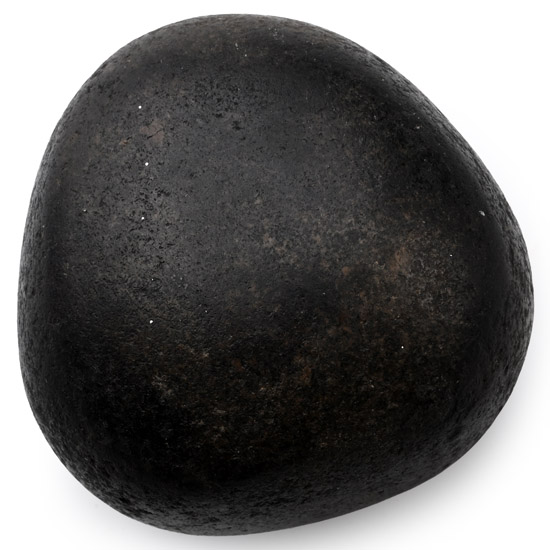
Egyptian Polished Diorite Hammerstone
Early Dynastic Period, circa 3,000 B.C.Estimate: £50 - 70 (+bp*)
Opening Bid: £5
Triangular in plan with rounded edges; with a handwritten label reading 'Polished diorite hammerstone. Egyptian, early Dynastic, c. 3000 BC'. 248 grams, 55 mm wide
From the collection of A.D.Passmore (1879-1958), his collection of flints from the area of Stonehenge was donated to the Ashmolean Museum in the 1950s. From the private collection of Peter Clayton, FCILIP, Dip, Arch, FSA, FRNS, Hemel Hempstead, Hertfordshire, UK; formed since the late 1950s. Accompanied by a copy of an old handwritten information card by Peter Clayton. -
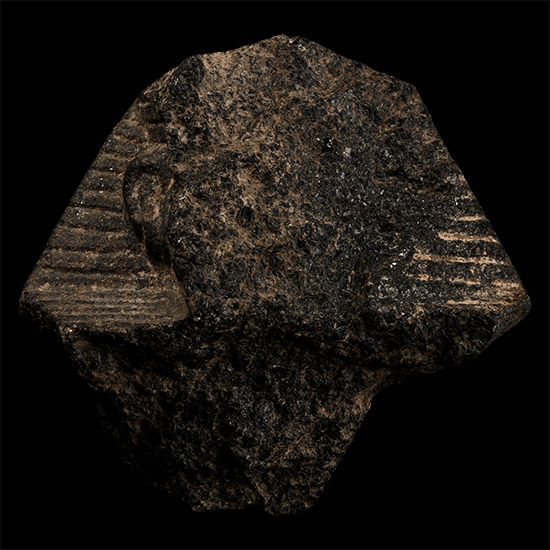
Egyptian Fragmentary Granite Head of a Pharaoh
Middle Kingdom, circa late 12th-13th Dynasty, circa 1860-1649 B.C.Estimate: £400 - 600 (+bp*)
Opening Bid: £5
With a distinctive striated royal nemes headcloth, one large forward-facing ear preserved, and a largely absent face, the gathered 'tail' of the headdress hanging down at the back. 406 grams, 96 mm
Acquired March 1965. From the private collection of Peter Clayton, FCILIP, Dip, Arch, FSA, FRNS, Hemel Hempstead, Hertfordshire, UK; formed since the late 1950s. Accompanied by an old handwritten information card by Peter Clayton, collection no.110.
Dark, hard stones were favoured for royal statuary in the late Middle Kingdom. The internal treatment of the forward-facing ears and the markings of the nemes are comparable to those of more complete royal heads from this period (cf. Bourriau, J., Pharaohs and Mortals. Egyptian art in the Middle Kingdom, Cambridge, 1988, p. 38, no. 32, for a portrait head of Amenemhat III). -
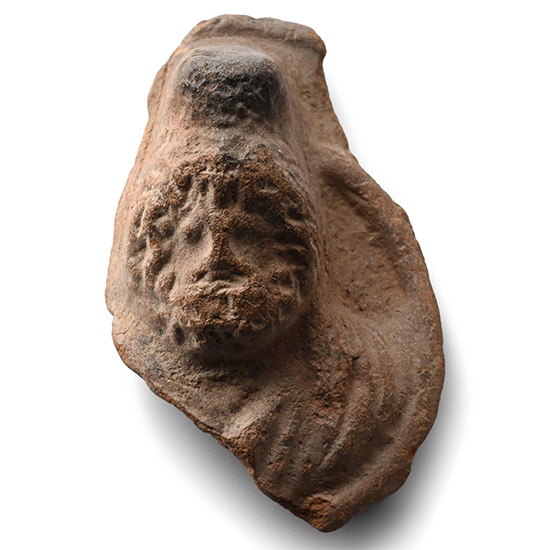
Egyptian Terracotta Statuette Head of the God Serapis
Roman Period, circa 2nd-3rd century A.D.Estimate: £40 - 60 (+bp*)
Bids: 1 | Current Bid: £5
Fragment depicting the god Serapis, with tight curly hair and beard, wearing a modius crown. 28.98 grams, 59 mm
From the private collection of Peter Clayton, FCILIP, Dip, Arch, FSA, FRNS, Hemel Hempstead, Hertfordshire, UK; formed since the late 1950s. -
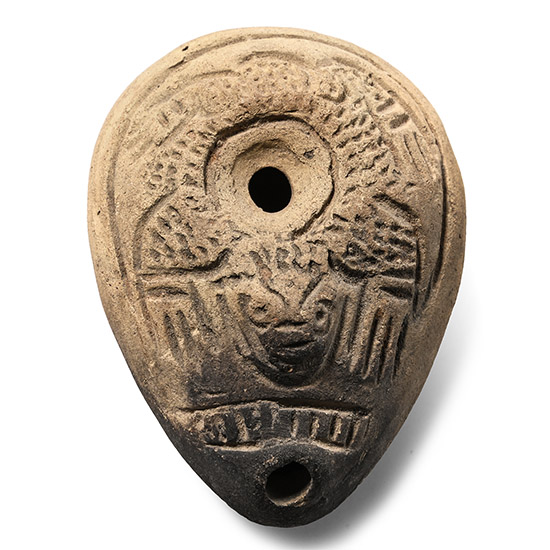
Romano-Egyptian Terracotta Frog Oil Lamp
Roman Period, 3rd-4th century A.D.Estimate: £50 - 70 (+bp*)
Bids: 1 | Current Bid: £5
Ovoid in plan and biconvex in section, low-relief frog image on the discus, starburst on the underside; old collector's note: 'Very light buff coloured frog lamp. Exact type as illustrated in Bailey, [?] Roman pottery lamps. B.17.1963 pl. 14 d. Decorated base. 3-4th century A.D. Found in Alexandria. From Puys-Aubert collection in Alexandria. March 1963.' 71 grams, 81 mm
From the private collection of Peter Clayton, FCILIP, Dip, Arch, FSA, FRNS, Hemel Hempstead, Hertfordshire, UK; formed since the late 1950s. Accompanied by an old handwritten identification card written by Peter Clayton. -
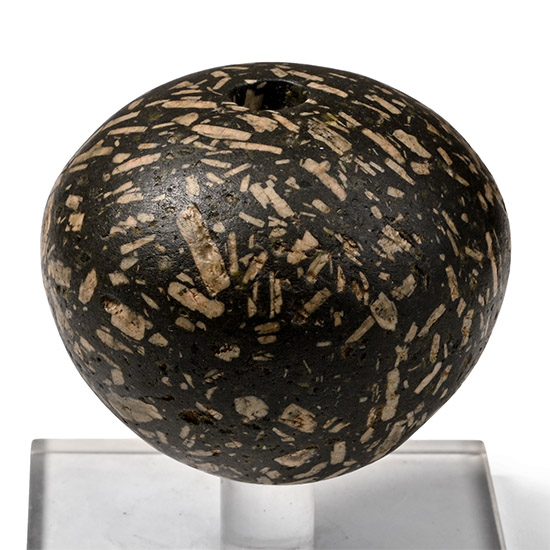
Egyptian Speckled Black and White Breccia Polished Macehead
Early Dynastic, circa 3000 B.C.Estimate: £300 - 400 (+bp*)
Bids: 1 | Current Bid: £5
Biconvex in profile with central vertical socket; mounted on a custom-made stand. 305 grams total, macehead: 61 mm wide, 74 mm including stand
Acquired in April 1963, for £36 shillings. A present from John Kearne. From the private collection of Peter Clayton, FCILIP, Dip, Arch, FSA, FRNS, Hemel Hempstead, Hertfordshire, UK; formed since the late 1950s. Accompanied by an old handwritten information card by Peter Clayton, collection no.105. -
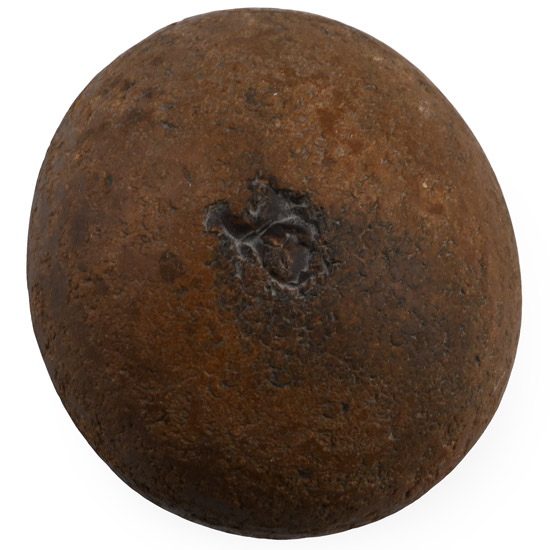
Egyptian Stone Smoothing Tool
3rd-late 1st millennium B.C.Estimate: £40 - 60 (+bp*)
Opening Bid: £5
Spherical pounder with a smooth surface. 625 grams, 86 mm
From the private collection of Peter Clayton, FCILIP, Dip, Arch, FSA, FRNS, Hemel Hempstead, Hertfordshire, UK; formed since the late 1950s. Accompanied by an old handwritten information card by Peter Clayton, collection no.134.
Stone pounders were used to shape and harden metal, as well as to pound stone architectural elements and statues. -
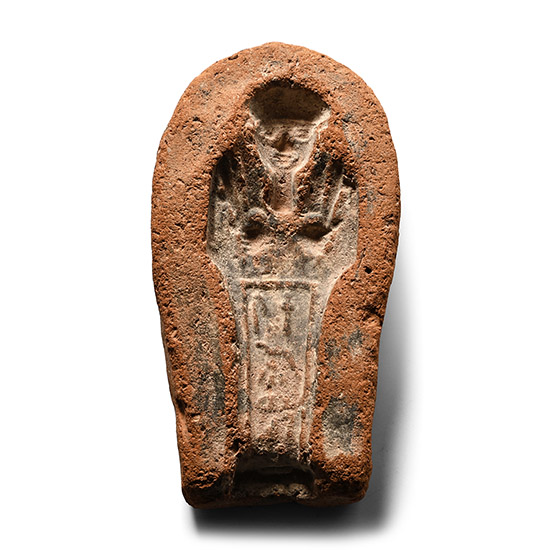
Egyptian Style Terracotta Shabti Mould
19th-20th century A.D.Estimate: £300 - 400 (+bp*)
Opening Bid: £150
Tongue-shaped in plan with a step to the square end, incuse figure with crossed hands, tripartite wig, hieroglyphic text to the lower body, giving a standard shabti introduction. 70 grams, 87 mm
From the private collection of Peter Clayton, FCILIP, Dip, Arch, FSA, FRNS, Hemel Hempstead, Hertfordshire, UK; formed since the late 1950s.
This forger's mould features the most recognisable text elements found on Late Period shabtis. However, authentic ancient moulds were typically plain—allowing the inscription to be added after casting—or left with blank spaces for the owner's name. While modern forgers often successfully replicate the common opening formulas, they frequently garble or over-embellish the subsequent individual names and texts.
