
Ancient Art, Antiquities, Books, Natural History, Stamps & Coins

-
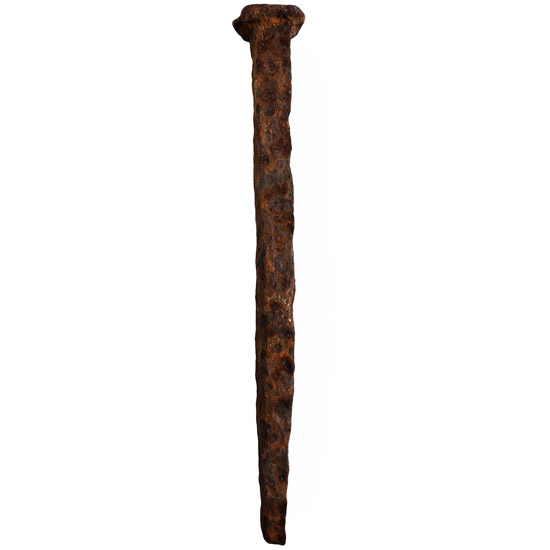
Very Large Romano-Scottish Legion XX Valeria Victrix 'Inchtuthil Fort' Iron Nail
Circa 83-87 A.D.Estimate: £100 - 140 (+bp*)
Bids: 3 | Current Bid: £15
Sturdy rectangular-section clout-nail with a slightly domed top. 228 grams, 21 cm
From excavations started by Richmond in Perthshire, Scotland, in the 1950s, and discovered in the summer of 1960. Selected and boxed by David Colville & Sons by 1963. Acquired on the UK art market in the 1990s. Property of a Middlesex gentleman.
The fortress at Inchtuthil was a fortified headquarters and forward supply depot for the forces led by the Roman governor, Gnaeus Julius Agricola, when he undertook a lengthy campaign against the Caledonian tribes in the north of Britain. The campaign is mentioned in the biographical work written by his son-in-law, the historian Tacitus, which has been studied in order to understand the Roman plan for the subjugation of the island. The troops chosen for the campaign were drawn from the 20th Legion (Legio XX Valeria Victrix). While the construction of Inchtuthil and other strongholds took place, the troops lived in temporary encampments which were also fortified and formed a chain of defensive sites from which domination of the surrounding territory could be achieved. Subsequently, once the site was abandoned late in the 1st century A.D. (around 86 A.D.), no further building took place there or in the area. Excavation in the 20th century by Sir Ian Richmond (begun in 1952) revealed a pristine site with its complete plan recoverable - unique in the Roman Empire. The defences were a broad ditch and turf wall with stone facing, with watchtowers and gatehouses. The site was thought to have been abandoned due to the relocation of troops to counter an invasion from Eastern Europe into the province of Dacia, although this is no longer certain. A huge quantity of iron nails (more than 875,000) was recovered from a pit in the fort as well as other ironware; the goods had been buried in order not to let them fall into the hands of the Caledonians. The excavated nails and other items were sorted and sold in small parcels, which was completed by 1963. The nails range in size from small nails between thirty-eight and seventy millimetres long, up to the massive spikes three hundred and seventy-two millimetres long. These kinds of long nails were also used for crucifixions. -
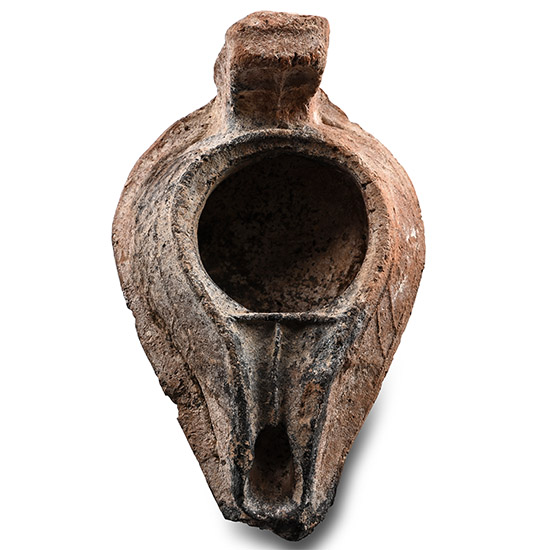
Late Roman Terracotta Oil Lamp
6th-7th century A.D.Estimate: £80 - 100 (+bp*)
Opening Bid: £5
Slipper-shaped type with hatching to the shoulder, ribbed nozzle, rectangular handle with raised cruciform motif, underside with cross-in-circle motif and inked '397' legend. 185 grams, 12.5 cm
Ex important German collection, 1970s onwards. -
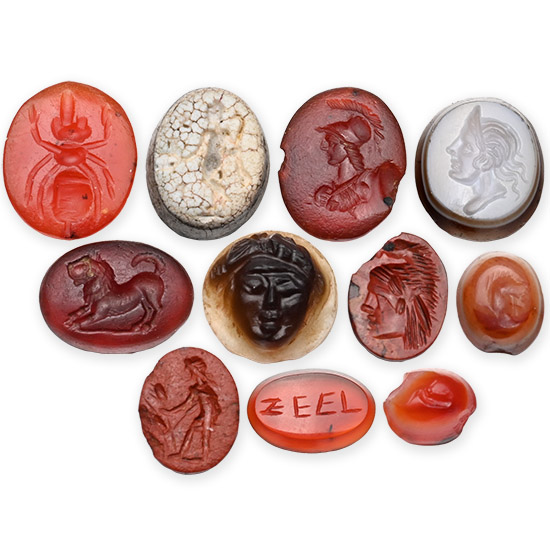
Large Roman Carnelian and Other Gemstone Collection
1st-2nd century A.D. and laterEstimate: £1,500 - 2,000 (+bp*)
Opening Bid: £750
Comprising eleven gemstones with various motifs, including: a cameo with a face, a profile bust wearing a filet, an insect with a stinger, a bust of Minerva, a lion on a baseline, a helmetted head of a warrior, a harvesting scene, two with a bird(?), an advancing nude female with an inscription before, and one inscribed 'ZEEL'. 5.33 grams total, 7-13 mm
Private collection, London. -
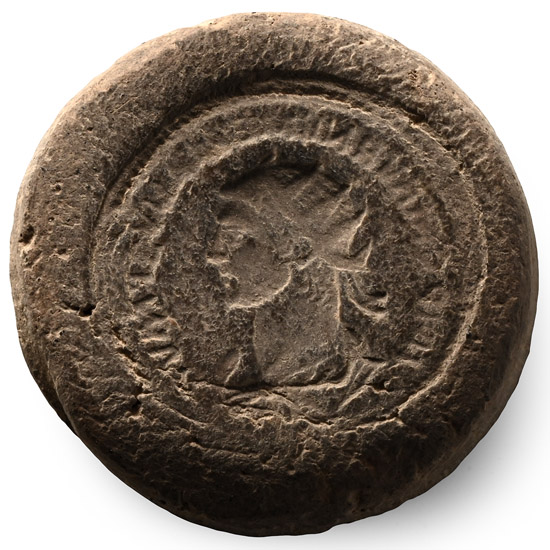
Roman Terracotta Coin Forger's Mould
Circa 3rd-4th century A.D.Estimate: £50 - 70 (+bp*)
Bids: 1 | Current Bid: £5
Discoid clay mould with an impressed design of a coin on each face, one side with a radiate profile bust. 4.12 grams, 27 mm
London gentleman's collection, 1970-1990s, by descent. -
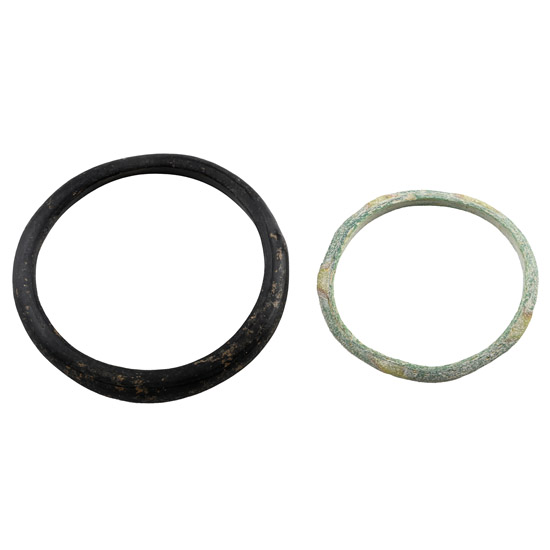
Large Late Roman Glass Bracelet Group
Circa 4th-6th century A.D.Estimate: £50 - 70 (+bp*)
Opening Bid: £5
Each D-shaped in section. 39 grams total, 68-84 mm
Acquired on the UK art market since the 1990s. From the property of a late Lincolnshire, UK, gentleman; thence by descent. -
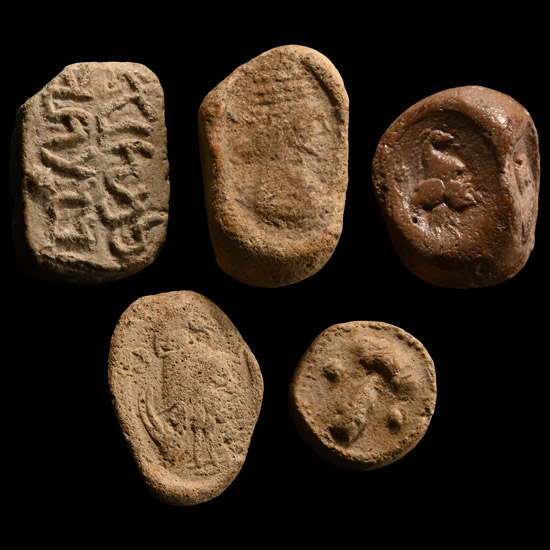
Eastern Roman Terracotta Tesserae and Tablet Collection
Circa 2nd-3rd century A.D.Estimate: £80 - 100 (+bp*)
Opening Bid: £5
Including standing figure, profile bust, ibex, Nabataean script and other types. 11.4 grams total, 13-22 mm
From the private collection of a European gentleman (1942-2024), formed since the 1970s. -
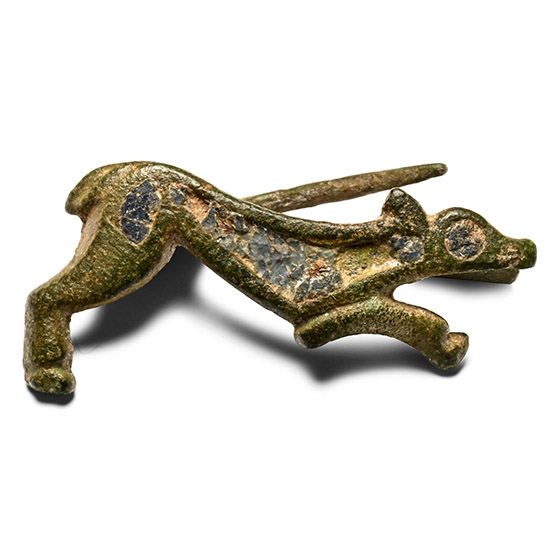
Romano-British Enamelled Bronze Running Dog Brooch
Circa 2nd century A.D.Estimate: £120 - 140 (+bp*)
Bids: 1 | Current Bid: £70
Formed as a hound running right with panels to the body with remains of blue enamel; pin and catchplate to reverse. 4.44 grams, 33.4 mm
Acquired on the UK art market in the 1980s. From an East Anglian private collection. -
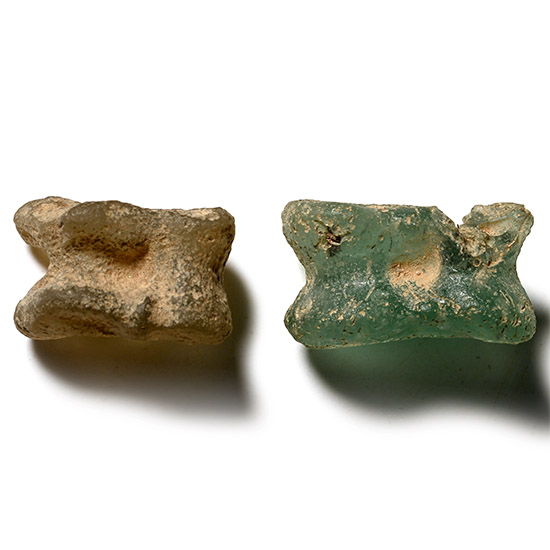
Roman Glass Knucklebones Gaming Pair
Circa 1st-4th century A.D.Estimate: £200 - 300 (+bp*)
Opening Bid: £100
Each a miniature astragalus with surface detailing. 5.86 grams total, 17-20 mm
From the collection of the late Mr S.M., London, UK, 1970s, by descent. -
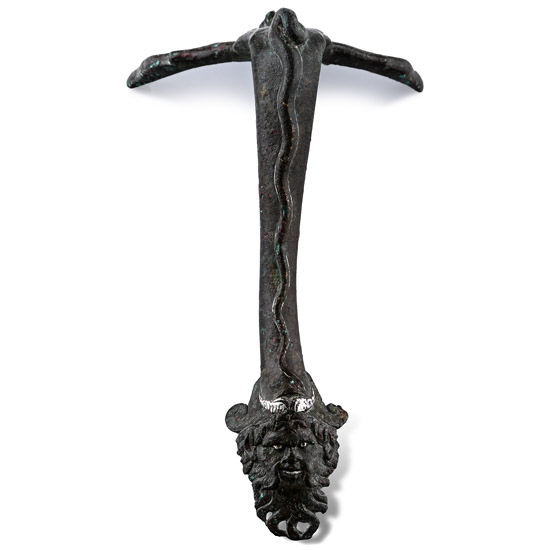
Roman Bronze Vessel Handle with Silver Inlaid Face
1st century A.D.Estimate: £1,500 - 2,000 (‡+bp*)
Opening Bid: £750
Swept in profile comprising a horizontal crescentic panel to attach to the rim, with inlaid silver detailing, recurved cobra-shaped thumb pad, raised serpent to the outer face of the tapering handle, finial a mask of Bacchus or Pan, facing with volute scrolls to the brow and thick splayed beard; silver diadem. 118 grams, 14.4 cm
Private collection. with Christie's, London, 11 June 1997, no.97 (part). with Bonhams, 13 April 2000, no.198. Private collection, Europe. -
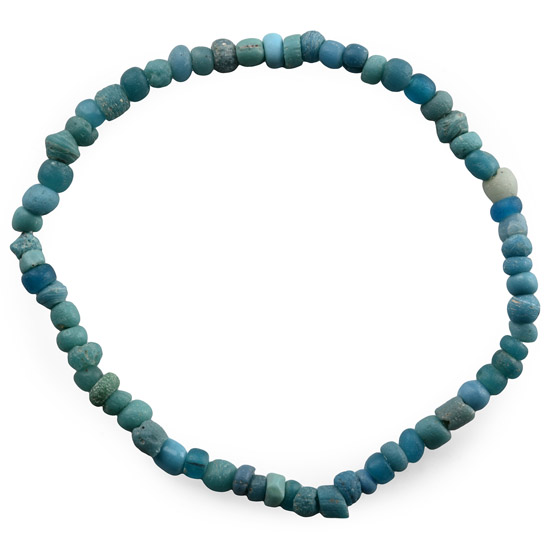
Roman Light Blue Glass Bead Bracelet
Circa 1st-4th century A.D.Estimate: £50 - 70 (+bp*)
Opening Bid: £5
Composed mainly of oblate beads, restrung with an elasticated string. 3.77 grams, 16.4 cm
Ex Ancient Art Shop, Windsor, UK, 1990s. Ex private collection. -
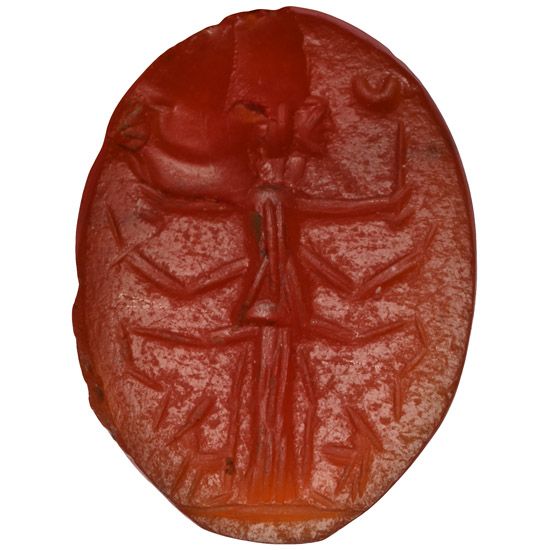
Roman Carnelian Gemstone with Goddess Hecate
1st-2nd century A.D.Estimate: £400 - 600 (+bp*)
Bids: 1 | Current Bid: £5
Ellipsoid in plan with intaglio standing robed figure of Hecate, her heads facing left and right, with six arms; holding the leashes of two dogs standing to either side of her, with birds in the field; chipped; supplied with a museum-quality impression. 0.65 grams, 13 mm
From the private collection of a European gentleman (1942-2024), formed since the 1970s.
Hecate, the goddess of the Underworld, is often represented with 6 arms: the uppermost hands holding torches, the middle hands holding daggers, and the lowermost hands holding whips. Hecate was a chthonic (underworld) goddess. As the holder of the keys that can unlock the gates between realms, she could unlock the gates of death, as described in a 3rd-century B.C. poem by Theocritus. In the 1st century AD, Virgil described the entrance to hell as 'Hecate's Grove', though he says that Hecate is equally 'powerful in Heaven and Hell.' -
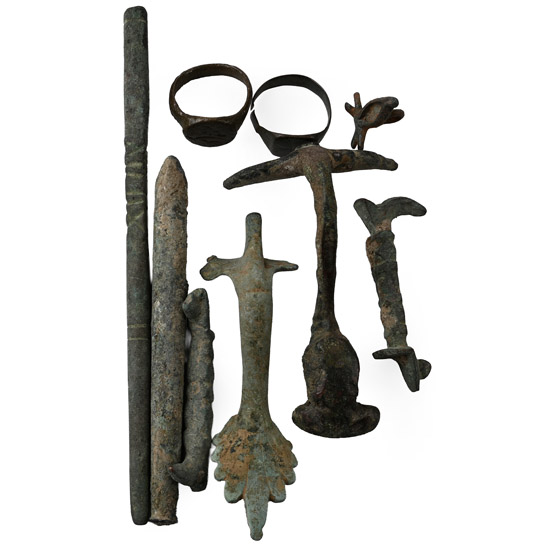
Roman and Other Bronze Artefact Collection
Circa 1st-16th century A.D.Estimate: £40 - 60 (+bp*)
Opening Bid: £5
Comprising: two jug handles, two rings, and others. 230 grams total, 1.8-15 cm
From a UK collection formed in the 1980s. Property of an Essex, UK, gentleman.
