
Ancient Art, Antiquities, Books, Natural History, Stamps & Coins

-
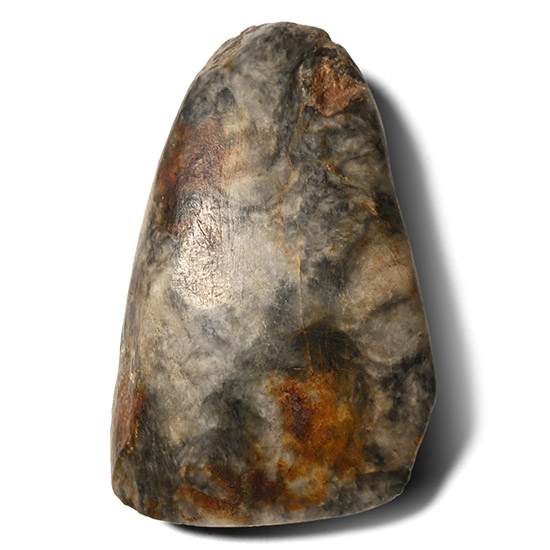
Fawcett Collection French Small Polished Axehead with Fawcett Monogram
Neolithic Period, circa 6,000 B.P.Estimate: £60 - 80 (+bp*)
Opening Bid: £5
Tongue-shaped in plan with asymmetrical cutting edge; inked monogram and 'Moltot Normandy FR.35' legend. 40.9 grams, 48 mm
Found Normandy, France. Ex Dr Hugh Alderson Fawcett (1891-1982), a general practitioner and antiquarian who built up an important collection of ancient implements, weapons and ornaments. The present part of the collection having been gifted to Haselmere Parish Priest, Charles Borelli (c.1914-2000) of Farnham; who was part of the Borelli family from Italy who emigrated from Lake Como in 1828 to set up the Borelli family watch and jewellery business; thence by family descent to his nephew. -
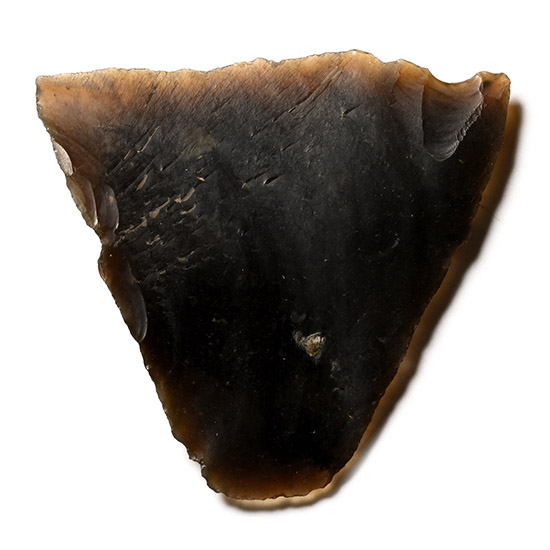
Farnham Stone Age Knapped Flint Tranchet Arrowhead
Neolithic Period, circa 6,000 B.P.Estimate: £100 - 140 (+bp*)
Opening Bid: £5
Triangular in plan with long cutting edges; marked '260' to upper face. 6.3 grams, 43 mm
Found during the original official excavations in the Farnham area, Surrey, UK, which were conducted by Harold Falkner (1875-1963) and William Francis Rankine (c.1877-1962), who were instrumental in the excavation works and pit dwellings at sites including Six Bells, Frensham, Tilford, Thursley and Bagshot, and Waverley, amongst others, at and near Farnham in the 1930s and 1940s. Much of the material is now in the prestigious Farnham museum. The present part of the collection having been gifted to their good friend and Haselmere Parish Priest, Charles Borelli (c.1914-2000) of Farnham, who was part of the Borelli family from Italy who emigrated from Lake Como in 1828 to set up the Borelli family watch and jewellery business; thence by family descent to his nephew. -
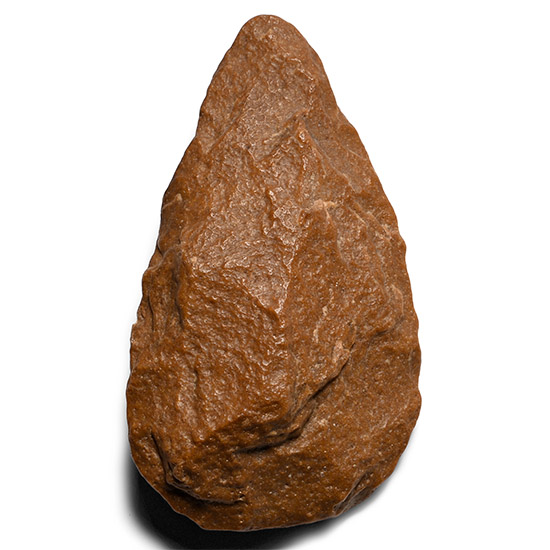
African Homo Erectus Stone Age Knapped Handaxe
Palaeolithic Period, circa 1,000,000-300,000 B.P.Estimate: £60 - 80 (+bp*)
Bids: 1 | Current Bid: £5
Leaf-shaped in plan with a rounded butt. 103 grams, 89 mm
Found Central Sahara. Ex old German collection of Dr J. Fehkhaber, formed in the 1970s. -
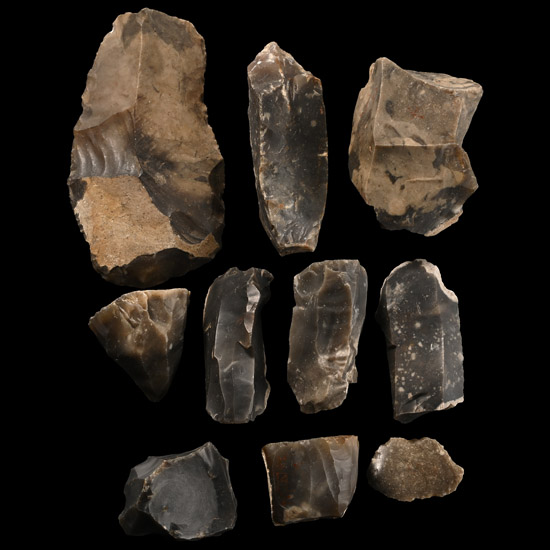
Farnham Stone Age Knapped Flint Tool and Blade Core Group
Neolithic Period, circa 6000 B.P.Estimate: £150 - 200 (+bp*)
Opening Bid: £5
Including blade-cores and a broad blade with curved edge, old label mostly degraded. 520 grams total, 3.4-10.2 cm
Found during the original official excavations in the Farnham area, Surrey, UK, which were conducted by Harold Falkner (1875-1963) and William Francis Rankine (c.1877-1962), who were instrumental in the excavation works and pit dwellings at sites including Six Bells, Frensham, Tilford, Thursley and Bagshot, and Waverley, amongst others, at and near Farnham in the 1930s and 1940s. Much of the material is now in the prestigious Farnham museum. The present part of the collection having been gifted to their good friend and Haselmere Parish Priest, Charles Borelli (c.1914-2000) of Farnham, who was part of the Borelli family from Italy who emigrated from Lake Como in 1828 to set up the Borelli family watch and jewellery business; thence by family descent to his nephew.
Farnham district is one of the most interesting prehistoric regions in England, and has been visited by a succession of prehistoric peoples from Palaeolithic times onwards. Along the southern slope of the Farnham valley are three gravel terraces, which are famous prehistorically and have yielded large quantities of flint implements and bones of prehistoric animals, notably the mammoth. In prehistoric times, the chalk deposits played an important role in attracting settlers, as they contained rich layers of flint nodules used to make implements. The Farnham Gravels have been an abundant source of Palaeolithic finds, most prominent being hand axes. The axes differ in type, and each type is associated with a cultural phase of the Palaeolithic period. Types similar to these are found in similar deposits in the Somme valley and in many English valley gravels. Flint mining was also carried out by the Neolithic folk. Polished axes and leaf forms, arrowheads and knives, or possibly lance heads, are characteristic of the Neolithic flint work. -
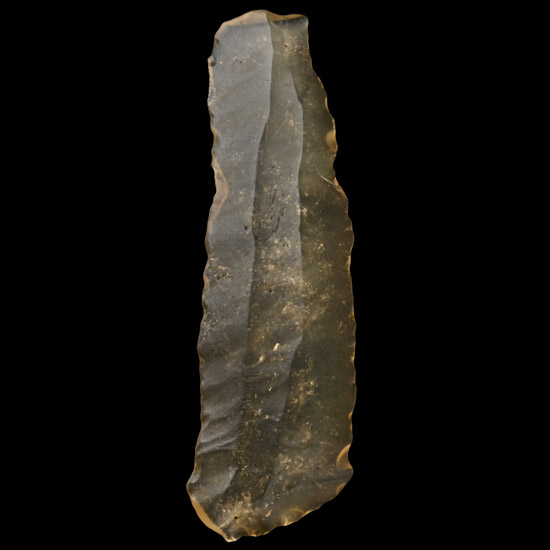
Libyan Desert Glass Blade
Neolithic Period, circa 6000 B.P.Estimate: £40 - 60 (+bp*)
Opening Bid: £5
Thin and faceted with parallel sides, rounded butt; tip absent. 2.47 grams, 46 mm
Acquired on the UK art market. From the private collection of an East Anglian, UK, collector.
Libyan Desert glass formed approximately 29 million years ago when an intense, high-energy cosmic event instantly melted quartz-rich desert sand in the Sahara, which then rapidly cooled into high-purity silica glass. -
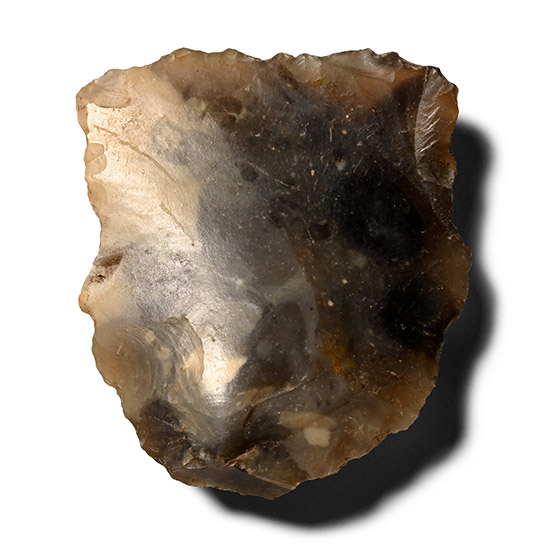
Farnham Stone Age Knapped Flint Scraper
Neolithic Period, circa 6,000 B.P.Estimate: £40 - 60 (+bp*)
Opening Bid: £5
D-shaped in plan with squared edge and rounded butt. 24.4 grams, 45 mm
Found during the original official excavations in the Farnham area, Surrey, UK, which were conducted by Harold Falkner (1875-1963) and William Francis Rankine (c.1877-1962), who were instrumental in the excavation works and pit dwellings at sites including Six Bells, Frensham, Tilford, Thursley and Bagshot, and Waverley, amongst others, at and near Farnham in the 1930s and 1940s. Much of the material is now in the prestigious Farnham museum. The present part of the collection having been gifted to their good friend and Haselmere Parish Priest, Charles Borelli (c.1914-2000) of Farnham, who was part of the Borelli family from Italy who emigrated from Lake Como in 1828 to set up the Borelli family watch and jewellery business; thence by family descent to his nephew. -
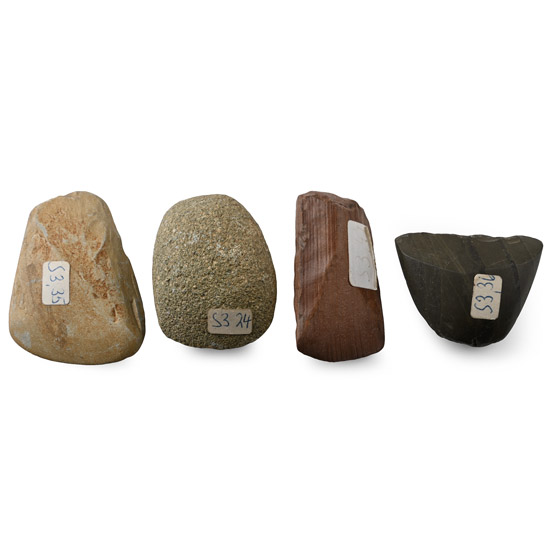
El Golea Algeria Stone Age Polished Axehead Group
Neolithic Period, circa 6000 B.P.Estimate: £60 - 80 (+bp*)
Opening Bid: £5
Comprising two rectangular with a broad cutting edge and a rounded butt, one triangular with a broad cutting edge and a rounded butt, one flat with widening cutting edge and some chips to the butt. 144 grams total, 43-52 mm
Found El Golea, Algeria. Ex old German collection of Dr J. Fehkhaber, formed in the 1970s. -
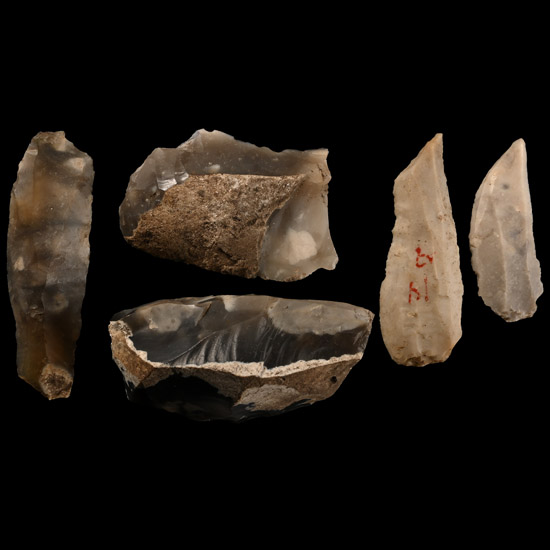
Farnham Capel Field Stone Age Knapped Flint Tool Collection
Neolithic Period, circa 6,000 B.P.Estimate: £100 - 140 (+bp*)
Opening Bid: £5
Comprising: four edge scrapers each with 'Chapel Field' notation (one with date '30.3.53'); irregular blade with cortex to reverse and 'Chapel Field' label. 56 grams total, 35-51 mm
Found Caple Field, near Farnham, Surrey, UK, circa 1948-1953. Found during the original official excavations in the Farnham area, Surrey, UK, which were conducted by Harold Falkner (1875-1963) and William Francis Rankine (c.1877-1962), who were instrumental in the excavation works and pit dwellings at sites including Six Bells, Frensham, Tilford, Thursley and Bagshot, and Waverley, amongst others, at and near Farnham in the 1930s and 1940s. Much of the material is now in the prestigious Farnham museum. The present part of the collection having been gifted to their good friend and Haselmere Parish Priest, Charles Borelli (c.1914-2000) of Farnham, who was part of the Borelli family from Italy who emigrated from Lake Como in 1828 to set up the Borelli family watch and jewellery business; thence by family descent to his nephew.
Farnham district is one of the most interesting prehistoric regions in England, and has been visited by a succession of prehistoric peoples from Palaeolithic times onwards. Along the southern slope of the Farnham valley are three gravel terraces, which are famous prehistorically and have yielded large quantities of flint implements and bones of prehistoric animals, notably the mammoth. In prehistoric times, the chalk deposits played an important role in attracting settlers, as they contained rich layers of flint nodules used to make implements. The Farnham Gravels have been an abundant source of Palaeolithic finds, most prominent being hand axes. The axes differ in type, and each type is associated with a cultural phase of the Palaeolithic period. Types similar to these are found in similar deposits in the Somme valley and in many English valley gravels. Flint mining was also carried out by the Neolithic folk. Polished axes and leaf forms, arrowheads and knives, or possibly lance heads, are characteristic of the Neolithic flint work. -
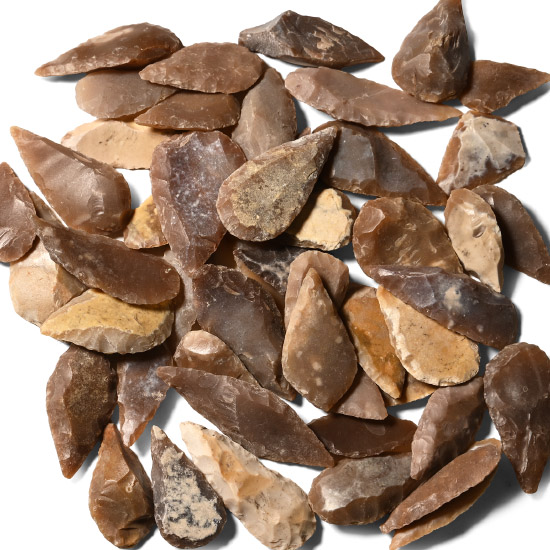
Stone Age Mixed Type Arrowhead Collection
Neolithic Period, circa 6th-4th millennium B.C.Estimate: £50 - 70 (+bp*)
Opening Bid: £5
Comprising mostly bifacial and uniface leaf-shaped and piriform flint and chert arrowheads; probably from the Sahara region of North Africa. 115 grmas total, 21-40 mm
Ex UK gallery, early 2000s. -
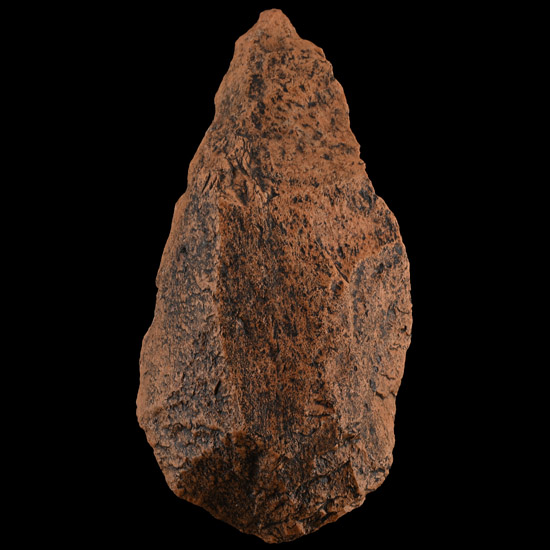
Large Stone Age Red Quatzite Homo Erectus Pointed Handaxe
Lower Palaeolithic Period, circa 1,000,000-500,000 B.P.Estimate: £120 - 170 (+bp*)
Opening Bid: £5
Leaf-shaped in plan with a sharp point, inked inscription '50 O, Ouarzazate, Marokko, 95'. 1 kg, 20 cm
Found near Ouarzazate, Morocco, North Africa. From a private collection formed during the 1970s-1980s, having been acquired on the British art market; thence by descent to the current owner in 1998. -
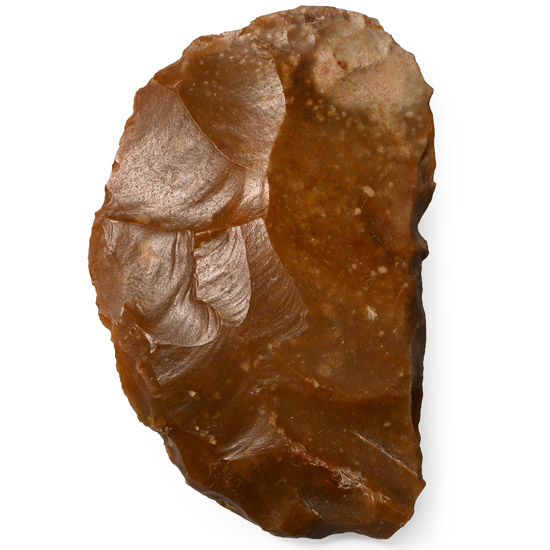
Gran Pressigny French Stone Age Knapped Knife
Neolithic Period, circa 6000 B.P.Estimate: £70 - 90 (+bp*)
Opening Bid: £5
Semi-circular in plan with curved back, rounded butt and chipped tip. 140 grams, 10.8 cm
From the famed and desired region of Gran Pressigny, France. Ex Chauvais collection, formed in the early 1900s. From the private collection of an East Anglian, UK, specialist collector. -
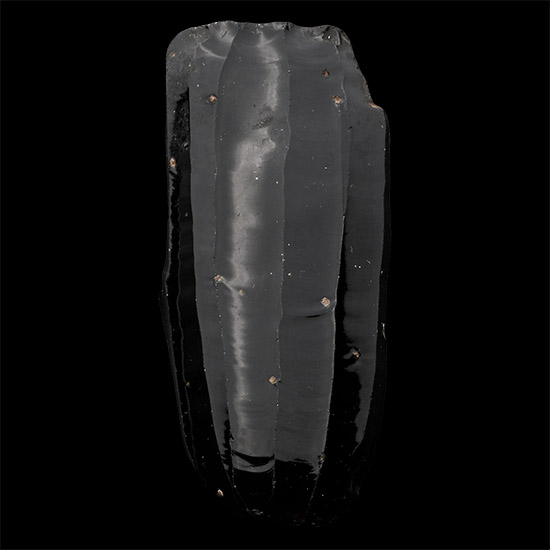
Stone Age Obsidian Blade Core
Neolithic Period, circa 6,000 B.P.Estimate: £50 - 70 (+bp*)
Opening Bid: £5
Plano-convex in section and tongue-shaped in plan, with evidence for eight flaked blades having been removed from the upper face, possibly Greek. 72.8 grams, 92 mm
Gifted to Haselmere Parish Priest, Charles Borelli (c.1914-2000) of Farnham, who was part of the Borelli family from Italy who emigrated from Lake Como in 1828 to set up the Borelli family watch and jewellery business; thence by family descent to his nephew.
