
Ancient Art, Antiquities, Books, Natural History, Stamps & Coins

-
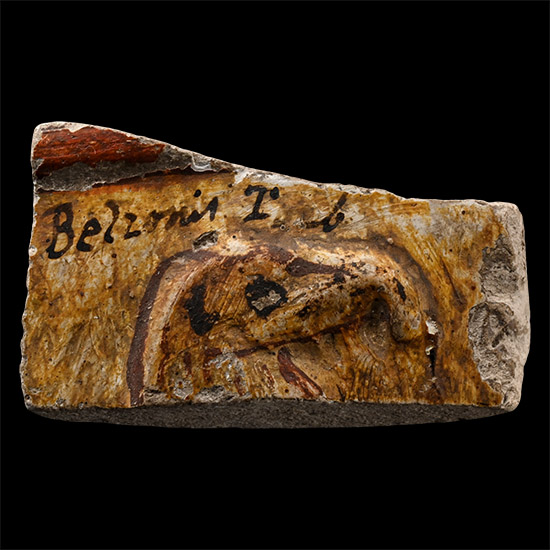
Egyptian Painted Limestone Fragment from the Tomb of Pharaoh Seti I
New Kingdom, 19th Dynasty, 1290-1279 B.C.Estimate: £100 - 140 (+bp*)
Bids: 1 | Current Bid: £5
Colourful, almost rectangular section of a wall fragment, with a slightly dished face, low-relief moulding with pigment, and 'Belzonis T[om]b' written at the top; accompanied by an old collector's label suggesting the likely findspot and other details. 15.3 grams, 44 mm
With a late 19th-early 20th century handwritten ticket attached. From the private collection of Peter Clayton, FCILIP, Dip, Arch, FSA, FRNS, Hemel Hempstead, Hertfordshire, UK; formed since the late 1950s.
The Italian explorer and antiquarian Giovanni Battista Belzoni uncovered the tomb of Seti I (KV 17) on October 16, 1817. This monumental tomb, with beautifully decorated walls, extended almost 140 metres underground through a series of descending corridors and chambers. In 1821, Belzoni opened a groundbreaking exhibition at the Egyptian Hall in Piccadilly, London, presenting a full-scale replica of the tomb. The paid public exhibition sparked massive 19th-century "Egyptomania" and introduced European audiences to ancient Egyptian art. Such was the renown of his discovery that it was often referred to as 'Belzoni's Tomb'. -
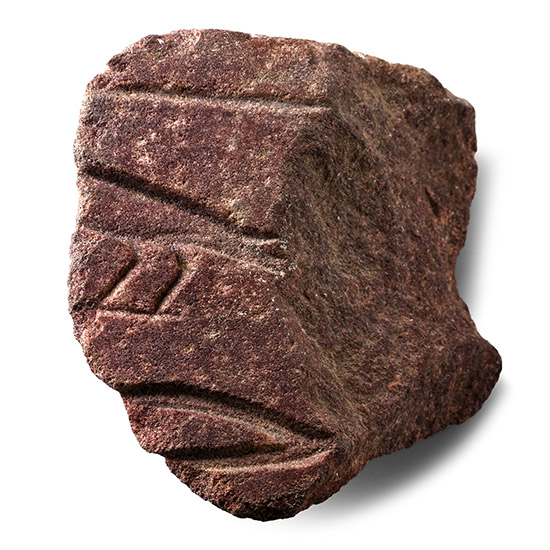
Egyptian Red Quartzite Granite Hieroglyphic Fragment
New Kingdom, 18th Dynasty, Amarna Period, 1379-1362 B.C.Estimate: £100 - 140 (+bp*)
Opening Bid: £5
Irregular fragment preserving two partial hieroglyphs: the swallow and the mouth signs, possibly writing the word wr, meaning 'great'. 150 grams, 81 mm
Acquired in April 1980. From the private collection of Peter Clayton, FCILIP, Dip, Arch, FSA, FRNS, Hemel Hempstead, Hertfordshire, UK; formed since the late 1950s. Accompanied by an old handwritten information card by Peter Clayton, collection no.145. -
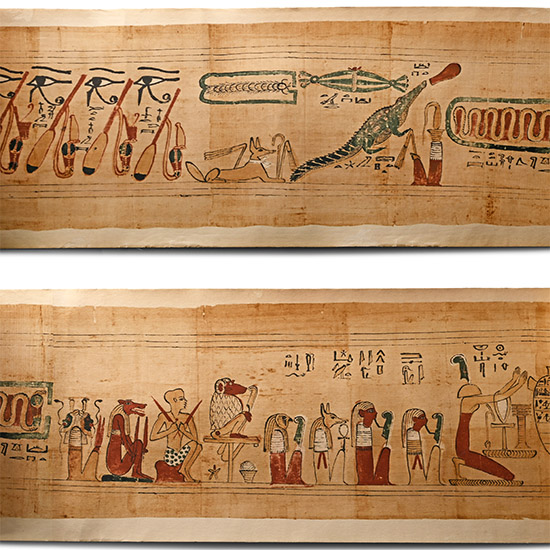
Egyptian Papyrus Museum Reproduction of Berlin 3127 in Tube
20th century A.D.Estimate: £60 - 80 (+bp*)
Opening Bid: £5
Colour reproduction of Berlin Papyrus 3127 belonging to Amun-em-wia, who lived during the 21st Dynasty (Third Intermediate Period). 312 grams total, tube: 27.5 cm high
From the private collection of Peter Clayton, FCILIP, Dip, Arch, FSA, FRNS, Hemel Hempstead, Hertfordshire, UK; formed since the late 1950s. -
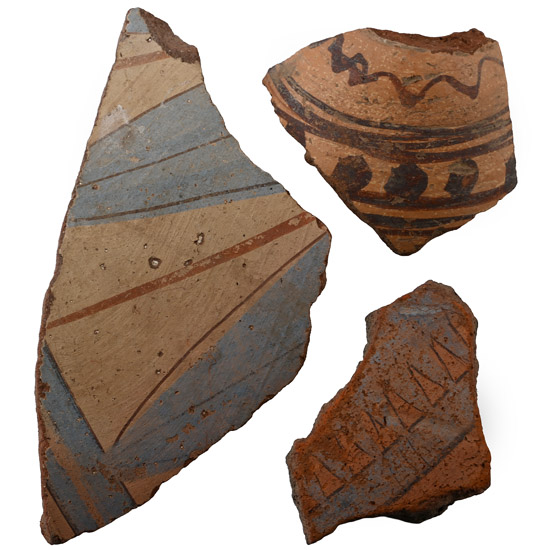
Large Egyptian Painted Bowl Fragments
New Kingdom, 18th Dynasty, Amarna Period, 1379-1362 B.C.Estimate: £80 - 100 (+bp*)
Opening Bid: £5
Two fragments of distinctive blue-painted pottery and one from a Mycenaean vessel. 221 grams total, 7.2-16.5 cm
Acquired in March 1979. From the private collection of Peter Clayton, FCILIP, Dip, Arch, FSA, FRNS, Hemel Hempstead, Hertfordshire, UK; formed since the late 1950s. Accompanied by an old handwritten information card by Peter Clayton, collection no.143.
The largest blue-painted fragment likely comes from the neck, and the smaller from the body, of a large storage vessel; intact examples of these vessels have been found at Amarna (cf. Seyfried, F. (ed.), In the Light of Amarna: 100 Years of the Nefertiti Discovery, Berlin, 2012, pp. 288-289, Cat. no. 68, for a near-complete example). Amarna has yielded the largest quantity of Late Helladic (LH IIIA2) Mycenaean pottery in Egypt. Analysis has revealed that several Mycenaean sherds excavated at Amarna in Egypt come from a production site in the northern Argolid, probably in the Mycenae-Berbati region. -
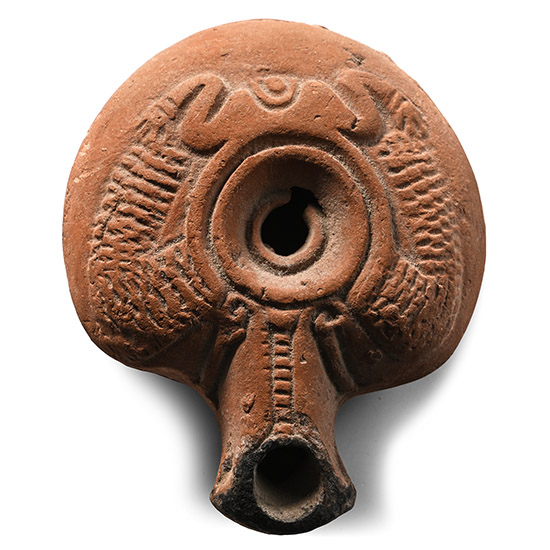
Romano-Egyptian Terracotta Frog Oil Lamp
Roman Period, 3rd-4th century A.D.Estimate: £80 - 100 (+bp*)
Bids: 1 | Current Bid: £5
Cordate in plan and biconvex in section, with a short volute nozzle and low-relief stylised frog detailing on the discus; basal ring enclosing 'B' mark; old collector's ticket: 'Buff terracotta lamp in form of a frog with nozzle standing out from front of lamp. Frog is very stereotyped, beneath B. 3-4th century A.D. Found in Alexandria. From Puys-Aubert collection in Alexandria. March 1963.' 102 grams, 92 mm
From the private collection of Peter Clayton, FCILIP, Dip, Arch, FSA, FRNS, Hemel Hempstead, Hertfordshire, UK; formed since the late 1950s. Accompanied by an old handwritten identification card written by Peter Clayton. -
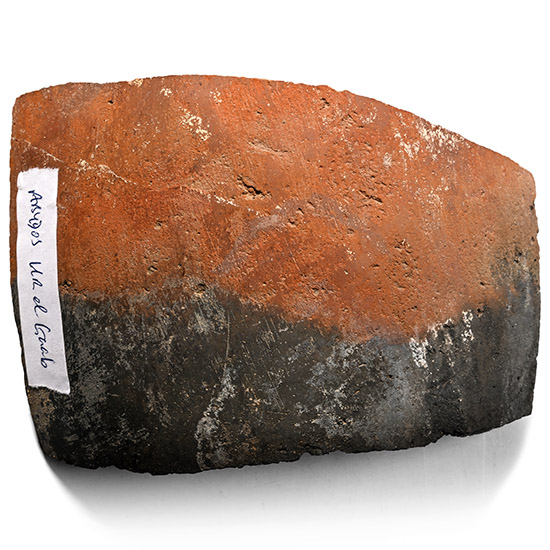
Large Egyptian Black-Topped Vase Fragment
Predynastic Period, Naqada II, circa 3900–3400 B.C.Estimate: £20 - 30 (+bp*)
Opening Bid: £5
Curved in section with applied findspot label 'Abydos Ur(sic) el Gaab'. 166 grams, 13.6 cm
Found at Umm el-Ga'ab, Abydos, Egypt. From the private collection of Peter Clayton, FCILIP, Dip, Arch, FSA, FRNS, Hemel Hempstead, Hertfordshire, UK; formed since the late 1950s.
Umm el-Qa'ab is Arabic for 'mother of pots', referring to the mounds of Predynastic and later pottery left by ancient pilgrims and more recent excavators. -
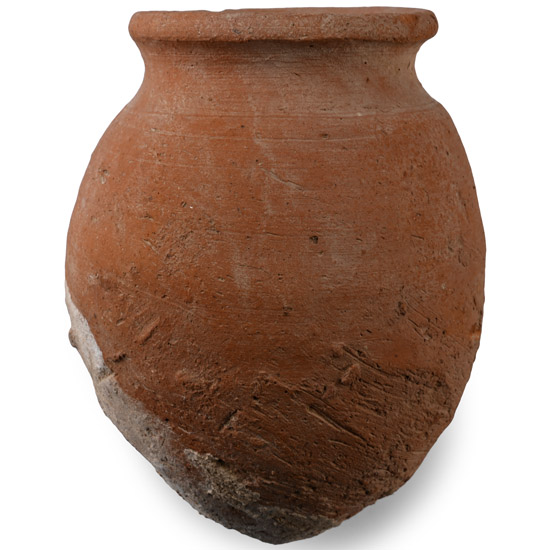
Egyptian Terracotta Jar
New Kingdom, circa 16th-13th century B.C.Estimate: £300 - 400 (+bp*)
Opening Bid: £5
With pointed foot, bulbous body, carinated shoulder and everted rim. 770 grams, 15.4 cm
Acquired Sunday 11th October 1992. From the private collection of Peter Clayton, FCILIP, Dip, Arch, FSA, FRNS, Hemel Hempstead, Hertfordshire, UK; formed since the late 1950s. Accompanied by an old handwritten information ticket.
Various forms of this vessel were produced during the New Kingdom (see Guidotti, M.C., Vasi dall’epoca protodinastica al Nuovo Regno, Museo Egizio di Firenze, Rome, 1991, pp. 218, nos. 339-340, and p. 227, no. 361). -
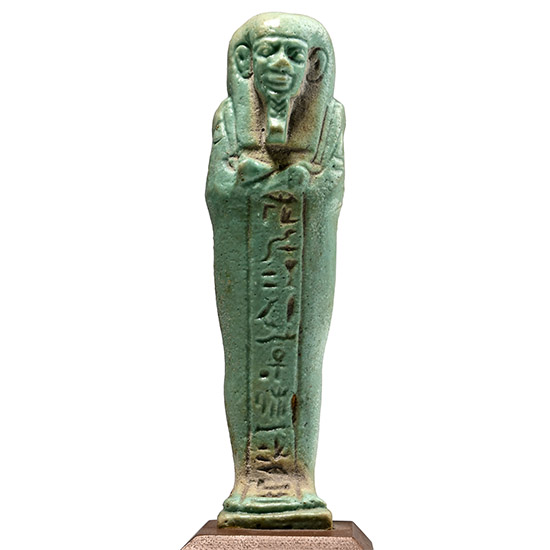
Egyptian Blue Glazed Faience Shabti of Djed-Bastet-Iuef-Ankh
Late Period, 664-332 B.C.Estimate: £400 - 600 (+bp*)
Bids: 1 | Current Bid: £5
Mummiform figure standing on a square plinth, wearing a long lappet wig, a false beard, and fine facial detailing, with crossed arms, the left hand holding a pick and the right a hoe, with the cord of a seed bag suspended from the bag; a plain dorsal pillar; the lower front bearing a vertical panel containing an impressed hieroglyphic text reading: 'The Osiris, Djed-Bastet-iuef-ankh, born to Iset-ir-dis'; mounted on a display stand. 99 grams total, 13.1 cm including stand
Acquired from Richardson, February 1965, for £2.00. From the private collection of Peter Clayton, FCILIP, Dip, Arch, FSA, FRNS, Hemel Hempstead, Hertfordshire, UK; formed since the late 1950s. Accompanied by an old handwritten information card by Peter Clayton, collection no.112. -
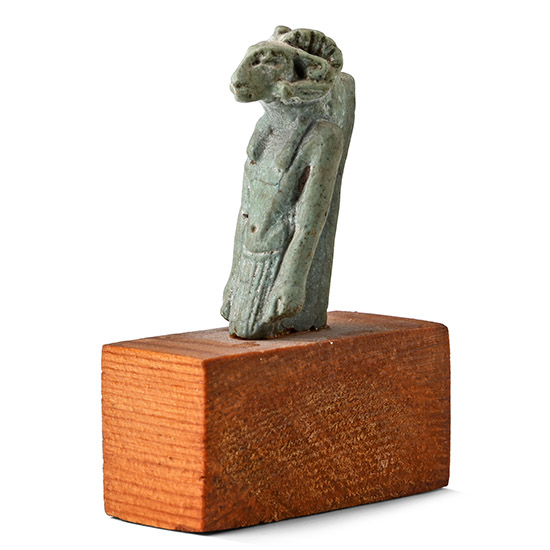
Egyptian Blue Glazed Faience Amulet of the God Khnum
Late Period, 664-332 B.C.Estimate: £100 - 140 (+bp*)
Bids: 1 | Current Bid: £5
Fragment with dorsal pillar and ram-headed deity, mounted on display stand. 13.72 grams total, 57 mm including stand
Acquired from S. Michael Greenford, circa June 1961, for 7 shillings and sixpence. From the private collection of Peter Clayton, FCILIP, Dip, Arch, FSA, FRNS, Hemel Hempstead, Hertfordshire, UK; formed since the late 1950s. Accompanied by an old handwritten information card by Peter Clayton, collection no.91. -
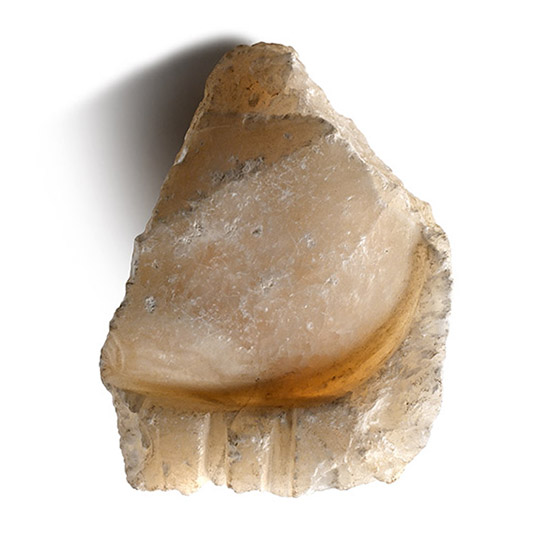
Egyptian Alabaster Fragment Probably from a Chest with a Representation of Pharaoh Akhenaten
New Kingdom, 18th Dynasty, Amarna Period, 1379-1362 B.C.Estimate: £300 - 400 (+bp*)
Opening Bid: £5
Irregular fragment with one dressed face carved with rays of Aten and other detailing. 299 grams, 87 mm
Acquired in April 1980. From the private collection of Peter Clayton, FCILIP, Dip, Arch, FSA, FRNS, Hemel Hempstead, Hertfordshire, UK; formed since the late 1950s. Accompanied by an old handwritten information card by Peter Clayton, collection no.148.
Scenes depicting Akhenaten and family members often included the prominent Aten sun disc with radiating rays ending in human hands. This fragment appears to show the lower-right side of the disc, with a faint trace of a possible uraeus - typically seen at the bottom centre of the Aten disc. -
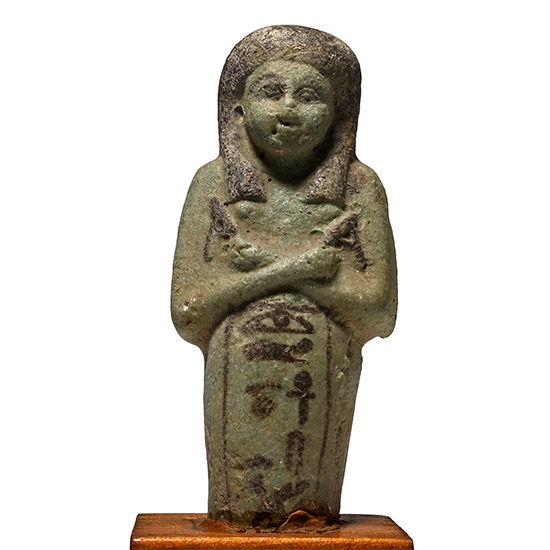
Egyptian Green Glazed Faience Shabti of the Osiris Ankhes-en-Mut
Third Intermediate Period, 21st Dynasty, circa 980-935 B.C.Estimate: £400 - 600 (+bp*)
Opening Bid: £5
Upper section of a mummiform shabti wearing a lappet wig, with arms crossed and hands holding agricultural implements, and a black-painted seed bag on the back; hieroglyphic panel on the lower body reading: 'The Osiris, Ankhes-en-Mut…'; mounted on a display stand. 101 grams total, 11.3 cm including stand
Acquired from the Egyptian Exploration Society, 30th June 1965, for 2 shillings and sixpence. From the private collection of Peter Clayton, FCILIP, Dip, Arch, FSA, FRNS, Hemel Hempstead, Hertfordshire, UK; formed since the late 1950s. Accompanied by an old handwritten information card by Peter Clayton, collection no.116.
It is possible that this shabti belongs to the same individual as another shabti in the Archaeological Museum, Krakow (Schlögl, H.A., Corpus der ägyptischen Totenfiguren der öffentlichen Sammlungen Krakaus, Krakow, 2000,p. 195, no. 16). -
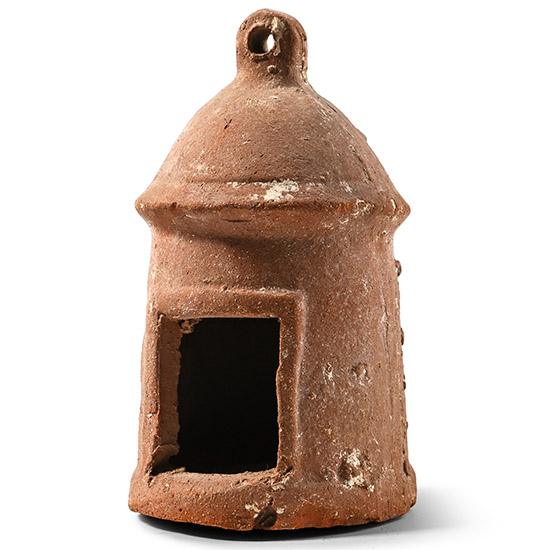
Romano-Egyptian Pottery Shrine
Roman Period, 30 B.C.-323 A.D.Estimate: £50 - 70 (+bp*)
Bids: 2 | Current Bid: £15
Tubular type with domed 'beehive' roof and pierced lug at the apex, carinated collar and rectangular opening. 127 grams, 10.4 cm
From the private collection of Peter Clayton, FCILIP, Dip, Arch, FSA, FRNS, Hemel Hempstead, Hertfordshire, UK; formed since the late 1950s.
