
Ancient Art, Antiquities, Books, Natural History, Stamps & Coins

-
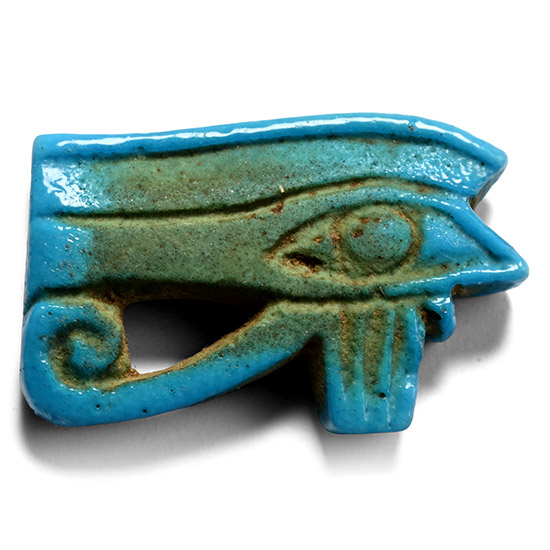
Egyptian Bright Blue Faience Eye of Horus Amulet
New Kingdom, 1504-1450 B.C.Estimate: £100 - 140 (+bp*)
Bids: 1 | Current Bid: £5
Turquoise-glazed wedjat-eye, carved on one face; pierced longitudinally. 0.77 grams, 18 mm
Excavated from Egypt in 1914. From the private collection of Mr David Sams and his wife Elizabeth Kate Sams, gentry and amateur archaeologists who travelled to Egypt in 1914 with their daughter Ethel. Mr Sams and his wife led digging expeditions from which these items come, from the family estate of Mr and Mrs Sams, by direct descent to their granddaughter.
The wedjat-eye amulet depicts Horus’s healed eye, blending human and falcon features. Its ancient Egyptian name means ‘the one that is sound’. Myth says Seth wounded or took the eye, and Thoth later restored it. Believed to offer protection, healing, and regeneration, the popular amulet was worn by the living and the dead. -
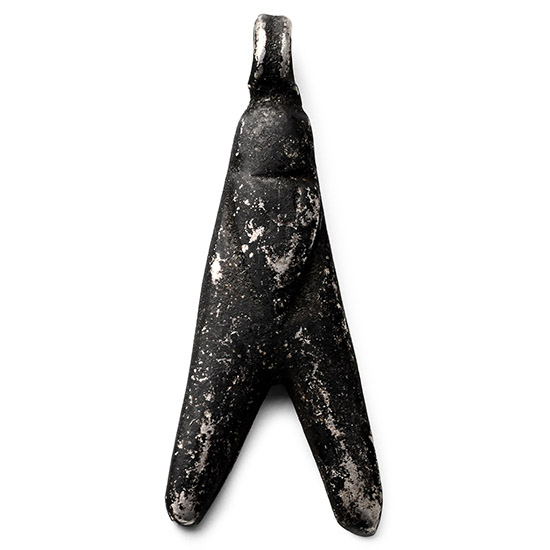
Egyptian Silver Fly Amulet
Late Period, 664-332 B.C.Estimate: £80 - 100 (+bp*)
Bids: 2 | Current Bid: £10
With detailing to the body and head, ribbed suspension loop above the head. 0.97 grams, 20 mm
London, UK, gentleman, 1990s.
Fly amulets served apotropaic functions, protecting against bites and warding off pests. Some may also have symbolised fertility. Pharaohs even awarded gold fly pendants to honour soldiers’ bravery and tenacity. -
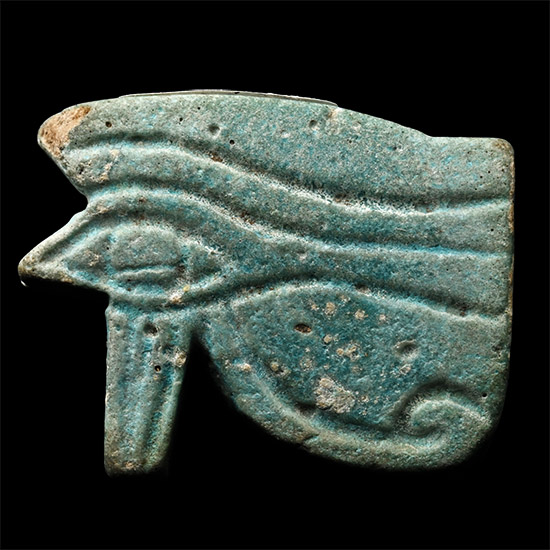
Egyptian Blue Glazed Faience Wedjat Eye Amulet
Late Period, 664-332 B.C.Estimate: £180 - 240 (‡+bp*)
Opening Bid: £90
A double-sided wedjat-eye amulet depicting a human eye shape paired with an eyebrow and specific falcon markings: a tear-like drop extending down from the front of the lower lid and a stylised spiral curl trailing from the base; longitudinally pierced for suspension. 9.8 grams, 36 mm
Ex Carl Leonhard Burckhardt-Reinhard (1902-1965), formed since 1922, Egypt. Inherited by his son Christopher Burckhardt in 1966, Switzerland. Since then in the possession of his wife, Switzerland.
The wedjat represents the left eye of Horus that was healed by Thoth. It symbolises the moon, while the right eye of the falcon-headed sky god symbolises the sun. Amulets in the shape of the wedjat were said to have magical powers and the ability to protect and heal. -
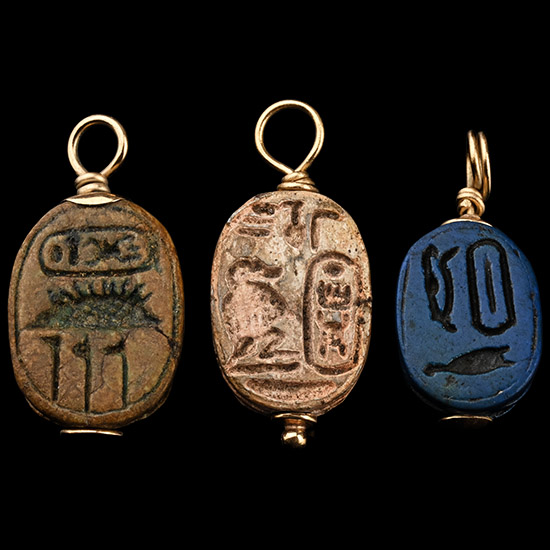
Egyptian Faience Scarabs with Gold Mounts
Late Period, 664-332 B.C. and laterEstimate: £400 - 600 (‡+bp*)
Opening Bid: £200
Comprising: a chestnut-coloured steatite scarab with a Thutmosis III cartouche and hieroglyphs on the underside; a tan-coloured faience scaraboid with a Thutmosis III cartouche on the convex obverse and the same cartouche with hieroglyphs, faced by a seated baboon, on the underside; offered with a modern blue scarab in a gold mount. 6.05 grams total, 22-25 mm
Private collection of Kal Noselson, New York, acquired between 1976 and the late 1990s; thence by descent. Accompanied by the collector's original inked images. -
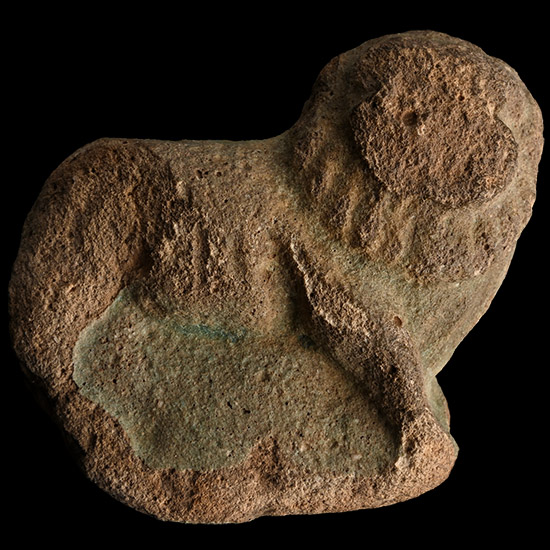
Egyptian Glazed Terracotta Lion Statuette
Roman Period, 30 B.C.-323 A.D.Estimate: £40 - 60 (+bp*)
Bids: 1 | Current Bid: £5
Modelled in the round in advancing pose with head turned. 115 grams, 81 mm
Acquired on the UK art market since the 1990s. From the property of a late Lincolnshire, UK, gentleman; thence by descent. -
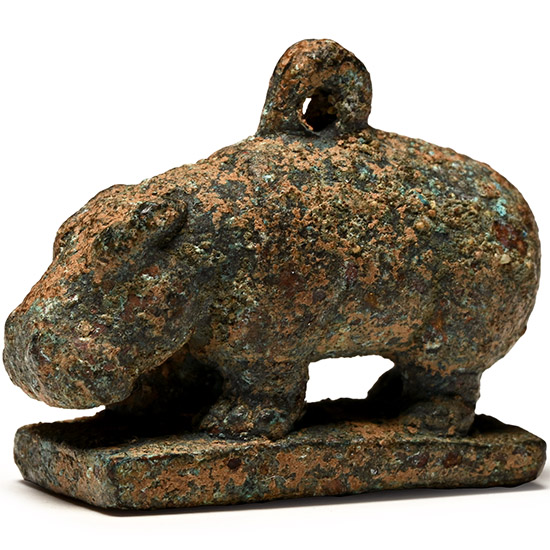
Egyptian Bronze Hippopotamus Amulet
Late Period, 664-332 B.C. or laterEstimate: £600 - 800 (+bp*)
Opening Bid: £300
Modelled in the round on a rectangular base with a dorsal loop. 20.5 grams, 26 mm
Ex mid 19th century London, UK, collection.
Metal hippopotamus amulets are comparatively rare compared with faience and stone examples. A gold hippopotamus amulet of similar size was discovered in Tomb W 643 at Meroe, Sudan, and is now in the Museum of Fine Arts, Boston (inv. no. 23.380). Egyptian art depicted the Nile hippopotamus in Old, Middle, and New Kingdom limestone reliefs, as well as in faience, stone, and metal statuettes. Egyptians both admired and feared them: powerful and unpredictable, hippos attack when threatened. Their fearsome reputation made them potent apotropaic amulets, giving the wearer power over evil and chaotic forces. -
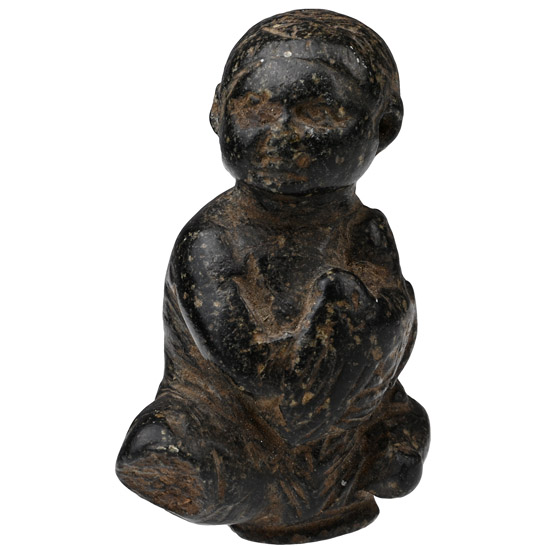
Egyptian Steatite Statuette of a Boy
Alexandria, 3rd century B.C.Estimate: £250 - 350 (‡+bp*)
Opening Bid: £135
Modelled in the round figure of a child crouching holding a bird close to his chest; socket to each ear; mounted on a custom-made stand. 67.4 grams total, 5 cm, 10 cm high including stand
Ex Herbert A.Cahn, Basle, 1960s. -
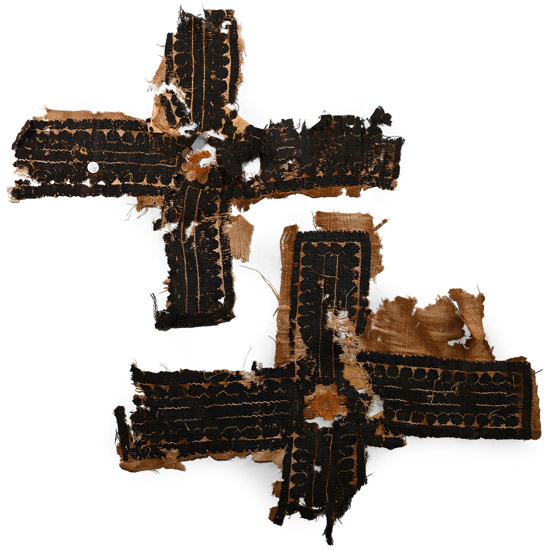
Large Egyptian Coptic Tunic Textile Fragments Embroidered with Geometric Patterns
Circa 5th century A.D.Estimate: £80 - 100 (+bp*)
Bids: 1 | Current Bid: £5
Comprising a large portion of a clavi of a tunic, with the complete section passing across the shoulders ornamented with striped bands, filled with geometric lines and patterns, bordered with plain stripes, decorated at the intersection by a yellow flower; in wool, yellow and dark blue tapestry on linen. 94 grams total including paper folder, 55.5 cm
Acquired 1970s-1996. Property of a North American collector. London collection, 2016.
The fragments are decorative parts of tunics. These are fabrics of great decorative finesse, with some elements displaying an unusual and extremely well-preserved colour palette. -
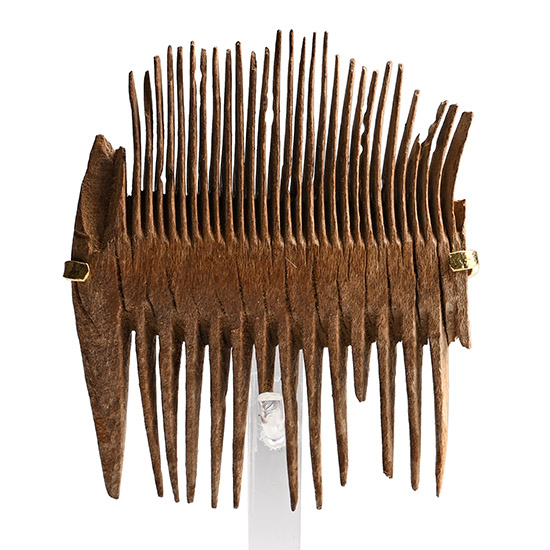
Egyptian Coptic Wooden Comb
Circa 4th-7th century A.D.Estimate: £500 - 700 (‡+bp*)
Opening Bid: £230
With fine teeth cut on one side and coarser teeth on the other; some absent; mounted on a custom-made stand. 12.62 grams total, comb: 51 mm, 85 mm high including stand
Ex Carl Leonhard Burckhardt-Reinhard (1902-1965), formed since 1922, Egypt. Inherited by his son Christopher Burckhardt in 1966, Switzerland. Since then in the possession of his wife, Switzerland.
The type is attested in Egypt, where it is particularly well documented in the Coptic Period. The lack of decoration makes a more precise chronological classification difficult. As evidenced by a wooden comb of the same type from Antinoë, the fine-toothed side was also used for removing head lice. In the present example, the comb continued on one side for an indeterminate length. -
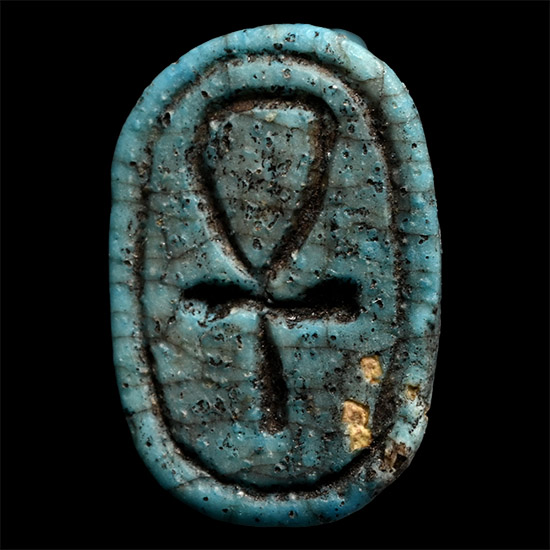
Egyptian Faience Scaraboid Frog Amulet with Ankh
Late Period, 664-332 B.C.Estimate: £120 - 170 (+bp*)
Opening Bid: £60
Modelled in the round, crouching on a rectangular base, incised ankh to the underside. 0.48 grams, 11 mm
From an important UK collection, 1940s.
Frog amulets in ancient Egypt symbolised fertility, rebirth, and renewal. Associated with the goddess Heqet, linked to childbirth and life-giving forces, they were especially popular for fertility and for protection during pregnancy and labour. Their association with the annual Nile flood, which brought new life to the land, further emphasised their symbolism of revival and abundance. The ancient Egyptian ankh hieroglyph on the amulet's base, meaning "life," reinforces the creature's symbolism. -
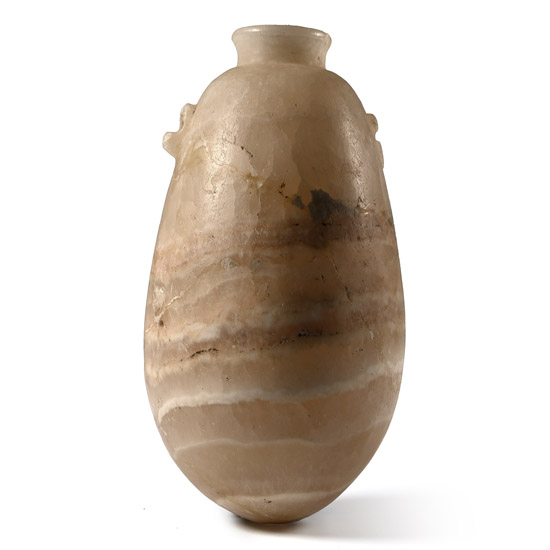
Egyptian Alabaster Alabastron
Late Period, 664-332 B.C.Estimate: £500 - 700 (‡+bp*)
Opening Bid: £250
Ovoid jar with a rounded base, concave shoulders and flared neck; remains of lug handles, restored. 332 grams, 14 cm
Acquired in the mid 1980s-1990s. Private collection, Switzerland, thence by descent. Private collection, since the late 1990s. -
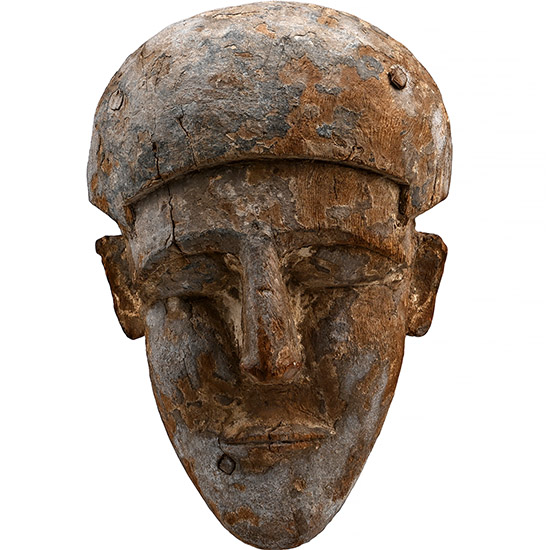
Egyptian Carved Cedar Wood Sarcophagus Mask
Ptolemaic-Roman Period, 332 B.C.-100 A.D.Estimate: £1,000 - 1,400 (+bp*)
Opening Bid: £500
From the lid of an anthropoid coffin, representing the idealised features of the deceased beneath a broad, rounded wig, the elongated face modelled with large almond-shaped eyes beneath extended brows, a prominent nose, delineated lips and projecting ears, the chin tapering to a rounded point; a curved incision separates the headdress from the forehead, the broadly flattened reverse preserving sockets and wooden plugs from the original pegged attachment to the coffin lid; preparatory gesso and traces of polychrome decoration remaining across the face and headdress; mounted on a modern metal display stand. 1.43 kg total, 32.5 cm including stand
Private collection, Yorkshire, UK, acquired in the mid-20th century.
Wooden coffins were mostly manufactured from multiple elements, often with the face and front portion of the headdress carved separately and attached to the lid using dowels.
