
Ancient Art, Antiquities, Books, Natural History, Stamps & Coins

-
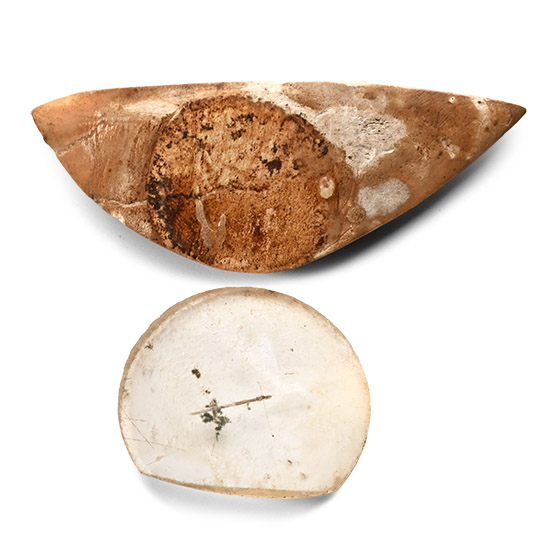
Egyptian Inlaid Mummy Eye
Late Period, 664-332 B.C.Estimate: £500 - 700 (‡+bp*)
Opening Bid: £250
Almond-shaped insert in pale stone with disc-shaped, convex iris, possibly not belonging. 4.51 grams total, 18-37 mm
Ex Milfred (Miriam) Devor Collection. with Archaeological center, Tel-Aviv, 27 March 2013, no.356. -
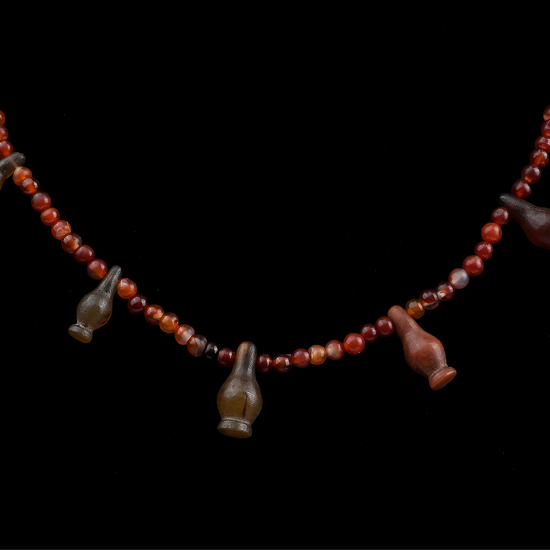
Egyptian Carnelian Bead and Poppy Amulet Necklace
Late Period, 664-332 B.C. and laterEstimate: £200 - 300 (+bp*)
Opening Bid: £100
Poppy-head amulet necklace restrung with later spherical beads. 21.9 grams, 45 cm long
From the collection of a gentleman, acquired on the London art market in the 1990s. -
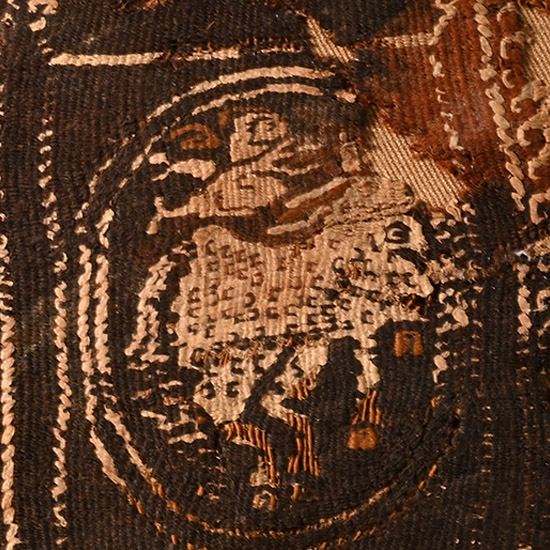
Egyptian Mounted Coptic Tunic Textile Fragment of a Tablion with Animals
Circa 4th-7th century A.D.Estimate: £60 - 80 (+bp*)
Bids: 1 | Current Bid: £5
In purple wool and coarse linen, S-torsion, embroidered with an image of a horse and a flying putto, the borders decorated with meanders; mounted on linen backing. 54 grams total, 14 cm
Acquired 1970s-1996. Property of a North American collector. London collection, 2016.
The tabula, or tablion, was a square embroidery decorating tunics and mantles. These fabrics were of great decorative finesse, displaying an unusual and extremely well-preserved colour palette. The animal design recalls Iranian motifs, while the flying putto combines Dionysiac and Christian figurative elements. -
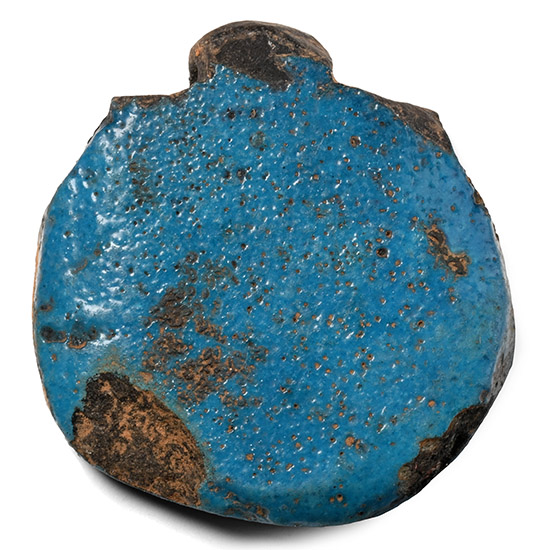
Large Egyptian Bright Blue Faience Sun Disc Amulet
Late Period, 664-332 B.C.Estimate: £40 - 60 (+bp*)
Opening Bid: £5
Large discoid with deep blue glaze, representing the sun disc on the horizon, pierced at the top. 7.5 grams, 32 mm
Excavated from Egypt in 1914. From the private collection of Mr David Sams and his wife, Elizabeth Kate Sams, gentry and amateur archaeologists who travelled to Egypt in 1914 with their daughter, Ethel. Mr Sams and his wife led digging expeditions from which these items come, from the family estate of Mr and Mrs Sams, by direct descent to their granddaughter.
The sun disc and sun-disc-on-the-horizon (akhty) amulets are linked to the deceased's rebirth. -
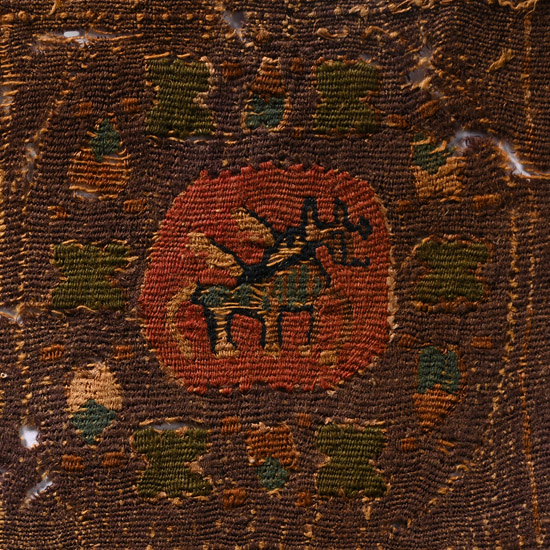
Egyptian Coptic Textile Fragment of a Tunic Tablion with Pegasus
Circa 7th century A.D.Estimate: £40 - 60 (+bp*)
Bids: 1 | Current Bid: £5
In natural wool in shades of light brown, yellow, green, blue, and red with S-twist yarn, depicting the figure of Pegasus within a central medallion, surrounded by geometric and vegetal motifs; borders ornamented with meanders. 1.3 grams, 10.5 cm
Acquired 1970s-1996. Property of a North American collector. London collection, 2016.
The tabula, or tablion, was a square embroidery used to decorate tunics or mantles. The central figure is a rare representation of the winged horse Pegasus, a motif derived from Greek mythology, showing that classical iconography was still alive among the Christian Graeco-Roman people. -
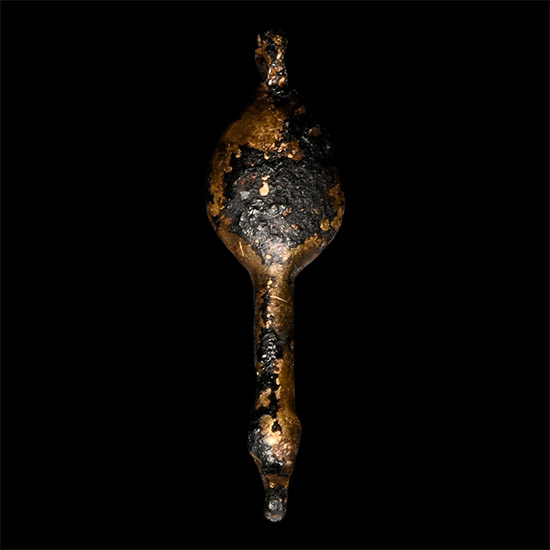
Egyptian Gold Poppy Pendant Amulet
Circa 5th-3rd century B.C.Estimate: £100 - 140 (+bp*)
Opening Bid: £50
Bulbous poppy-head with loop at the top and bottom. 0.2 grams, 12 mm
Ex early 20th century French collection. -
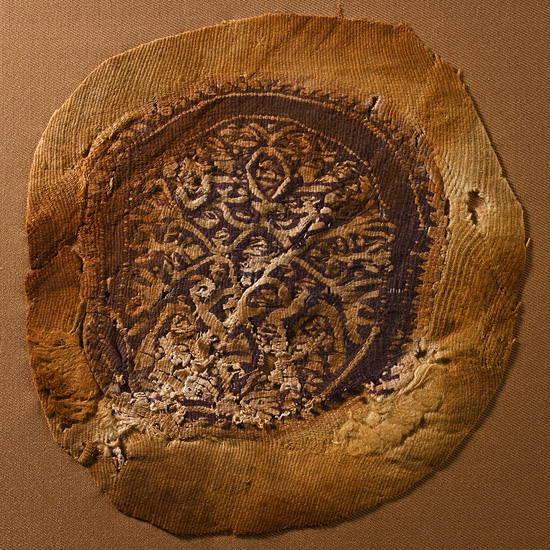
Egyptian Mounted Coptic Orbiculus Textile Fragment
Circa 6th century A.D.Estimate: £40 - 60 (+bp*)
Bids: 1 | Current Bid: £5
Comprising a large circular fragment of an orbiculus in linen and wool, S torsion, scalloped borders, embroidered with vegetal and geometric ornaments, dark purple on linen. 117 grams total, 18.5 cm
Acquired 1970s-1996. Property of a North American collector. London collection, 2016.
Water plant elements are scattered on the orbiculus, which is decorated with vegetal interlaces and possibly fish figures. These abstract decorations show a strong stylisation that gives the marine animals a plant-like appearance. -
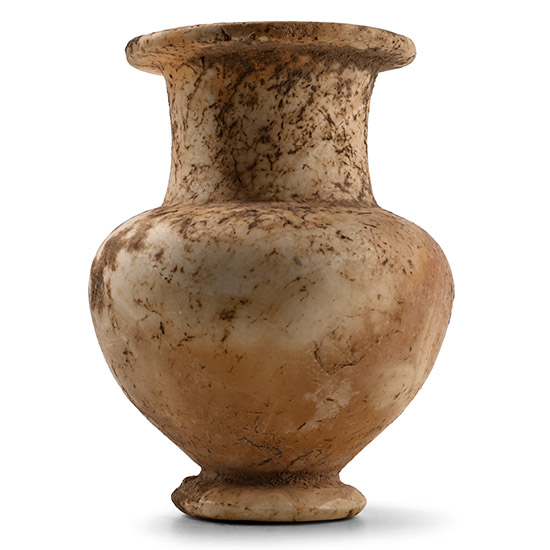
Early Phoenician Alabaster Vase
1st millennium B.C.Estimate: £3,000 - 4,000 (‡+bp*)
Opening Bid: £1,667
With bulbous body, broad flared neck, flange rim, dimple to underside of base. 769 grams, 13.1 cm
Private collection, USA and Switzerland, acquired in the late 1980s-early 1990s; by descent to the current owner. This lot has been checked against the Interpol Database of stolen works of art and is accompanied by search certificate no.13222-249180.
Jars like this vase certainly were part of the funerary equipment and destined to contain makeup, unguents and oils. The vase can find a good parallel with a similar specimen in the Egyptian Museum of Turin, belonging to the outfit of the 18th Dynasty princess Nbw-m-tḫ, probably a daughter of Amenhotep III. -
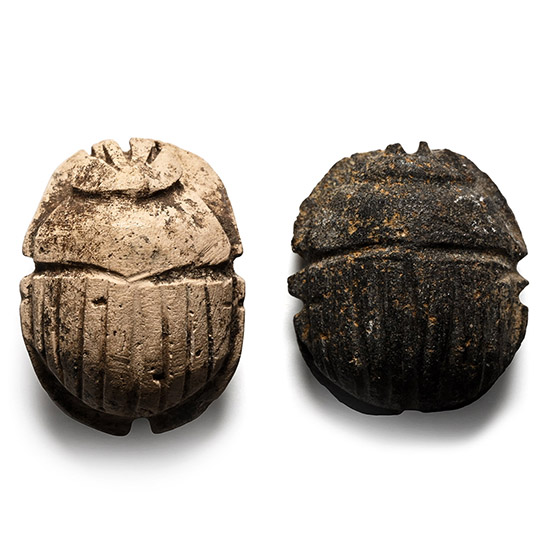
Egyptian Heart Scarab Group
Late Period, 664-332 B.C.Estimate: £120 - 170 (+bp*)
Opening Bid: £60
Comprising two naturalistically modelled scarabs with striated wing cases and ribbed undersides. 7.5 grams total, 18-20 mm
From the collection of a gentleman, acquired on the London art market in the 1990s.
The scarab amulet was a powerful symbol of rebirth, transformation, and protection in ancient Egypt. Modeled after the beetle associated with the sun god Khepri, it represented the cycle of life and regeneration. From the Middle Kingdom (c. 2050 BCE) onwards, scarabs served as funerary amulets, personal charms, and seals—often inscribed with prayers or names—reflecting both spiritual beliefs and daily life. -
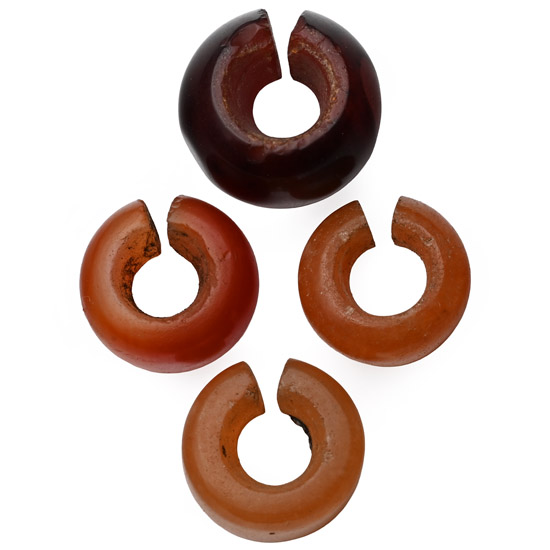
Egyptian Carnelian Hair Ring Collection
New Kingdom, circa 1400–1292 B.C.Estimate: £200 - 300 (+bp*)
Opening Bid: £100
Each a penannular lentoid-section type with narrow slot. 17 grams total, 16-20 mm
London gentleman's collection, 1970-1990s, by descent. -
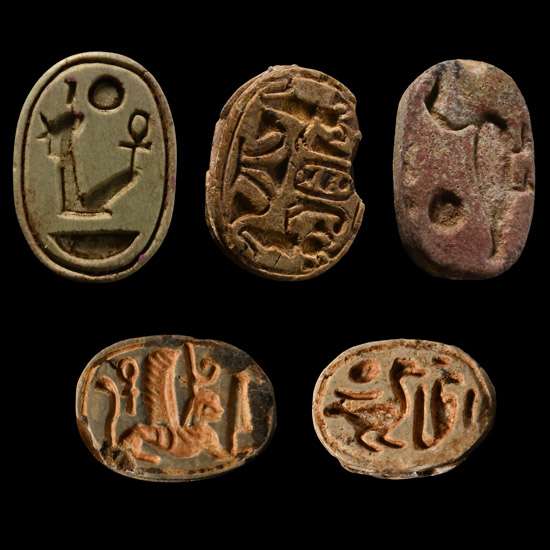
Egyptian and Phoenician Stone Scarab Group
New Kingdom-Late Period, circa 1380-332 B.C.Estimate: £120 - 170 (+bp*)
Bids: 2 | Current Bid: £15
Mixed group of scarabs and scaraboids, all inscribed on the undersides with hieroglyphs and motifs, including the cartouches of Amenhotep III and Thutmosis III. 7.7 grams total, 13-17 mm
From the private collection of a European gentleman (1942-2024), formed since the 1970s. -
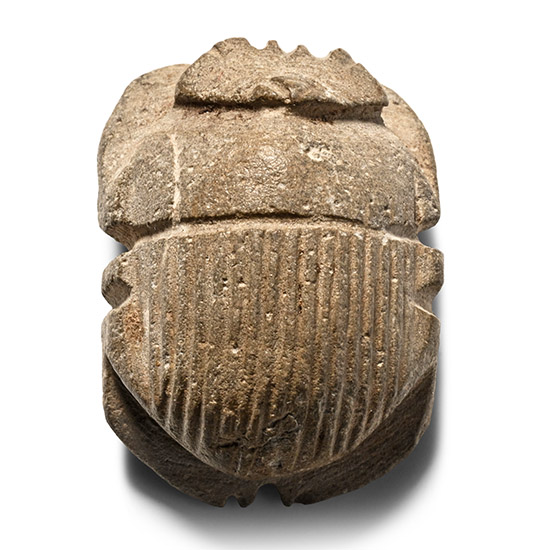
Large Egyptian Stone Scarab
Late Period, 664-332 B.C.Estimate: £200 - 300 (+bp*)
Bids: 1 | Current Bid: £5
With incised anatomical detailing on the upper and underside of the body. 7.94 grams, 27 mm
London, UK, art market, 1980s. Private collection, London, UK.
