
Ancient Art, Antiquities, Books, Natural History, Stamps & Coins

-
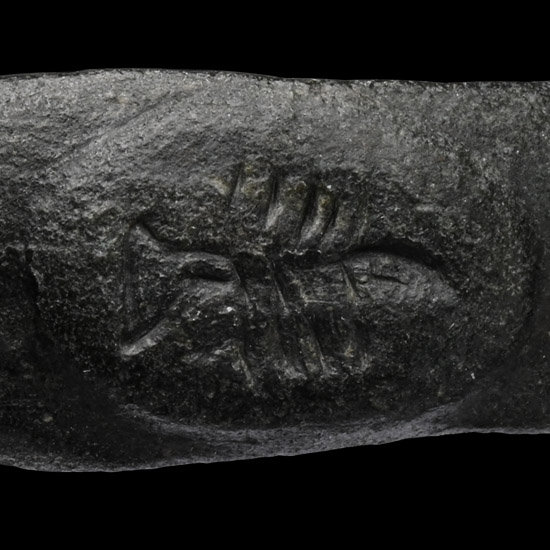
Roman Bronze Ring with Scorpion
Circa 3rd century A.D.Estimate: £40 - 60 (+bp*)
Opening Bid: £5
With angled shoulders supporting an ellipsoid bezel with incised scorpion. 5.61 grams, 25.16 mm overall, 17.29 x 14.40 mm internal diameter (approximate size British I 1/2, USA 4 1/2, Europe 8.07, Japan 7)
Ex German art market, 2000s. Acquired from an EU collector living in London. From the collection of a Surrey, UK, gentleman. -
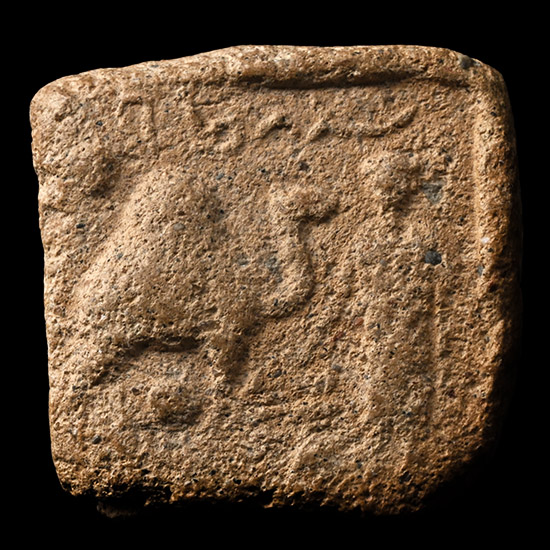
Eastern Roman Terracotta Bifacial Tablet with Camel and Figures
Circa 2nd-3rd century A.D.Estimate: £50 - 70 (+bp*)
Opening Bid: £5
Square in plan with moulded design; Side A - camel in profile with standing figure and legend above; Side B - standing figure between military standards. 4.67 grams, 22 mm
From the private collection of a European gentleman (1942-2024), formed since the 1970s. -
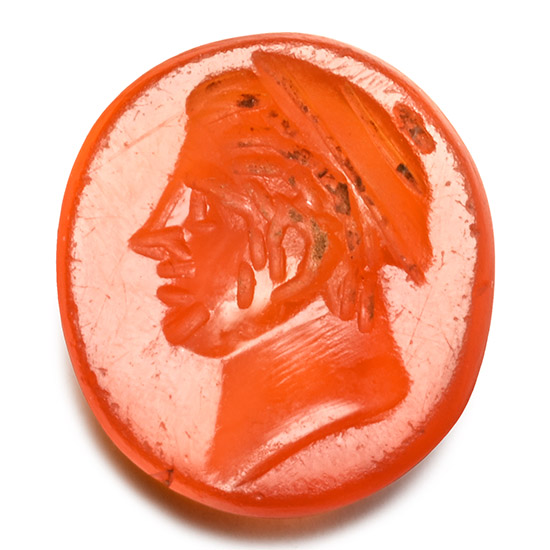
Roman Carnelian Gemstone with Male Portrait
1st-3rd century A.D.Estimate: £300 - 400 (+bp*)
Bids: 2 | Current Bid: £10
Oval translucent intaglio with a profile of a young male wearing a cap. 0.45 grams, 10 mm
UK private collection assembled 1970s-90s, and thence to the liquidated state of above. -
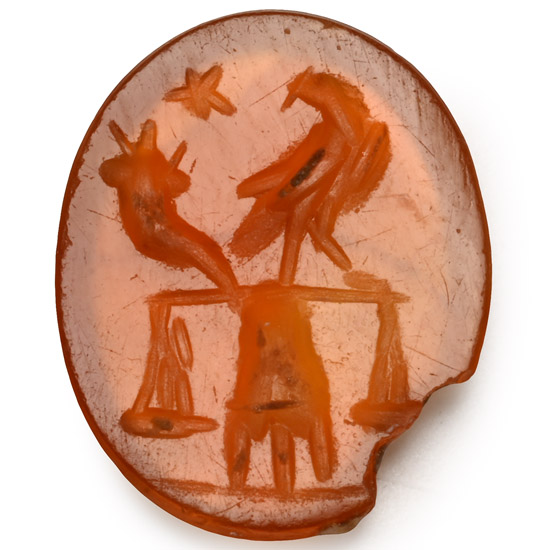
Roman Eagle on Scale and Mosius Beside Cornucopia and Star Carnelian Gemstone
2nd-3rd century A.D.Estimate: £100 - 140 (+bp*)
Bids: 1 | Current Bid: £5
Ellipsoid in plan with incuse design of a weighing balance and scale pans, perched eagle to one side and a cornucopia to the other, star above; supplied with a museum-quality impression. 0.52 grams, 13 mm
From the private collection of a European gentleman (1942-2024), formed since the 1970s. -
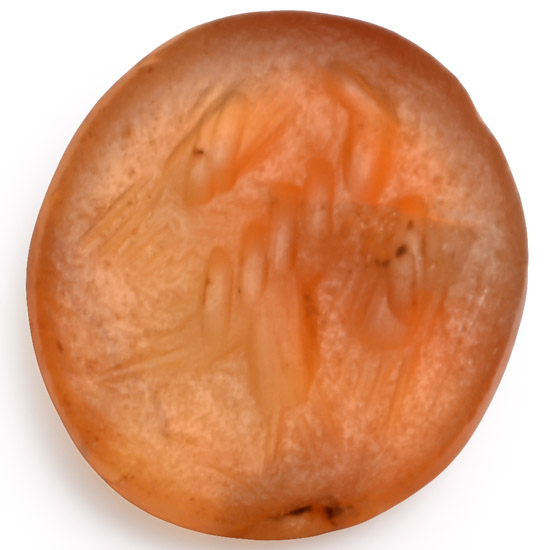
Roman Carnelian Gemstone with Eagle
1st century B.C.Estimate: £80 - 100 (+bp*)
Opening Bid: £5
Discoid in plan with intaglio perching eagle, wings partly extended; supplied with an impression. 0.35 grams, 9 mm
From the private collection of a European gentleman (1942-2024), formed since the 1970s. -
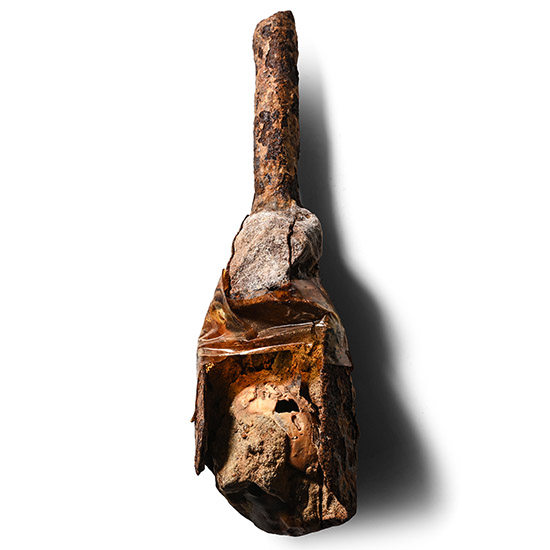
'Reculver Fort' Roman Iron Object
1st-4th century A.D.Estimate: £30 - 40 (+bp*)
Opening Bid: £5
Comprising a sturdy iron handle with rounded end, conical shoulder with lead block, circular sidewall with a slot to the upper face; old collector's ticket: 'Unidentified metal object from beach at Reculver. B.M. say probably Roman'; cellophane sleeve applied. 167 grams, 13.6 cm
Found Reculver, Kent, UK, and elsewhere in the late 1950s. From the private collection of Peter Clayton, FCILIP, Dip, Arch, FSA, FRNS, Hemel Hempstead, Hertfordshire, UK; formed since the late 1950s. Accompanied by an old handwritten identification card written by Peter Clayton. -
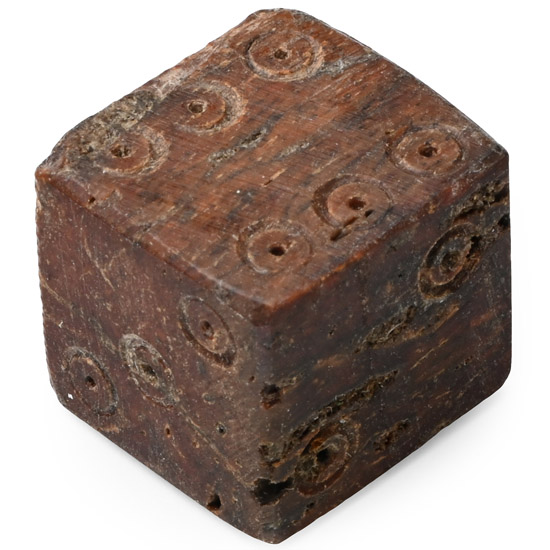
Roman Bone Gaming Die
Circa 1st-4th century A.D.Estimate: £60 - 80 (+bp*)
Bids: 1 | Current Bid: £5
Dark brown cuboid dice with ring-and-dot markings disposed 1:6, 2:5, 3:4. 3.48 grams, 12 mm
Ex Essex gentleman, previously in a Cambridgeshire, UK, gentleman's collection. -
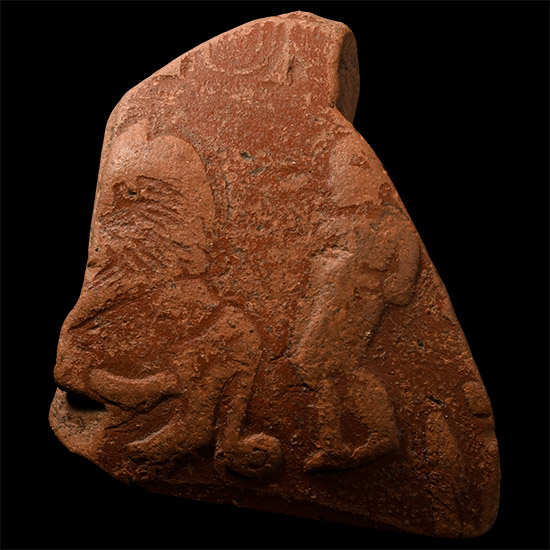
Roman Redware Bowl Fragment with Gladiator and Lion
3rd-4th century A.D.Estimate: £30 - 40 (+bp*)
Opening Bid: £5
Curved in profile with low-relief scene of a secutor with large shield advancing towards a lion. 38.3 grams, 63 mm
From the private collection of Peter Clayton, FCILIP, Dip, Arch, FSA, FRNS, Hemel Hempstead, Hertfordshire, UK; formed since the late 1950s. -
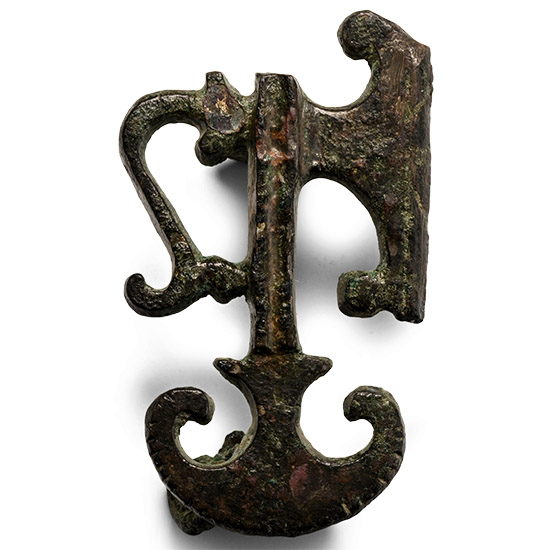
Roman Bronze Axehead Plate Brooch
Circa 1st-2nd century A.D.Estimate: £120 - 170 (+bp*)
Opening Bid: £60
A plate brooch formed as an axe, scrolled tendril at the bottom of a long slender handle; catchplate to the reverse. 7.4 grams, 37 mm
Ex German art market, 2000s. Acquired from an EU collector living in London. From the collection of a Surrey, UK, gentleman. -
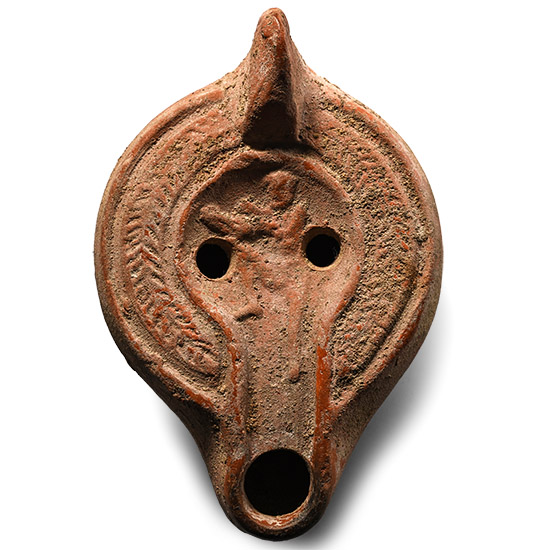
Roman Redware Oil Lamp with Caestarius
Circa 4th-5th century A.D.Estimate: £150 - 200 (+bp*)
Opening Bid: £5
With deep hollow-formed body, lug handle and short nozzle, wreath to the shoulder and low-relief image of a boxer(?) on one leg. 136 grams, 11.3 cm
Ex J.R. collection, Netherlands, since before 2000. Private collection, Europe, acquired from the above. -
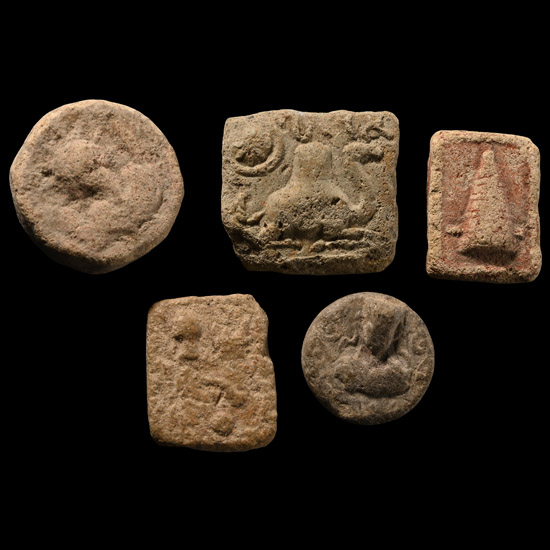
Eastern Roman Terracotta Tesserae and Tablet Collection
Circa 2nd-3rd century A.D.Estimate: £70 - 90 (+bp*)
Opening Bid: £5
Including facing bust, profile bust, kneeling camel and other types. 8.52 grams total, 13-18 mm
From the private collection of a European gentleman (1942-2024), formed since the 1970s. -
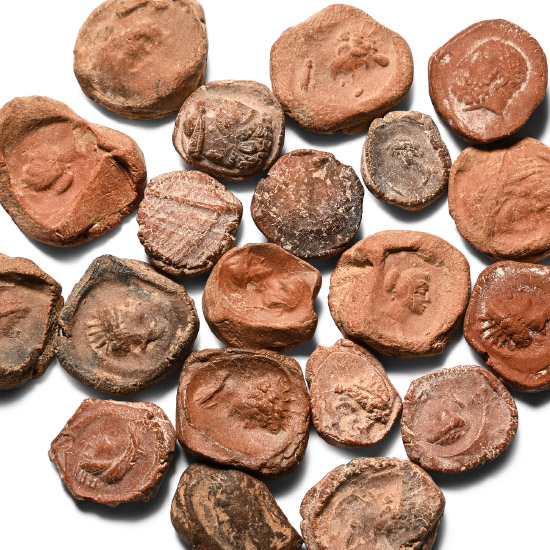
Roman Terracotta Bullae, Tesserae or Token Group
3rd century B.C.-1st century A.D.Estimate: £100 - 140 (+bp*)
Bids: 1 | Current Bid: £5
A mixed group of ceramic bullae, tesserae or theatre tokens bearing low-relief motifs, mainly consisting of profile busts of deities. 32.7 grams total, 13-22 mm
From the private collection of a European gentleman (1942-2024), formed since the 1970s.
The term 'tessera' was used in Roman times to convey the Greek term σύμβολον (token). Small tiles are known as tokens, often shaped like coins, made of metal (copper, lead, iron), clay, bone, wood, or glass, stamped as well as engraved. The tokens, however, are not exclusively coin-shaped, as the Latin term 'tessera' suggests by etymologically referring to a square or at least a four-sided shape and confirmed in several cases by material remains of the past. Tokens and tesserae seem to have been used both in Athens and Rome for the distribution of goods. According to written sources, the term token is identified with credentials of the official authorities. They have also been interpreted as tokens of identity, as entrance tickets to theatre performances, tribunals or assemblies of citizens, archival material of seal engraving, as pawns in games, Charon’s obols and even as amulets.
