
Ancient Art, Antiquities, Books, Natural History, Stamps & Coins

-
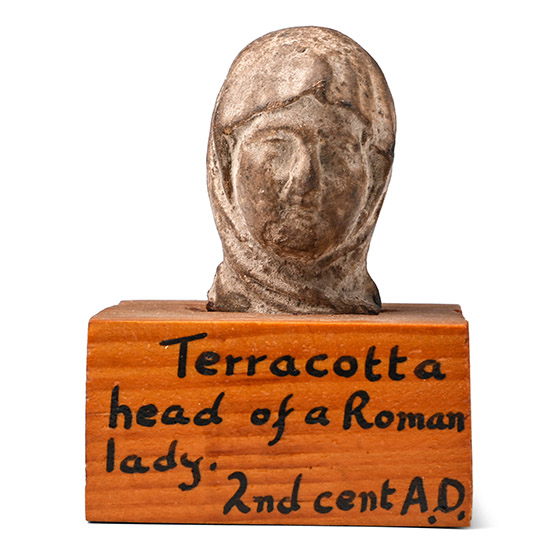
Egyptian Terracotta Head of a Roman Lady
Hellenistic Period, circa 3rd-2nd century B.C.Estimate: £100 - 140 (+bp*)
Bids: 1 | Current Bid: £5
Depicting the cloth-wrapped head of a lady, mounted on a wooden stand. 40.9 grams total, 51 mm including stand
Acquired from High Street, Herne Bay, circa June 1957, for £1.00. Certificate of antiquity no.668 of Blanchard's Egyptian Museum, Cairo. From the private collection of Peter Clayton, FCILIP, Dip, Arch, FSA, FRNS, Hemel Hempstead, Hertfordshire, UK; formed since the late 1950s. Accompanied by an old handwritten information card by Peter Clayton, collection no.11.
This head comes from a draped female figure, known as the Tanagra-type, often wearing elegant himations (cloaks) and wide-brimmed hats (tholia), or holding accessories such as fans, wreaths, and mirrors. -
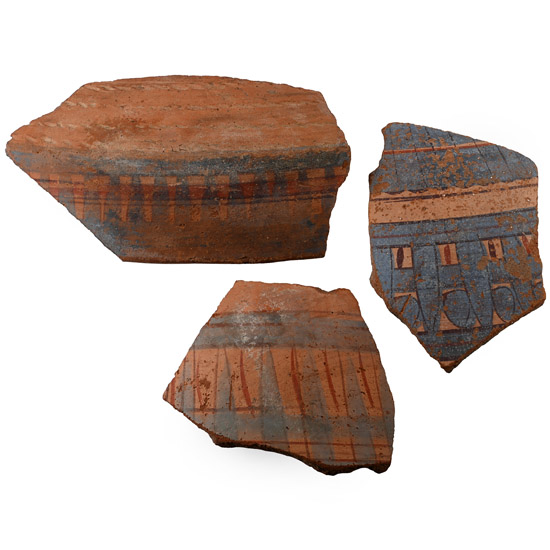
Large Egyptian Painted Bowl Fragments
New Kingdom, 18th Dynasty, Amarna Period, 1379-1362 B.C.Estimate: £80 - 100 (+bp*)
Bids: 1 | Current Bid: £5
Three fragments from three highly decorated blue-painted vessels. 545 grams total, 11.5-18 cm
Acquired in February 1978. From the private collection of Peter Clayton, FCILIP, Dip, Arch, FSA, FRNS, Hemel Hempstead, Hertfordshire, UK; formed since the late 1950s. Accompanied by an old handwritten information card by Peter Clayton, collection no.140.
The distinctive blue colour on these pottery fragments came from a cobalt-and-aluminium slip that reacted during firing. -
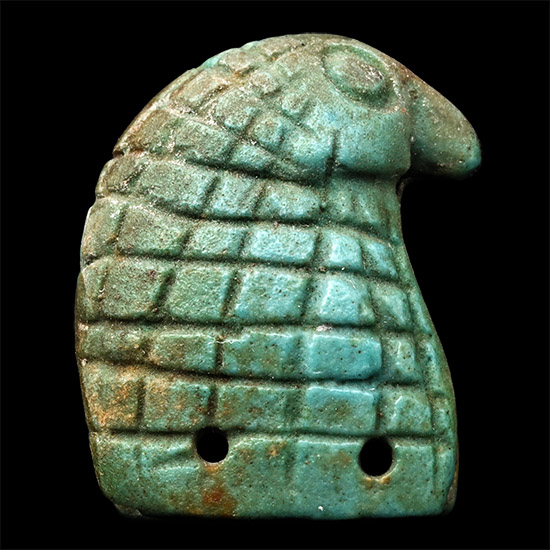
Egyptian Green Glazed Faience Qebehsenuef Attachment
Late-Ptolemaic Period, 664-30 B.C.Estimate: £100 - 140 (+bp*)
Bids: 2 | Current Bid: £15
Highly stylised head of the falcon god Qebehsenuef, one of the Four Sons of Horus, with incised feather decoration to the front, flat-backed, with two holes for attachment. 5.45 grams, 25 mm
From the private collection of Peter Clayton, FCILIP, Dip, Arch, FSA, FRNS, Hemel Hempstead, Hertfordshire, UK; formed since the late 1950s.
This amulet was likely attached to a visceral package or sewn onto mummy bandages. Qebehsenuef protected the intestines. -
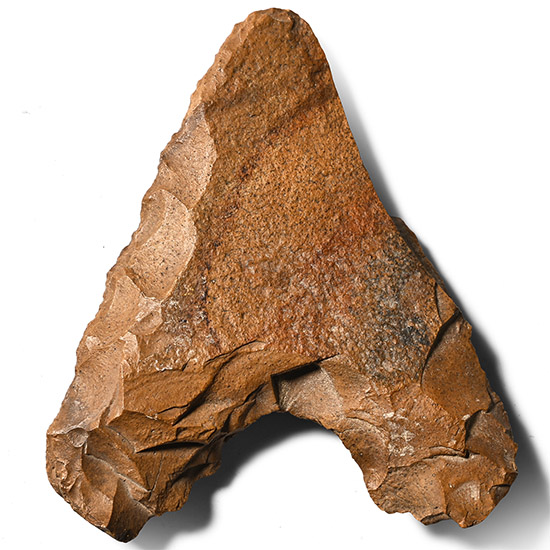
'Saqqara' Egyptian Stone Age Knapped Spearhead
Neolithic Period, circa 6,000 B.P.Estimate: £50 - 70 (+bp*)
Bids: 1 | Current Bid: £5
Triangular in plan with swept barbs to the rear edge; marked 'Near Great Pyramid 1912' and 'G[.]RRA'. 59.5 grams, 84 mm
Found near the Great Pyramid, Saqqara, Egypt, 1912. Acquired from Sotheby's, 16 June 1959 (part), £4.10. From the private collection of Peter Clayton, FCILIP, Dip, Arch, FSA, FRNS, Hemel Hempstead, Hertfordshire, UK; formed since the late 1950s. Accompanied by a copy of an old handwritten identification card written by Peter Clayton. -
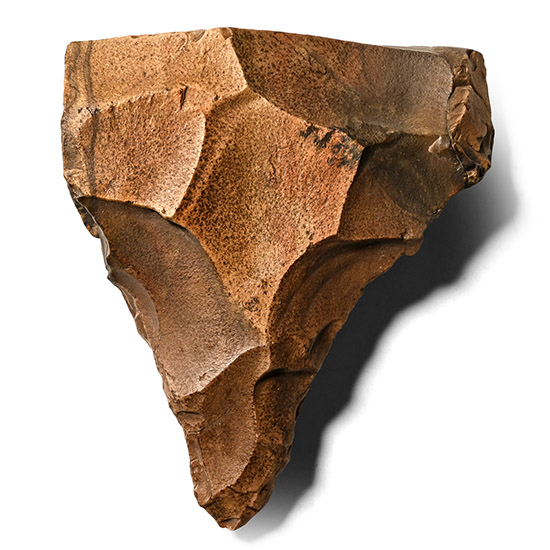
'Saqqara' Egyptian Stone Age Knapped Boring Tool
Neolithic Period, circa 6,000 B.P.Estimate: £50 - 70 (+bp*)
Bids: 2 | Current Bid: £15
Triangular in plan with flat butt; inked 'Step Pyramid Sakkara' findspot. 90 grams, 83 mm
Found near the Step Pyramid, Saqqara, Egypt. Acquired from Sotheby's, 16 June 1959 (part), £4.10. From the private collection of Peter Clayton, FCILIP, Dip, Arch, FSA, FRNS, Hemel Hempstead, Hertfordshire, UK; formed since the late 1950s. Accompanied by a copy of an old handwritten identification card written by Peter Clayton. -
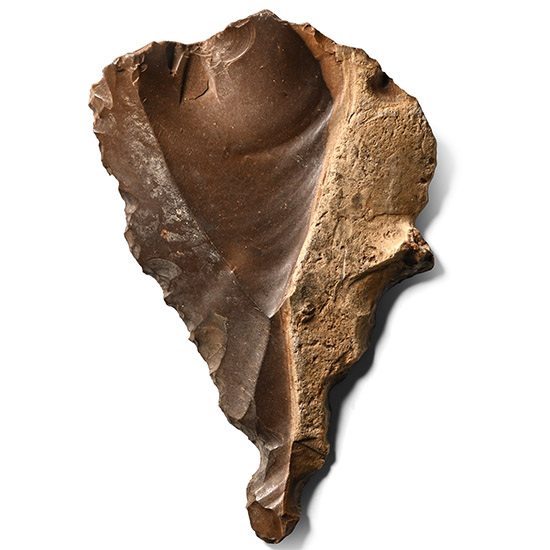
'Valley of the Kings' Egyptian Stone Age Knapped Boring Tool
Neolithic Period, circa 6,000 B.P.Estimate: £50 - 70 (+bp*)
Bids: 1 | Current Bid: £5
Triangular in plan with broad curved butt and cortex to one edge; marked 'Tombs of the Kings Valley, Thebes, 1912'. 80.8 grams, 97 mm
Found near the tombs of the Valley of the Kings, Thebes, Egypt, 1912. Acquired from Sotheby's, 16 June 1959 (part), £4.10. From the private collection of Peter Clayton, FCILIP, Dip, Arch, FSA, FRNS, Hemel Hempstead, Hertfordshire, UK; formed since the late 1950s. Accompanied by a copy of an old handwritten identification card written by Peter Clayton. -
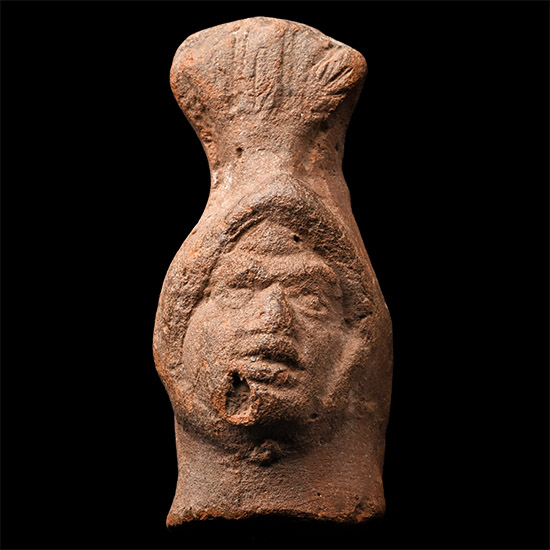
Egyptian Terracotta Statuette Head of the God Harpocrates
Graeco-Roman Period, circa 2nd-3rd century A.D.Estimate: £40 - 60 (+bp*)
Bids: 1 | Current Bid: £5
Boldly modelled facial features, wearing a tall lotus flower crown. 58.16 grams, 70 mm
From the private collection of Peter Clayton, FCILIP, Dip, Arch, FSA, FRNS, Hemel Hempstead, Hertfordshire, UK; formed since the late 1950s. -
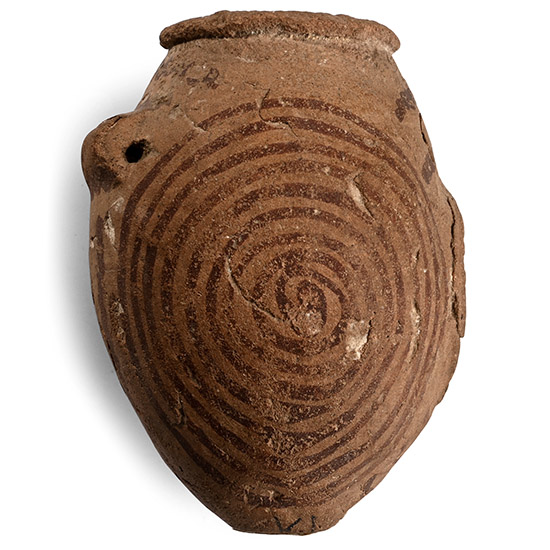
Egyptian Terracotta Pot with Painted Decoration
Predynastic Period, circa 3,500-3000 B.C.Estimate: £300 - 400 (+bp*)
Bids: 3 | Current Bid: £65
One half of a buff-coloured double-ovoid vessel, originally joined on one side to another identical pot, with a single pierced lug handle and a bold design of radiating circles. 68.4 grams, 75 mm
Ex Puys-Aubert collection in Alexandria, March 1963, paid 18 shillings. From the private collection of Peter Clayton, FCILIP, Dip, Arch, FSA, FRNS, Hemel Hempstead, Hertfordshire, UK; formed since the late 1950s. Accompanied by an old handwritten information card by Peter Clayton, collection no.99.
This small pot was originally attached to an identical vessel. Intact examples of which were found by the famous archaeologist Flinders Petrie during his excavations at the predynastic cemetery at Naqada, the site that gave its name to the chronology of the periods before Egyptian dynastic history. -
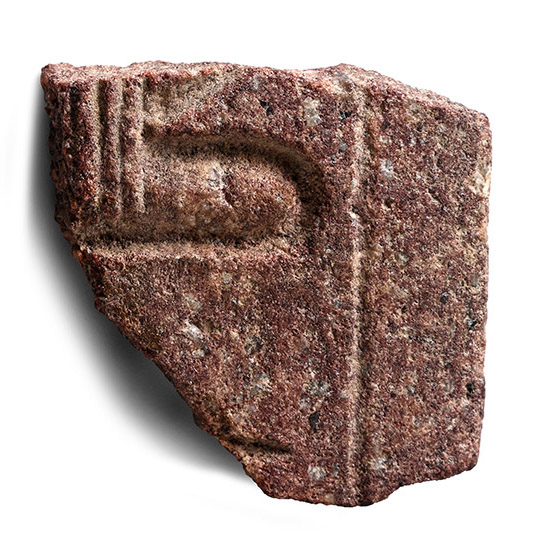
Egyptian Red Quartzite Granite Fragment with Part of Cartouche
New Kingdom, 18th Dynasty, Amarna Period, 1379-1362 B.C.Estimate: £60 - 80 (+bp*)
Opening Bid: £5
Dressed stone fragment with a vertical border and the lower portion of a cartouche with rope bands. 70 grams, 58 mm
Acquired in April 1980. From the private collection of Peter Clayton, FCILIP, Dip, Arch, FSA, FRNS, Hemel Hempstead, Hertfordshire, UK; formed since the late 1950s. Accompanied by an old handwritten information card by Peter Clayton, collection no.146.
After Akhenaten's reign, his monuments and statuary were systematically smashed. As a result, most evidence of the Amarna period's sculptural and architectural output survives only in fragments (for examples of stone fragments from statues and other objects recovered from Akhenaten's capital city, Akhetaten, see Seyfried, F. (ed.), In the Light of Amarna: 100 Years of the Nefertiti Discovery, Berlin, 2012, pp. 164-169; 230-231; 390-391). -
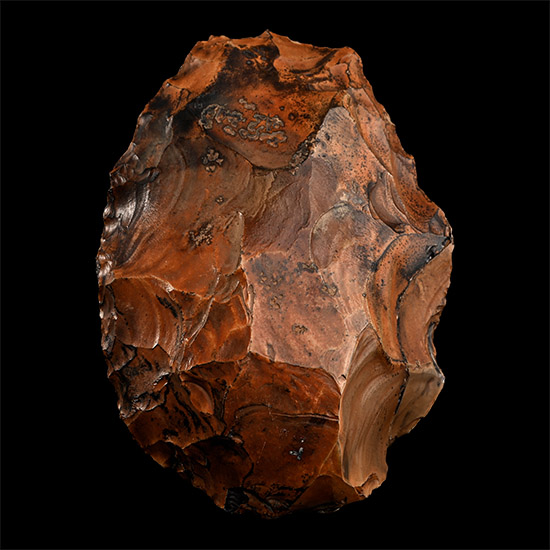
Egyptian Stone Age Knapped Handaxe
Lower Palaeolithic Period, circa 500,000-250,000 B.P.Estimate: £150 - 200 (+bp*)
Bids: 3 | Current Bid: £15
Expertly shaped through percussion flaking, creating zigzagging lateral edges, with a roughly ovate or teardrop form and a heavy, thick butt, tapering down to a distinct working edge. 363 grams, 12.5 cm
From the collection of A.D. Passmore (1879-1958), his collection of flints from the area of Stonehenge was donated to the Ashmolean Museum in the 1950s. From the private collection of Peter Clayton, FCILIP, Dip, Arch, FSA, FRNS, Hemel Hempstead, Hertfordshire, UK; formed since the late 1950s. Accompanied by a copy of an old handwritten information card by Peter Clayton.
The Egyptian flint hand axe, or biface, is a prehistoric stone tool with two faces. This tool holds the record for being the longest-used tool in human history. The technical term 'biface' comes from the archetypal model, generally a bifacial Lithic flake with an almond-shaped morphology. Hand axes typically have a pointed end and a rounded base, giving them their characteristic shape, and both faces have been knapped to remove the natural cortex, at least partially. -
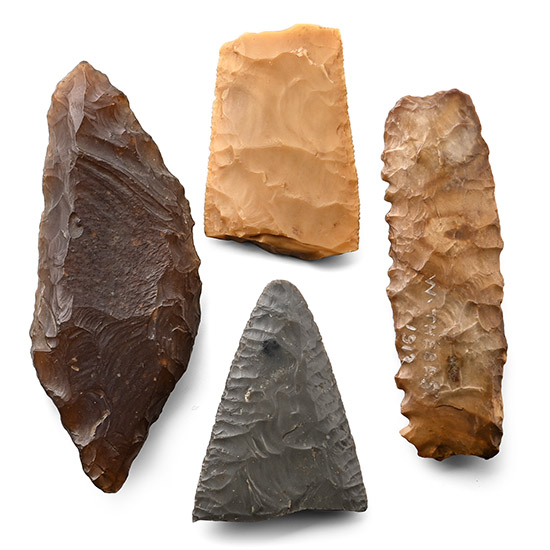
Egyptian Stone Age Knapped Tool Group from Thebes
Neolithic Period, 11,000-5,200 B.P.Estimate: £60 - 80 (+bp*)
Bids: 1 | Current Bid: £5
Comprising: a long, bifacially flaked blade, a rectangular scraper or adze, a slender, elongated blade or knife, and a triangular projectile point or axe head. 89 grams total, 52-94 mm
Found Thebes. From the collection of A.D. Passmore (1879-1958), his collection of flints from the area of Stonehenge was donated to the Ashmolean Museum in the 1950s. From the private collection of Peter Clayton, FCILIP, Dip, Arch, FSA, FRNS, Hemel Hempstead, Hertfordshire, UK; formed since the late 1950s. Accompanied by a copy of an old handwritten information card by Peter Clayton. -
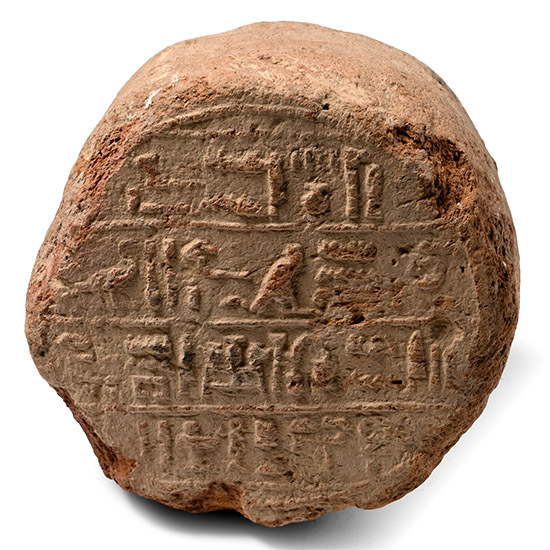
Egyptian Terracotta Funerary Cone of Montuemhat
Late Period, 25th-26th Dynasty, circa 700-650 B.C.Estimate: £300 - 400 (+bp*)
Bids: 5 | Current Bid: £165
The front part of a large tapering funerary cone, with the circular flat end impressed with four horizontal lines of hieroglyphic text, reading: "Fourth prophet of Amun, mayor of the city Montuemhat, true of voice, son of the prophet of Amun, scribe of the offering-table in the house of Amun, mayor of the city Nesptah, true of voice". 380 grams, 86 mm wide
Acquired from Abdoul Rassoul on the West Bank at Luxor, 1974-1980 when a guest lecturer. From the private collection of Peter Clayton, FCILIP, Dip, Arch, FSA, FRNS, Hemel Hempstead, Hertfordshire, UK; formed since the late 1950s.
Montuemhat, Mayor of Thebes and Governor of Upper Egypt, was possibly the most powerful official in southern Egypt of his era. He built one of the largest and most lavishly decorated non-royal tombs known (TT34), which still dominates the Asasif landscape today.
