
Ancient Art, Antiquities, Books, Natural History, Stamps & Coins

-
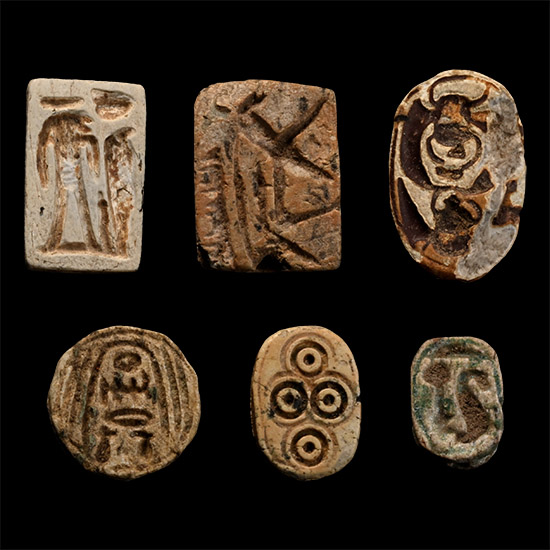
Egyptian Steatite Scarab and Plaque Group
Late Period-Ptolemaic Period, circa 664-30 B.C.Estimate: £200 - 300 (+bp*)
Opening Bid: £100
Including scarab, scaraboid and other types with incised hieroglyphs and other symbols. 6.3 grams total, 9-14 mm
Ex 1990s collection. -
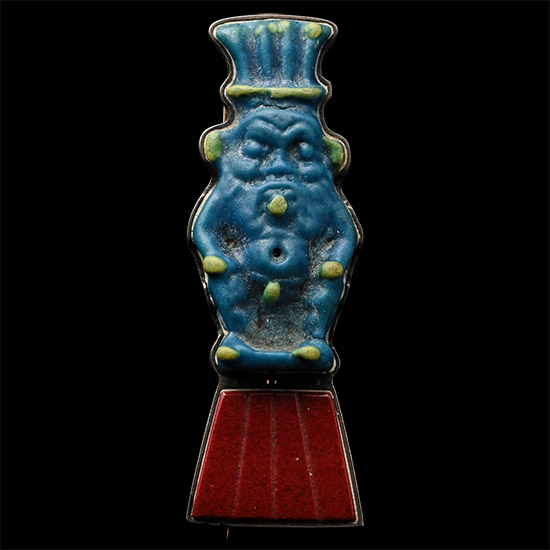
Egyptian Polychrome Faience Amulet of the God Bes Fashioned as a Dress Pin
Late-Ptolemaic Period, circa 664-30 B.C.Estimate: £300 - 400 (+bp*)
Opening Bid: £167
The dwarf god depicted in a characteristic bandy-legged stance, with his hands on his hips and a fearsome expression, wearing a plumed headdress; the deep blue glaze highlighted in yellow; set in a metal casing with hinged pins on the reverse and a red jasper insert depicting four plumes beneath his feet. 13.7 grams, 52 mm
Early 20th century UK collection. Ex A.H. collection, London, UK. Accompanied by a previous catalogue information page with provenance.
From the New Kingdom onwards, Bes became one of ancient Egypt's most popular apotropaic deities. Despite his somewhat fearsome appearance, Bes served as the patron and protector of pregnant women and children and was believed to shield them from snakes. The role of Bes as a guardian of women persisted at least until the third or fourth century A.D. -
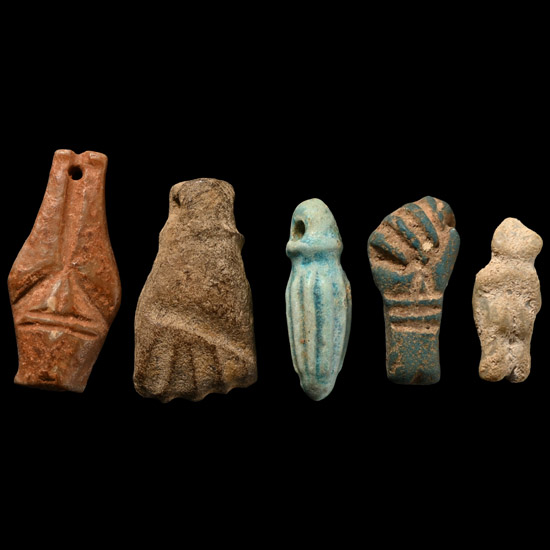
Romano-Egyptian Faience Amulet Group
Roman Period, 30 B.C.-323 A.D.Estimate: £60 - 80 (+bp*)
Opening Bid: £5
Comprising: a melon, two clenched-fist amulets, and two female figurines. 7.01 grams total, 18-26 mm
From the private collection of a European gentleman (1942-2024), formed since the 1970s. -
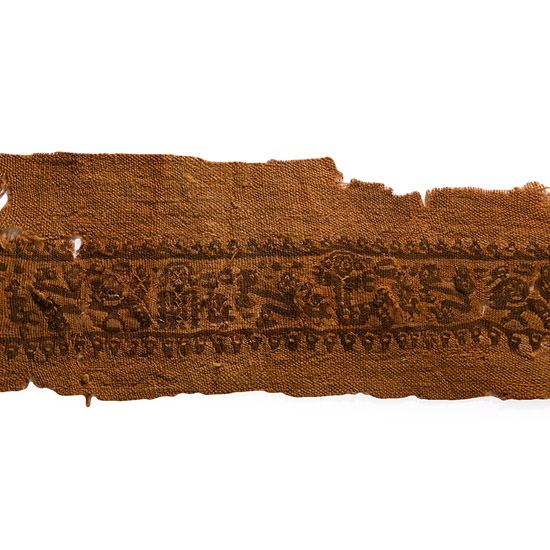
Egyptian Coptic Textile Fragment of a Clavus from a Tunic with Triton, Male Figure and Birds
Circa 5th-6th century A.D.Estimate: £60 - 80 (+bp*)
Opening Bid: £5
Comprising a decorative tunic stripe (clavus) in purple wool over coarse linen, S-twist tapestry, embroidered with stylised plants, male figures, tritons and birds, borders decorated with meanders. 14.5 grams, 44 cm
Acquired 1970s-1996. Property of a North American collector. London collection, 2016.
Among the many fragments from wool tunics are several long strips that match to form nearly full-length central pectoral clavi. They are patterned with a profusion of small figures or interlaced abstract designs, birds, plants, and animals, with a contrasting border filled with geometric motifs. -
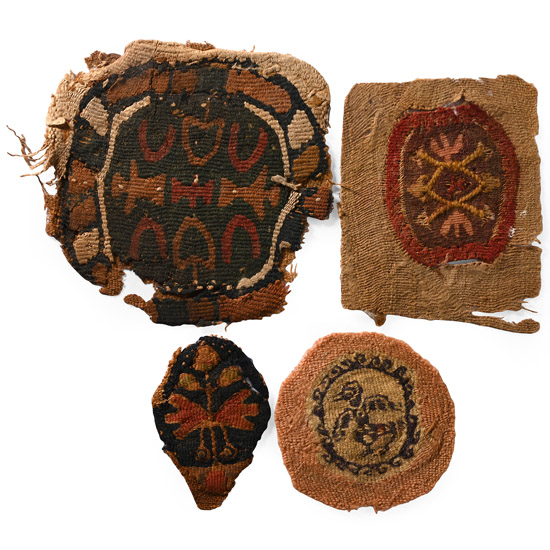
Egyptian Coptic Tunic Textile Fragments of Orbiculi with Vegetation, Animals and Geometric Ornament
Circa 6th-7th century A.D.Estimate: £80 - 100 (+bp*)
Opening Bid: £5
Featuring four medallions (orbiculi) in red, green, yellow, and dark blue wool, three decorated with floral and geometric motifs, the fourth featuring an eaglet figure with a meander border; tapestry weave, S-twist. 11.07 grams total, 6.3-10.7 cm
Acquired 1970s-1996. Property of a North American collector. London collection, 2016.
The orbiculi are realised in the tapestry technique. They were part of the decoration of a tunic, and the presence of the Imperial eagle, which is not a common pattern, could be related to a military tunic or to a tunic of an Imperial functionary. -
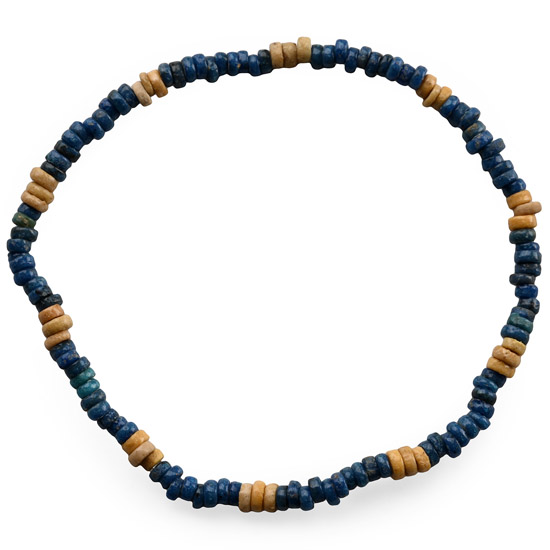
Egyptian Faience Mummy Bead Bracelet
Late Period, 664-332 B.C.Estimate: £60 - 80 (+bp*)
Opening Bid: £5
Composed of alternating blue and cream annular beads, restrung with an elasticated string. 2.09 grams, 17 cm
Ex Ancient Art Shop, Windsor, UK, 1990s. Ex private collection. -
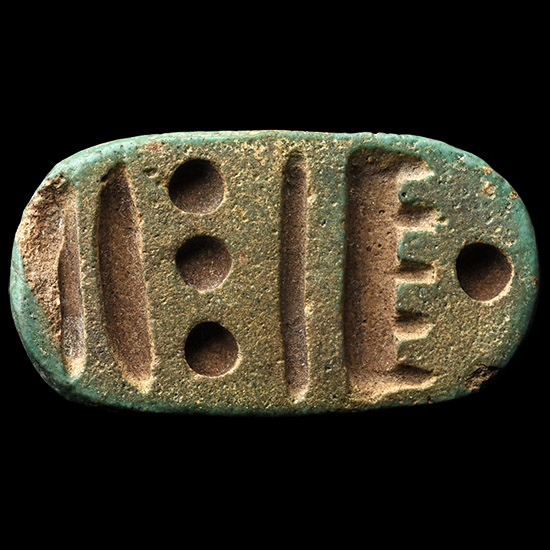
Large Egyptian Amuletic Cartouche-shaped Stamp Naming Amun-Re
Third Intermediate Period-Late Period, circa 1069-332 B.C.Estimate: £300 - 400 (+bp*)
Opening Bid: £150
Large oval stamp with plano-convex profile, plumed motif to the top, pierced for suspension; underside with hieroglyphic legend, possibly a garbled version of (A)mun-Re, lord of the thrones (of the two lands). 13.2 grams, 49 mm
Excavated from Egypt in 1914. From the private collection of Mr David Sams and his wife Elizabeth Kate Sams, gentry and amateur archaeologists who travelled to Egypt in 1914 with their daughter Ethel. Mr Sams and his wife led digging expeditions from which these items come from the family estate of Mr and Mrs Sams, by direct descent to their granddaughter. -
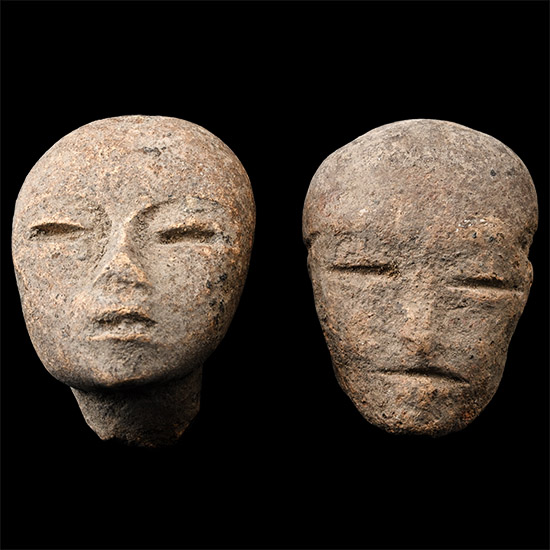
Phoenician Terracotta Head Group
Mid 1st millennium B.C.Estimate: £50 - 70 (+bp*)
Bids: 1 | Current Bid: £5
Each of bulbous profile with pinched nose and incised eyes and mouth. 31 grams total, 33-34 mm
From the private collection of a European gentleman (1942-2024), formed since the 1970s. -
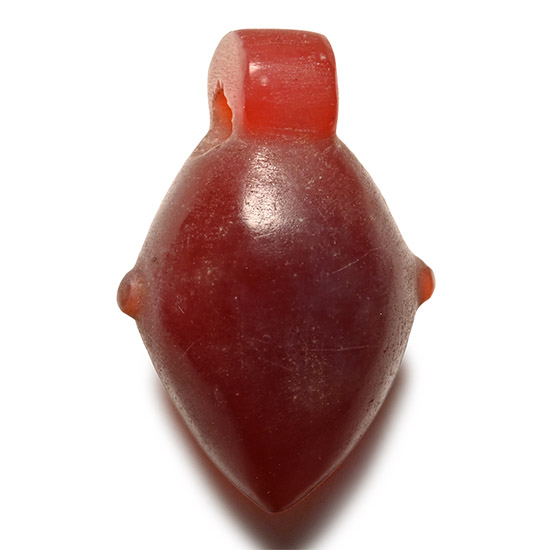
Egyptian Carnelian Heart Amulet
Late Period, 664-332 B.C.Estimate: £100 - 140 (+bp*)
Bids: 1 | Current Bid: £50
Carved with tiny lateral lugs, surmounted by a suspension loop. 1.04 grams, 15 mm
Ex London collection, 1990s. -
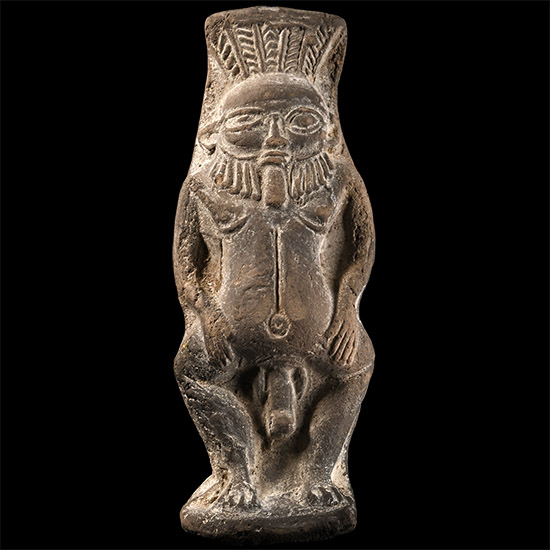
Egyptian Style Terracotta Bes Figure
Early 20th century A.D.Estimate: £20 - 30 (+bp*)
Opening Bid: £5
Standing on a pillar and wearing a feather crown, his hands resting on his knees, large protruding ears and a grimacing expression. 151 grams, 13.3 cm
Acquired in Luxor, Egypt. From a private collection formed in the 1930s. -
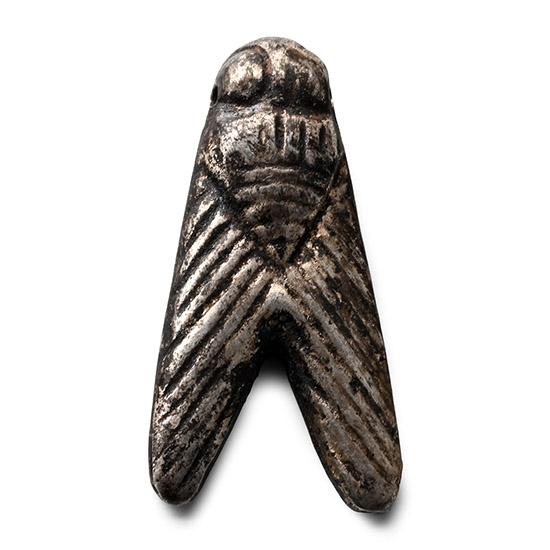
Egyptian Silver Fly Amulet
Late Period, 664-332 B.C.Estimate: £80 - 100 (+bp*)
Opening Bid: £5
With detailing to the body and head, ribbed suspension loop above the head. 1.09 grams, 17 mm
London, UK, gentleman, 1990s.
Fly amulets were believed to protect against insect bites and to ward off troublesome flying creatures through apotropaic magic. Some believe they may have even symbolised the fly’s fecundity. Additionally, pharaohs bestowed gold fly-shaped pendants as military awards to honour soldiers' bravery and persistence in battle. -
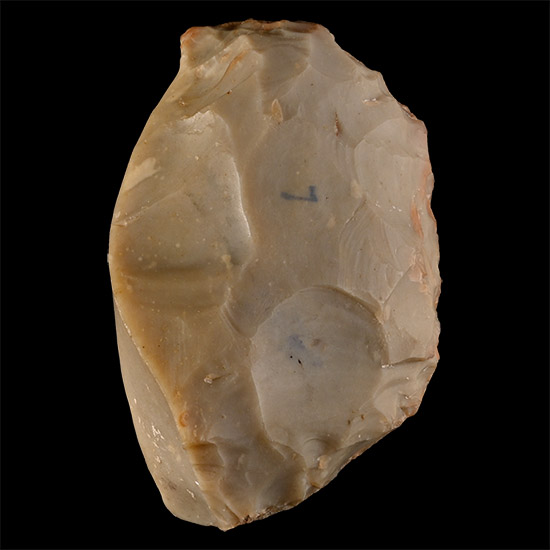
Fawcett Collection Egyptian Stone Age Knapped Chert Axe with Fawcett Monogram
Neolithic Period, circa 6,000 B.P.Estimate: £60 - 80 (+bp*)
Opening Bid: £5
Biconvex in section with cortex to the equator; marked 'Egypt' and monogram. 97.8 grams, 67 mm
Ex Dr Hugh Alderson Fawcett (1891-1982), a general practitioner and antiquarian who built an important collection of ancient implements, weapons and ornaments. The present part of the collection was gifted to Haselmere Parish Priest Charles Borelli (c.1914-2000) of Farnham, a member of the Borelli family from Italy who emigrated from Lake Como in 1828 to set up the Borelli family watch and jewellery business; thence by family descent to his nephew.
