
Ancient Art, Antiquities, Books, Natural History, Stamps & Coins

-
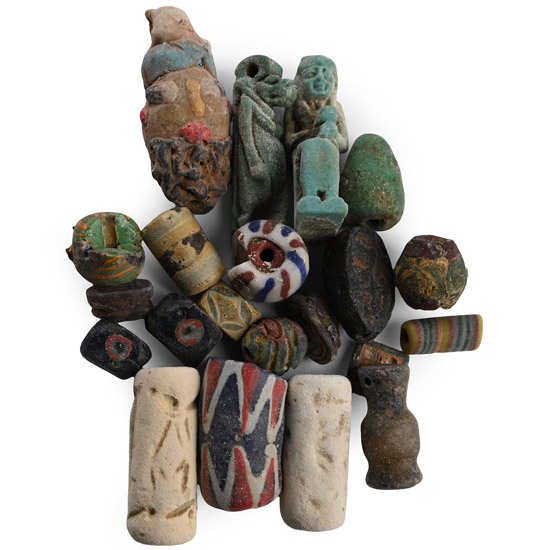
Egyptian Faience and Glass Bead and Amulet Collection
Late-Roman Period, circa 664-323 A.D.Estimate: £150 - 200 (+bp*)
Opening Bid: £75
Including pendant amulets of Isis Lactans and Taweret; an amethyst scarab with wadj, nefer, and neb hieroglyphs on the underside; tubular beads with dragged trails; a face pendant; and other types. 59 grams total, 10-33 mm
London gentleman's collection, 1970-1990s, by descent. -
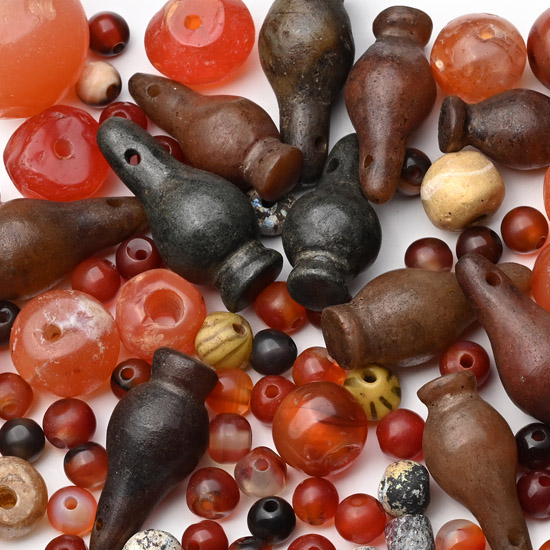
Egyptian Carnelian and Other Beads with Jasper Poppy Bead Amulets
Late Period, circa 664-332 B.C.Estimate: £400 - 600 (+bp*)
Opening Bid: £200
Including poppy- or cornflower-shaped, spherical, biconvex, and other types. 38 grams total, 4-20 mm
London gentleman's collection, 1970-1990s, by descent. -
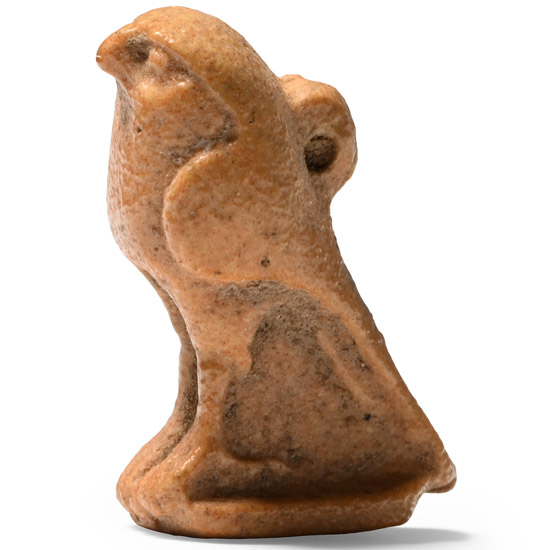
Egyptian Horus Amulet
Late Period, 664-332 B.C.Estimate: £150 - 200 (+bp*)
Opening Bid: £75
Perching Horus falcon with talons gripping the front edge of the integral plinth; detailed wings and head and a suspension loop on the back. 1.24 grams, 19 mm
Ex London gentleman's collection, by descent 1980s.
Horus is one of the most significant and widely worshipped gods in ancient Egyptian mythology. His importance spans many aspects of Egyptian religion, including serving as a symbol of the living king, offering protection, representing the sky, and symbolising the sun. -
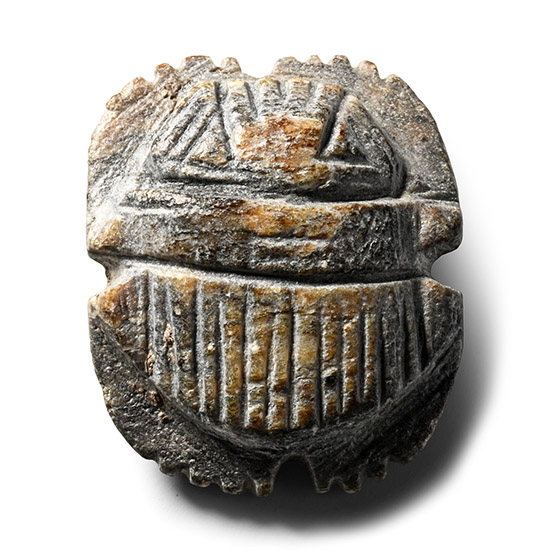
Egyptian Stone Scarab
Late Period, 664-332 B.C.Estimate: £120 - 170 (+bp*)
Bids: 1 | Current Bid: £5
With incised anatomical detailing on the body, the underside ground smooth, with a faint trace of an original horizontal suspension hole. 3.28 grams, 20 mm
London, UK, art market, 1980s. Private collection, London, UK. -
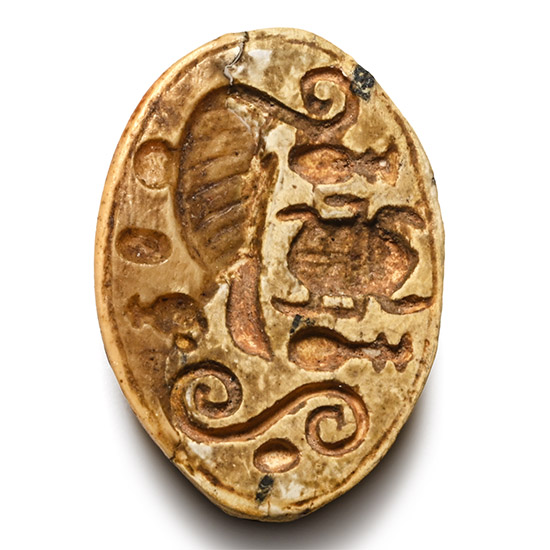
Egyptian Stone Scarab
Late Period, 664-332 B.C.Estimate: £40 - 60 (+bp*)
Bids: 1 | Current Bid: £5
Scaphoid plaque with a ribbed dome on the obverse and a flared mouth at the socket; underside with incuse hieroglyphs and symbols, including a scarab flanked by two nefer signs, an S-scroll, a standing vulture, and others; supplied with an impression. 1.22 grams, 18 mm
From the private collection of a European gentleman (1942-2024), formed since the 1970s. -
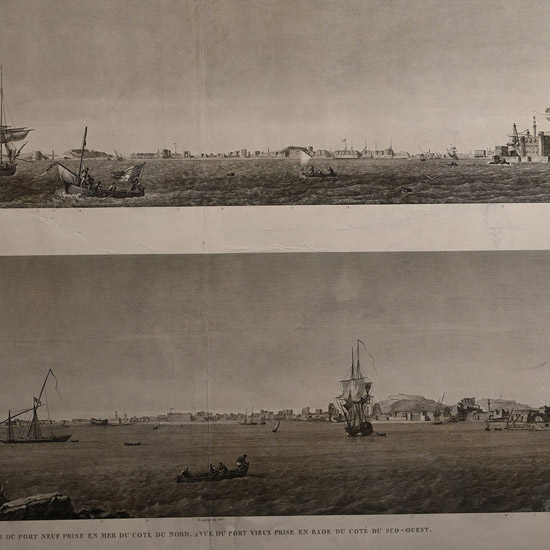
Very Large Egyptian Expedition Lithograph of Views of Alexandria
Early 19th century A.D.Estimate: £80 - 100 (+bp*)
Opening Bid: £40
Proof etching on laid paper of plate 88 from Description de l'Égypte : ou, Recueil des observations et des recherches qui ont été faites en Égypte pendant l'expédition de l'armée française. entitled 1. Vue du port neuf en mer du cote du nord. 2. Vue du port vieux prise en rade du cote du sud-ouest. 259 grams, 104.5 x 69 cm
From the collection of a North American priest. Acquired between 1981-1996. Property of a North American collector.
Produced between February 1802 and 1830 on the orders of Napoleon Bonaparte; published between 1809 and 1828. Just 1,000 copies were distributed to various institutions, printed on laid paper with an 'Égypte ancienne et moderne' watermark. The book is subtitled Recueil des observations et des recherches qui ont été faites en Égypte pendant l’expédition de l’Armée française, publié par les ordres de Sa Majesté l’Empereur Napoléon le Grand (Gathering of observations and discoveries which were made in Egypt during the expedition of the French army, published on the orders of His Majesty the Emperor Napoleon the Great). It was the world's first encyclopedia devoted exclusively to the remains of ancient Egypt. The plates of this book are the first to present the archaeological sites of Thebes (Luxor). -
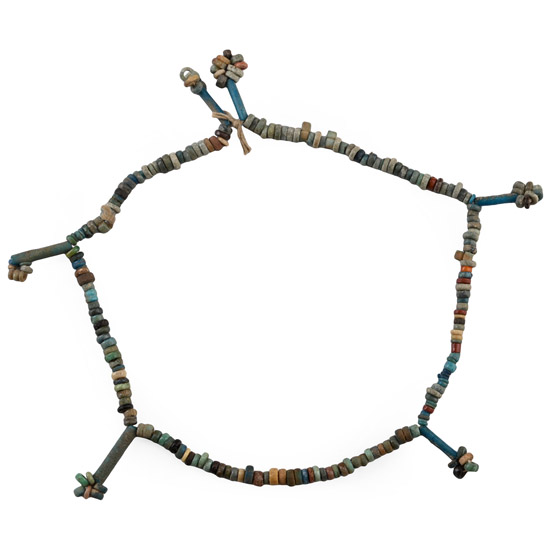
Egyptian Faience Mummy Bead Bracelet with Drops
Late Period-Ptolemaic Period, circa 664-30 B.C.Estimate: £60 - 80 (+bp*)
Opening Bid: £5
Composed of green- and blue-glazed disc and tubular beads, restrung. 4.64 grams, 27 cm
Excavated from Egypt in 1914. From the private collection of Mr David Sams and his wife Elizabeth Kate Sams, gentry and amateur archaeologists who travelled to Egypt in 1914 with their daughter Ethel. Mr Sams and his wife led digging expeditions from which these items come from the family estate of Mr and Mrs Sams, by direct descent to their granddaughter. -
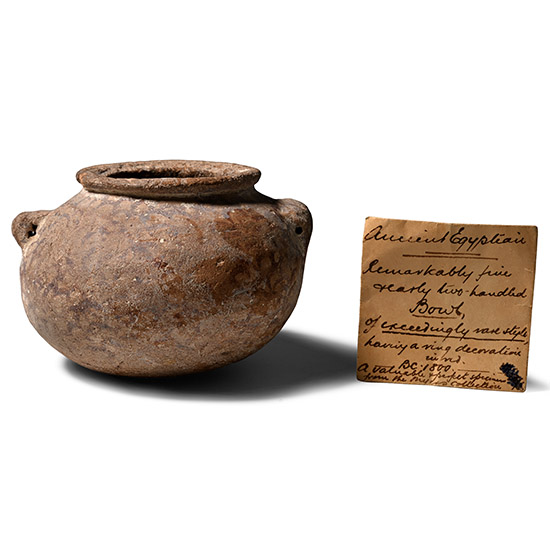
Egyptian Painted Terracotta Bowl
Predynastic-Protodynastic Period, circa 3900-3200 B.C.Estimate: £80 - 100 (+bp*)
Bids: 2 | Current Bid: £25
Squat in profile with everted rim to the mouth, two lateral pierced lugs; old collector's handwritten card 'Ancient Egyptian remarkably fine & early two-handled bowl of exceedingly rare style, having a ring decoration in red. B.C. 1800. A valuable and perfect specimen from the Myers Collection'. 271 grams, 10.3 cm wide
From the private collection of Major William Joseph Myers (1858-1899). From the estate of a deceased Sussex private collector since the early 20th century. Accompanied by a copy of an illustrated academic report by Simone Musso. Accompanied by an old original handwritten information card.
The painted decoration imitates the veining of a hardstone such as basalt or breccia. -
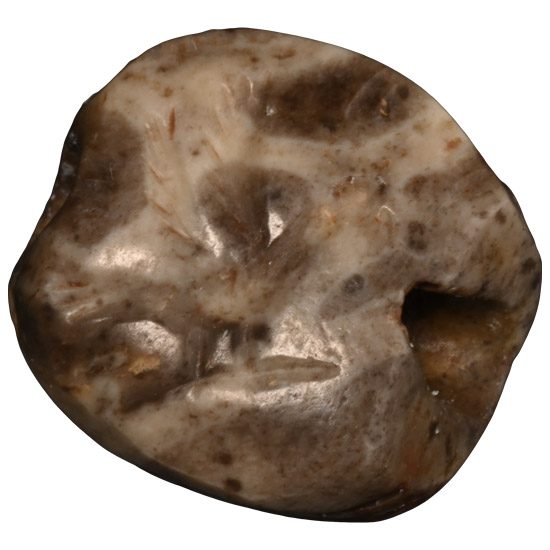
Phoenician Marbled Grey Stone Scarab with Bird
Late 1st millennium B.C.Estimate: £40 - 60 (+bp*)
Opening Bid: £5
Plano-convex in section, with hatched segmentation on the upper face; underside with bird in flight, with radiating strokes to the border; edge chipped; supplied with an impression. 4.11 grams, 17 mm
From the private collection of a European gentleman (1942-2024), formed since the 1970s. -
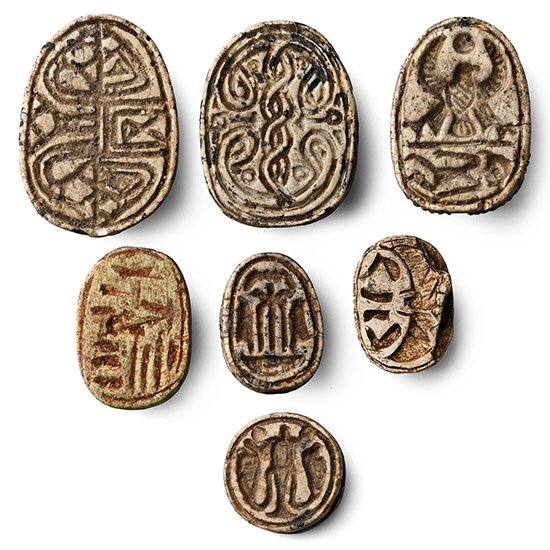
Egyptian Steatite Scarab Collection
Mostly Late Middle Kingdom, Second Intermediate Period, 1780-1500 B.C.Estimate: £600 - 800 (+bp*)
Opening Bid: £300
Mixed group of scarabs and scaraboids, including: stylised foliate motif with a sa sign; central entwined cords with curled tops and tails, and nefer signs; a falcon with outspread wings and sun disc above, surmounting a fallen enemy; a group of hieroglyphs: a central mes flanked by reed leaves, with a water sign n above, and a neb sign below; a falcon with outspread wings, with two maat feathers and stylised cobras above; a central hes vase flanked by rearing cobras. 32.6 grams total, 15-28 mm
From the collection of a gentleman, acquired on the London art market in the 1990s. -
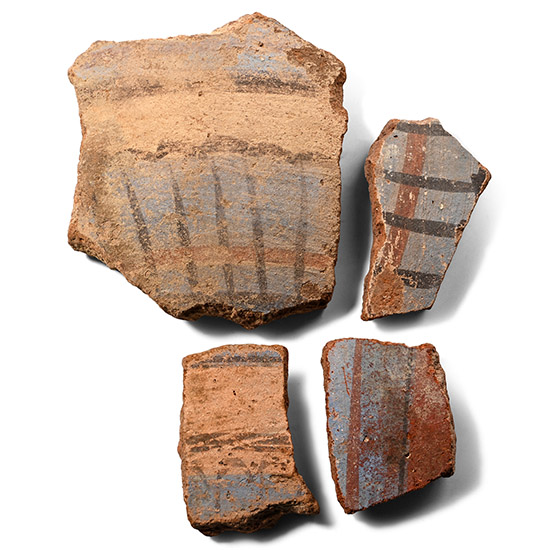
Egyptian Amarna Painted Pottery Fragments
New Kingdom, Amarna Period, 1353-1336 B.C.Estimate: £50 - 70 (+bp*)
Opening Bid: £5
Including bowl fragment with painted flower detailing, and other types. 65 grams total, 36-70 mm
From a private collection formed 1970s-1990s. -
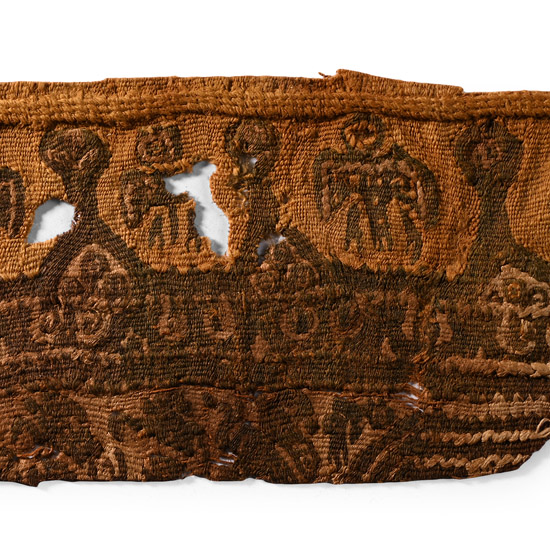
Egyptian Coptic Tunic Textile Fragment of a Segmentum with Eagles and Other Birds
Circa 7th century A.D.Estimate: £50 - 70 (+bp*)
Opening Bid: £5
Fragment of a large segmentum in linen and wool, embroidered with rows of eagles and other birds, the borders with geometric decorations. 8 grams, 19 cm
Acquired 1970s-1996. Property of a North American collector. London collection, 2016.
The segment is realised in the tapestry technique. They were part of the decoration of a tunic, and the presence of the Imperial eagle, not a common pattern, could refer to a military tunic.
