
Ancient Art, Antiquities, Books, Natural History, Stamps & Coins

-
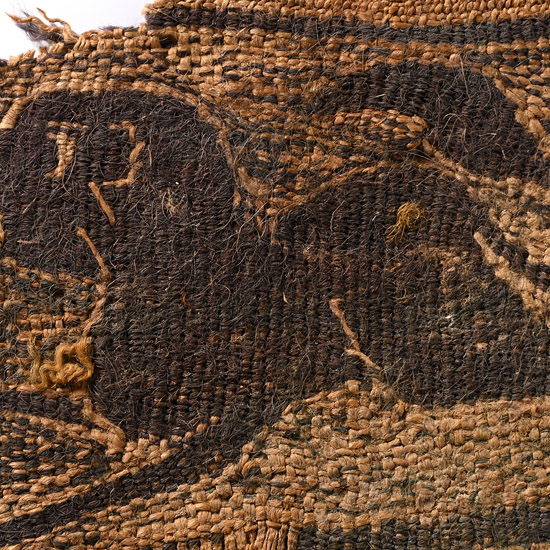
Egyptian Coptic Textile Fragment of a Clavus from a Tunic with Embroidered Lion
Circa 4th-5th century A.D.Estimate: £50 - 70 (+bp*)
Opening Bid: £5
With a representation of a running lion, with its tail curved over its body. 2.58 grams, 90 mm
Acquired 1970s-1996. Property of a North American collector. London collection, 2016.
The theme of rabbits or hares, in association with other characters and animals of the Dionysian thiasos (here, a lion), in a hunting setting, has notable parallels. Such representations are linked to narratives of the Dionysian cycle. -
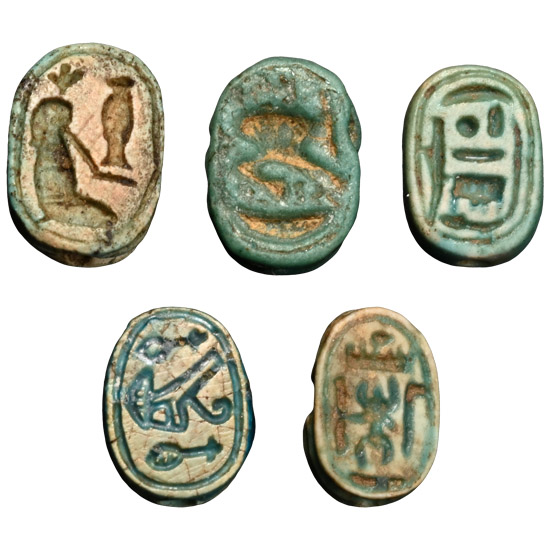
Egyptian Miniature Blue Glazed Scarab Collection
Late Period, 664-332 B.C.Estimate: £200 - 300 (‡+bp*)
Opening Bid: £100
Comprising: three scarabs, each with hieroglyphs on the underside; a scaraboid with two ankh motifs on the underside; and a bifacial ellipsoidal plaque with hieroglyphs on each face. 1.78 grams total, 8-9 mm
Private collection of Kal Noselson, New York, acquired between 1976 and the late 1990s; thence by descent. Accompanied by the collector's original inked images. -
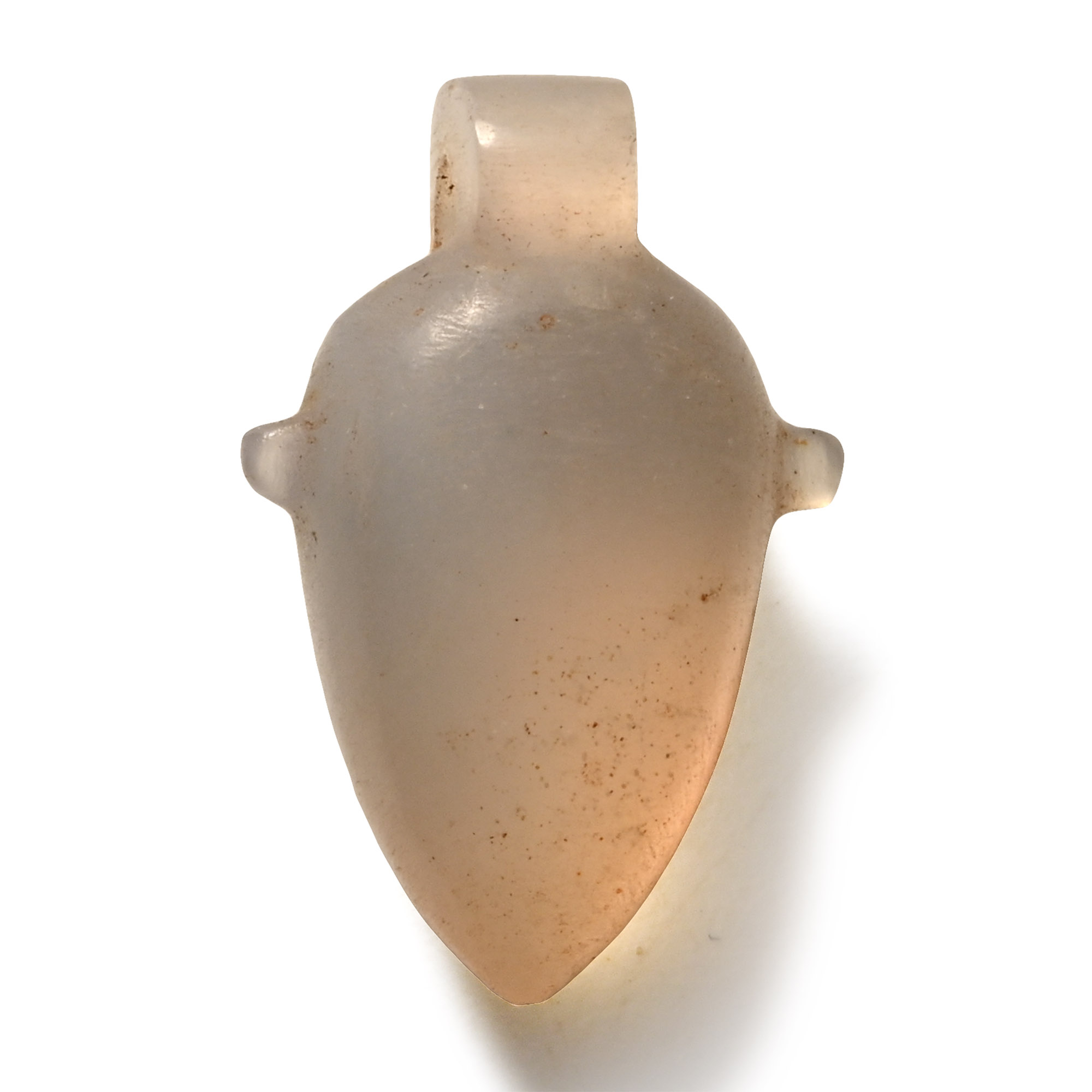
Egyptian Chalcedony Heart Amulet
Late Period, 664-332 B.C.Estimate: £100 - 140 (+bp*)
Opening Bid: £50
Carved with lateral lugs and surmounted by a suspension loop. 0.85 grams, 15 mm
Ex London collection, 1990s.
Ancient Egyptians viewed the heart (ib) as the seat of intelligence, emotions, behaviour, and memory. During the ‘Weighing of the Heart’ ceremony, it spoke for the deceased before Osiris and accounted for their actions. For this reason, Egyptians placed heart amulets on mummies to protect the organ and secure a favourable judgment. -
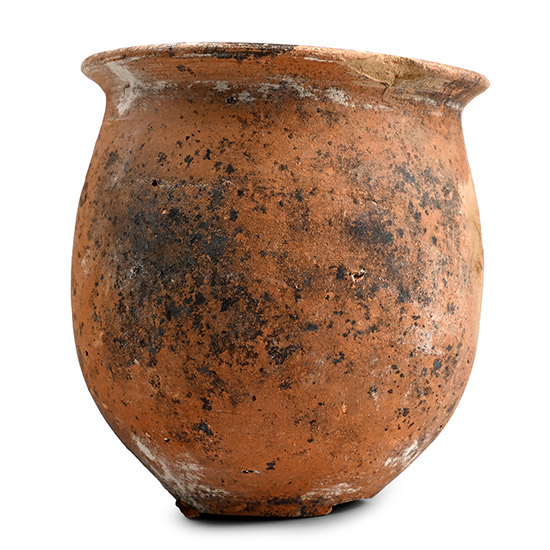
Egyptian Terracotta Jar
Roman Period, 30 B.C.-323 A.D.Estimate: £50 - 70 (+bp*)
Opening Bid: £5
Ovoid in profile with flared everted rim to the mouth; repaired. 140 grams, 85 mm
Acquired on the UK art market since the 1990s. From the property of a late Lincolnshire, UK, gentleman; thence by descent. -
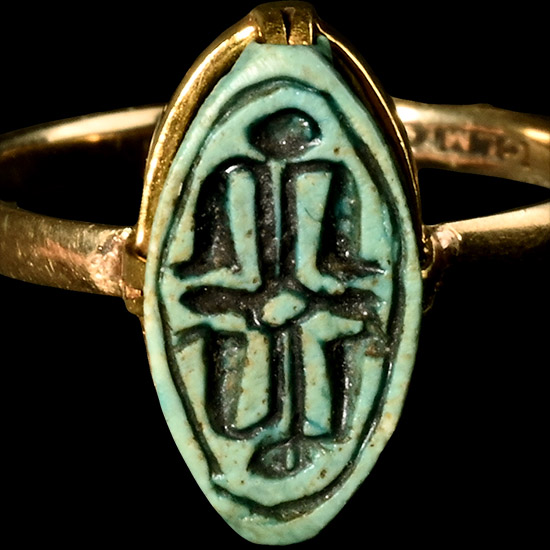
Egyptian Blue Faience Cowroid with Uraei in Gold Ring
Third Intermediate Period, 1069-860 B.C.Estimate: £500 - 700 (+bp*)
Opening Bid: £250
Slender, lentoid form with a finely striated edge design; the main motif comprises four outward-facing uraei, one in each quadrant, with a sun disc at each end, mounted in a modern gold ring. 2.33 grams, 22.62 mm overall, 16.76 mm internal diameter (approximate size British M, USA 6, Europe 12.46, Japan 12)
Private collection, London. -
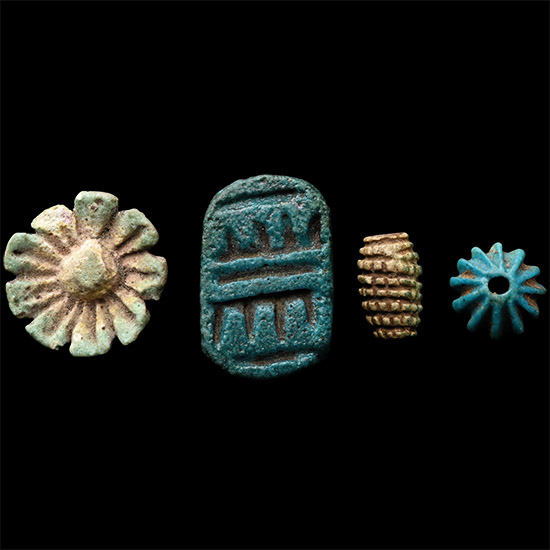
Egyptian Decorative Glazed Faience Amulet Collection
Late Period, 664-332 B.C.Estimate: £100 - 140 (‡+bp*)
Opening Bid: £45
Comprising: two rosette beads, one tubular bead and a stamp-seal amulet, all with a drill hole; one rosette bead slightly worn. 5.77 grams total, 11-24 mm
with Tajan Auction, 22 October 2004, no.172. -
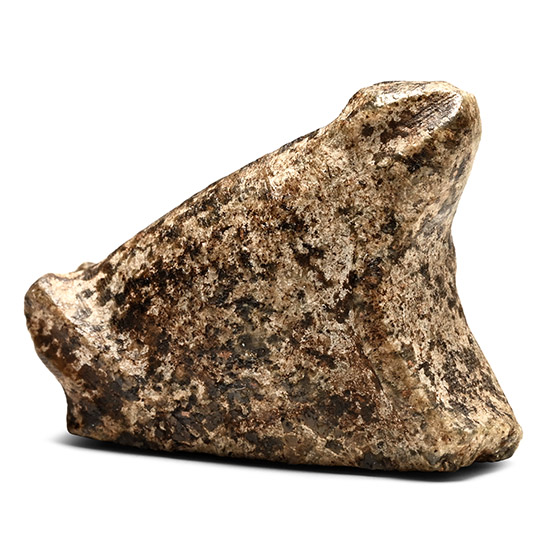
Egyptian Amulet in the Shape of a Squatting Frog
Late Period, 664-332 B.C.Estimate: £500 - 700 (‡+bp*)
Opening Bid: £275
Carved in the round in a squatting pose, with rear legs poised to leap. 9.2 grams, 27 mm
Ex Herbert A. Cahn, Basel, 1970s; thence by descent.
Frog amulets in ancient Egypt symbolised fertility, rebirth, and renewal. Associated with the goddess Heqet, who was linked to childbirth and life-giving forces, they were especially popular for fertility and for protection during pregnancy and labour. Their association with the annual Nile flood, which brought new life to the land, further emphasised their symbolism of revival and abundance. -
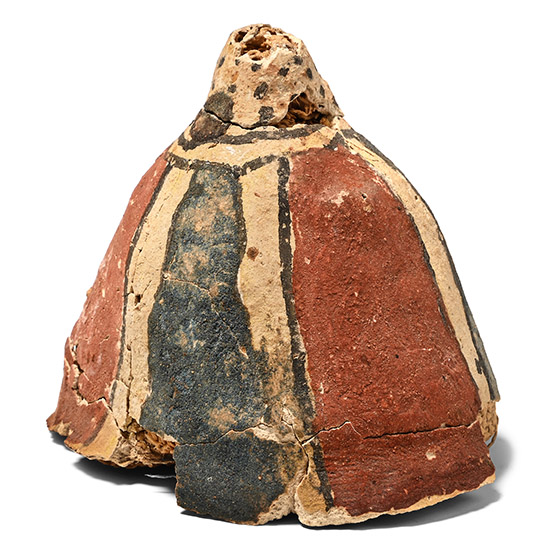
Egyptian Bell-Shaped Cartonnage Element from a Mummy Case
Graeco-Roman Period, circa 3rd century B.C.-2nd century A.D.Estimate: £100 - 140 (+bp*)
Opening Bid: £5
Bell-shaped in form with a conical top feature, the outer face is primed to accept painted petal detailing; inner layers are in loosely woven fabric. 20 grams, 69 mm
with a privately curated collection, 1980s-early 2000s. From the private collection and estate of Christine Simons (1943-2025), West Midlands, UK.
This is an intriguing object, possibly a breast from a cartonnage mummy case. For example, some Roman-period cartonnage cases from Akhmim were modelled with female physiognomies, including wide hips and modelled breasts. -
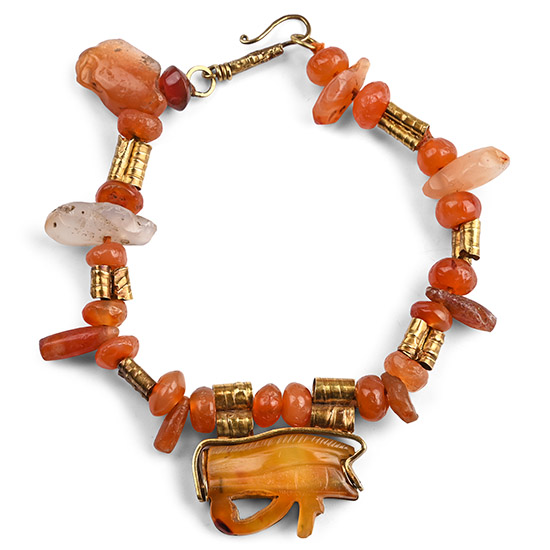
Egyptian Hardstone Eye of Horus Amulet Bracelet
Late Period, 664-332 B.C.Estimate: £600 - 800 (+bp*)
Bids: 1 | Current Bid: £300
Groups of ancient Egyptian carnelian beads restrung as a wearable bracelet with a wedjat-eye amulet suspended from the middle, using old gold by Belinda Elliston, collector and Egyptologist. 25.19 grams, 20 cm
Ex Belinda Elliston collection, a member of the Egyptian Exploration Society, 1940s onwards. -
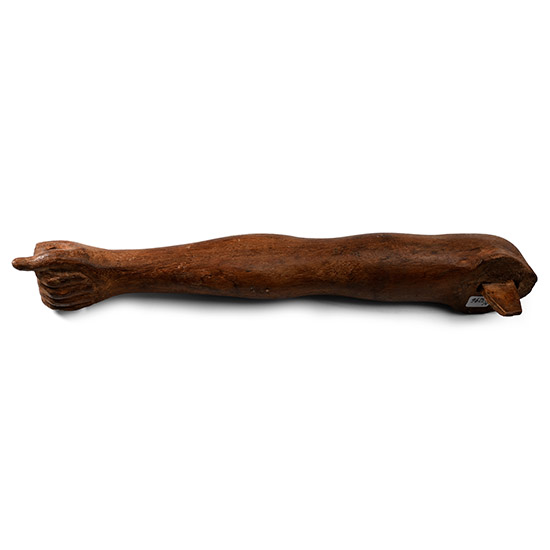
Large Egyptian Wooden Right Arm from Male Statuette
Old Kingdom, 2700-2200 B.C.Estimate: £2,000 - 3,000 (‡+bp*)
Opening Bid: £1,150
Carved in acacia wood and preserved in its entirety, from an under-life-size male statuette; slender fingers forming a fist and originally holding a tool; attachment tenon at the inner shoulder. 160 grams, 27 cm
Natural traces of ageing. Intact.
Ex Galerie Cybele, Paris, acquired in 1999. with Binoche et Giquello auction, Paris, 20 March 2017, no.88. This lot has been checked against the Interpol Database of stolen works of art and is accompanied by search certificate no.13474-263055.
Separately manufactured arms did not need to touch the body's sides or be stabilised by bars. Thus, the figure, which presumably stood upright with one leg advanced, was given a freer and more lifelike appearance. -
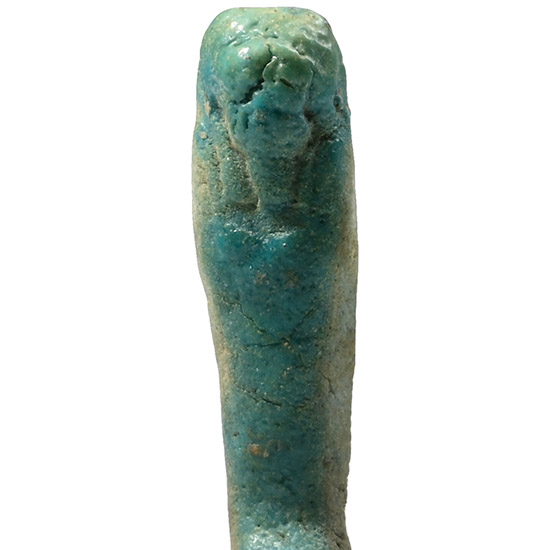
Egyptian Blue-Green Glazed Shabti
Late Period, 664-332 B.C. or laterEstimate: £40 - 60 (+bp*)
Opening Bid: £5
Mummiform shape with a deep blue-green glaze, moulded facial details and crossed arms; supplied with a custom-made stand. 6.25 grams, 53 mm (14.15 grams total, 70 mm high including stand)
Acquired from John L. Homan, Lincolnshire, UK, 1990. Accompanied by a copy of the original receipt dated 15th March 1989. -
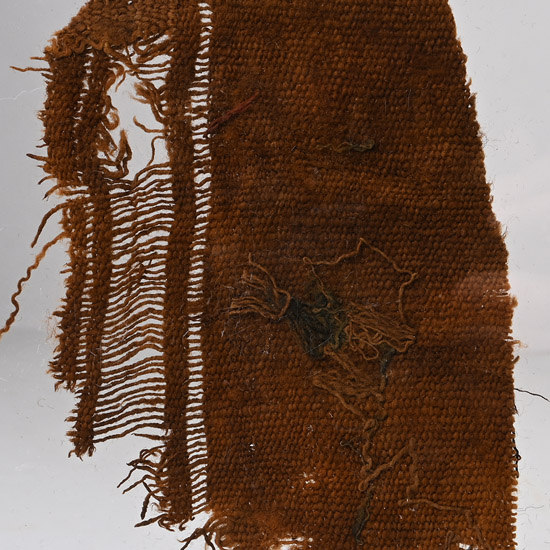
Egyptian Mummy Wrapping Fragment in Display Stand
Circa 1500 B.C.-300 A.D.Estimate: £50 - 70 (+bp*)
Opening Bid: £5
Textile fragment with a decorative openwork section on one side; mounted in a protective acrylic display. 83 grams total, 16 cm including stand
with a privately curated collection, 1980s-early 2000s. From the private collection and estate of Christine Simons (1943-2025), West Midlands, UK.
