
Ancient Art, Antiquities, Books, Natural History, Stamps & Coins

-
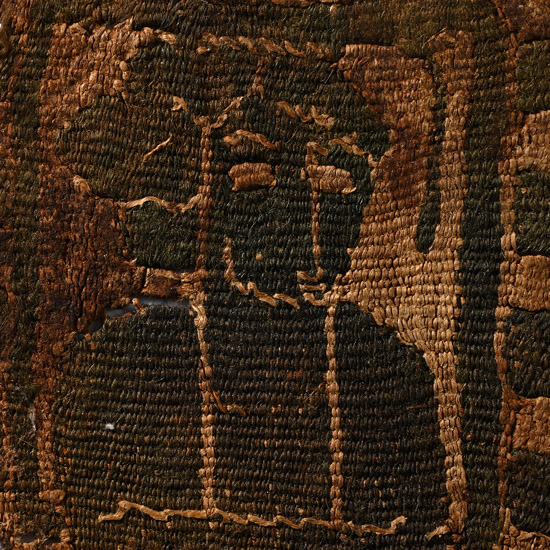
Egyptian Coptic Textile Fragment of a Tablion from a Tunic with Facing Bust
Circa 5th century A.D.Estimate: £60 - 80 (+bp*)
Opening Bid: £5
In linen and wool, showing the half-bust of a man clad in tunica paragaudata, borders with geometric decorations. 4.68 grams, 10 cm
Acquired 1970s-1996. Property of a North American collector. London collection, 2016.
The tabula, or tablion, was a square embroidery used to decorate tunics or mantles. This one, interestingly, shows a man dressed in the typical late Roman tunic, featuring the image of a soldier or military servant. -
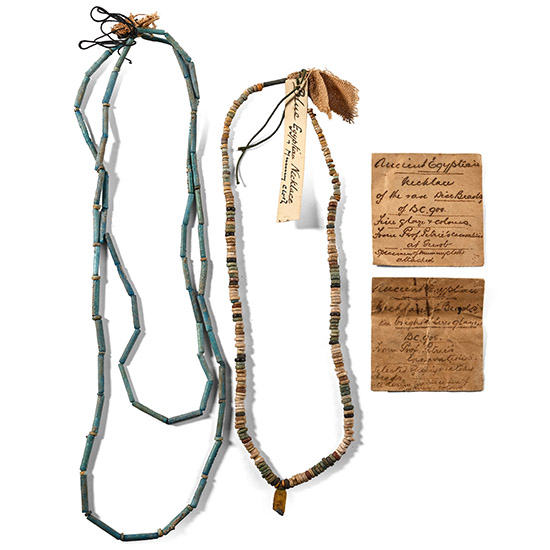
Egyptian Disc Necklace Beads and Mummy Cloth
Late Period, 664-332 B.C.Estimate: £80 - 100 (+bp*)
Bids: 1 | Current Bid: £5
Comprising: restrung necklace of mainly white annular beads and a pendant with a fragment of original mummy cloth and an old card label: 'Ancient Egyptian Necklace of Beads in bright blue glaze B.C. 900 From Prof. Petrie's excavations. Selected & finely matched beads ...specimens of ... colour' and old card label 'Blue Egyptian Necklace and Mummy Cloth'; restrung necklace of blue tubular beads with fragment of original mummy cloth and old card label 'Ancient Egyptian Necklace of the rare disc beads of B.C. 900. Fine glaze and colours. From Prof. Petrie's excavations at Gurob. Specimen of mummy cloth attached'. 20 grams total, 46-100 cm
Ex Petrie excavations early 20th century. From the estate of a deceased Sussex private collector since the early 20th century. Accompanied by two old handwritten labels. -
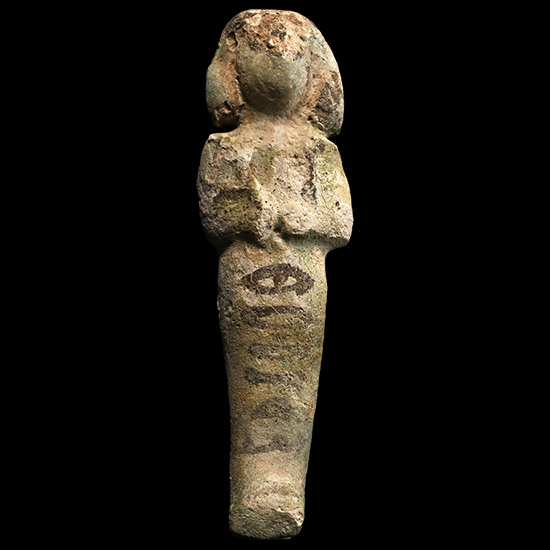
Egyptian Pale Blue Glazed Shabti.
Third Intermediate Period, 22nd Dynasty, circa 945-715 B.C.Estimate: £120 - 170 (+bp*)
Bids: 1 | Current Bid: £5
Mummiform figure with a high-relief bag wig, a top sash band, facial details, tools, a seed bag, and hieroglyphs on the lower body, all rendered in black pigment. 40 grams, 10.8 cm
with a privately curated collection, 1980s-early 2000s. From the private collection and estate of Christine Simons (1943-2025), West Midlands, UK. -
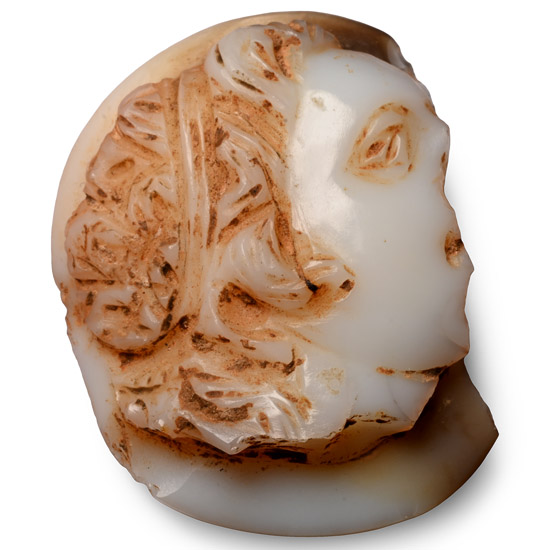
Egyptian Agate Portrait Cameo with Taenia
Graeco-Roman Period, circa 3rd century B.C.-2nd century A.D.Estimate: £200 - 300 (+bp*)
Bids: 1 | Current Bid: £5
Ellipsoid plaque with reserved high-relief profile bust, wearing a diadem in the hair. 4.77 grams, 26 mm
From the private collection of a European gentleman (1942-2024), formed since the 1970s.
Egyptian-style or Hellenistic/Ptolemaic agate cameos featuring a portrait bust bound with a taenia (a narrow fillet or headband) typically represent a royal or divine figure from the Graeco-Roman or Ptolemaic period in Egypt. -
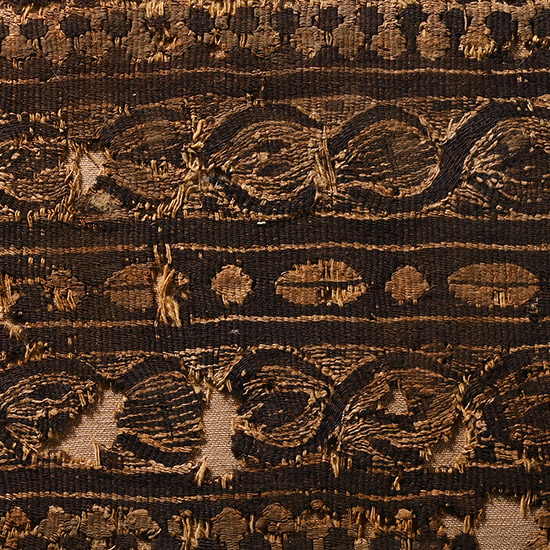
Egyptian Mounted Coptic Tunic Textile Fragment of a Clavus with Nilotic Ornament
Circa 6th century A.D.Estimate: £40 - 60 (+bp*)
Opening Bid: £5
Comprising a large segmentum in linen and wool, purple wool on linen, S-torsion, borders with dentilled decoration, floral and vegetal embroidery divided into three running strips; mounted on linen backing. 88 grams total, 26 cm
Acquired 1970s-1996. Property of a North American collector. London collection, 2016.
This embroidery was typical of tunics and garments characterised by full-length clavi, decorated with either intricate geometric patterns or with a multitude of small figures and animals, often edged with geometric borders and finished with thick, weft-loop fringes or cords. -
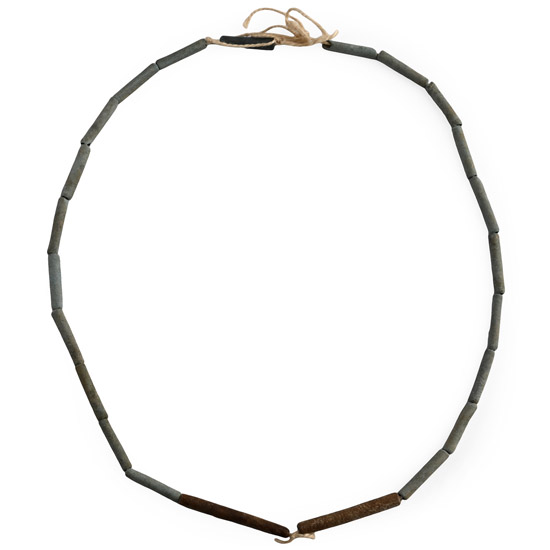
Egyptian Tubular Faience Mummy Bead String
Late Period-Ptolemaic Period, circa 664-30 B.C.Estimate: £30 - 40 (+bp*)
Opening Bid: £5
Comprising mostly green-glazed tubular beads, restrung. 2.63 grams, 36 cm
Excavated from Egypt in 1914. From the private collection of Mr David Sams and his wife Elizabeth Kate Sams, gentry and amateur archaeologists who travelled to Egypt in 1914 with their daughter Ethel. Mr Sams and his wife led digging expeditions from which these items come from the family estate of Mr and Mrs Sams, by direct descent to their granddaughter. -
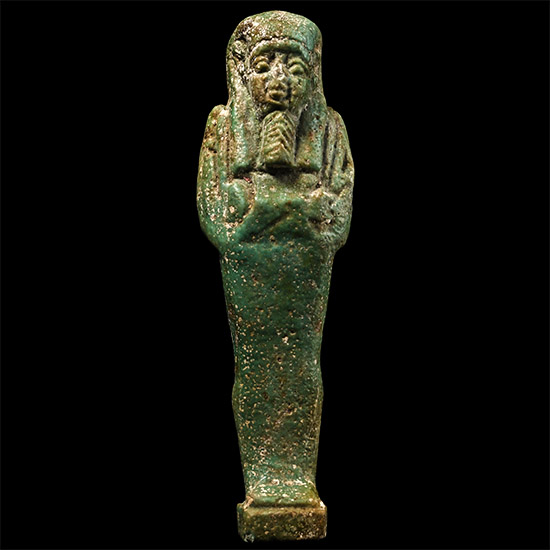
Egyptian Blue Glazed Faience Shabti
30th Dynasty-Ptolemaic Period, 380-30 B.C.Estimate: £60 - 80 (+bp*)
Bids: 2 | Current Bid: £11
Typical mummiform shape, modelled with a rectangular base and a dorsal pillar, tripartite wig and braided false beard, holding the pick and hoe in crossed hands. 56.42 grams, 10.5 cm
From the estate of a deceased Sussex private collector since the early 20th century. -
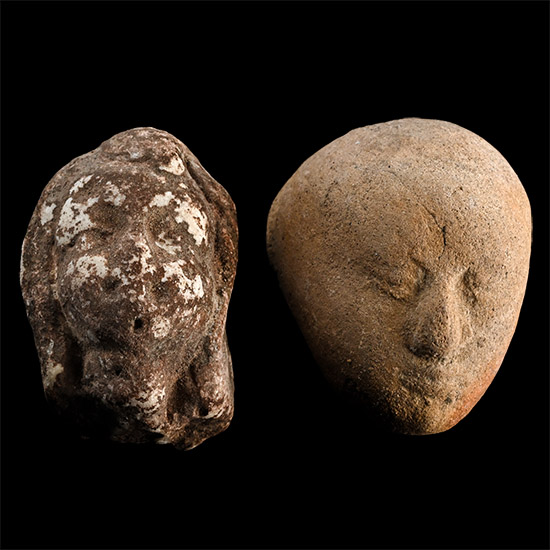
Phoenician Terracotta Head Group
Mid 1st millennium B.C.Estimate: £50 - 70 (+bp*)
Opening Bid: £5
One mould formed with shoulder-length hair and puffy features; the other hollow to the reverse. 28.5 grams total, 33-34 mm
From the private collection of a European gentleman (1942-2024), formed since the 1970s. -
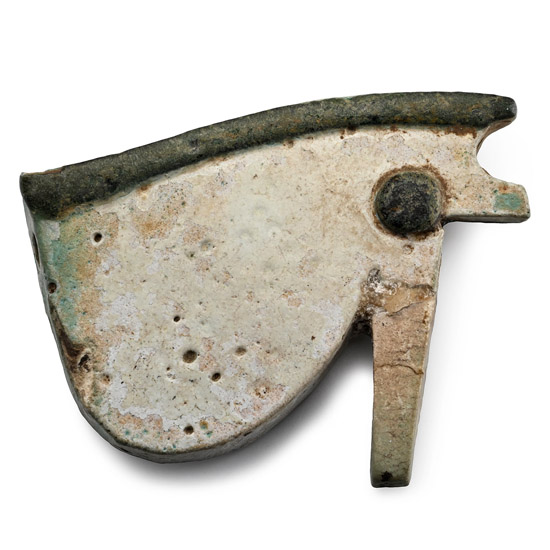
Large Egyptian Faience Eye of Horus Amulet
Third Intermediate Period, circa 1069-664 B.C.Estimate: £200 - 300 (+bp*)
Opening Bid: £100
Sizeable wedjat-eye amulet with applied black detailing to the pupil and brow. 16.5 grams, 50.4 mm
with Archaeologia, Switzerland, before 1983. Ex private North American collection. London private collection, 2016.
The wedjat-eye amulet symbolises the healed eye of the god Horus, representing both human and falcon elements. The name wedjat in ancient Egyptian means ‘the one that is sound.’ According to Egyptian mythology, Horus' eye was wounded or taken by the god Seth and later restored by Thoth. The wedjat-eye amulet was believed to protect its wearer and confer qualities of recovery and regeneration. It was highly popular and was used by both the living and the dead. -
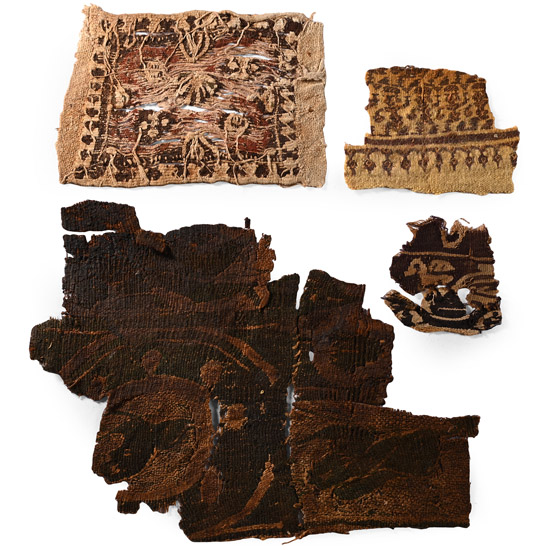
Egyptian Coptic Tunic Textile Fragments of Segmenta and Tablia with Figures, Animals and Geometric Decoration
Circa 5th-7th century A.D.Estimate: £70 - 90 (+bp*)
Opening Bid: £5
Comprising: a large segmentum in linen and wool, with hares and lions, hunters with shields, purple wool on linen, S-torsion; fragment of a tabula with borders in dentellid decoration; a complete tabula in red, white and purple; small parts of a clavus with floral and animal embroidery. 27 grams total, 5.4-24.2 cm
Acquired 1970s-1996. Property of a North American collector. London collection, 2016.
The fragments are decorative parts of tunics. These are fabrics of great decorative finesse, with some elements displaying an unusual and extremely well-preserved colour palette. -
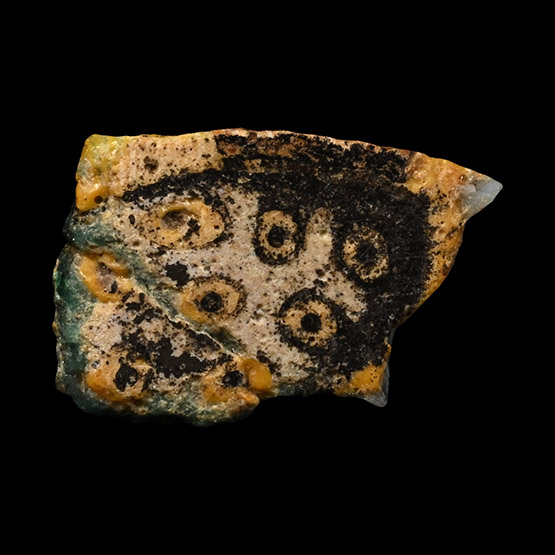
Egyptian Glass Panel with Eyes
Late Period, 664-332 B.C.Estimate: £200 - 300 (+bp*)
Opening Bid: £106
Irregular glass panel fragment with inlaid mosaic eye motifs; repaired. 1.57 grams, 18 mm
From the collection of a gentleman, acquired on the London art market in the 1990s. -
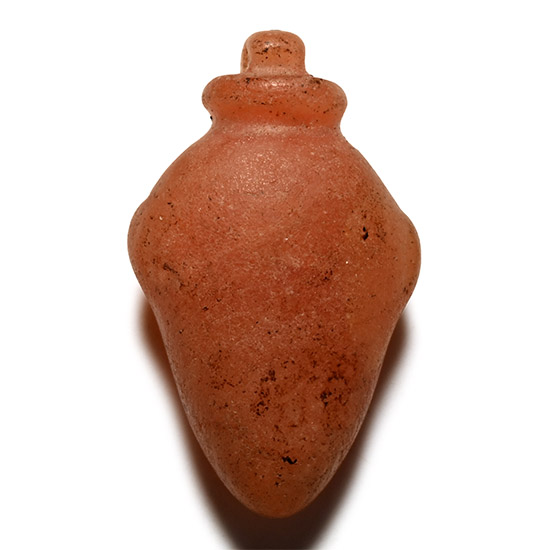
Egyptian Orange Jasper Heart Amulet
Late Period, 664-332 B.C.Estimate: £100 - 140 (+bp*)
Opening Bid: £50
Carved with lateral lugs, a pronounced rim surmounted by a suspension loop. 4.44 grams, 27 mm
Ex London collection, 1990s.
In ancient Egyptian belief, the heart (ib) was the centre of intelligence, emotions, and behaviour. It was also believed to store a person's memories. During the Weighing of the Heart ceremony in the afterlife, the heart could speak on the deceased's behalf and account for their lifetime of actions before Osiris. For this reason, Egyptians placed heart amulets on the mummy to protect the organ and ensure a favourable outcome in judgement.
