-
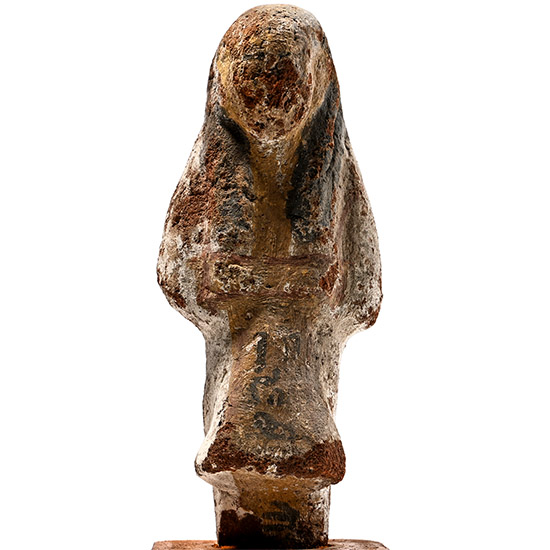
Egyptian Painted Clay Shabti in Daily Dress
New Kingdom, 19th-20th Dynasty, circa 1292-1069 B.C.Estimate: £600 - 800 (+bp*)
Opening Bid: £5
Shabti wearing the kilted dress of daily life, painted white, a blue-black lappet wig, arms crossed, and hands holding hoes, applied in red pigment; the face yellow; a yellow panel of hieroglyphic text on and beneath the kilt reading: 'The illuminated one, the Osiris, Wen....'; feet missing; mounted on a display stand. 119 grams total, 12.5 cm including stand
Acquired from the Egypt Exploration Society, 30th June 1965, for 2 shillings and sixpence. From the private collection of Peter Clayton, FCILIP, Dip, Arch, FSA, FRNS, Hemel Hempstead, Hertfordshire, UK; formed since the late 1950s. Accompanied by an old handwritten information card by Peter Clayton, collection no.115. -
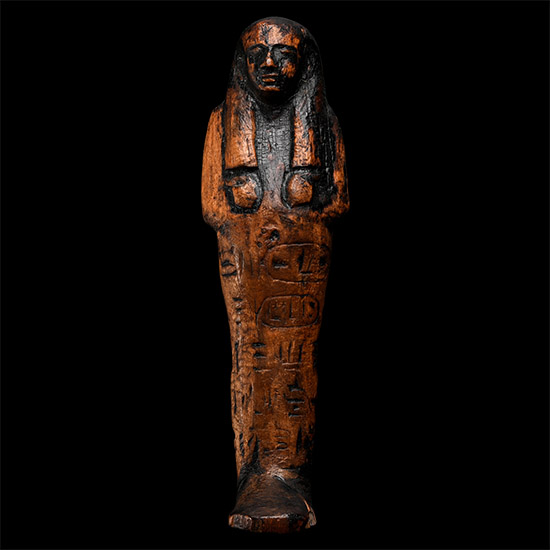
Egyptian Wooden Shabti of Pharaoh Seti I
New Kingdom, 19th Dynasty, circa 1291-1278 B.C.Estimate: £2,000 - 3,000 (+bp*)
Bids: 3 | Current Bid: £110
Mummiform shape with a long lappet wig and crossed arms, the hands modelled in relief, bearing six rows of hieroglyphic inscription arranged around the lower half of the body, presenting a version of Chapter 6 from the Book of the Dead, including the cartouches containing his throne name Men-Maat-Re ('Eternal is the justice of Re') and his birth name Seti-mery-en-Ptah ('Seti beloved of Ptah'); traces of black varnish visible, particularly between the lappets and on either side of the head. 82.7 grams, 18.5 cm
Acquired in London from an antiques market in 1960s for £20.00. From the private collection of Peter Clayton, FCILIP, Dip, Arch, FSA, FRNS, Hemel Hempstead, Hertfordshire, UK; formed since the late 1950s. This lot has been checked against the Interpol Database of stolen works of art and is accompanied by search certificate no.13497-263004.
Seti I was buried at Thebes in a large, lavishly decorated tomb in the Valley of the Kings (KV 17). His funerary equipment included about 700 shabtis, some made of faience and stone, but most were made of wood. Although carving finesse and overall finish varied, Seti I's wooden shabtis comprised at least two main types: those, like this example, in which the crossed arms are unmodelled and indicated only by the swell of the elbows, while the hands are boldly carved, and those in which both the arms and hands are more plastically rendered. Both forms could be uninscribed or bear both of Seti I's cartouches and a version of the shabti spell (Chapter 6 from the Book of the Dead). Analysis of one of Seti I's wooden shabtis identified the timber species as juniper. -
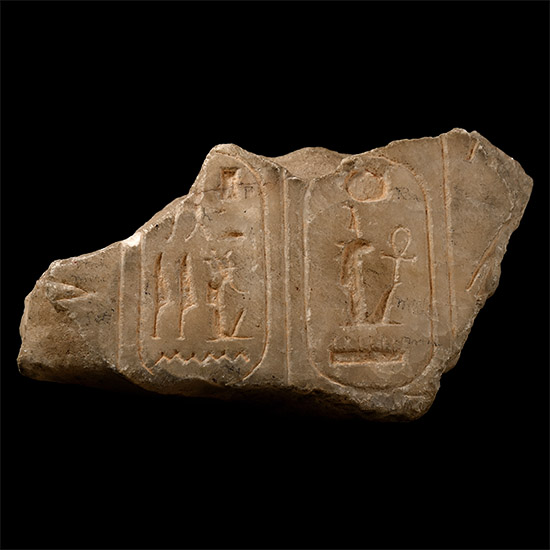
Egyptian Alabaster Fragment with Pharaoh Seti I's Cartouches
New Kingdom, 19th Dynasty, circa 1278 B.C.Estimate: £2,000 - 3,000 (+bp*)
Bids: 1 | Current Bid: £5
Thick section of alabaster with traces of four columns of hieroglyphs, including two partially preserved cartouches, one containing the birth name and epithet of Seti I, Seti mery-en-Ptah ('Seti, beloved of Ptah'), and the other his throne name, Men-Maat-Re ('Eternal is the justice of Re'). 526 grams, 13.8 cm
Received by gift from archaeologist Cyril Aldred, September 1964. From the private collection of Peter Clayton, FCILIP, Dip, Arch, FSA, FRNS, Hemel Hempstead, Hertfordshire, UK; formed since the late 1950s. Accompanied by an old handwritten information card by Peter Clayton, collection no.123. This lot has been checked against the Interpol Database of stolen works of art and is accompanied by search certificate no.13494-262900.
Peter Clayton's card suggests that the fragment may come from Seti's alabaster sarcophagus, the elaborately decorated lower half of which is in the John Soane Museum, London. The fragment may belong to the lid, which plunderers smashed in antiquity and which survives only in a relatively small number of fragments. -
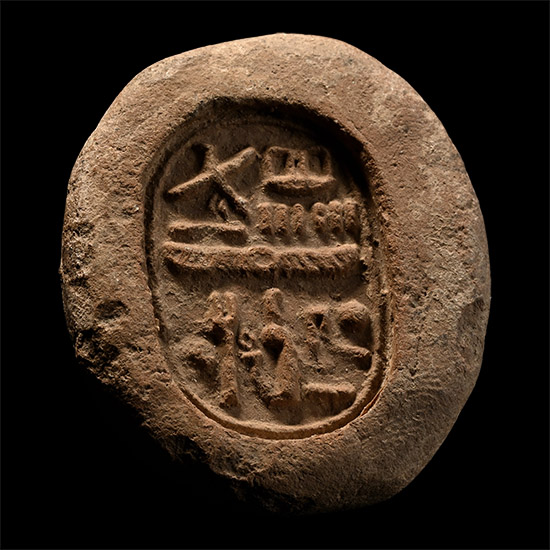
Egyptian Terracotta Mould with Impression of the Cartouche of Pharaoh Ramesses II
New Kingdom, 19th Dynasty, circa 1237-1235 B.C.Estimate: £600 - 800 (+bp*)
Bids: 3 | Current Bid: £35
Oblate type with an impressed cartouche recording the sixth Heb-Sed (jubilee) of Ramesses II. 27.4 grams, 46 mm
Acquired 7th February 1962. From the private collection of Peter Clayton, FCILIP, Dip, Arch, FSA, FRNS, Hemel Hempstead, Hertfordshire, UK; formed since the late 1950s. Accompanied by an old handwritten information card by Peter Clayton, collection no.85.
By the time of Ramesses II, the royal Heb-Sed festival was already about two thousand years old. He celebrated his first Heb-Sed in his 30th year and his sixth in his 45th year. -
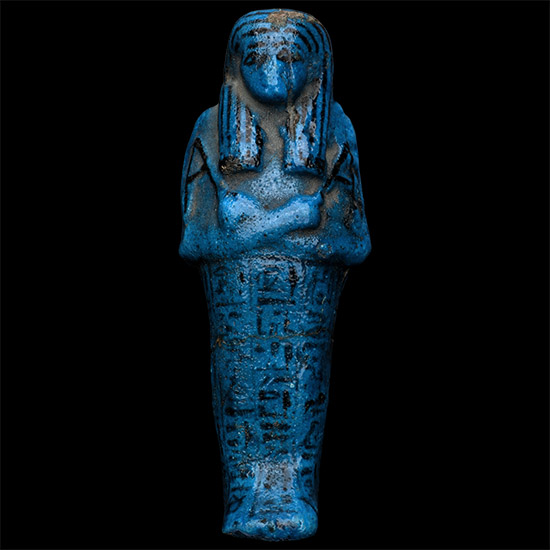
Egyptian Deir el-Bahari Bright Blue Glazed Faience Shabti of Nesitanebisheru, Daughter of Pinedjem II, High Priest of Amun, and Neskhons
Third Intermediate Period, 21st Dynasty, circa 980-935 B.C.Estimate: £6,000 - 8,000 (+bp*)
Bids: 3 | Current Bid: £40
Deep blue, lustrous-glazed mummiform shabti with a tripartite wig and modelled arms; each hand holding a hoe, with the implements, wig, and facial details rendered in black; on the back of the figure, below the wig, hangs a centrally positioned trapezoidal seed bag in black; the bottom half of the figure bears eight columns of hieroglyphic text in black, giving a version of the shabti spell. 229 grams, 15.1 cm
From the cache of mummies of the priests of Amun at Deir el-Bahari, found by the Abdul Rassoul family circa 1910. E.E.S. sale, November 1967, sold for £5.00. Acquired from Richardson, St Christopher’s Place, Wigmore Street. London, late 1960s, for £7.00 and 10 shillings. From the private collection of Peter Clayton, FCILIP, Dip, Arch, FSA, FRNS, Hemel Hempstead, Hertfordshire, UK; formed since the late 1950s. Accompanied by an academic report by Paul Whelan. Accompanied by an old handwritten information card by Peter Clayton, collection no.122. This lot has been checked against the Interpol Database of stolen works of art and is accompanied by search certificate no.13491-262881. -
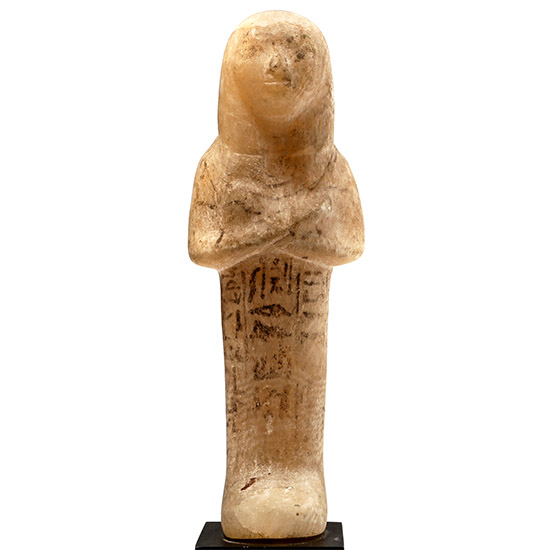
Egyptian Alabaster Shabti Figure of the Osiris, Kay
New Kingdom, 19th-20th Dynasty, circa 1292-1077 B.C.Estimate: £2,000 - 3,000 (+bp*)
Bids: 1 | Current Bid: £5
Mummiform figure wearing a short lappet wig, with a black-painted broad collar, arms crossed over the chest, holding black-painted agricultural implements; eight columns of black hieroglyphic text surround the figure's lower half, the front central column reading: 'The illuminated one, the Osiris, Kay...'. 297 grams total, 15.5 cm including stand
Acquired privately at Cumberland Coin Fair, Marble Arch, circa 1980, for £75.00. From the private collection of Peter Clayton, FCILIP, Dip, Arch, FSA, FRNS, Hemel Hempstead, Hertfordshire, UK; formed since the late 1950s. This lot has been checked against the Interpol Database of stolen works of art and is accompanied by search certificate no.13492-262899. -
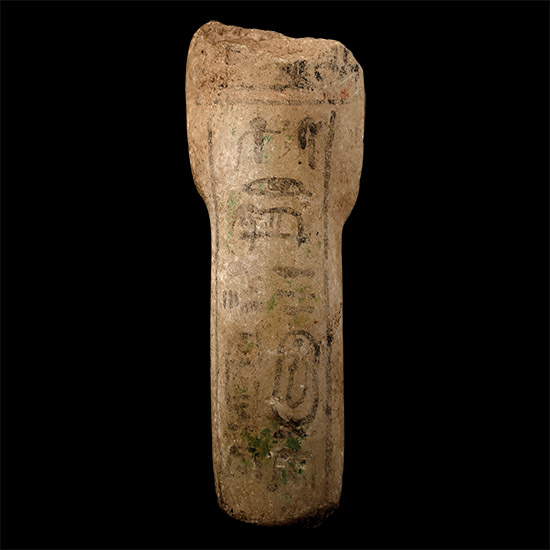
Egyptian Alabaster Shabti of Pharaoh Ramesses VI
New Kingdom, 20th Dynasty, circa 1140-1132 B.C.Estimate: £1,000 - 1,400 (+bp*)
Opening Bid: £5
Formless mummiform shape (head missing), with the lower portions of a lappet wig, schematically represented arms and hands, a collar, and an inscription added in black, with traces of green pigment; the inscription, including two cartouches, reads: 'The illuminated one, the Osiris, Lord of the Two Lands Neb-Maat-Re, beloved of Amun, Master of Appearances, Ramesses', sḥḏ wsı͗r nb tꜢwy (nb-mꜢꜤt-rꜤ mry ı͗mn) nb ḫꜤw (rꜤ-ms.sw). 431 grams, 14.7 cm
Acquired March 1977. From the private collection of Peter Clayton, FCILIP, Dip, Arch, FSA, FRNS, Hemel Hempstead, Hertfordshire, UK; formed since the late 1950s. Accompanied by an old handwritten information card by Peter Clayton, collection no.126.
This rather rudimentary, peg-like shabti is characteristic of those for Ramesses IV, VI, and VII, as well as of non-royal figurines of the 20th Dynasty. Because of their virtually featureless appearance, which relies entirely on painted details, this shabti type has been referred to as 'à contours perdus' ('with lost outlines'). -
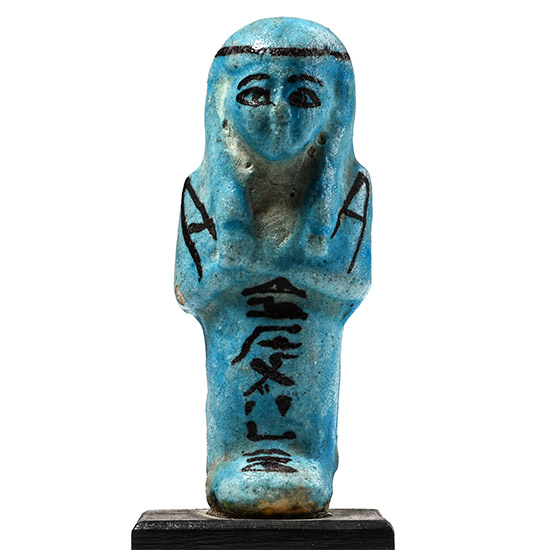
Egyptian Blue Glazed Faience Shabti of Nes-pa-her-an
Third Intermediate Period, 21st Dynasty, circa 980-935 B.C.Estimate: £600 - 800 (+bp*)
Bids: 1 | Current Bid: £5
Mummiform figure wearing a lappet wig encircled at the top by a black-painted sash, with arms crossed and hands holding black-painted hoes and a seed bag across the back; eyes and brows detailed in black; with a column of hieroglyphic text in black on the lower body, reading: 'The Osiris, Nes-pa-her-an'; mounted on a custom-made stand. 84 grams total, 11.4 cm including stand
From the private collection of Peter Clayton, FCILIP, Dip, Arch, FSA, FRNS, Hemel Hempstead, Hertfordshire, UK; formed since the late 1950s. Accompanied by an old handwritten information card by Peter Clayton, collection no.113.
Nes-pa-her-an's shabtis were recovered from the so-called 'Priests of Amun Cache' discovered in 1891 in the mortuary temple complex of Queen Hatshepsut. -
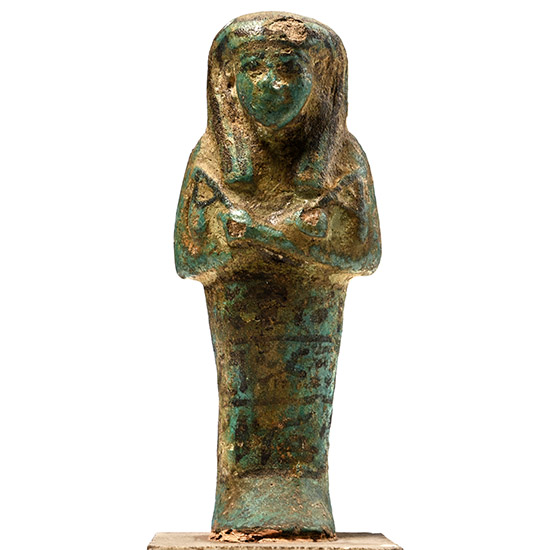
Egyptian Blue Faience Shabti of Pa-Ka
Third Intermediate Period, 21st Dynasty, circa 980-935 B.C.Estimate: £500 - 700 (+bp*)
Bids: 1 | Current Bid: £5
Mummiform type wearing a lappet wig, with arms crossed and hands holding hoes; the wig, facial details, and hoes are highlighted in black; three horizontal lines of hieroglyphic text on the lower body, giving the owner's name and an abbreviated version of the shabti spell; mounted on a stand. 192 grams total, 13 cm including stand
Ex E.B.W. Chappelors collection, July 1958. From the private collection of Peter Clayton, FCILIP, Dip, Arch, FSA, FRNS, Hemel Hempstead, Hertfordshire, UK; formed since the late 1950s. Accompanied by an old handwritten information card by Peter Clayton, collection no.42. -
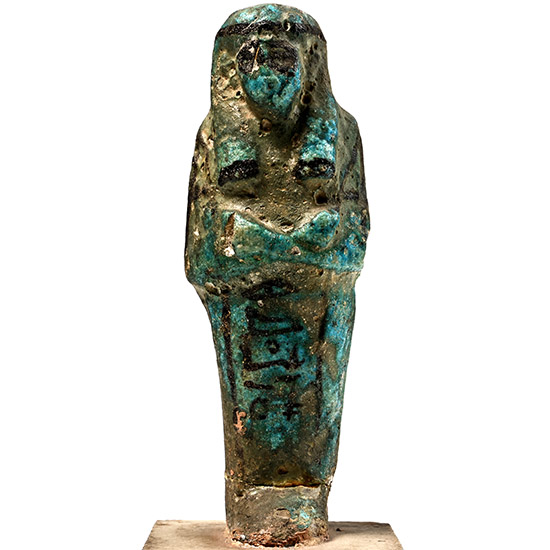
Egyptian Blue Glazed Faience Shabti of the Osiris Pedi-Khonsu
Third Intermediate Period, 21st Dynasty, circa 980-935 B.C.Estimate: £500 - 700 (+bp*)
Opening Bid: £5
Mummiform type wearing a lappet wig, with arms crossed and hands holding hoes, black-painted detailing on the face, lappet ends, sash tie encircling the wig, seed bag across the back, and a column of hieroglyphic text on the lower body; mounted on a display stand, repaired. 183 grams total, 12.9 cm including stand
Ex E.B.W.Chappelors collection, July 1958. From the private collection of Peter Clayton, FCILIP, Dip, Arch, FSA, FRNS, Hemel Hempstead, Hertfordshire, UK; formed since the late 1950s. Accompanied by an old handwritten information card by Peter Clayton, collection no.41.
The writing of Khonsu on this shabti is reversed from the usual spelling and matches another example in the Musée d'ethnographie de Neuchâtel, Switzerland, for the same individual (Schlögl, H.A., and Brodbeck, A., Ägyptische Totenfiguren aus öffentlichen und privaten Sammlungen der Schweiz, Göttingen, 1990, p. 213, no. 135). -
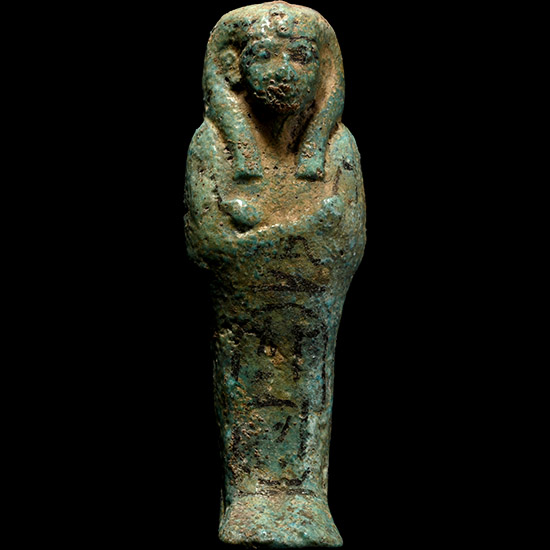
Egyptian Turquoise Blue Glazed Faience Shabti with Cartouche of Kedmerut
Third Intermediate Period, 22nd Dynasty, circa 825-777 B.C.Estimate: £500 - 700 (+bp*)
Opening Bid: £5
Mummiform shabti wearing a lappet wig, bearing a faintly modelled royal uraeus on the brow, with arms crossed and hands holding black-painted hoes, a black-painted seed belt across the back, black detailing on the face, and hieroglyphic text on the lower body giving the introduction 'The Osiris' followed by Kedmerut's name within a cartouche. 60.8 grams, 99 mm
From the private collection of Peter Clayton, FCILIP, Dip, Arch, FSA, FRNS, Hemel Hempstead, Hertfordshire, UK; formed since the late 1950s.
Kedmerut was the 23rd Divine Adoratrice of Amun, a title originally bestowed on the daughter of Amun’s chief priests during Hatshepsut’s reign (1473–1458 BC). By the Third Intermediate Period, these priestly women also held the title ‘God’s Wife of Amun’ and wielded considerable power, effectively ruling Upper Egypt as sovereigns. Indeed, Kedmerut’s shabti bears a uraeus on its forehead, symbolising kingship. -
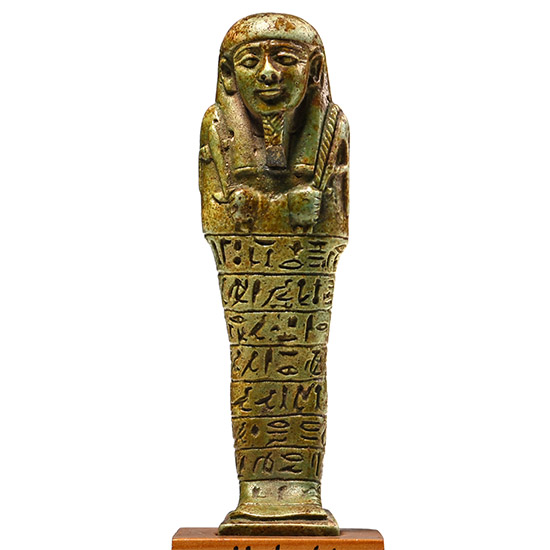
Egyptian Green Glazed Faience Shabti of Wedjahor
Late Period, 26th Dynasty, 664-525 B.C.Estimate: £800 - 1,000 (+bp*)
Bids: 3 | Current Bid: £35
Mummiform figure wearing a plain tripartite wig with horizontal line detailing at the lappet ends, a braided false beard, a finely modelled face, arms crossed with the left hand holding a pick and the right a hoe, and a tightly twisted cord of a long rectangular seed bag, which hangs over the left shoulder; seven horizontal bands of hieroglyphs on the body, with an eighth on the foot, and more entirely filling the dorsal pillar, giving Chapter 6 of the Book of the Dead; with a display stand bearing the legend 'Ushabti of Wedjahor XXVI Dyn'. 63.9 grams, 10.9 cm (81.2 grams total, 12.6 cm including stand)
Acquired at Michael's, Crawford Street, 6th January 1960, £3:5:0 for two. From the private collection of Peter Clayton, FCILIP, Dip, Arch, FSA, FRNS, Hemel Hempstead, Hertfordshire, UK; formed since the late 1950s. Accompanied by an old handwritten information card by Peter Clayton, collection no.69A.

