
Ancient Art, Antiquities, Books, Natural History, Stamps & Coins

-
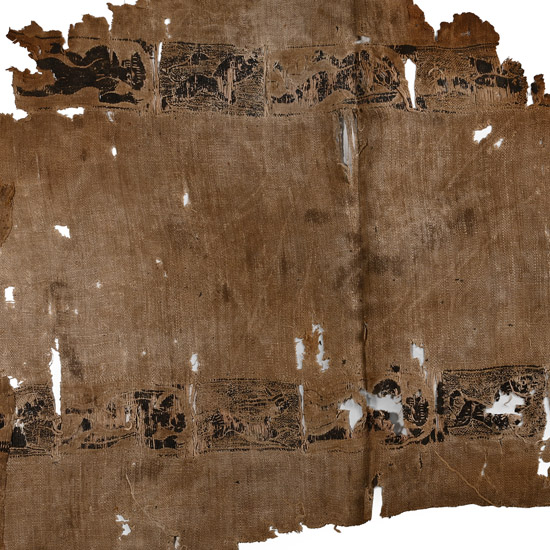
Large Egyptian Coptic Tunic Textile Fragment with Parallel Clavi and Images of Hunting Warriors and Animals
Circa 4th-5th century A.D.Estimate: £200 - 300 (+bp*)
Opening Bid: £5
Large portion of a tunic featuring pairs of 'clavi' decorated with an alternating sequence of shield-bearing hunters, lions, and rabbits; on the right lower side, an ornamental tabula; white linen warp with S-twist, tapestry-woven figures. 148 grams total including paper folder, 74 cm
Acquired 1970s-1996. Property of a North American collector. London collection, 2016.
The theme of rabbits or hares, in association with other characters and animals of the Dionysian thiasos (like the lions), in a hunting setting, has notable parallels. Such representations are linked to narratives of the Dionysian cycle. However, the hunting scene—considered by the Romans the best exercise for military training—may imply a strong connection to the military context. -
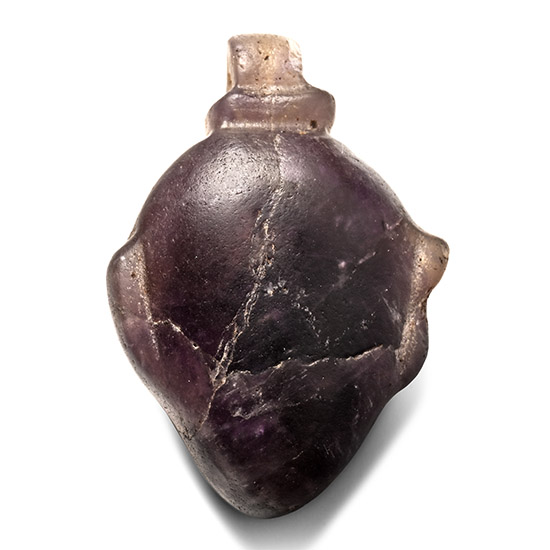
Egyptian Amythest Heart Amulet
Late Period, circa 664-332 B.C.Estimate: £100 - 140 (+bp*)
Opening Bid: £50
Lentoid in section with two side lugs and a suspension loop on the top. 4.7 grams, 25 mm
London gentleman's collection, 1970-1990s, by descent.
Ancient Egyptians regarded the heart (ib) as the seat of intelligence, emotions, behaviour, and memory. During the ‘Weighing of the Heart’ ceremony, the heart spoke for the deceased before Osiris and accounted for their actions. For this reason, Egyptians placed heart amulets on mummies to protect the organ and secure a favourable judgement. -
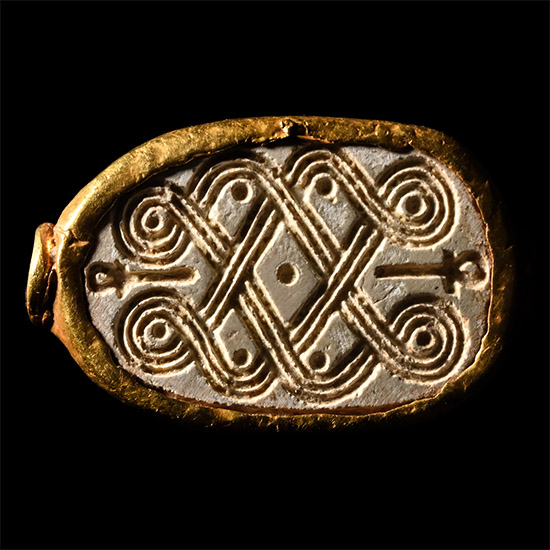
Egyptian Steatite Scarab with Interlocking Scrolls in Gold Mount
Second Intermediate Period, circa 1650 B.C. and laterEstimate: £200 - 300 (‡+bp*)
Opening Bid: £100
Comprising a carved scarab in a gold frame with mounting rings suitable for use as a ring bezel; the underside features a trilinear looped guilloche motif flanking two ankh motifs. 2.63 grams, 20 mm
Acquired from Derek Content, 20 May 1975. Private collection of Kal Noselson, New York, acquired between 1976 and the late 1990s; thence by descent. Accompanied by an original handwritten invoice from Derek Content, dated 20 May 1975. -
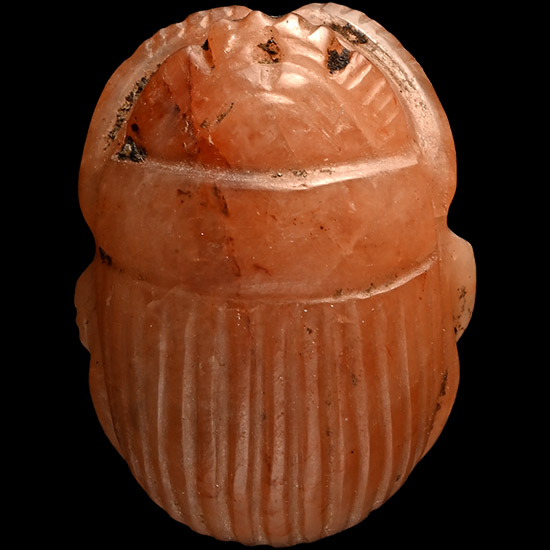
Egyptian Carnelian Heart Scarab
Late Period, 664-332 B.C.Estimate: £800 - 1,000 (+bp*)
Opening Bid: £400
With fine anatomical detailing on the body and striated wingcase, legs folded beneath the body and flanked by a ribbed suspension loop. 7.35 grams, 24 mm
From a mid 20th century collection.
The scarab amulet was one of ancient Egypt’s most widespread symbols, signifying rebirth, transformation, and protection. Modelled on the dung beetle associated with the sun god Khepri—believed to roll the sun across the sky—it symbolised the cycle of life and renewal. Used widely from the early Middle Kingdom onward, scarabs served as funerary amulets, personal charms, and seals, often inscribed with prayers or names. They reflect both spiritual beliefs and daily life in ancient Egypt. -
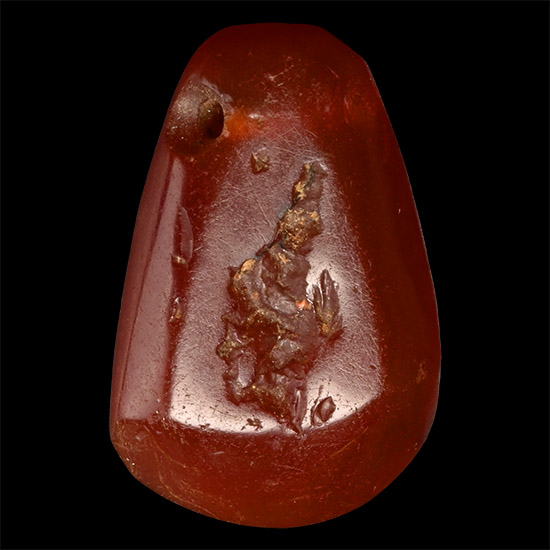
Egyptian Carnelian Amulet with Isis
Late-Ptolemaic Period, circa 664-30 B.C.Estimate: £200 - 300 (+bp*)
Opening Bid: £75
Trapezoidal in plan and biconvex in section, with faceted edges, bearing a depiction of Isis Lactans; pierced for suspension. 2.08 grams, 19 mm
Property of a London, UK, gentleman, 1970-2000. -
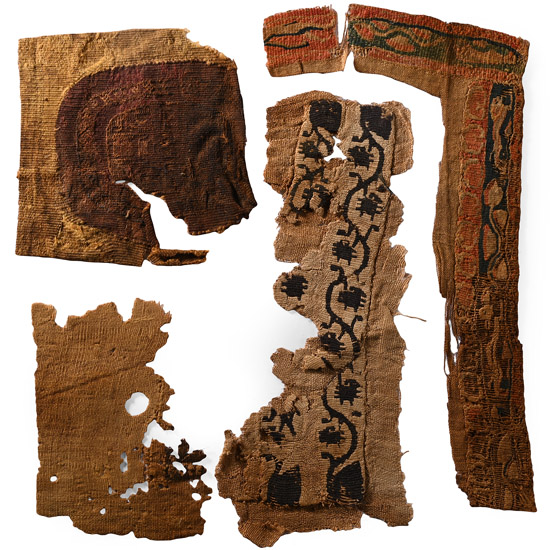
Egyptian Coptic Tunics Textile Fragments of Orbiculus and Segmenta with Animals and Geometric Decoration
Circa 4th-7th century A.D.Estimate: £70 - 90 (+bp*)
Opening Bid: £5
Comprising a purple-red wool orbiculus on linen, decorated with geometric patterns; a clavus fragment featuring a double row of vegetal interlaces in natural and dark blue wool (S-twist); a fragment of green, red, and blue wool textile on linen, decorated with vegetal motifs; and an indistinct linen fragment with traces of geometric borders. 30 grams total, 13-27 cm
Acquired 1970s-1996. Property of a North American collector. London collection, 2016.
The fragments are decorative parts of tunics. These are fabrics of great decorative finesse, with some elements displaying an unusual and extremely well-preserved colour palette. The plant designs are related to the so-called Nilotic decorative pattern. -
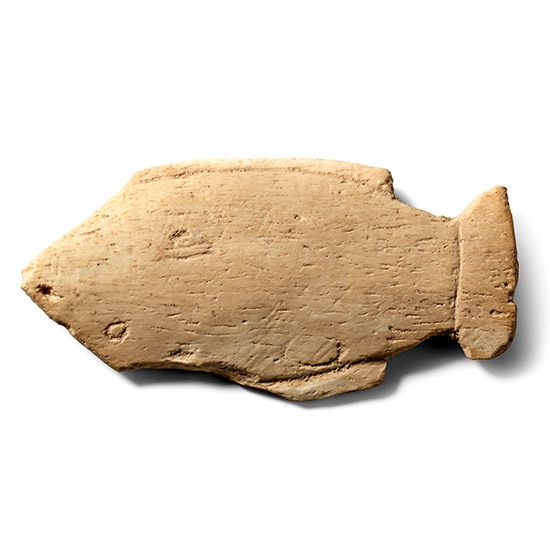
Egyptian Bone Fish Amulet
New Kingdom, circa 1400–1292 B.C.Estimate: £60 - 80 (+bp*)
Opening Bid: £5
Carved as a fish in profile with tail and fins, circular eye detail; chipped to the top. 2.5 grams, 39 mm
London, UK, art market, 1980s. Private collection, London, UK. -
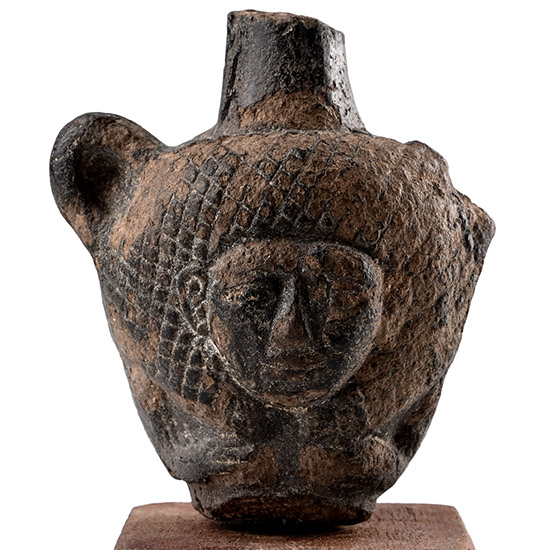
Egyptian Terracotta Pseudo-Hathor Votive Jug
1st millennium B.C.Estimate: £200 - 300 (+bp*)
Opening Bid: £5
Formed as a model janiform jug with loop handles (one absent), a spout, and addorsed masks of Hathor with hatched detailing on the hair, arms bent below the face, and hands cupping the breasts; repaired and mounted on a custom-made stand. 192 grams total, 10.2 cm high including stand
From a Hastings, Kent, UK, antiques dealer, (shop closed 2009). with Burstow & Hewett, 2024. Acquired by the current owner from the above. Accompanied by a copy of an illustrated academic report by Simone Musso. -
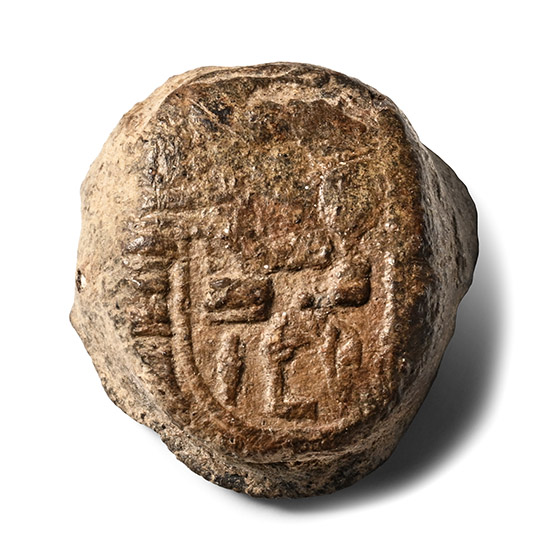
Egyptian Terracotta Bulla with Royal Cartouche
New Kingdom, circa 1400-1292 B.C.Estimate: £60 - 80 (+bp*)
Opening Bid: £5
Discoid seal impression with one face preserving a partial impressed cartouche, the other side bearing the impression of a cord and linen. 1.92 grams, 17 mm
London, UK, art market, 1980s. Private collection, London, UK.
Clay seals were used to secure doors and containers holding valuable commodities and goods. The impression on the underside of this example indicates that it once sealed a linen bag or a linen lid cover. -
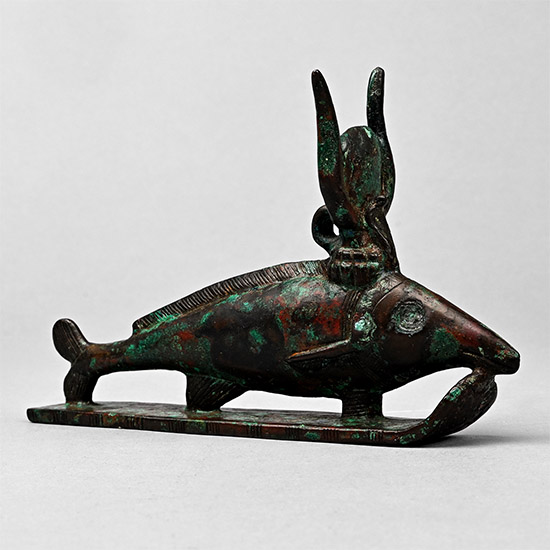
Large Egyptian Bronze Oxyrhynchus Fish of Per-Medjed with Hieroglyphic Inscription
Late Period-Ptolemaic Period, 664-30 B.C.Estimate: £4,000 - 6,000 (‡+bp*)
Opening Bid: £2,100
Modelled in the round on a sledge attached by ventral and pectoral fins, a forked tail, a dorsal ridge, and a tapering nose, featuring recessed circular eyes filled with enamel, a horned sun disc headdress fronted by a uraeus, and a suspension loop behind; a few hieroglyphs of a dedication remain visible on the underside of the sledge, which may be interpreted as part of a name ‘….Ta-ir-di-ankhet…’ (…tꜢ di͗ Ꜥnḫ t….). 585 grams, 17 cm
Acquired from Gallery Reiner, Paris, France, 1981. Private collection, Europe. Accompanied by a copy of French passport no.150583 dated 29 November 2013. This lot has been checked against the Interpol Database of stolen works of art and is accompanied by a search certificate no.12375-226676.
The Medjed, a type of elephant-snout fish (Mormyrus kannume), was revered in ancient Egyptian religion, particularly in Per-Medjed, better known by its Greek name, Oxyrhynchus Polis. This version of the name, meaning "city of the sharp-nosed," reflects the fish's distinctive appearance as depicted in Egyptian art. These fish were believed to have consumed the penis of Osiris, the god who was dismembered and scattered by his brother Seth. As sacred creatures, figurines of the Medjed were often adorned with a horned sun-disc headdress worn by the goddesses Hathor and Isis, suggesting a close association with both. Some figurines, like this example, featured suspension loops, allowing them to be worn as pendant amulets. -
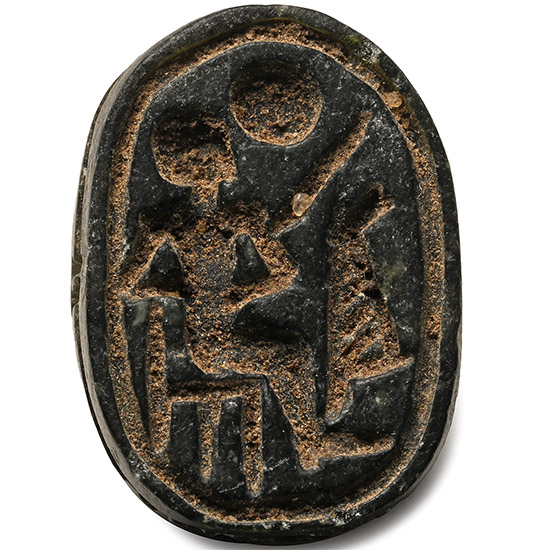
Egyptian Black Stone Scarab with Seated Figure
Late Period, 664-332 B.C.Estimate: £400 - 600 (+bp*)
Opening Bid: £200
Plano-convex in section, with the underside showing an enthroned figure holding a staff before a reed leaf, with a sun disc above. 2.8 grams, 17 mm
From a mid 20th century collection. -
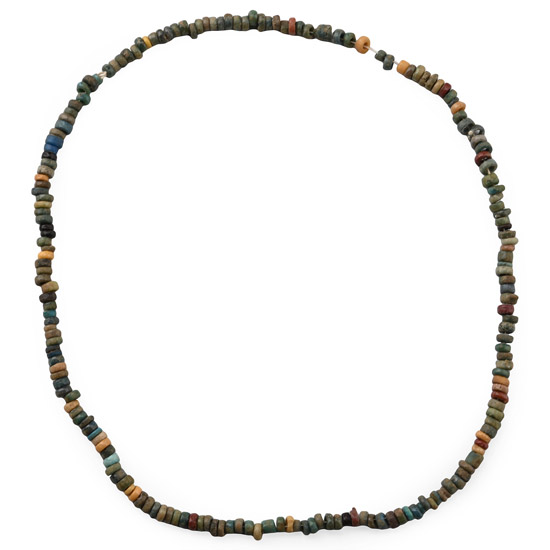
Egyptian Faience Mummy Bead Bracelet
Late Period-Ptolemaic Period, circa 664-30 B.C.Estimate: £40 - 60 (+bp*)
Opening Bid: £5
Composed of green and blue glazed oblate beads, restrung. 3 grams, 29 cm
Excavated from Egypt in 1914. From the private collection of Mr David Sams and his wife Elizabeth Kate Sams, gentry and amateur archaeologists who travelled to Egypt in 1914 with their daughter Ethel. Mr Sams and his wife led digging expeditions from which these items come, from the family estate of Mr and Mrs Sams, by direct descent to their granddaughter.
