
Ancient Art, Antiquities, Books, Natural History, Stamps & Coins

-
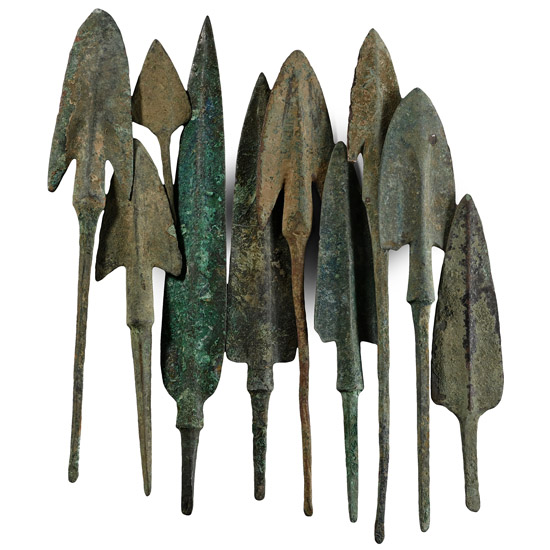
Western Asiatic Bronze Arrowhead Collection
2nd-1st millennium B.C.Estimate: £100 - 140 (+bp*)
Opening Bid: £55
Including barbed-and-tanged, leaf-shaped, triangular and other types. 242 grams total, 6-16.6 cm
Ex Abelita collection, 1980s-2010. -
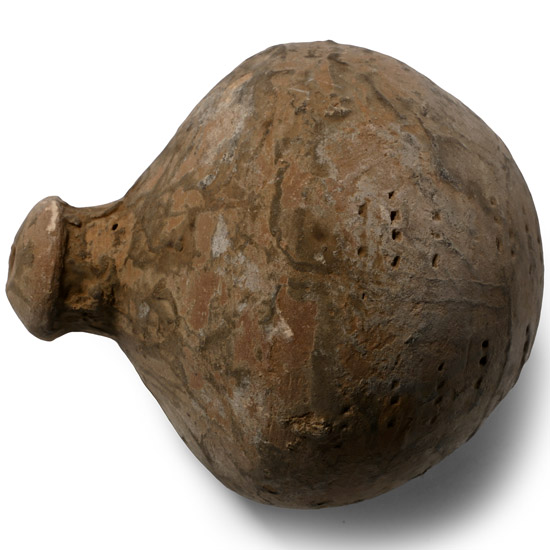
Byzantine 'Greek Fire' Ceramic Fire Bomb or Hand Grenade
9th-11th century A.D.Estimate: £80 - 100 (+bp*)
Opening Bid: £5
Ovoid in profile with domed filler hole; intended to be filled with explosive liquid and a wick, and used as a hand grenade. 370 grams, 10.4 cm
From an important specialist collection, London, UK, 1990s onwards. Accompanied by an academic paper by military specialist Dr Raffaele D'Amato, dated 15 July 2019 and titled 'Eastern Roman Empire - Greek Fire Bomb or Hand Grenade (μεσαίον kακάβιον) 9th-11th century AD'.
Apart from the use of siphons or manual flame-throwers called cheirosiphona, special corps of Roman soldiers employed terracotta grenades, in the form of small jars, abundantly evidenced in archaeological excavations. They were called μεσαία kακαβιά or κυτροκακάβια where the former had a bulbous shape and the latter a more cylindrical form. -
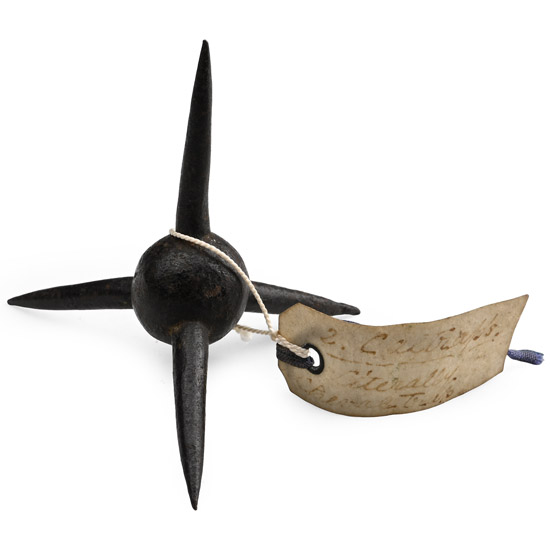
Medieval Iron Caltrop
15th-16th century A.D.Estimate: £40 - 60 (+bp*)
Bids: 2 | Current Bid: £10
Comprising a sphere with four radiating round-section spikes; old collector's label 71 grams, 82 mm
From the private collection of Peter Clayton, FCILIP, Dip, Arch, FSA, FRNS, Hemel Hempstead, Hertfordshire, UK; formed since the late 1950s.
Caltrops were strewn in front of an army in order to injure attacking horses or infantry stepping on them. The design means that they always land with one spike vertical. -
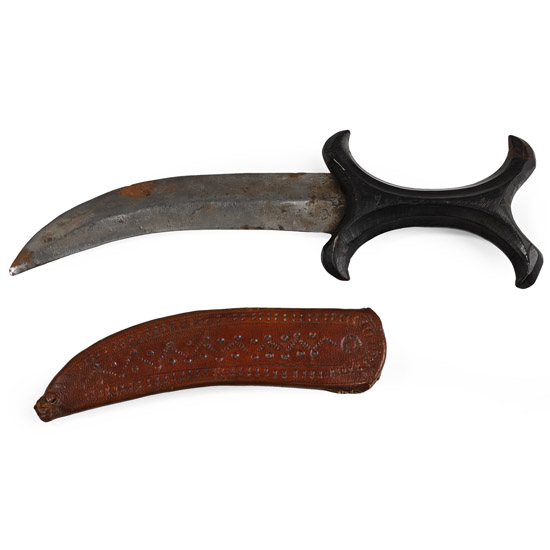
Beja or Hadendoa Curved Dagger with Sheath
Sudan, late 19th-early 20th century A.D.Estimate: £80 - 100 (+bp*)
Opening Bid: £5
Comprising a thin leaf-shaped two-edged blade with curved tip in an X-shaped wooden hilt with carved fluting; leather sheath with stamped detailing and suspension ring to reverse. 140 grams, 26.5 cm
From the private collection of Peter Clayton, FCILIP, Dip, Arch, FSA, FRNS, Hemel Hempstead, Hertfordshire, UK; formed since the late 1950s. -
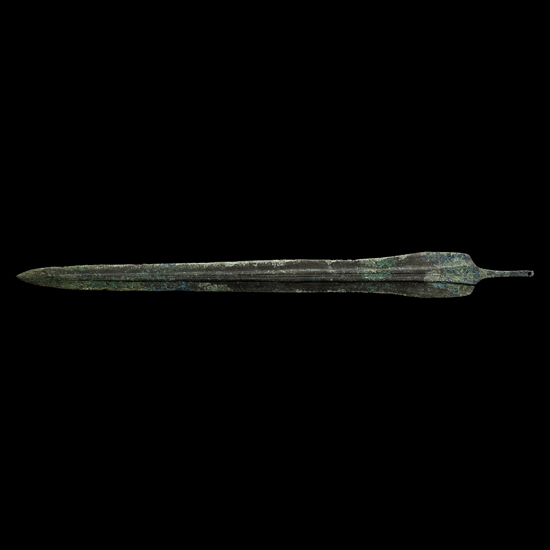
Luristan Bronze Tanged Dirk
Early 1st millennium B.C.Estimate: £100 - 140 (+bp*)
Opening Bid: £50
Comprising a slender blade with a raised midrib with grooves, a short rectangular-section tang pierced at the end. 200 grams, 41.5 cm
Ex Abelita family collection, 1980s-2000s.
The Luri people produced a quantity of fine metalwork, which, according to Dr Khorasani, could be due to a settled period arising as a result of the defeat of the Elamites by the Babylonians, leaving the Luristani people in relative peace for a period of time after 1200 BC. According to Khorasani, 'A culture of innovation and experimentation flourished, and the repertoire of the Luristan smiths expanded in the period between 1150-1050 B.C.' -
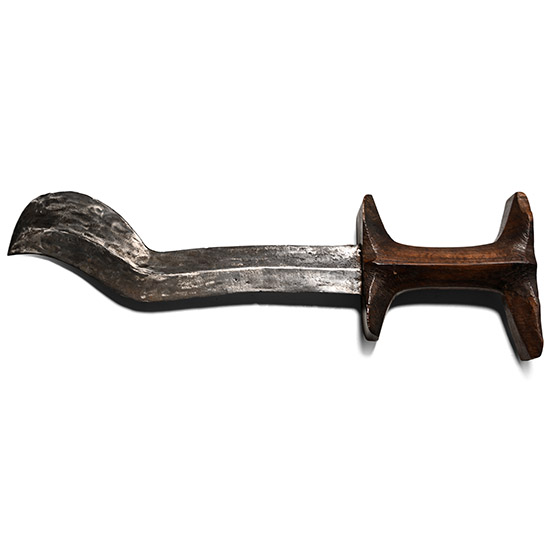
Large Beja Ham-Stringing Curved Knife
Sudan, late 19th century A.D.Estimate: £80 - 100 (+bp*)
Opening Bid: £5
With traditional X-shaped carved hilt, narrow two-edged blade with hooked end for slicing. 255 grams, 32.5 cm
From the private collection of Peter Clayton, FCILIP, Dip, Arch, FSA, FRNS, Hemel Hempstead, Hertfordshire, UK; formed since the late 1950s. -
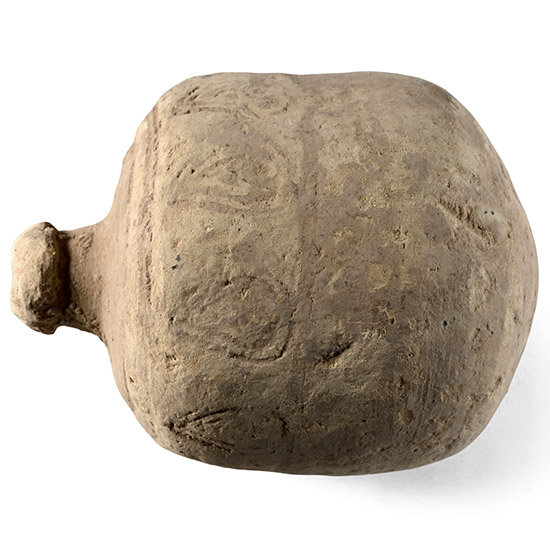
Byzantine 'Greek Fire' Ceramic Fire Bomb or Hand Grenade
9th-11th century A.D.Estimate: £70 - 90 (+bp*)
Opening Bid: £5
Drum-shaped body with rounded base and domed filler hole, impressed leaf motifs on the shoulder; intended to be filled with explosive liquid and a wick, and used as a hand grenade. 605 grams, 12.8 cm
Ex important collection of weaponry, London, UK, 1980-1990s. Accompanied by an academic paper by military specialist Dr Raffaele D'Amato, dated 15 July 2019 and titled 'Eastern Roman Empire - Greek Fire Bomb or Hand Grenade (μεσαίον kακάβιον) 9th-11th century AD'.
Apart from the use of siphons or manual flame-throwers called cheirosiphona, special corps of Roman soldiers employed terracotta grenades, in the form of small jars, abundantly evidenced in archaeological excavations. They were called μεσαία kακαβιά or κυτροκακάβια, where the former had a bulbous shape and the latter a more cylindrical form. -
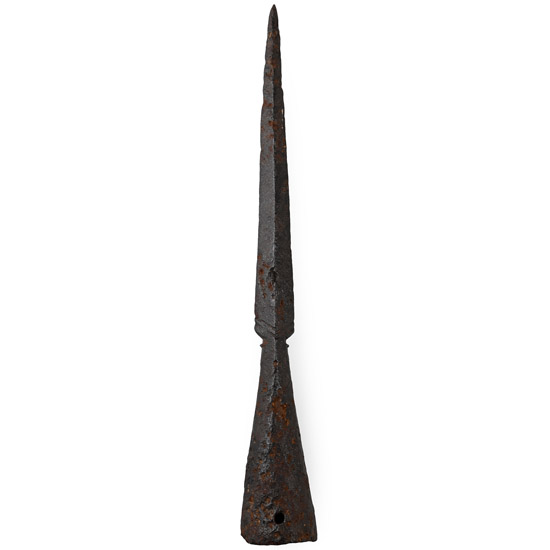
Eastern European Medieval Socketted Spear
Circa 14th century A.D. or laterEstimate: £70 - 90 (+bp*)
Bids: 1 | Current Bid: £5
Comprising a rectangular-section tapering blade and a tubular socket widening towards the base. 210 grams, 24.7 cm
Acquired on the UK art market since the 1960s. From the private collection of Mr J.P.H., a Woolwich, UK, collector, his collection formed since the 1960s. -
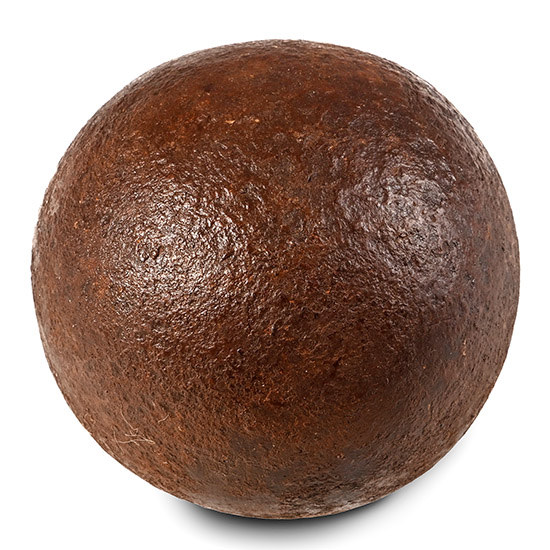
Battle of Sole Bay 12lb Iron Cannon Ball
Circa 1672 A.D.Estimate: £100 - 140 (+bp*)
Opening Bid: £50
About 4 inches in diameter, spherical solid shot with a small patch of slight flattening from the casting process. 5.43 kg, 10.8 cm
Found Southwold Beach, Suffolk, UK, in 1984. Acquired on the UK art market. Property of a Nottinghamshire, UK, gentleman.
The Battle of Solebay took place on 6 June 1672 near Southwold, Suffolk, England. It was an action in the Third Anglo-Dutch War and one of the largest naval battles of the period. A Dutch fleet attacked a combined Anglo-French force off the English coast but the outcome was inconclusive despite a very lengthy combat. The Allied fleet suffered considerable damage and was forced to abandon plans to land troops on the Dutch coast. -
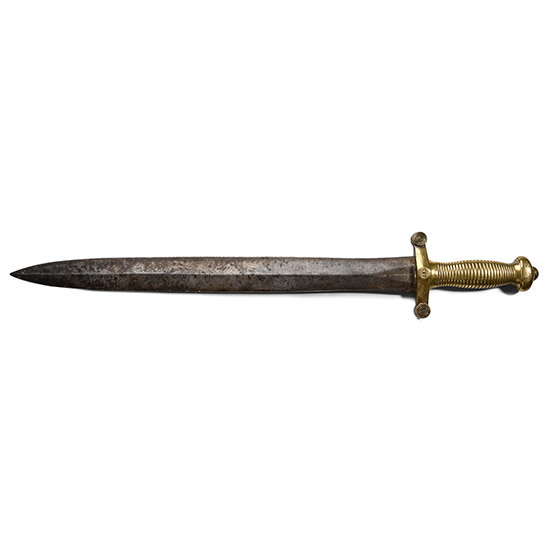
French Artillery Infantry Short Sword
Circa 1830-1848 A.D.Estimate: £100 - 140 (+bp*)
Bids: 1 | Current Bid: £5
Model 1831 double-edged short sword with slightly waisted lentoid-section blade, solid bronze hilt with ribbed grip, roundel finials to the crossguard, stamped '717' to one face and 'X' to underside; blade with asterisk proofing stamp, copperplate legend 'Shre...'; reverse with 'Châtellerault,1832'; edges notched. 1.11 kg, 63.7 cm
From the private collection of Peter Clayton, FCILIP, Dip, Arch, FSA, FRNS, Hemel Hempstead, Hertfordshire, UK; formed since the late 1950s. -
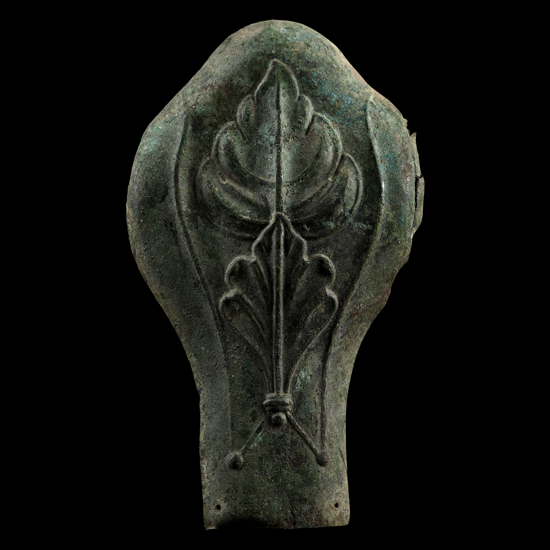
Greek Armour Plate with Palmette
Hellenistic, 2nd-1st century B.C.Estimate: £400 - 600 (+bp*)
Bids: 1 | Current Bid: £5
Piriform in plan with convex surface, high-relief repoussé acanthus-leaf palmette; mounting holes at the narrow end, edge chipped. 39.6 grams, 15.3 cm
From the late collection of a Cornish couple, formed from the early 1990s. -
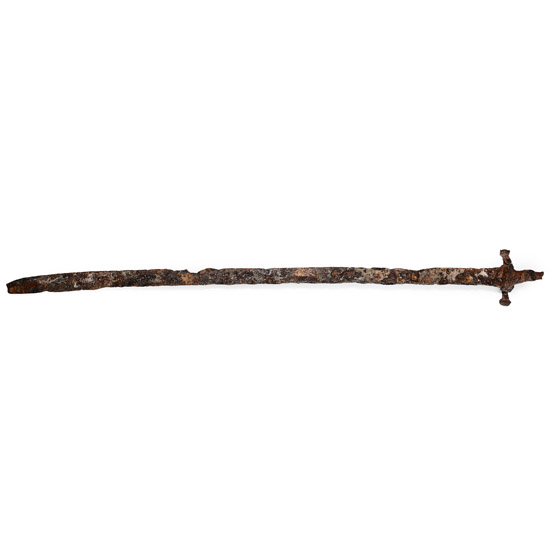
Khazar Iron Sabre Relic
8th-9th century A.D.Estimate: £200 - 300 (+bp*)
Opening Bid: £5
A single-edged hand-forged sabre with a gently curving blade and shallow tip; small ferrous crossguard with lobe finials; domed stud to the grip. 510 grams, 82 cm long
Acquired on the London art market, 2022. Private collection, Aylesbury, Buckinghamshire, UK.
