
Ancient Art, Antiquities, Books, Natural History, Stamps & Coins

-
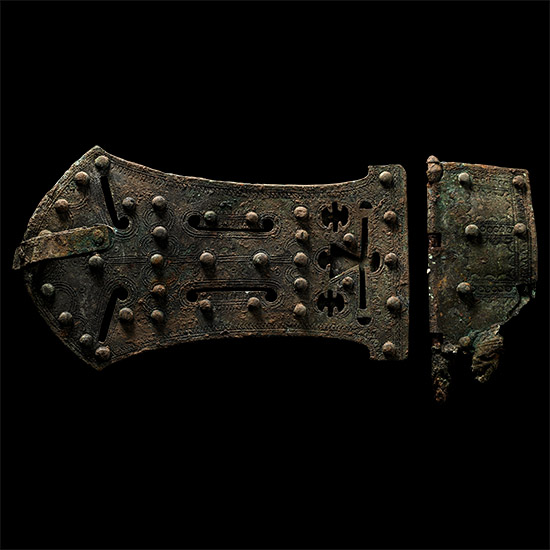
Roman Military Bronze Horse Harness Plates
Circa 3rd century A.D.Estimate: £400 - 600 (+bp*)
Bids: 1 | Current Bid: £5
Comprising: a broad flat-section tongue-shaped panel with incised linear detailing and punched-points, rows of domed rivets, openwork slots and other shapes; a hole at the apex with strap junction, small attachment panel to reverse; rectangular end-plate similarly decorated with articulating slots to one edge to accept a securing pin. 100 grams total, 9-14 cm
Private collection formed in Europe in the 1980s. Westminster collection, central London, UK
The strap harness, probably destined for the muzzle of the horse, or maybe part of a belt, belongs to forms of fittings for straps and belts of the Roman era found in the Danish bogs. Almost all feature attachments on the reverse side to secure the strap. Some bronze examples were decorated, on the front, with mosaic and enamel, inserted in the openwork perforations. These elements, judging by their form and craftsmanship, are of Romano-barbaric origin. -
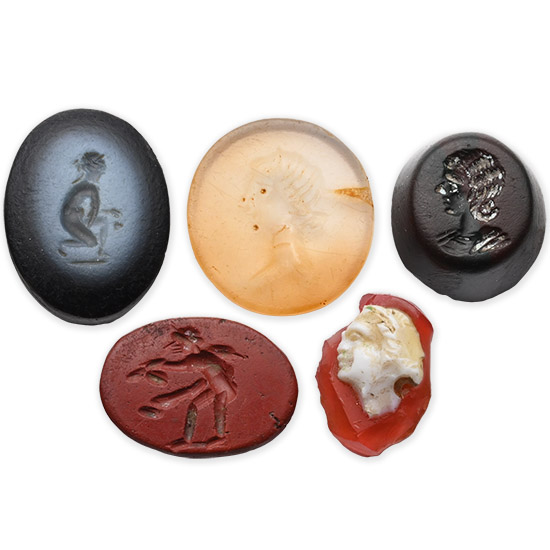
Roman Carved Gemstone Collection
1st century B.C. and laterEstimate: £400 - 600 (+bp*)
Bids: 3 | Current Bid: £25
Comprising: a transparent agate intaglio with a profile bust; a banded agate intaglio with a kneeling figure; an agate cameo with a female head; a red jasper intaglio with a putto; an oval thick intaglio with a profile female bust. 2.85 grams total, 9-13 mm
UK private collection assembled 1970s-90s, and thence to the liquidated state of above. -
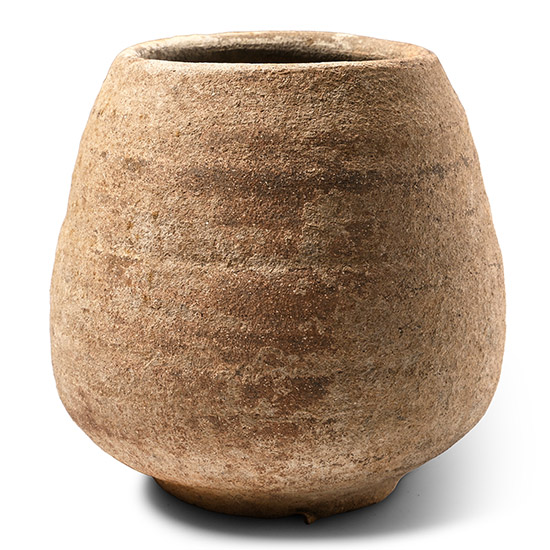
Large Carthaginian Buffware Ribbed Cup
Punic, circa 3rd-2nd century B.C.Estimate: £100 - 140 (+bp*)
Opening Bid: £5
Conical body with vertical lines to the outer face, flat discoid base and slightly chamfered rim. 345 grams, 11.2 cm
Ex old English collection. From the estate of a late Bristol, South West England, collector. -
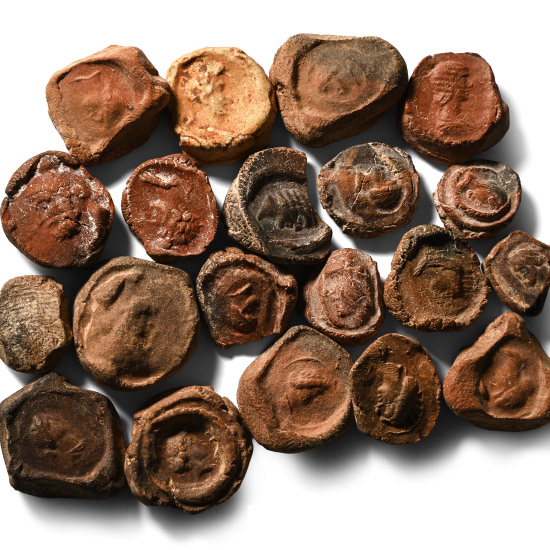
Roman Terracotta Bullae, Tesserae or Token Group
1st century B.C.-3rd century A.D.Estimate: £100 - 140 (+bp*)
Opening Bid: £5
A mixed group of ceramic bullae, tesserae or theatre tokens bearing low-relief motifs, mainly consisting of profile busts of deities. 31.1 grams total, 12-21 mm
From the private collection of a European gentleman (1942-2024), formed since the 1970s.
The term 'tessera' was used in Roman times to convey the Greek term σύμβολον (token). Small tiles are known as tokens, often shaped like coins, made of metal (copper, lead, iron), clay, bone, wood, or glass, stamped as well as engraved. The tokens, however, are not exclusively coin-shaped, as the Latin term 'tessera' suggests by etymologically referring to a square or at least a four-sided shape and confirmed in several cases by material remains of the past. Tokens and tesserae seem to have been used both in Athens and Rome for the distribution of goods. According to written sources, the term token is identified with credentials of the official authorities. They have also been interpreted as tokens of identity, as entrance tickets to theatre performances, tribunals or assemblies of citizens, archival material of seal engraving, as pawns in games, Charon’s obols and even as amulets. -
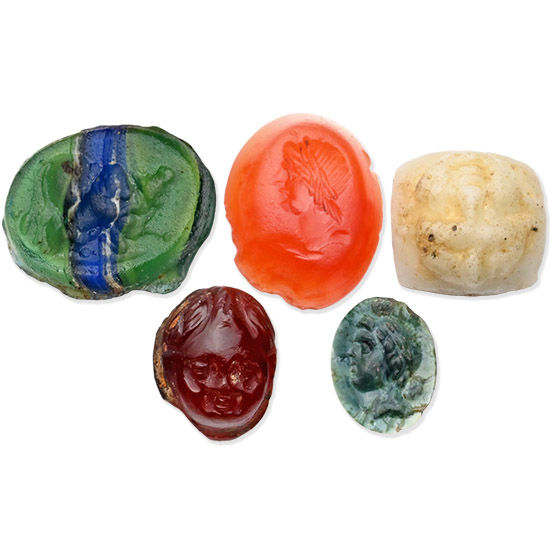
Roman Carved Gemstone Collection
1st-3rd century A.D. and laterEstimate: £400 - 600 (+bp*)
Bids: 1 | Current Bid: £5
Comprising: a banded glass intaglio with a lion attacking a bull; a mottled blue intaglio with a profile bust; a carnelian intaglio with a profile bust; a rectangular cameo with the head of a putto; a carnelian cameo of a putto. 2.45 grams total, 8-13 mm
UK private collection assembled 1970s-90s, and thence to the liquidated state of above. -
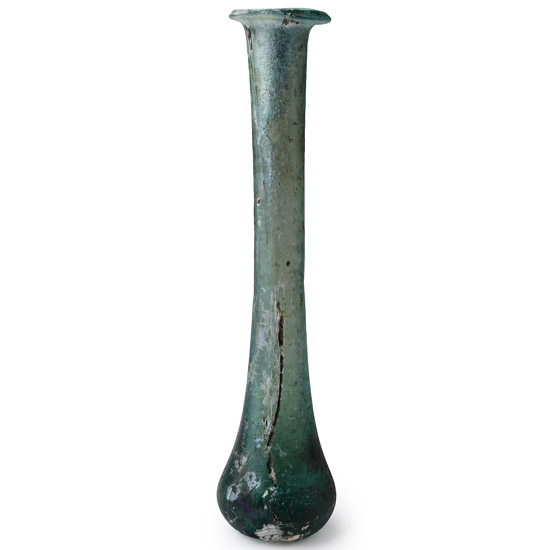
Roman Iridescent Turquoise Glass Unguentarium
Circa 1st century A.D.Estimate: £100 - 140 (+bp*)
Opening Bid: £50
Formed of thick glass with a flattened base and a long, tubular neck with an everted rim; repaired. 44.2 grams, 12.5 cm
Roman glass from an important London collection, acquired from the early 1980s. -
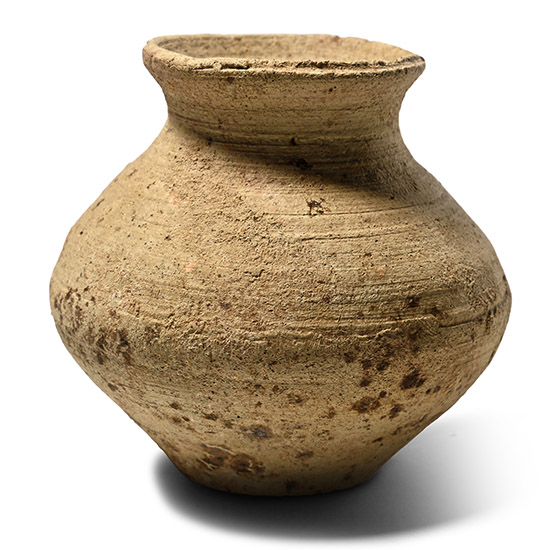
Small Roman Buffware Cosmetic Pot
Circa 1st-4th century A.D.Estimate: £30 - 40 (+bp*)
Opening Bid: £5
Biconical in profile with flared rim to the mouth, incised groove to the equator. 50 grams, 61 mm wide
Ex old English collection. From the estate of a late Bristol, South West England, collector. -
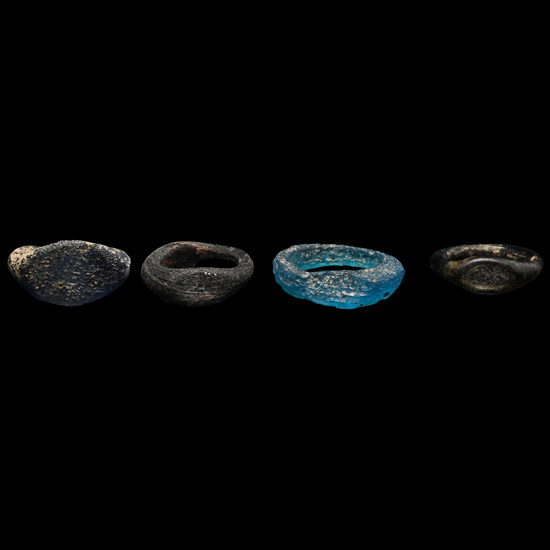
Roman Glass Ring Collection
3rd-4th century A.D.Estimate: £40 - 60 (+bp*)
Bids: 1 | Current Bid: £5
Group of four in varying shades of blue glass, each with a plain bezel. 3.64 grams total, 16-18 mm
From the private collection of a European gentleman (1942-2024), formed since the 1970s. -
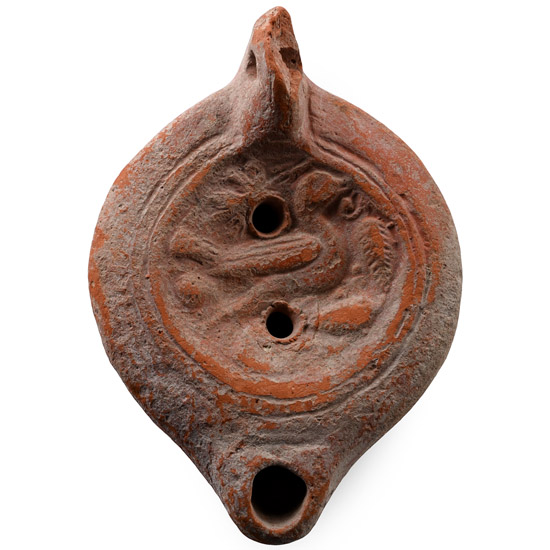
Roman Buffware Oil Lamp with Bird
Circa 2nd century A.D.Estimate: £80 - 100 (+bp*)
Opening Bid: £5
Round oil lamp with a pierced handle to the rear, a short nozzle and two filler holes on the discus with a bird facing right. 154 grams, 11.7 cm
From a UK collection formed in the 1980s. Property of an Essex, UK, gentleman. -
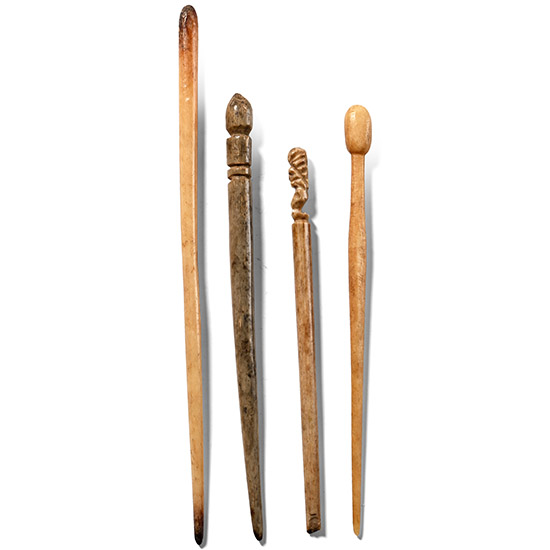
Roman Bone Pin Collection
1st-4th century A.D.Estimate: £80 - 100 (+bp*)
Bids: 1 | Current Bid: £5
Comprising: two with a bulbous finial; one with a lion head finial; one with a tapering body and rounded finial. 11.99 grams total, 9.3-13 cm
Ex German art market, 2000s. Acquired from an EU collector living in London. From the collection of Surrey, UK, gentleman. -
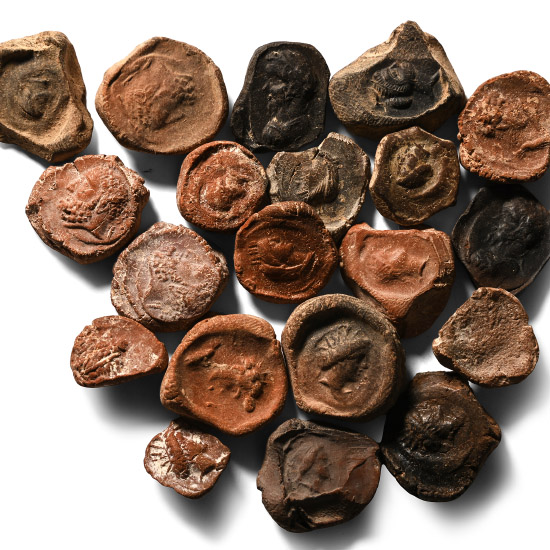
Roman Terracotta Bullae, Tesserae or Token Group
1st century B.C.-2nd century A.D.Estimate: £100 - 140 (+bp*)
Opening Bid: £5
A mixed group of ceramic bullae, tesserae or theatre tokens bearing low-relief motifs, mainly consisting of profile busts of deities. 30.7 grams total, 14-21 mm
From the private collection of a European gentleman (1942-2024), formed since the 1970s.
The term 'tessera' was used in Roman times to convey the Greek term σύμβολον (token). Small tiles are known as tokens, often shaped like coins, made of metal (copper, lead, iron), clay, bone, wood, or glass, stamped as well as engraved. The tokens, however, are not exclusively coin-shaped, as the Latin term 'tessera' suggests by etymologically referring to a square or at least a four-sided shape and confirmed in several cases by material remains of the past. Tokens and tesserae seem to have been used both in Athens and Rome for the distribution of goods. According to written sources, the term token is identified with credentials of the official authorities. They have also been interpreted as tokens of identity, as entrance tickets to theatre performances, tribunals or assemblies of citizens, archival material of seal engraving, as pawns in games, Charon’s obols and even as amulets. -
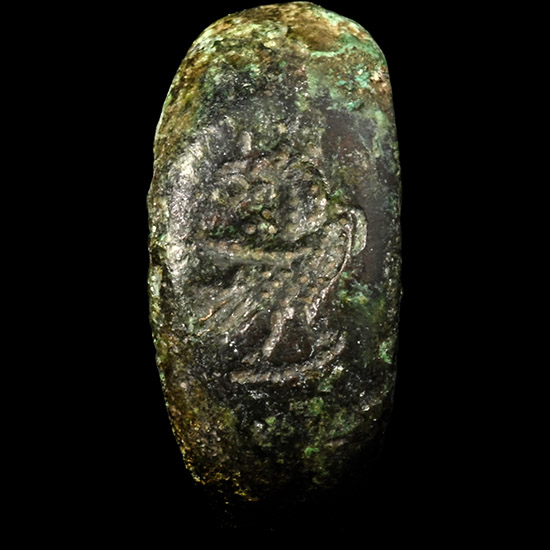
Roman Bronze Ring with Eagle
3rd-4th century A.D.Estimate: £40 - 60 (+bp*)
Opening Bid: £5
Plaque with incuse eagle perching with head turned to the rear. 3.38 grams, 20.81 mm overall, 17.10 mm internal diameter (approximate size British J 1/2, USA 5, Europe 9.32, Japan 9)
From the private collection of a European gentleman (1942-2024), formed since the 1970s.
