
Ancient Art, Antiquities, Books, Natural History, Stamps & Coins

-
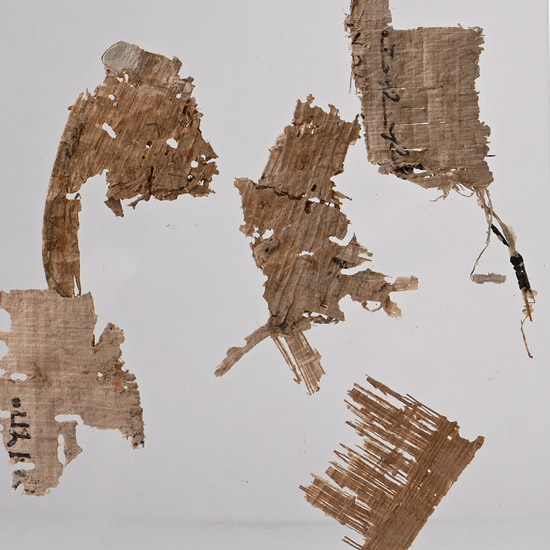
Egyptian Papyrus Fragments in Display Stand
Demotic, 300 B.C.-300 A.D.Estimate: £50 - 70 (+bp*)
Bids: 1 | Current Bid: £5
Irregular papyrus fragments with traces of Demotic and Greek script; mounted in a protective acrylic display. 80 grams total, 16 cm including stand
with a privately curated collection, 1980s-early 2000s. From the private collection and estate of Christine Simons (1943-2025), West Midlands, UK. -
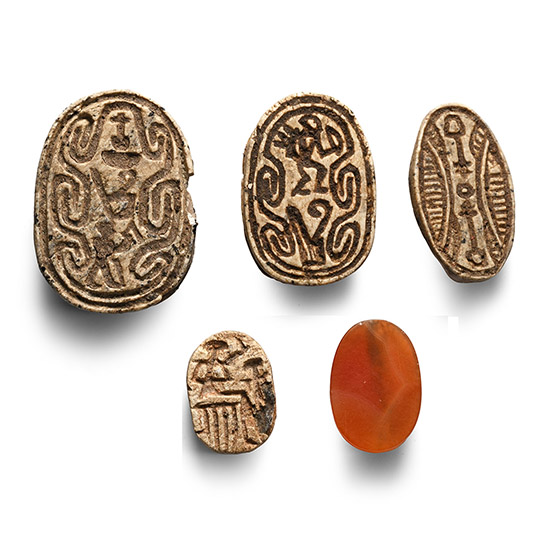
Egyptian Mixed Scarab Collection
2nd-1st millennium B.C. and laterEstimate: £400 - 600 (+bp*)
Opening Bid: £200
Comprising three faience scarabs with detailed bodies and decorated undersides, featuring: a scroll border with central design consisting of a nefer, neb, Red Crown, and a striding human figure holding a flail; a scroll border with a central figure of a bowman with a Red Crown beneath; a seated figure before an offering table(?); an oval scaraboid featuring a central sun disc with opposed nefer signs flanked by hatched panels; and a plain carnelian scarab. 22.75 grams total, 15-28 mm
From the collection of a gentleman, acquired on the London art market in the 1990s. This lot is accompanied by an illustrated lot declaration signed by the Head of the Antiquities Department, Dr Raffaele D'Amato. -
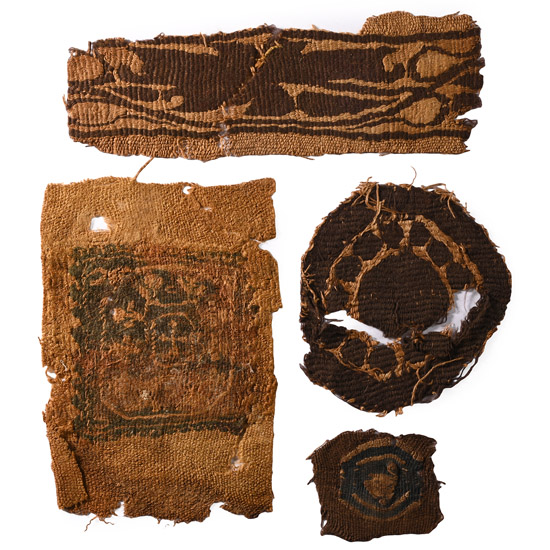
Egyptian Coptic Tunic Textile Fragments of Orbiculi, Segementa and Tablia with Animals, Geometric and Cross Decoration
Circa 4th-7th century A.D.Estimate: £80 - 100 (+bp*)
Opening Bid: £5
Comprising: an orbiculus in purple wool and coarse linen, S-torsion; a tabula in purple wool and coarse linen, on a brown linen background, S-torsion, embroidered with a central cross, the borders decorated with meanders; a broad segmentum in purple wool and coarse linen, on a brown linen background, S-torsion; a small orbiculus with vegetal ornaments. 11 grams total, 5.2-18.5 cm
Acquired 1970s-1996. Property of a North American collector. London collection, 2016.
The tabula, or tablion, was a square embroidery decorating tunics or mantles. The Christian elements, like the cross at the centre of our tabula, began to decorate garments from the 4th century onwards. -
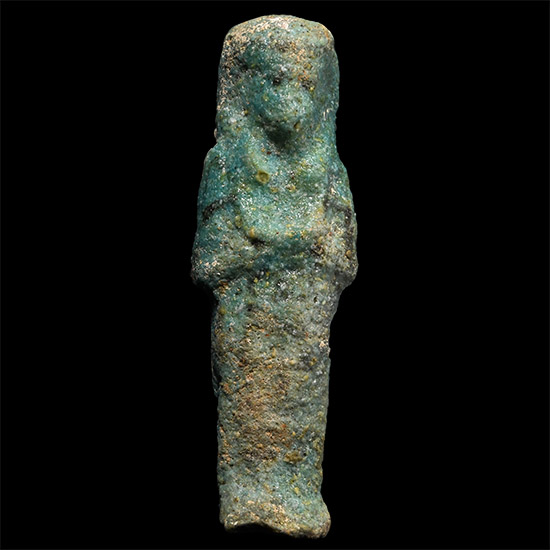
Egyptian Blue Faience Shabti
Third Intermediate Period, 22nd Dynasty, circa 945-715 B.C.Estimate: £100 - 140 (+bp*)
Opening Bid: £50
Mummiform figure wearing a lappet wig with a black hair sash, hands crossed at the chest, holding agricultural implements, a seed bag at the back, and a column of hieroglyphic inscription down the front. 20.77 grams, 73 mm
From the collection of a London gentleman, 2000s. -
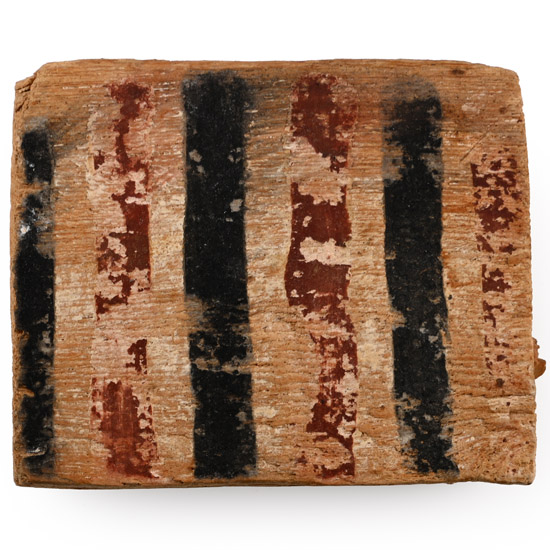
Egyptian Painted Wooden Sarcophagus Section
Late-Ptolemaic Period, circa 664-30 B.C.Estimate: £30 - 40 (+bp*)
Opening Bid: £5
Rectangular fragment preserving a decorative design of alternating black, red, and white stripes. 20.3 grams, 64 mm
with a privately curated collection, 1980s-early 2000s. From the private collection and estate of Christine Simons (1943-2025), West Midlands, UK. -
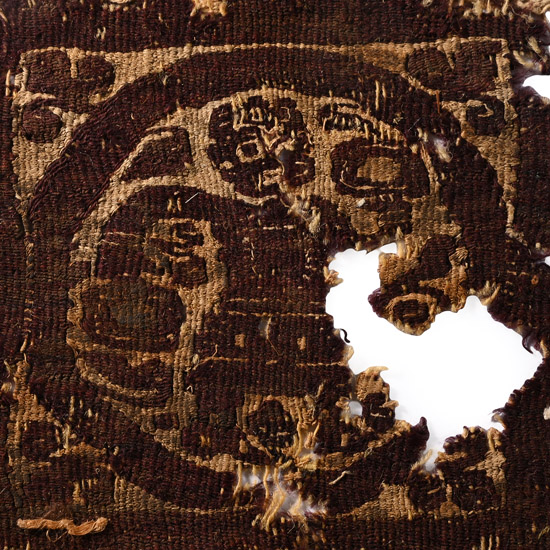
Egyptian Coptic Tunic Tablion Textile Fragment with Image of a Servant
Circa 4th century A.D.Estimate: £40 - 60 (+bp*)
Opening Bid: £5
Comprising a tablion in linen and wool, showing a figure of a man clad in tunica paragaudata inside a roundel, carrying hunting cages, lily flowers in each corner. 3.05 grams, 95 x 95 mm
Acquired 1970s-1996. Property of a North American collector. London collection, 2016.
The scene may depict a servant of some patrician engaged in hunting activities. Of particular note is the man's tunic, decorated with clavi, orbiculi, and segmenta. -
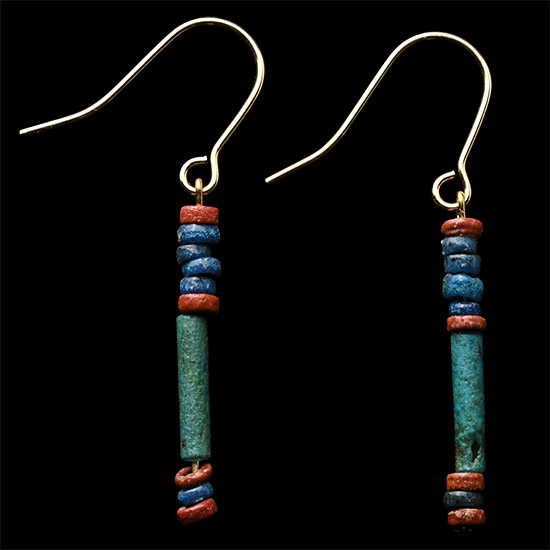
Egyptian Faience Earrings on Modern Mounts
Late-Ptolemaic Period, circa 664-30 B.C.Estimate: £50 - 70 (+bp*)
Opening Bid: £5
Each composed of two groups of faience disc beads separated by a longer tubular bead with a modern gold wire fitting. 0.85 grams total, 43 mm each
Ex Ancient Art shop, Windsor, UK, 1990s. -
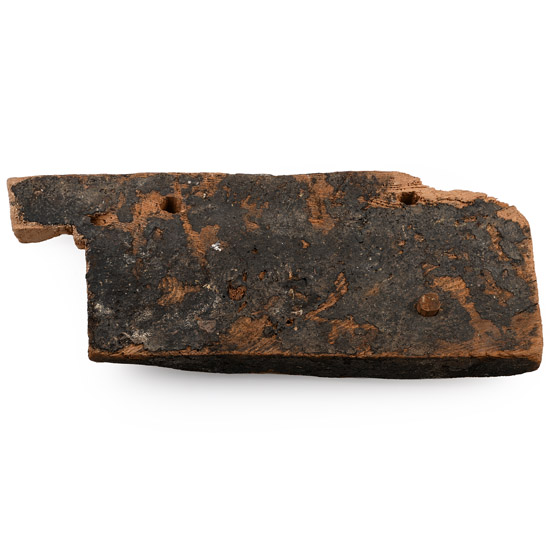
Egyptian Wooden Sarcophagus Panel
Late-Ptolemaic Period, circa 664-30 B.C.Estimate: £60 - 80 (+bp*)
Opening Bid: £5
Rectangular fragment with dowel and dowel holes, with a black bitumen-like varnish. 157 grams, 25 cm
With a privately curated collection, 1980s-early 2000s. From the private collection and estate of Christine Simons (1943-2025), West Midlands, UK. -
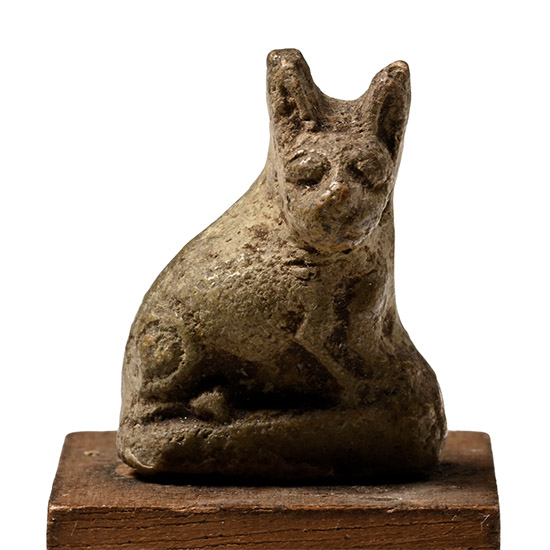
Egyptian Faience Cat Amulet
Late Period, 664-332 B.C.Estimate: £80 - 100 (+bp*)
Bids: 3 | Current Bid: £25
Modelled in the round in a sitting pose with head turned; old collector's label: 'Ancient Egyptian Charm Figure of the Sacred Cat. B.C. 900. Fine style & work & quite perfect. From the Hilton Price Collection'; with an old wooden stand. 3.01 grams, 23 mm
From the private collection of Frederick George Hilton Price (1842–1909). From the estate of a deceased Sussex private collector since the early 20th century. Accompanied by an old, original handwritten information label. -
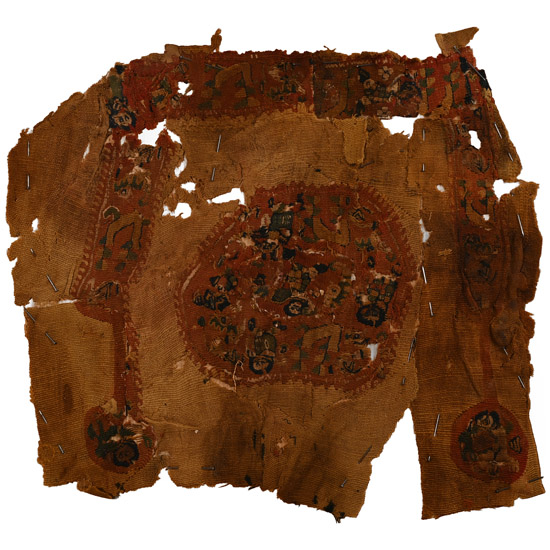
Large Egyptian Coptic Tunic Textile Fragment with Lateral Clavi and Central Orbiculus Representing Figures and Animals
Circa 6th century A.D.Estimate: £300 - 400 (+bp*)
Opening Bid: £5
Larger portion of a tunic with decorative strips (clavi) ending with circular decorations (orbiculi), and central orbiculus in red, green and yellow wool, S-twist tapestry, decorated with Nilotic scenes including plants, animals, possibly human figures. 59 grams total including paper folder, 32.5 cm
Acquired 1970s-1996. Property of a North American collector. London collection, 2016.
Among the many fragments of wool tunics, there are several long strips that match to form nearly full-length central pectoral clavi and orbiculi. They are patterned with a profusion of small figures or interlaced abstract designs, birds, plants and animals, with a contrasting border filled with geometric motifs. -
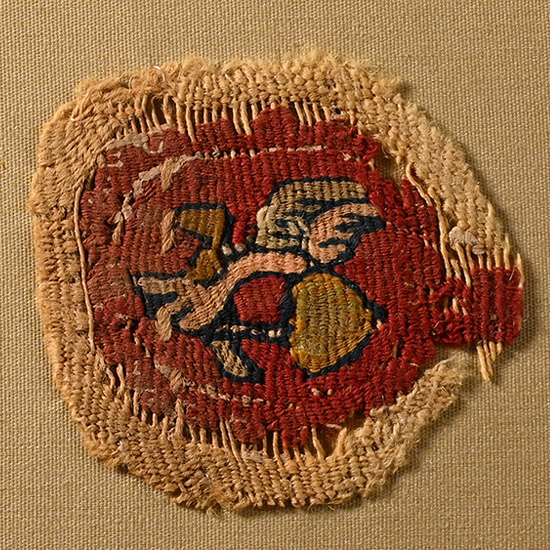
Egyptian Mounted Coptic Textile Terminal Fragment of a Clavus with Putto
Circa 6th century A.D.Estimate: £50 - 70 (+bp*)
Opening Bid: £5
With a putto flying over a red woven surface, in red, green, and yellow wool, S-twist tapestry. 26 grams total, 52 mm
Acquired 1970s-1996. Property of a North American collector. London collection, 2016.
Among the many fragments of wool tunics, there are several long strips that match to form a nearly full-length central pectoral clavi. They were patterned with a profusion of small figures like this flying putto, kept in one orbiculus (round embroidery), forming the finial of a clavus. -
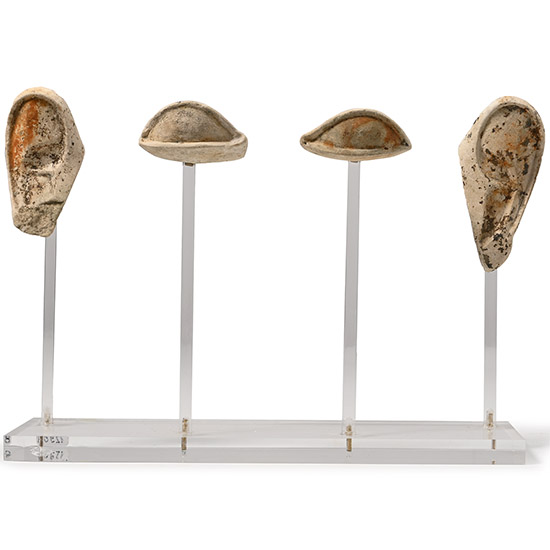
Egyptian Limestone Pair of Eyes and Ears
Late Period, 664-332 B.C.Estimate: £500 - 700 (‡+bp*)
Opening Bid: £250
A pair of narrow, almond-shaped eyes with elegantly curved, slightly set-off lids; the eyeballs are slightly convex; the reverse is smoothed; the tip and part of the surface of one earlobe are missing; traces of black paint and a reddish-yellow colour (paint or iron oxide deposits); originally served as inlays for a coffin mask. 234 grams total, 21.5 cm wide including stand
Israeli art market, 2015, from Mr I.H., a licensed art dealer from Jerusalem.
