
Ancient Art, Antiquities, Books, Natural History, Stamps & Coins

-
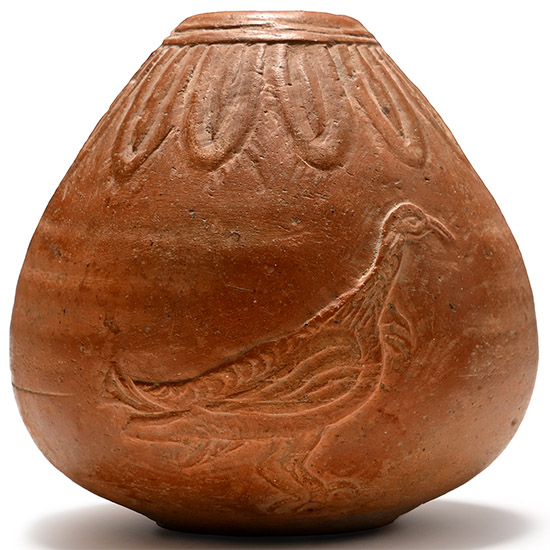
Egyptian Terracotta Pot with Bird
Late Period-Ptolemaic Period, 664-30 B.C.Estimate: £500 - 700 (+bp*)
Opening Bid: £250
Conical in profile with basal ring and radiating petal motifs to the shoulder; old 'Churchill Glass' dealer's label to underside. 50 grams, 61 mm
From the private collection of Peter Clayton, FCILIP, Dip, Arch, FSA, FRNS, Hemel Hempstead, Hertfordshire, UK; formed since the late 1950s. -
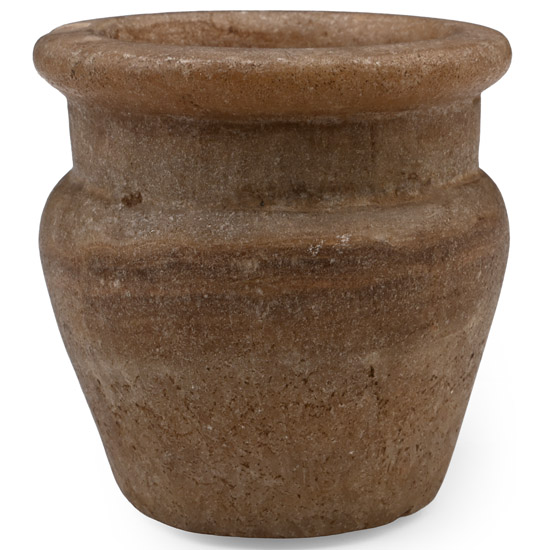
Egyptian Alabaster Pot
New Kingdom, circa 1400-1292 B.C.Estimate: £200 - 300 (+bp*)
Opening Bid: £100
A squat, shouldered jar with a short, wide neck and a rolled rim. 292 grams, 67 mm high
From the private collection of Peter Clayton, FCILIP, Dip, Arch, FSA, FRNS, Hemel Hempstead, Hertfordshire, UK; formed since the late 1950s. -
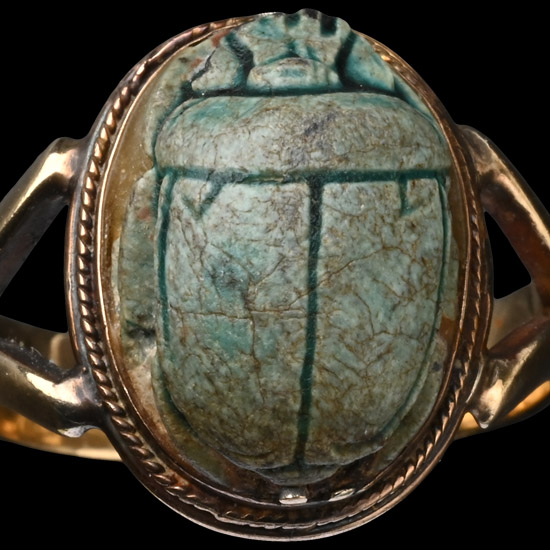
Egyptian Glazed Faience Scarab in Victorian Gold Ring
New Kingdom, circa 13th–11th century B.C. and laterEstimate: £300 - 400 (+bp*)
Opening Bid: £150
The scarab modelled with a stylised head, delineated pronotum and wing cases, a longitudinal division and angular markings at the shoulders, the underside with the seated figure of a pharaoh or god, facing a vertical cartouche bearing the throne name of Thutmose III, Men-kheper-re; set in a Victorian gold mount with an open-backed oval setting, with a fine beaded or twisted-wire border and pierced, divided shoulders. 5.69 grams, 26.90 mm overall, 18.79 x 18.00 mm internal diameter (approximate size British R, USA 8 1/2, Europe 18 3/4, Japan 18)
Acquired on the European art market. UK, private collection. -
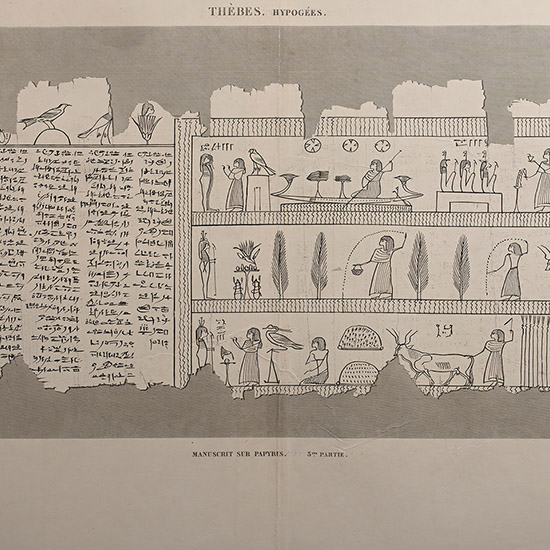
Very Large Egyptian Expedition Lithograph of the Hypogees Papyrus Manuscript from Thebes
Early 19th century A.D.Estimate: £80 - 100 (+bp*)
Opening Bid: £40
Proof etching on laid paper of plate 63 from Vol.II of Description de l'Égypte : ou, Recueil des observations et des recherches qui ont été faites en Égypte pendant l'expédition de l'armée française. entitled Thèbes. Hypogées. Manuscrit sur papyrus. 3eme partie. 272 grams, 103.5 x 69 cm
From the collection of a North American priest. Acquired between 1981-1996. Property of a North American collector.
Produced between February 1802 and 1830 on the orders of Napoleon Bonaparte; published between 1809 and 1828. Just 1,000 copies were distributed to various institutions, printed on laid paper with an 'Égypte ancienne et moderne' watermark. The book is subtitled Recueil des observations et des recherches qui ont été faites en Égypte pendant l’expédition de l’Armée française, publié par les ordres de Sa Majesté l’Empereur Napoléon le Grand (Gathering of observations and discoveries which were made in Egypt during the expedition of the French army, published on the orders of His Majesty the Emperor Napoleon the Great). It was the world's first encyclopedia devoted exclusively to the remains of ancient Egypt. The plates of this book are the first to present the archaeological sites of Thebes (Luxor). The papyrus manuscript was recovered from an underground tomb chamber (hypogeum). The scene depicts the Fields of Iaru, a verdant paradise in the ancient Egyptian afterlife, where the deceased could enjoy abundant harvests. -
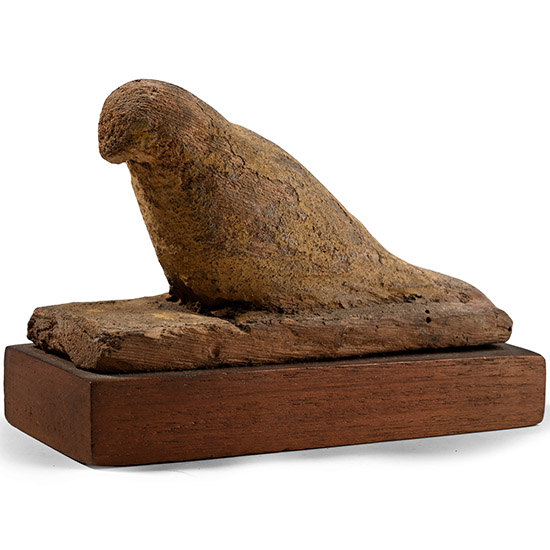
Egyptian Wooden Hawk
Late Period-Ptolemaic Period, 664-30 B.C.Estimate: £80 - 100 (+bp*)
Bids: 1 | Current Bid: £5
Carved in the round, perched on a rectangular base, coated with gesso and bearing traces of gilding. 146 grams total, 14 cm wide including stand
From the estate of a deceased Sussex private collector since the early 20th century.
Such figures decorated the tops of canopic chests, shabti boxes, and coffins. -
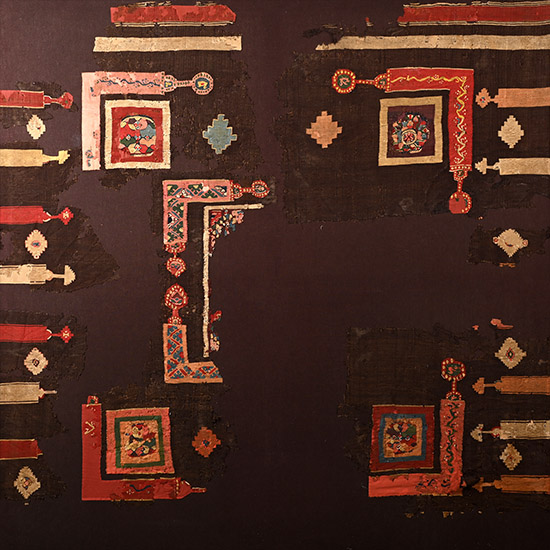
Very Large Egyptian Coptic Composition of Textile Tunic Fragments
Circa 560-700 A.D.Estimate: £4,000 - 6,000 (+bp*)
Opening Bid: £2,000
A composition of Roman-era Coptic textiles, assembled from various tunic and tapestry elements: 12 clavi, paired segmenta, and 4 tablia decorated with vegetal and floral motifs, framed by L-shaped elements composed of two clavi with orbiculi; geometric patterns wind along the clavi, while the orbiculi feature vegetal motifs and fish surrounded by small spheres; rhomboidal appliqués punctuate the surface; red, yellow, green, brown, pink, and indigo-blue wool, S-twist; mounted on a canvas with a wooden frame. 5.15 kg, 1.45 x 1.52 m
From the private antiquities collection of a Kensington collector. With a scientific report by RCD RadioCarbon dating from a sample taken in 2008. Property of a Huddersfield, UK, gentleman. This lot has been checked against the Interpol Database of stolen works of art and is accompanied by search certificate number no.13444-263431
The fragments are decorative parts of tunics or wall tapestries. These are fabrics of great decorative finesse, with some elements displaying an unusual and extremely well-preserved colour palette. The plant and animal designs are related to the so-called Nilotic decorative pattern, with Pagan elements persisting in the Christian Empire. Parts of this composition could also belong to a female shawl, like the famous Sabina's shawl found by Gayet in Antinoe. -
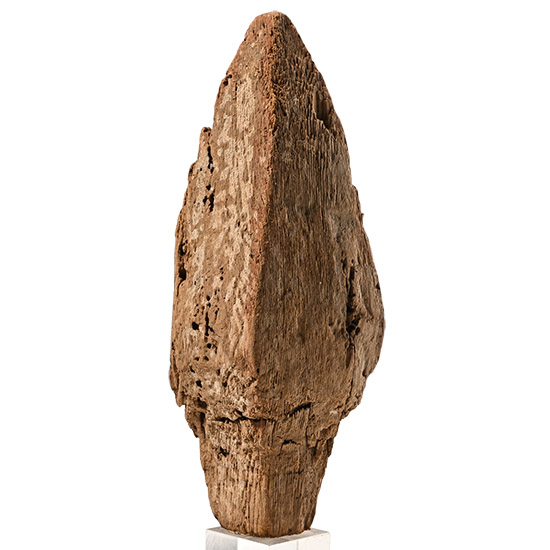
Egyptian Wooden Furniture Finial
Late Period-Ptolemaic Period, circa 664-30 B.C.Estimate: £40 - 60 (+bp*)
Opening Bid: £5
Square in section and leaf-shaped in profile, with a squat mounting peg; mounted on a custom-made Perspex stand. 30 grams total, 13.5 cm including stand
with a privately curated collection, 1980s-early 2000s. From the private collection and estate of Christine Simons (1943-2025), West Midlands, UK. -
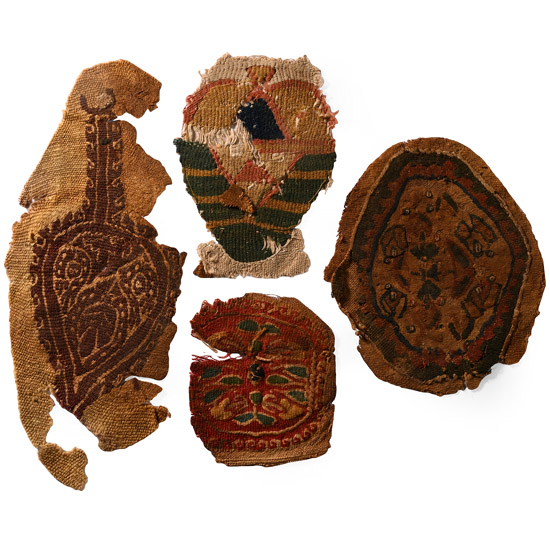
Egyptian Coptic Tunic Textile Fragments of Orbiculi with Vegetation, Fish and Geometric Ornament
Circa 6th-7th century A.D.Estimate: £80 - 100 (+bp*)
Opening Bid: £5
Comprising three lanceolate-shaped medallions in yellow, green, and red wool, decorated with birds and geometric and vegetal elements (left-facing); and a red wool orbiculus on white linen, featuring a floral design and a meander border. 17.7 grams total, 8.2-19.5 cm
Acquired 1970s-1996. Property of a North American collector. London collection, 2016.
The fragments are decorative parts of tunics. These are fabrics of great decorative finesse, with some elements displaying an unusual and extremely well-preserved colour palette. -
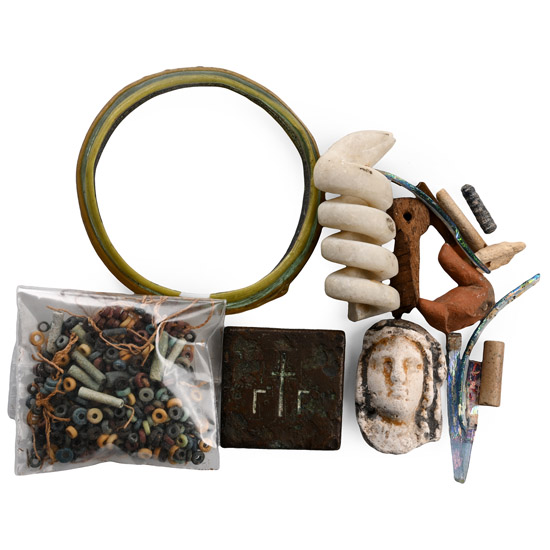
Egyptian and Other Mixed Artefact Collection
2nd century B.C. and laterEstimate: £500 - 700 (‡+bp*)
Opening Bid: £275
Including faience, glass, marble, bronze, stucco, terracotta and wooden items such as a bangle, Byzantine trade weight, stylised coiled serpent, peg, beads, and others. 159 grams total, 3-75 mm
Ex Horatio and Patsy Melas, Alexandria, Egypt, acquired before 1967; thence by descent, moved to Switzerland and London. with Chiswick Auctions, London, UK, 11 May 2016, no.132. -
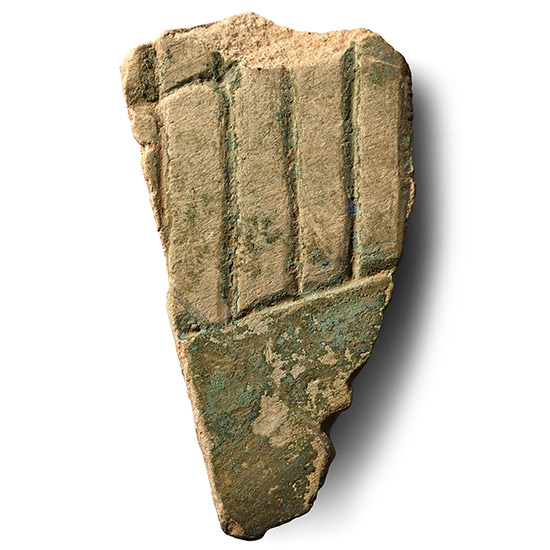
Egyptian Limestone Painted Relief Fragment from a Tomb
Middle Kingdom, circa 2030-1640 B.C.Estimate: £80 - 100 (+bp*)
Opening Bid: £5
Triangular in section with one decorated face including a band of vertical panels within a border, possibly wing feathers. 91 grams, 10.3 cm
with a privately curated collection, 1980s-early 2000s. From the private collection and estate of Christine Simons (1943-2025), West Midlands, UK. -
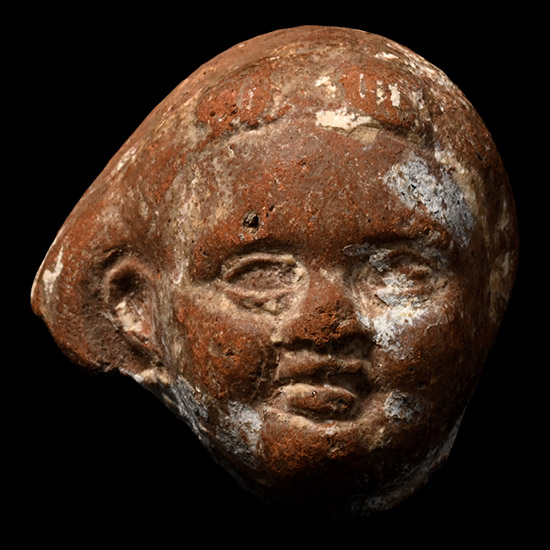
Romano-Egyptian Terracotta Head of Harpocrates
Ptolemaic Period, 1st century B.C.-1st century A.D.Estimate: £700 - 900 (‡+bp*)
Opening Bid: £350
With characteristic sidelock and two tufts of hair on his forehead, here rendered as rectangular blocks of hatching; mounted on a custom-made stand. 36 grams total, 64 mm high including stand
Ex Friedrich Hofmann, Berlin, before 1939; thence by descent. -
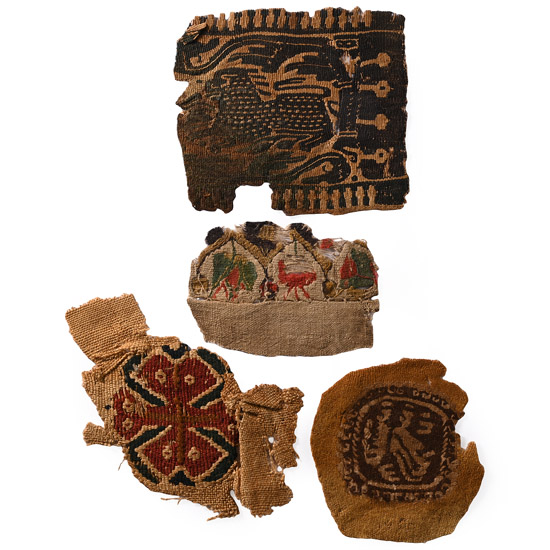
Egyptian Coptic Tunic Textile Fragments of Orbiculi and Segmenta with Vegetation, Animals and Geometric Ornament
Circa 6th-8th century A.D.Estimate: £80 - 100 (+bp*)
Opening Bid: £5
Comprising a squared tablion or fragment of clavus representing a lion with a spotted body, of Sassanid style, the frame featuring geometric patterns; an orbiculus in brown-purple over white linen, S-twist, featuring a bird, frame decorated with meanders; a fragment of textile in red, green, black and yellow wool, representing flowers; and a red and black geometric ornament featuring a type of a flower. 11.69 grams total, 8.3-11.3 cm
Acquired 1970s-1996. Property of a North American collector. London collection, 2016.
A significant feature of this group of textiles is the fragment featuring a lion; it reveals strong Sassanid influences and may date to the brief period of the Sassanid conquest of Roman Egypt, between 618 and 628 AD.
