-
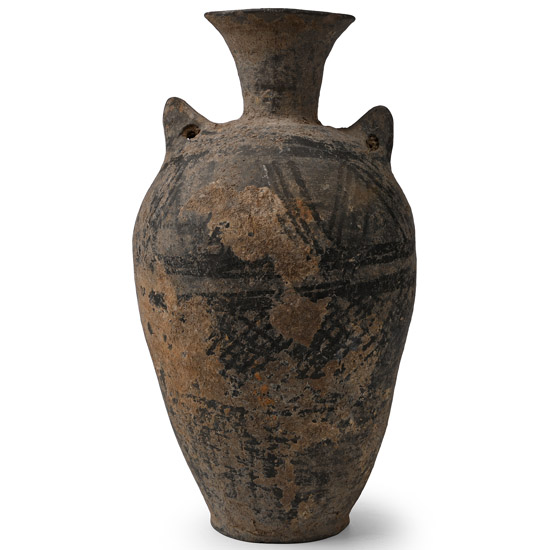
Amlash Terracotta Net-Painted Handled Vase
1st millennium B.C.Sold for (Inc. bp): £182
Piriform body and a funicular neck, two pierced lug handles above the shoulder, a circumferential band of dense net decoration on the body, and the shoulder decorated with a band of concentric triangles. 584 grams, 22 cm
Ex Abelita collection, 1990s. -
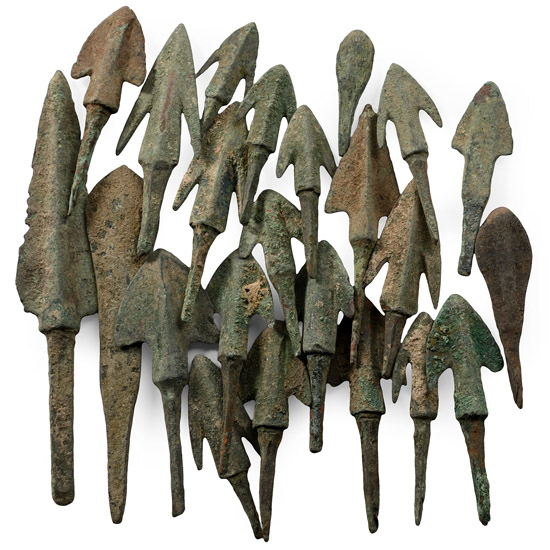
Western Asiatic Bronze Arrowhead Collection
19th-10th century B.C.Sold for (Inc. bp): £195
Comprising tanged arrowheads, most with barbs. 145 grams total, 30-98 mm
Ex London, UK, collection, 1990s. -
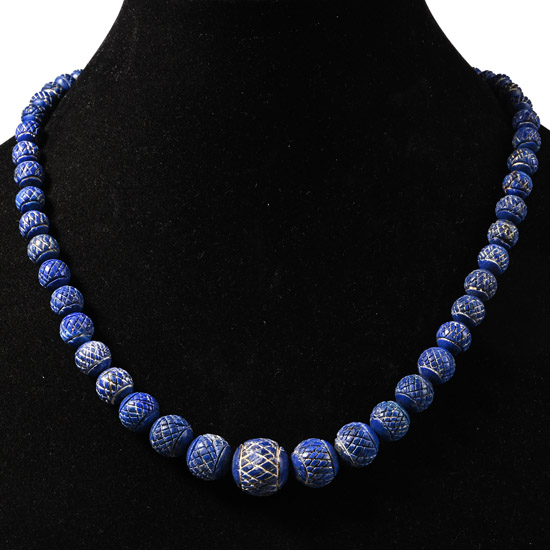
Bactrian Style Lapis Lazuli Bead Necklace String
20th century A.D.Sold for (Inc. bp): £39
Composed of graduated spherical beads with a hatched design, restrung. 61.5 grams, 42 cm
Acquired in the 1990s-early 2000s. Ex London, UK, collection. -
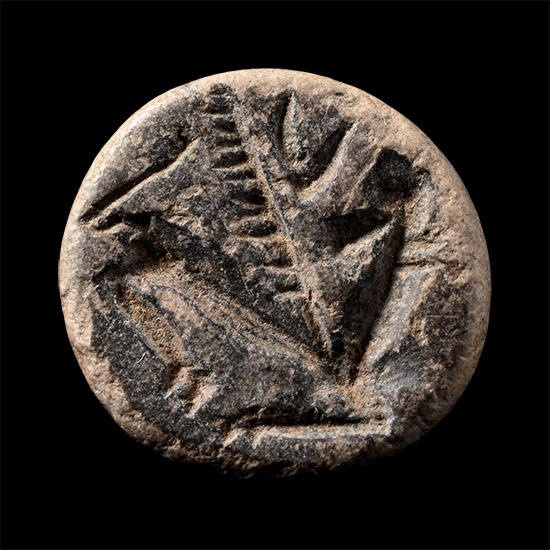
Palestinian or Anatolian Brown Stone Stamp Seal with Sphinx
Circa 1200-900 B.C.Sold for (Inc. bp): £52
Comprising a domed body and a large handle, accompanied by an old scholarly note, typed and signed by W.G. Lambert, late Professor of Assyriology, University of Birmingham, 1970-1993, which states: 'Stamp Seal of Brown Stone with Black Patina, 17 x 17.5 x 18 mm. The seal has an oval face, with domed back with superimposed handle, which is nicely shaped. The design shows a recumbent sphynx: body of a quadruped, but human head and wings. Above its back is a bird or fly. This is a seal from Syria / Palestine or Anatolia, c. 1200-900 B.C. It is in fine condition.' 4.61 grams, 18 mm
Acquired in the late 1980s-early 1990s. Ex property of a West London businessman. Academically researched and catalogued by the late Professor Lambert in the early 1990s. Accompanied by a copy of a scholarly report, numbered 1607, typed and signed by Professor Wilfrid George Lambert. -
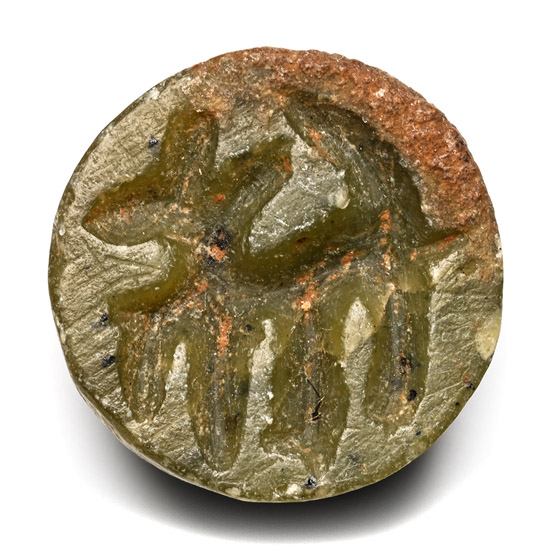
Sasanian Stone Seal with Animal
Circa 4th-6th century B.C.Sold for (Inc. bp): £26
Domed body with transverse piercing, the underside with a deeply engraved image of a stylised standing animal with long ears and erect tail; supplied with museum-quality impressions. 5.04 grams, 19 mm
From the private collection of a European gentleman (1942-2024), formed since the 1970s. -
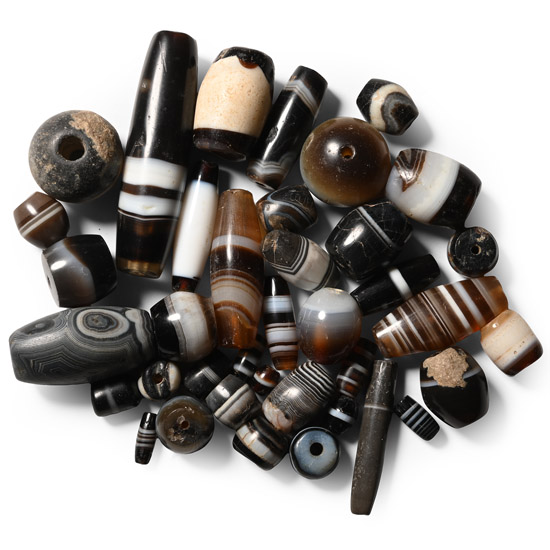
Western Asiatic Banded Agate Bead Collection
1st millennium B.C. and laterSold for (Inc. bp): £715
Comprising tubular, barrel-shaped, oblate and other types. 55 grams total, 4-38 mm
From the private collection of a European gentleman (1942-2024), formed since the 1970s. -
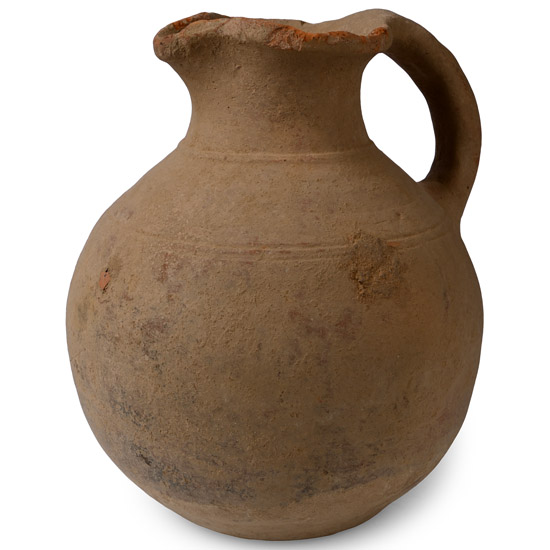
Western Asiatic Terracotta Jug with Trefoil Mouth
1st millennium B.C.Sold for (Inc. bp): £117
Bulbous body with flattened base and trefoil mouth, strap handle to the rear and incised circumferential bands on the shoulder. 1.6 kg, 22.4 cm
Ex Abelita collection, 1990s. -
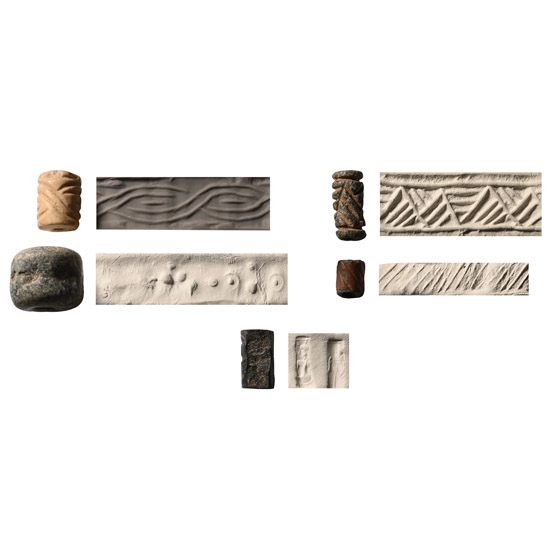
Western Asiatic Stone Cylinder Seal Group
3rd-2nd millennium B.C.Sold for (Inc. bp): £72
Comprising: a speckled grey marble seal with a drilled geometric pattern; a white limestone seal with a wickerwork pattern; a grey serpentine seal with a geometric pattern; a small bronze seal with a linear pattern; a fragmentary hematite seal with a seated deity; supplied with museum-quality impressions. 17.42 grams total, 9-17 mm
From the private collection of a European gentleman (1942-2024), formed since the 1970s. Accompanied by previous typed catalogue slips with collection nos.2, 14, 17, 18, 41. -
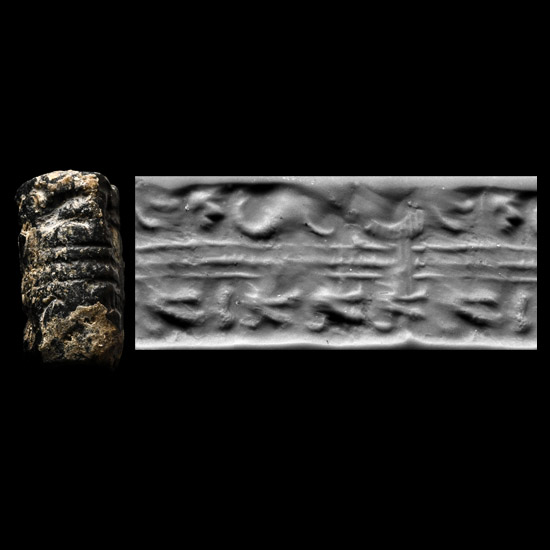
Syrian Haematite Cylinder Seal with Birds
Circa 1500-1200 B.C.Sold for (Inc. bp): £46
A small seal with a central linear motif with birds in flight above nd ram horns below; supplied with a museum-quality impression. 0.96 grams, 13 mm
From the private collection of a European gentleman (1942-2024), formed since the 1970s. Accompanied by a previous typed catalogue slip with collection no.58. -
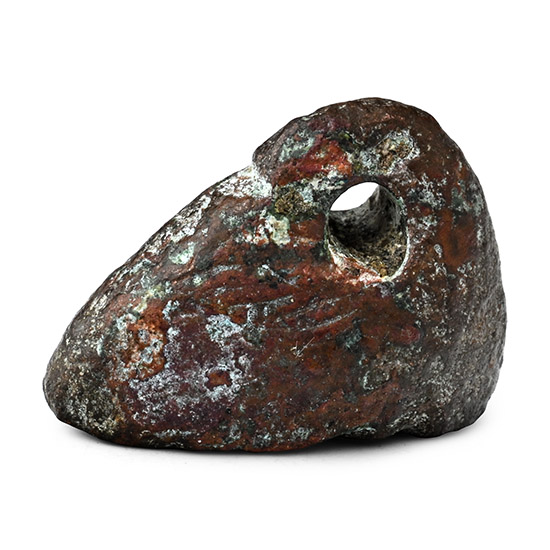
Neo-Babylonian Bronze Duck Weight of 1 Shekel
Circa 800-600 B.C.Sold for (Inc. bp): £156
In the shape of a sleeping duck, with its head turned towards its tail and with a flat striated base. 7.75 grams, 18 mm
Ex 'S' collection, London, UK, 1970 onwards. -
.jpg)
Western Asiatic Rock Crystal Gemstone with Calligraphic Text
Seljuk period, 12th-13th century A.D.Sold for (Inc. bp): £182
Ellipsoid type with incuse design of two lines of Naskh text; supplied with a museum-quality impression. 0.44 grams, 13 mm
From the private collection of a European gentleman (1942-2024), formed since the 1970s. -
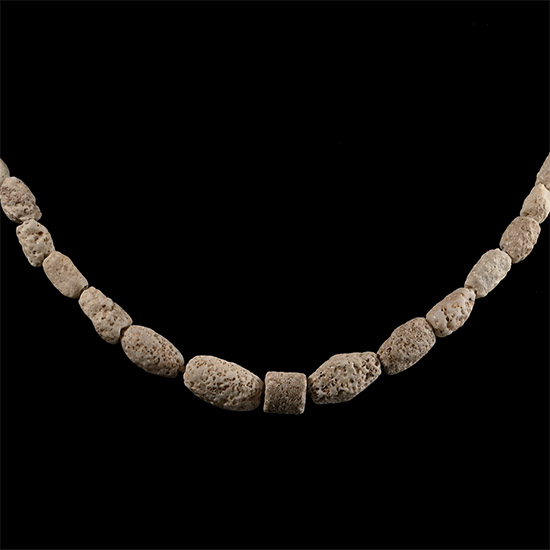
Western Asiatic Glass and Other Bead Necklace String
1st millennium B.C. and laterSold for (Inc. bp): £13
Graduated group of cream-coloured beads; restrung. 21 grams, 37.5 cm
Acquired in the 1990s. Ex London, UK, collection.

