-
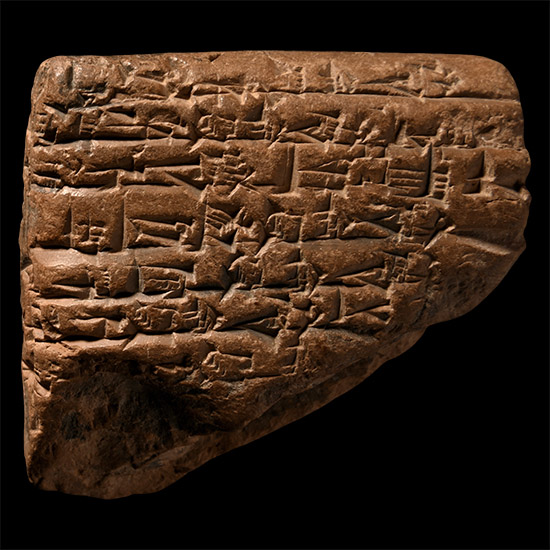
Ur III Terracotta Cuneiform Tablet Fragment with Accounts of Barley
Circa 21st century B.C.Sold for (Inc. bp): £780
Corner section of a cuneiform tablet with impressed cuneiform text on three sides. 34.7 grams, 42 mm
London, UK, art market, 1980s. Private collection, London, UK. -
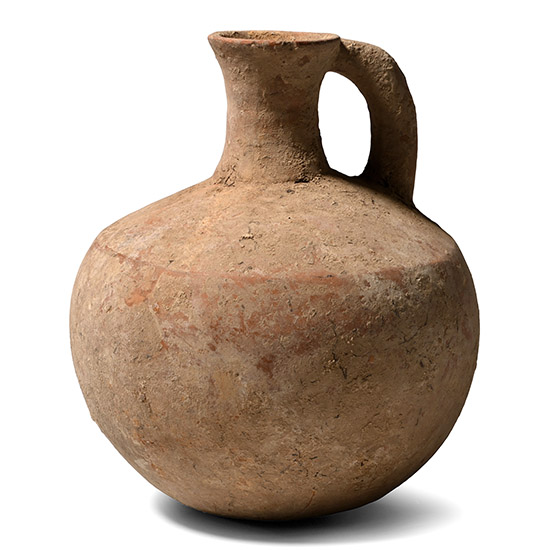
Western Asiatic Pottery Vessel with Handle
1st millennium B.C.Sold for (Inc. bp): £117
Comprising a squat bulbous body with a flattened base, a short neck with an everted rim and a handle to the rear. 413 grams, 15.1 cm
From an important specialist collection, London, UK, 1990s. -
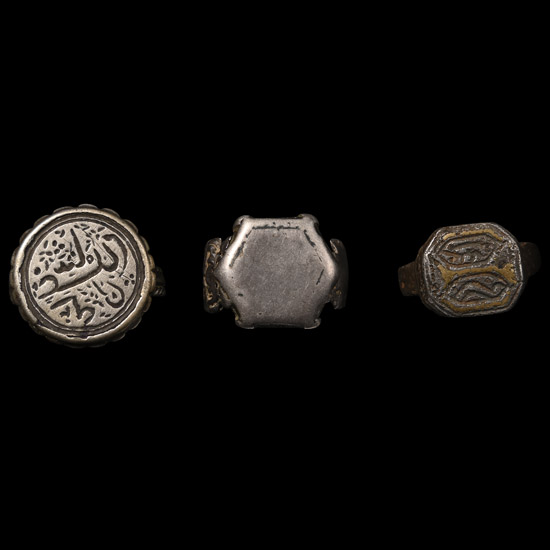
Western Asiatic Silver-Coloured Metal Ring Group
Circa 12th-18th century A.D.Sold for (Inc. bp): £221
A mixed group of rings from the Seljuk and Ottoman periods, comprising three rings: one with a calligraphic inscription, one with a hexagonal bezel with remains of niello, and one with the bezel divided into two fields. 24.9 grams total, 21-27 mm
Acquired in the late 1980s-early 1990s. Private collection, London, UK -
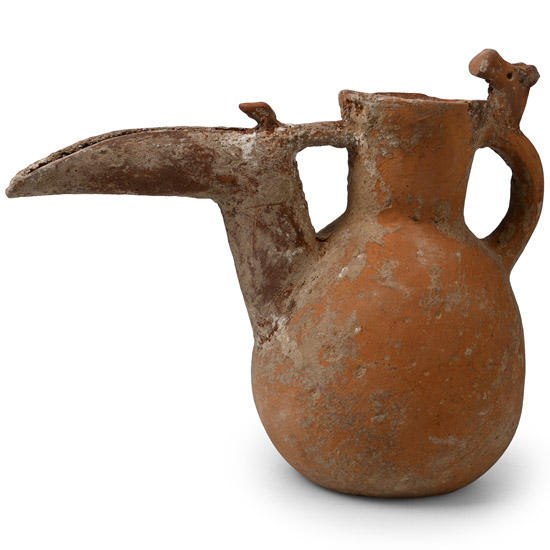
Amlash Zoomorphic Terracotta Pouring Vessel
1st millennium B.C.Sold for (Inc. bp): £117
Bulbous body with a funicular neck and a round-section handle with an animal-head thumbpad, the spout resembling a bird's head with a small curving projection above. 475 grams, 22.2 cm
Ex Abelita collection, 1990s. -
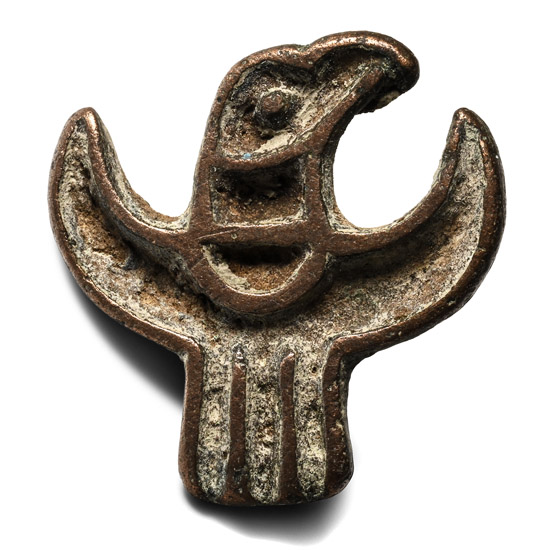
West Central Asian Bronze Eagle-Shaped Seal Matrix
Circa 2300-2000 B.C.Sold for (Inc. bp): £182
An eagle-shaped stamp seal with a loop on the reverse, accompanied by an old scholarly note, typed and signed by W.G. Lambert, late Professor of Assyriology, University of Birmingham, 1970-1993, which states: 'Stamp Seal of Bronze, 27 x 26.5 x 10.5mm. This has the shape of the thing depicted, with a flat face, convex back rising to the middle where a handle of inverted U-shape with three grooves over it is mounted. The design, which is compartmented, shows an eagle in heraldic pose: head sideways at the top with beak raised, spread wings below, and spread tail-feathers at the bottom. This comes from west central Asia and dates to c. 2300-2000 B.C. It is a most attractive piece and in very good condition -- the metal has been conserved -- save for slight damage to the beak of the bird.' 10.2 grams, 26 mm
Acquired in the late 1980s-early 1990s. Ex property of a West London businessman. Academically researched and catalogued by the late Professor Lambert in the early 1990s. Accompanied by a copy of a scholarly report, numbered R-774, typed and signed by Professor Wilfrid George Lambert. -
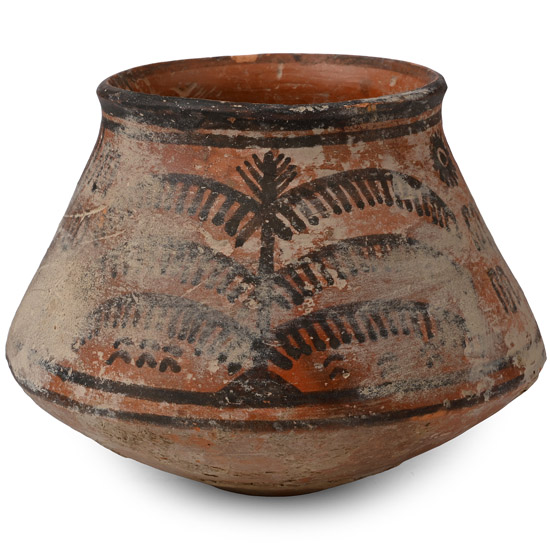
Indus Valley Terracotta Vessel with Zebu and Palm
3rd millennium B.C.Sold for (Inc. bp): £182
Biconical vessel with a narrow foot, painted zebu before a small tree on one side and the other side with a large palm tree. 376 grams, 13.5 cm
Ex Abelita collection, 1990s. -
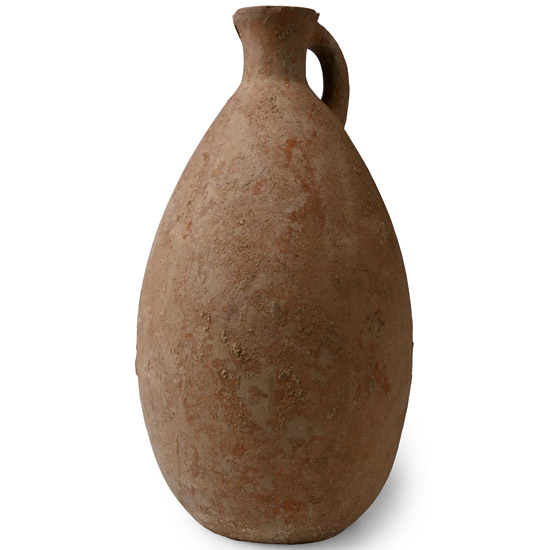
Large Western Asiatic Tall Terracotta Jug
1st millennium B.C.Sold for (Inc. bp): £260
Piriform body with a narrow trumpet-shaped neck and a small strap handle to the rear. 1.61 kg, 32.7 cm
Ex Abelita collection, 1990s. -
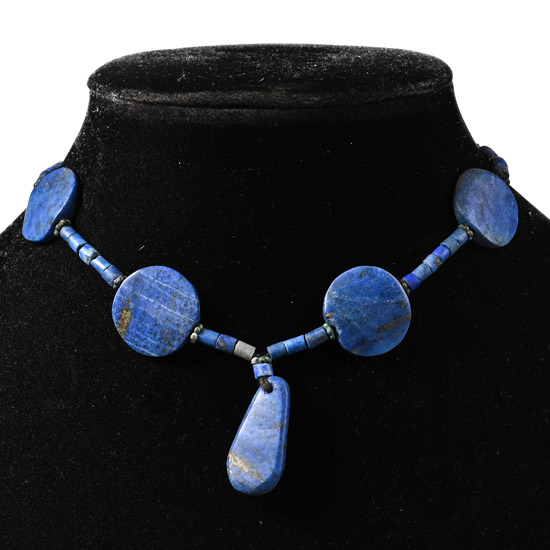
Bactrian Style Lapis Lazuli Bead Necklace String
20th century A.D.Sold for (Inc. bp): £39
Composed of tubular and coin-shaped beads with a teardrop-shaped pendant, restrung. 30.7 grams, 34.3 cm
Acquired in the 1990s-early 2000s. Ex London, UK, collection. -
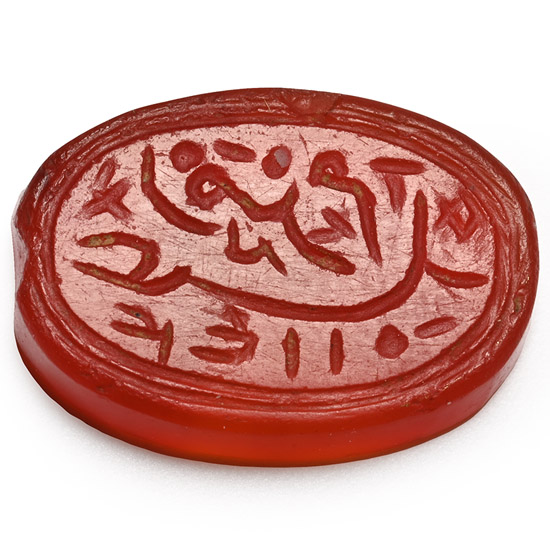
Western Asiatic Engraved Carnelian Calligraphic Intaglio
Late 19th-20th century A.D.Sold for (Inc. bp): £33
An oval intaglio with a calligraphic inscription. 1.27 grams, 16 mm
Acquired in the late 1980s-early 1990s. Private collection, London. -
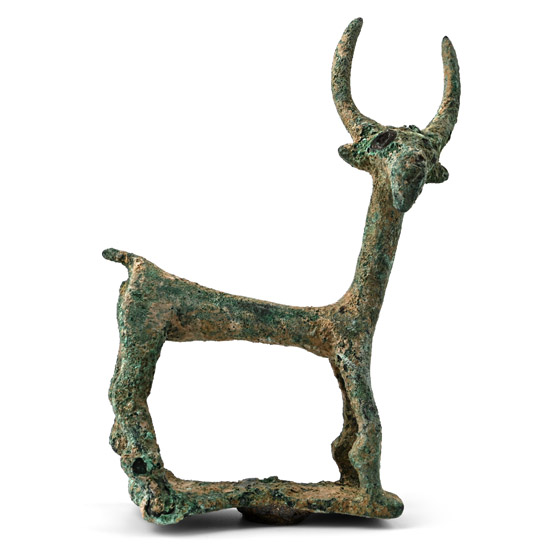
Luristan Stag Statuette
2nd-1st millennium B.C.Sold for (Inc. bp): £364
Modelled in the round on a waisted rectangular base, head turned. 91.31 grams, 10.56 mm
Ex Abelita family collection, 1980s-2000s. -
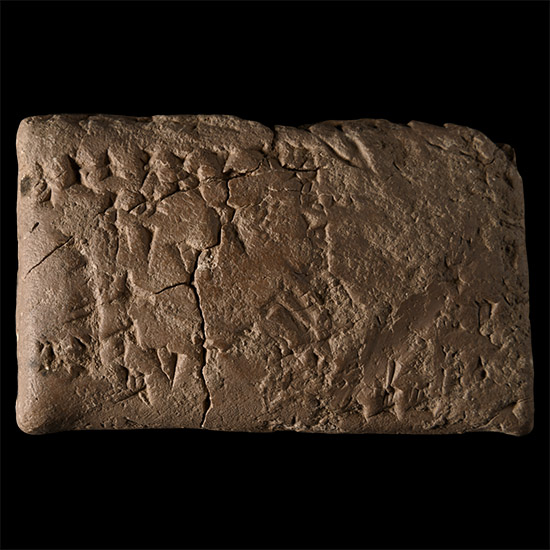
Mesopotamian Terracotta Cuneiform Tablet
Early 2nd millennium B.C.Sold for (Inc. bp): £208
Pillow-shaped tablet with impressed text. 143 grams, 82 mm
Specialised collection of cuneiform texts, the property of a London gentleman and housed in London before 1992. Thence by descent to family members. Examined by Professor Wilfrid George Lambert FBA (1926-2011), historian, archaeologist, and specialist in Assyriology and Near Eastern archaeology, in the late 1980s and early 1990s. This small collection is exceptional for the variety of types, including some very rare and well-preserved examples. -
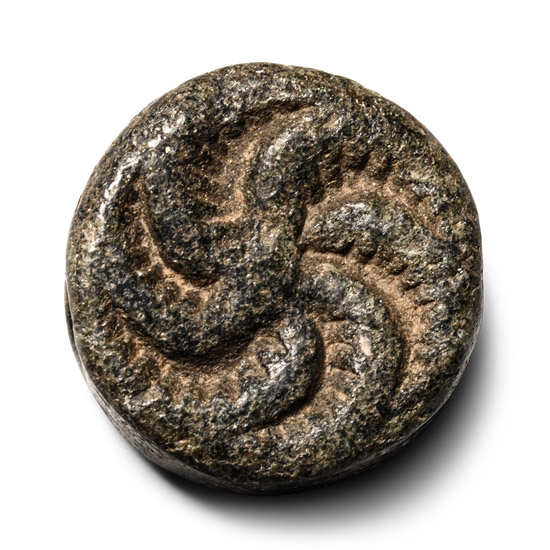
West Central Asian Green Stone Stamp Seal with Eight-Pointed Star Whorl
Circa 2000-1000 B.C.Sold for (Inc. bp): £72
Bifacial stamp seal, accompanied by an old scholarly note, typed and signed by W.G. Lambert, late Professor of Assyriology, University of Birmingham, 1970-1993, which states: 'Bifacial Stamp Seal of Green Stone, 18.5 x 8mm. The one side shows a spiralling device with notched curving arms. The other side shows an eight-pointed star with filling motifs between the arms. The seal is pierced at the widest point. This comes from west-central Asia and dates to c. 2500-2000 B.C. The side with the spiral was original with the seal, but the design on the other side may be a little later, perhaps c. 2000-1000 B.C. Similar designs to the spiral have been found on seals coming from the southeast Karakum desert.' 4.78 grams, 18 mm
Acquired in the late 1980s-early 1990s. Ex property of a West London businessman. Academically researched and catalogued by the late Professor Lambert in the early 1990s. Accompanied by a copy of a scholarly report, numbered 2009, typed and signed by Professor Wilfrid George Lambert.

