-
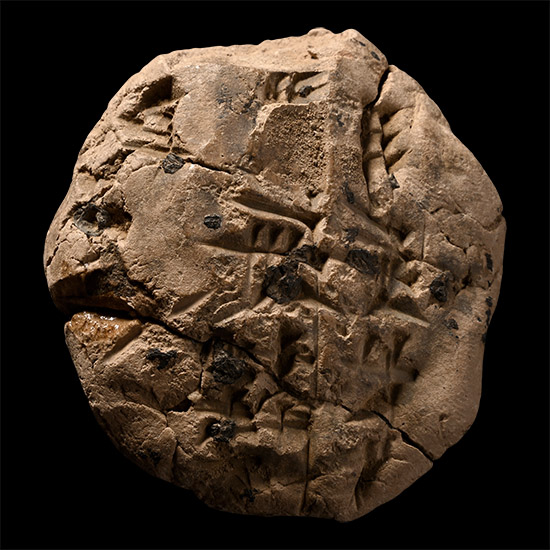
Old Babylonian Cuneiform School Exercise Tablet
Circa 2100-1900 B.C.Sold for (Inc. bp): £715
Domed tablet with impressed text on the upper face. 80.82 grams, 63 mm
Private collection, 1980s. UK private collection before 2000. Acquired on the UK art market. Private collection, London, UK. Academically researched and catalogued by the late Professor Lambert. Accompanied by an original handwritten slip written by Professor Wilfrid George Lambert. -
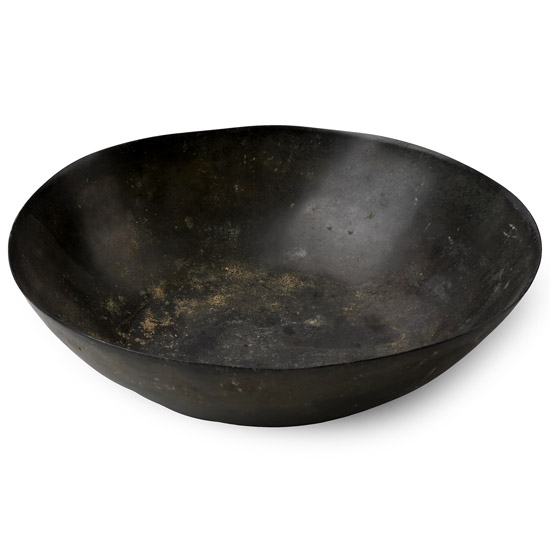
Sasanian Bronze Bowl
Circa 4th-6th century A.D.Sold for (Inc. bp): £78
Shallow sheet-bronze bowl with sloping walls and flattened base. 95 grams, 13.6 cm wide
From a London, UK, collection, 1990s-2010. -
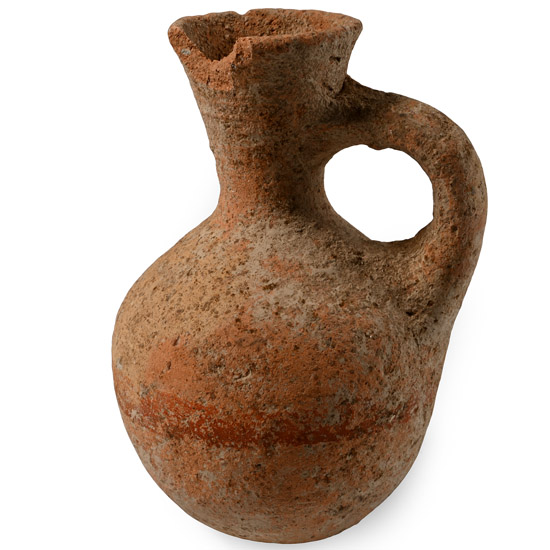
Holy Land Terracotta Juglet
Bronze Age, circa 2nd millennium B.C.Sold for (Inc. bp): £59
Spherical body with trumpet-shaped neck and strap handle, painted circumferential band on the body. 12.8 grams, 97 mm
From the collection of a Cambridge, UK, gentleman, by direct descent from his father, who acquired the items in London in circa 1960. -
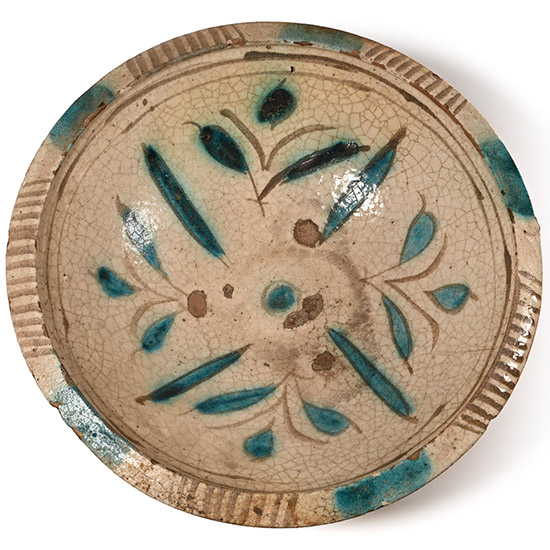
Western Asiatic Ceramic Bowl with Blue Leaf Design
10th century A.D.Sold for (Inc. bp): £234
Broad bowl with carinated inner edge to the and chamfered rim, law basal ring; upper face glazed with floral design picked out in blue and grey, circumferential rings below the rim and panels of radiating stripes and blue glaze. 710 grams, 24.6 cm
S. Morad collection. From the collection of M. Hugues Rosset, Switzerland. Private Swiss collection, acquired from M. Hugues Rosset in 1998. -
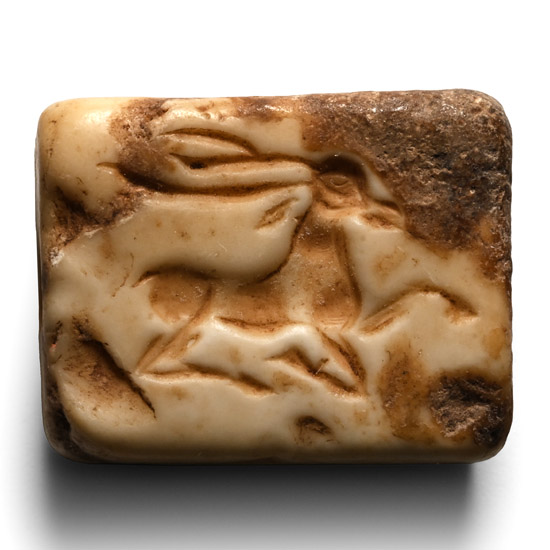
Sasanian Marble Bifacial Amulet with Animals
Circa 2nd-6th century A.D.Sold for (Inc. bp): £169
Rectangular in plane with transverse piercing, one side with a leaping lion and the other with a reclining antelope or ibex. 4.43 grams, 18 mm
From the private collection of a European gentleman (1942-2024), formed since the 1970s. -
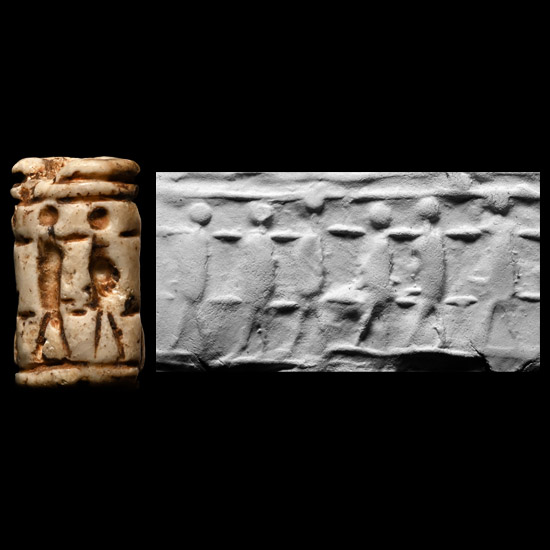
Western Asiatic White Stone Cylinder Seal with Figures
2nd-1st millennium B.C.Sold for (Inc. bp): £65
Frieze comprising a tall standing figure facing, flanked by five similar figures, all joined by horizontal bars at shoulders and hips, doubled borders; supplied with a museum-quality impression. 4.56 grams, 21 mm
From the private collection of a European gentleman (1942-2024), formed since the 1970s. -
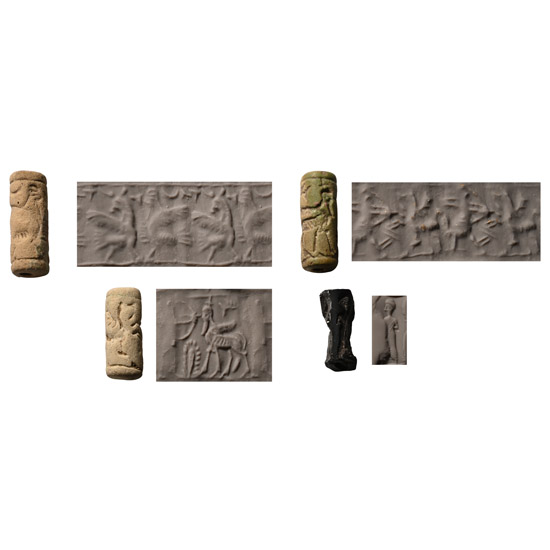
Western Asiatic Faience and Stone Cylinder Seal Group
2nd-1st millennium B.C.Sold for (Inc. bp): £195
Comprising: a cylinder seal showing an advancing Lamassu facing a robed figure with a drawn bow; a cylinder seal with winged beasts; a cylinder seal showing a winged beast facing back and Lamassu; a fragment of a stone cylinder seal showing a standing figure; supplied with museum-quality impressions. 11.94 grams total, 20-27 mm
From the private collection of a European gentleman (1942-2024), formed since the 1970s. -
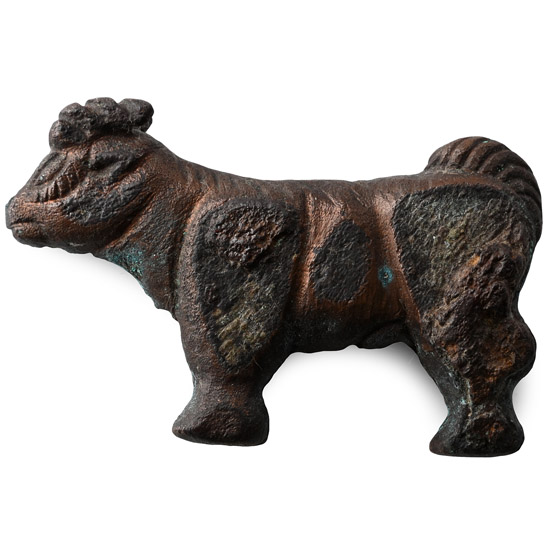
Western Asiatic Bronze Bull Statuette
2nd-3rd century A.D.Sold for (Inc. bp): £59
Stylised bull figure modelled standing with curving tail, short horns and large almond-shaped eyes. 87.3 grams, 63 mm
From the private coin collection of a West London, UK, gentleman, formed since the mid 1980s. -
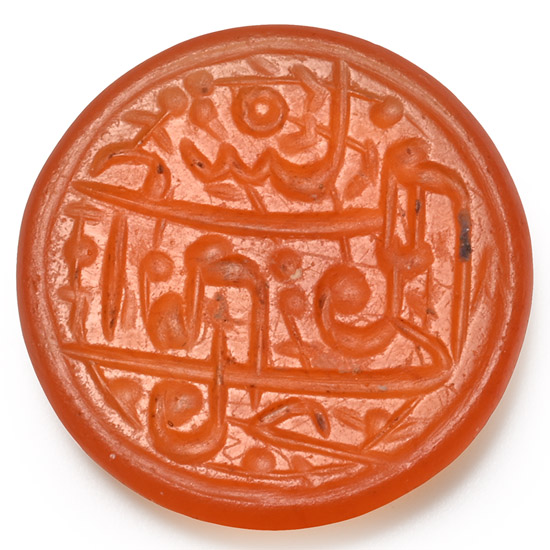
Western Asiatic Engraved Carnelian Calligraphic Intaglio
Late 19th-20th century A.D.Sold for (Inc. bp): £65
A circular intaglio with a two-line inscription; supplied with a museum-quality impression. 1.67 grams, 16 mm
Acquired in the late 1980s-early 1990s. Private collection, London. -
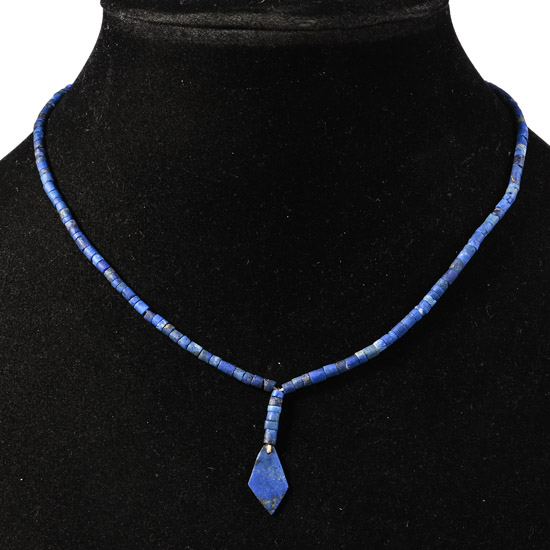
Bactrian Style Lapis Lazuli Bead Necklace String
20th century A.D.Sold for (Inc. bp): £46
Composed of tubular beads with a lozenge-shaped pendant, restrung. 5.44 grams, 31 cm
Acquired in the 1990s-early 2000s. Ex London, UK, collection. -
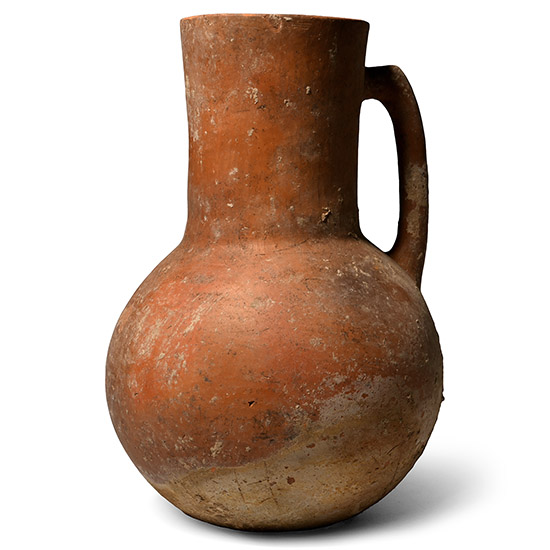
Large Western Asiatic Pottery Vessel
1st millennium B.C.Sold for (Inc. bp): £117
Bulbous body and a tall, tubular neck with a round-section handle. 960 grams, 26.5 cm
From an important specialist collection, London, UK, 1990s. -
.jpg)
Western Asiatic Grey Stone Cylinder Seal with Foal and Bird
1st millennium B.C.Sold for (Inc. bp): £143
Frieze comprising a mare in profile standing with foal suckling beneath. bird perching on a vessel, faravahar winged solar disc above; supplied with a museum-quality impression. 10.16 grams, 30 mm
From the private collection of a European gentleman (1942-2024), formed since the 1970s.

