-
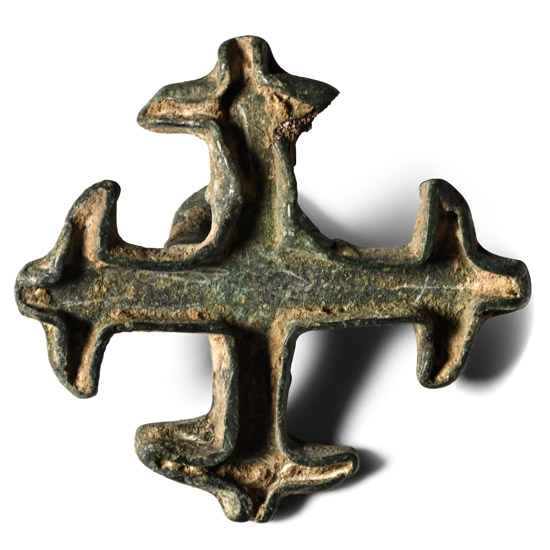
Large West Central Asian Bronze Fleur-Ended Cross Seal Matrix
Circa 2300-2000 B.C.Sold for (Inc. bp): £65
Comprising a cross-shaped body and a large U-shaped loop on the reverse. 14.5 grams, 41 mm
Acquired in the late 1980s-early 1990s. Ex property of a West London businessman. Academically researched and catalogued by the late Professor Lambert in the early 1990s. -
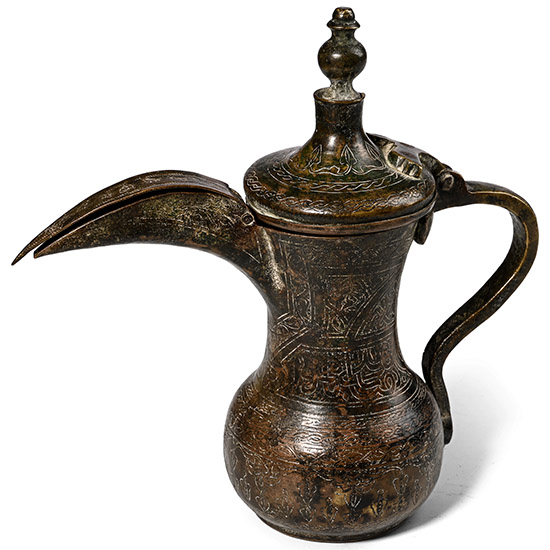
Syrian or Turkish Copper Ewer with Calligraphic Inscription
17th-18th century A.D.Sold for (Inc. bp): £338
Comprising a bulbous body with basal ring, tubular body with flared upper end, deeply curved spout with hinged cover, strap handle attached at the shoulder, hinged lid with knop handle; stamped and incised bands of guilloche, ropework, tendrils and other motifs. 621 grams, 21 cm
with Roseberys, 22 October 2020, no.204. Private collection, London, UK. -
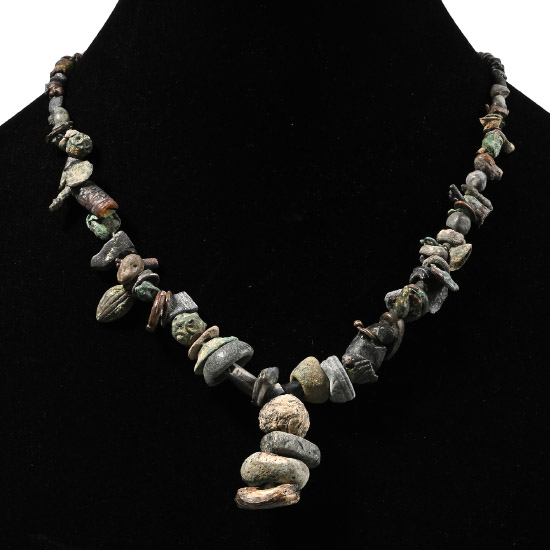
Western Asiatic Stone and Other Bead Necklace String
1st millennium B.C. and laterSold for (Inc. bp): £26
Graduated group composed of mixed beads and pendants, restrung. 59 grams, 38.5 cm
Ex Ancient Art Shop, Windsor, UK, 1990s. Ex private West County, UK, collection. -
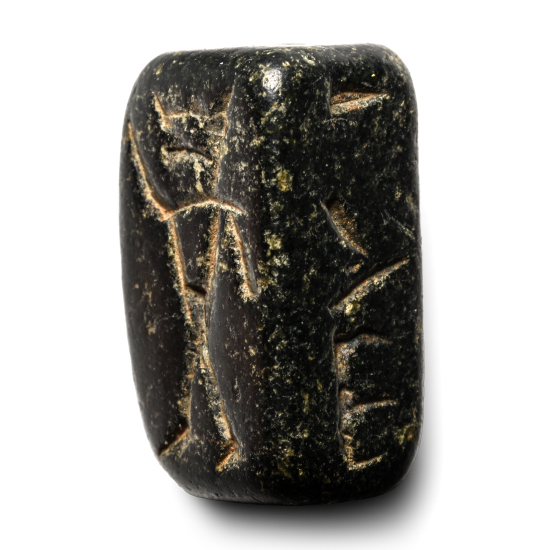
Assyrian Steatite Four-Sided Seal with Figures and Magical Symbols
Circa 600-400 B.C.Sold for (Inc. bp): £111
Rectangular in plan with longitudinal piercing, incuse decoration to the long faces: advancing figure with canine mask; undulating line (serpent); standing figure in flounced robe with arms raised; three glyphs or symbols; usage wear, 7.46 grams, 22 mm
From the private collection of Mr Brian Edwards, New Malden, Surrey, UK, formed from the late 1970s-early 1980s; thence by descent. Accompanied by the original collector's data sheet(s) with reference no.A8. -
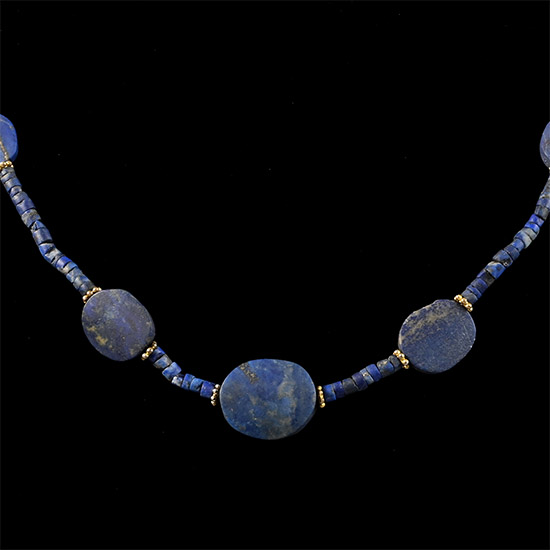
Bactrian Style Lapis Lazuli Bead Necklace String
20th century A.D.Sold for (Inc. bp): £20
Composed of coin-shaped and tubular beads interspersed with metal spacers, restrung. 33.8 grams, 49 cm
Acquired in the 1990s-early 2000s. Ex London, UK, collection. -
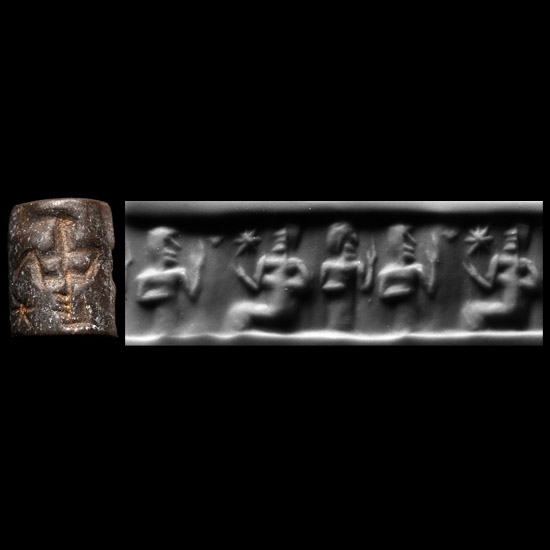
Syrian Haematite Cylinder Seal with Deity
Circa 2500-1800 B.C.Sold for (Inc. bp): £91
A small seal with a deity on a throne, two worshippers before and a star as a filler motif; supplied with a museum-quality impression. 0.83 grams, 10 mm
From the private collection of a European gentleman (1942-2024), formed since the 1970s. Accompanied by a previous typed catalogue slip with collection no.30. -
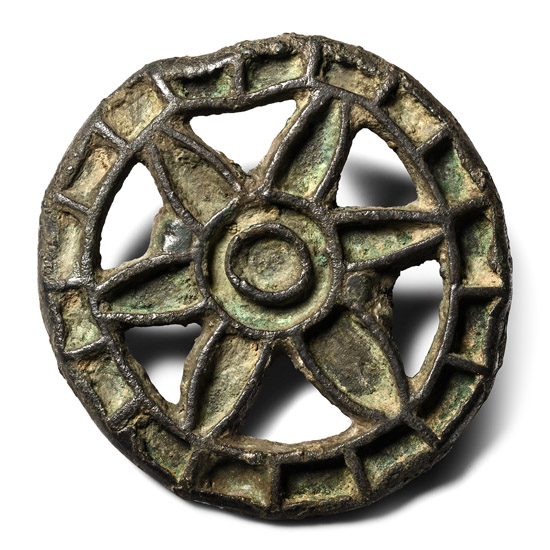
Large West Central Asian Bronze Six-Spoked Wheel Seal Matrix
Circa 2300-2000 B.C.Sold for (Inc. bp): £124
Openwork seal formed as a spoked wheel, accompanied by an old scholarly note, typed and signed by W.G. Lambert, late Professor of Assyriology, University of Birmingham, 1970-1993, which states: 'Stamp Seal of Bronze, 43 x 43 x 12 mm. This is round, with flat face and flat back, on which a loop handle is mounted. The design, which is both compartmented and open-work, consists of a rosette, with six 'rays' off a central small circular band, and a plain outer band surrounded the whole, divided into 17 segments. This comes from west central Asia and dates to c. 2300-2000 B.C. There is some wear and denting, but the piece is generally in fair condition, the metal having been conserved.' 27.9 grams, 45 mm
Acquired in the late 1980s-early 1990s. Ex property of a West London businessman. Academically researched and catalogued by the late Professor Lambert in the early 1990s. Accompanied by a copy of a scholarly report, numbered T-871, typed and signed by Professor Wilfrid George Lambert. -
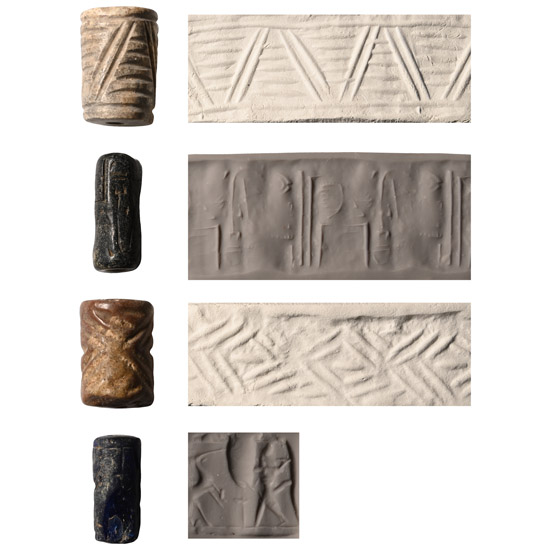
Western Asiatic Stone Cylinder Seal Group
3rd-2nd millennium B.C.Sold for (Inc. bp): £91
Comprising: a brown serpentine seal with a geometric pattern; a cream serpentine seal with a geometric pattern; a black steatite seal with a figure in a fringed dress with the hood over the head, a small table and two corn-ears as a divider; a blue glass seal with a standing figure and a rearing quadruped; supplied with museum-quality impressions. 27.1 grams total, 22-24 mm
From the private collection of a European gentleman (1942-2024), formed since the 1970s. Accompanied by previous typed catalogue slips with collection nos.4, 5, 28, and one handwritten. -
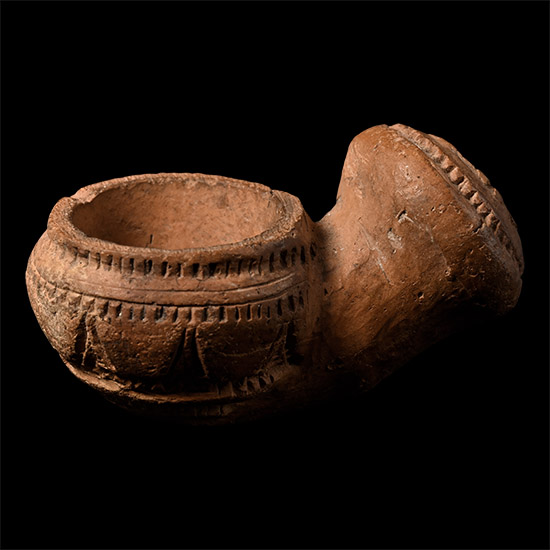
Western Asiatic Ceramic Tobacco Pipe Bowl
17th-18th century A.D.Sold for (Inc. bp): £33
Bowl with carinated shoulder, impressed rouletting, angled joint with bulbous mouth. 24.7 grams, 53 mm
From the private collection of Mr Brian Edwards, New Malden, Surrey, UK, formed from the late 1970s-early 1980s; thence by descent. -
.jpg)
Western Asiatic Variated Green Stone Cylinder Seal with Cuneiform Inscription
1400-1300 B.C.Sold for (Inc. bp): £130
An unfinished court scene with seated figure in profile wearing a tall headdress facing a kneeling figure with arms bent; lightly incised, with space for cuneiform text; supplied with a museum-quality impression. 16.41 grams, 32 mm
From the private collection of a European gentleman (1942-2024), formed since the 1970s. -
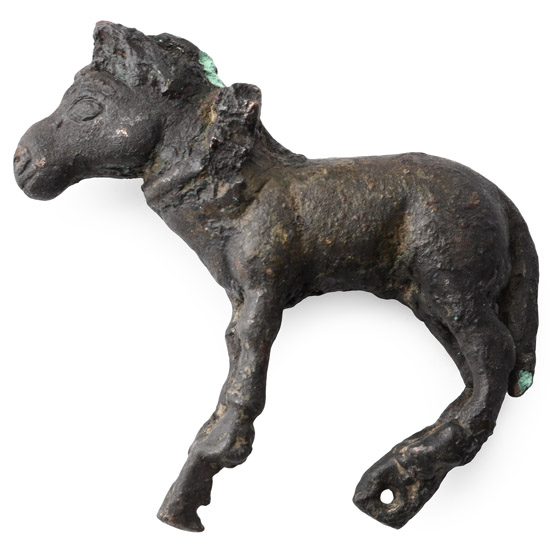
Western Asiatic Bronze Horse Statuette
2nd-3rd century A.D.Sold for (Inc. bp): £124
Modelled in the round as a stocky horse or a mule with pierced lugs beneath the hooves, a looped neck harness around the neck. 106 grams, 66 mm
From the private coin collection of a West London, UK, gentleman, formed since the mid 1980s. -
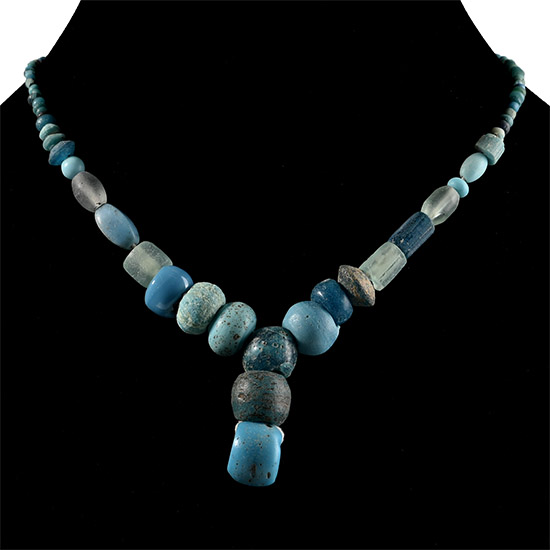
Achaemenid Turquoise Glass and Other Bead Necklace String
Mid 1st millennium B.C. and laterSold for (Inc. bp): £208
Composed of small oblate beads with larger oblate and oval beads as the central feature, restrung. 29 grams, 35 cm
Acquired in the 1990s. Ex London, UK, collection.

