-
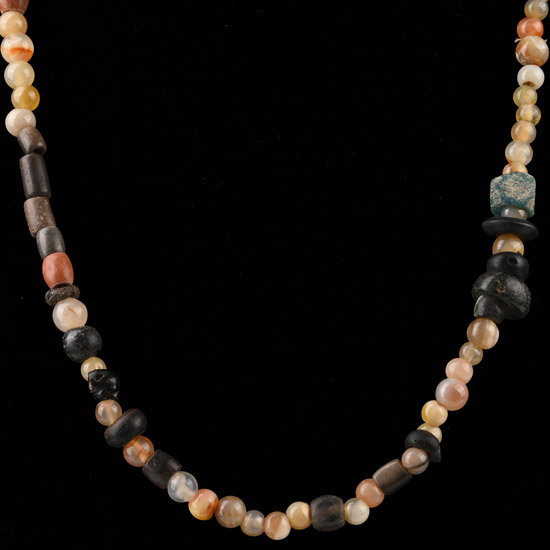
Roman Glass and Polished Stone Bead Necklace String
1st-4th century A.D. and laterSold for (Inc. bp): £78
Restrung group of mainly glass beads of oblate, spherical, cylindrical, polyhedral and other types. 72.9 grams, 66 cm
From the private collection of Mr Brian Edwards, New Malden, Surrey, UK, formed from the late 1970s-early 1980s; thence by descent. Accompanied by the original collector's data sheet(s) with reference no.A101. -
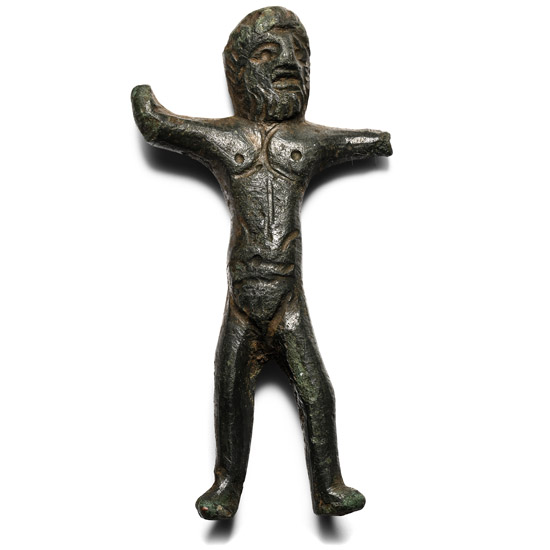
Romano-Celtic Bronze Statuette of God Sucellos
2nd-4th century A.D.Sold for (Inc. bp): £104
Modelled in the round with luxuriant hair and beard, bare-chested with a short kilt and belt; left arm extended straight and right arm bent upwards. 36.7 grams, 69 mm
From the private collection of a European gentleman (1942-2024), formed since the 1970s.
Sucellos was the Gaulish strong-man deity, usually shown with a hammer in his raised hand and a pot in the other. -
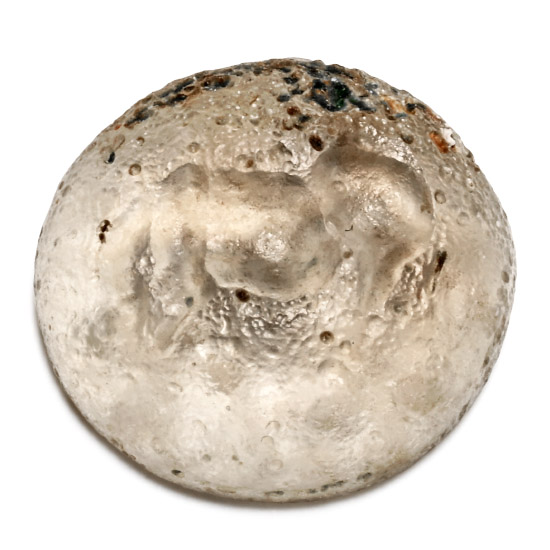
Roman Glass Gem with Horse
2nd-3rd century A.D.Sold for (Inc. bp): £33
Plano-convex type with incuse design to the underside of horse with its legs folded beneath the body; supplied with a museum-quality impression. 0.66 grams, 12 mm
From the private collection of a European gentleman (1942-2024), formed since the 1970s. -
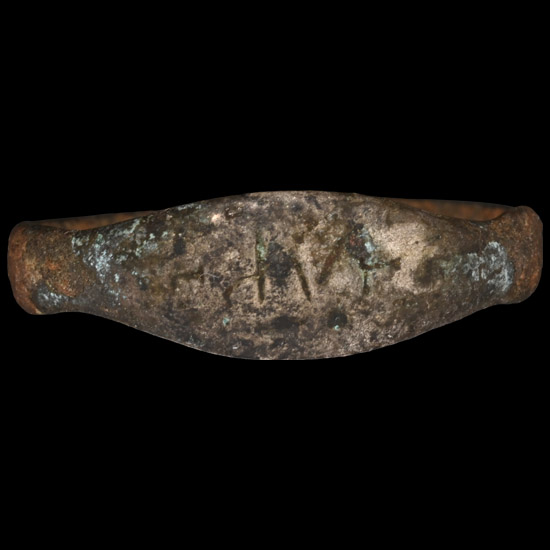
Roman Bronze Ring with Inscription
3rd-4th century A.D.Sold for (Inc. bp): £33
With slender hoop and ellipsoid bezel, three incised characters; with old collector's ticket. 1.34 grams, 19.80 mm overall, 17.25 mm internal diameter (approximate size British L 1/2, USA 6, Europe 11.87, Japan 11)
From the private collection of a European gentleman (1942-2024), formed since the 1970s. -
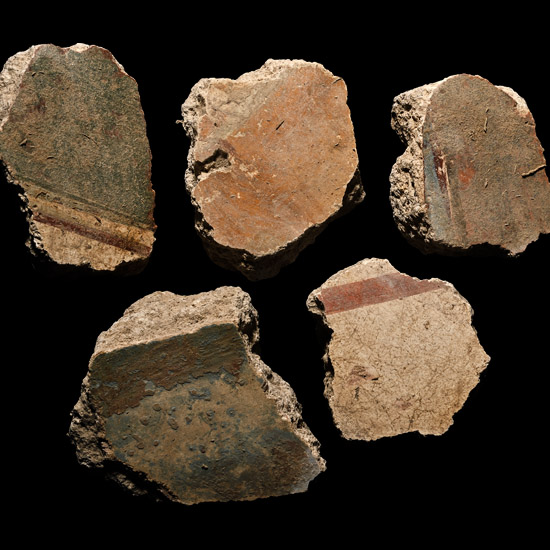
Roman Fresco Wall Plaster Collection
1st century A.D.Sold for (Inc. bp): £416
Fragments of wall plaster with rendered surface painted with mainly Pompeii red, pale blue, brown and white detailing; some with an impression of timber laths to the reverse. 868 grams total, 79-98 mm
Acquired in the 19th century. Ex Jeger collection, Switzerland. UK gallery, early 2000s.
These small fragments, for analogies with the fragments of Pompeii, seem to belong to the second style of Roman painting, red panels representing highlight and shadow, decorated with vegetal interlaces. A red grenade fillet probably framed some panels. A fragment shows alternate blue and red colours over a cream background, maybe pertinent to a socle. -
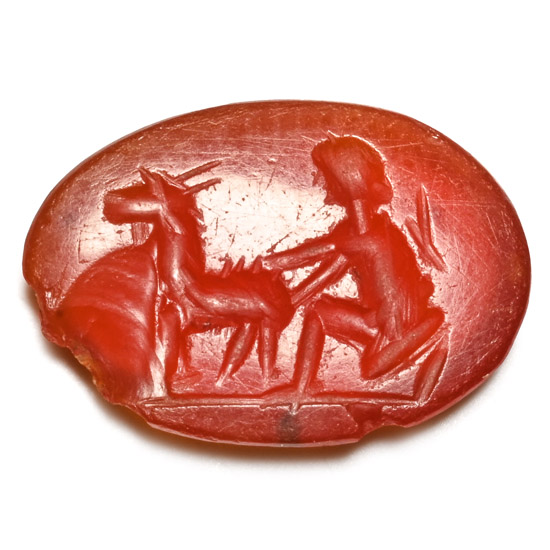
Roman Carnelian Gemstone with Figure and Animal
2nd-3rd century A.D.Sold for (Inc. bp): £130
Ellipsoid type with incuse design to the underside of a crouching figure extending both arms towards a mule, on a baseline; supplied with a museum-quality impression. 0.72 grams, 15 mm
From the private collection of a European gentleman (1942-2024), formed since the 1970s. -
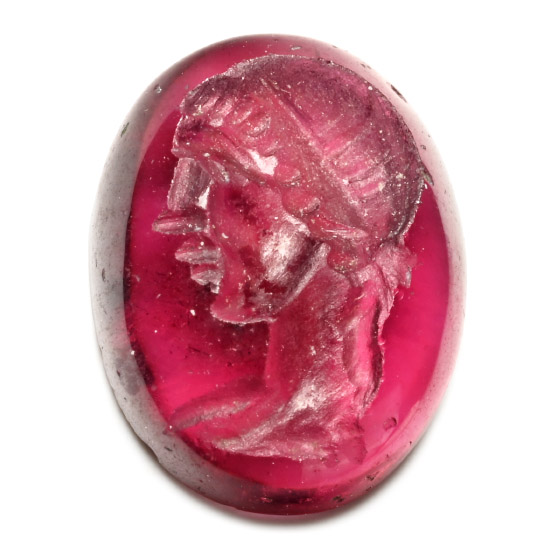
Roman Garnet Gemstone with Bearded Portrait
2nd-3rd century A.D.Sold for (Inc. bp): £72
Plano-convex type with incuse design of a profile bust with wreath to the brow and luxuriant beard; supplied with a museum-quality impression. 0.36 grams, 9 mm
From the private collection of a European gentleman (1942-2024), formed since the 1970s. -
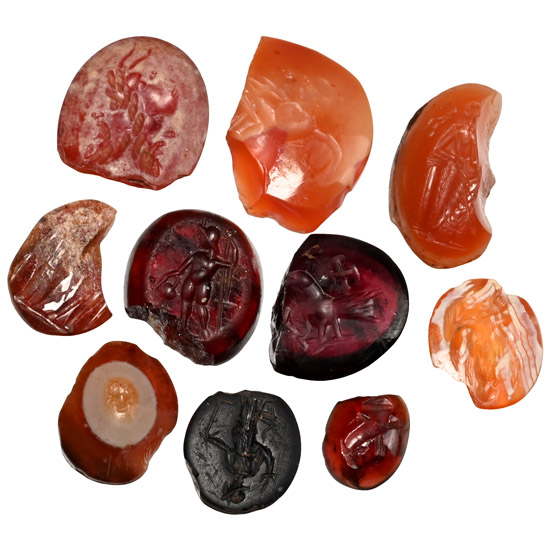
Roman Gemstone Group
2nd-3rd century A.D.Sold for (Inc. bp): £98
Including gryllus, Mars with helmet and spear, Isis-Minerva with cornucopia and other types; each supplied with a museum-quality impression. 6.25 grams total, 8-15 mm
From the private collection of a European gentleman (1942-2024), formed since the 1970s. -
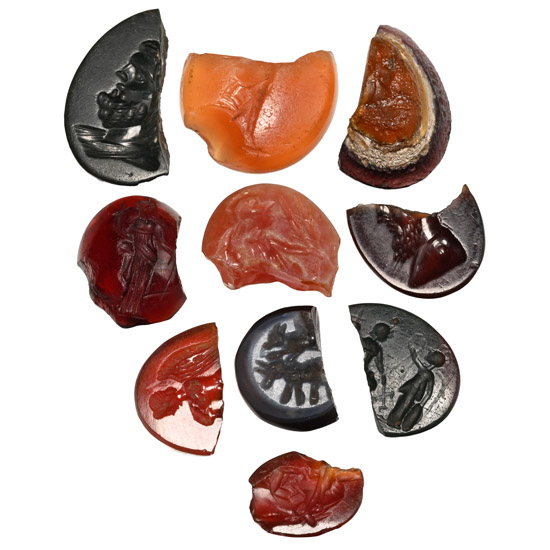
Roman Gemstone Group
2nd-3rd century A.D.Sold for (Inc. bp): £234
Including Fortuna with a cornucopia, gryllus, running horses and other types; each supplied with a museum-quality impression. 5.11 grams total, 10-16 mm
From the private collection of a European gentleman (1942-2024), formed since the 1970s. -
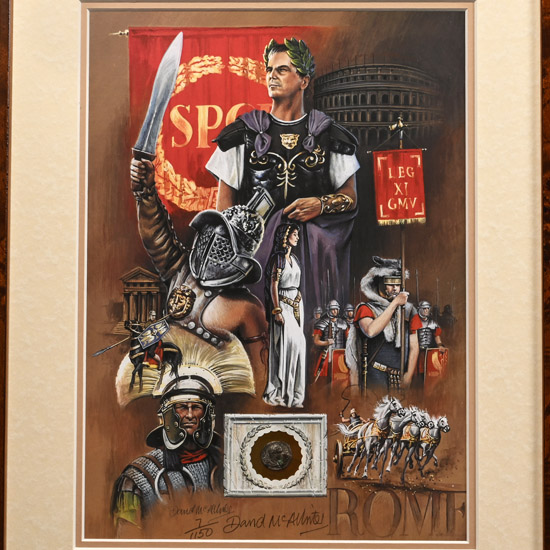
Silver Roman Coin and Framed Limited Edition Print
3rd century A.D. and laterSold for (Inc. bp): £7
The coin of Emperor Severus Alexander (222-235 A.D.) mounted on 22 carat gold foil, framed with an art print signed by the artist David McAllister, depicting scenes of Roman military activity; limited edition number 7/1150. 1.26 kg, 49.5 x 37.5 cm
UK gallery, early 2000s. Accompanied by a previous numbered certificate of authenticity.
David McAllister's exciting design is a 'one of a kind' work that portrays the might and riches of the Roman civilisation. This limited edition print is a celebration of the award-winning artist's lifetime dedication to historical paintings of the ancient world. To enhance appreciation of this rare and historic work, each print is signed and numbered by the artist. -
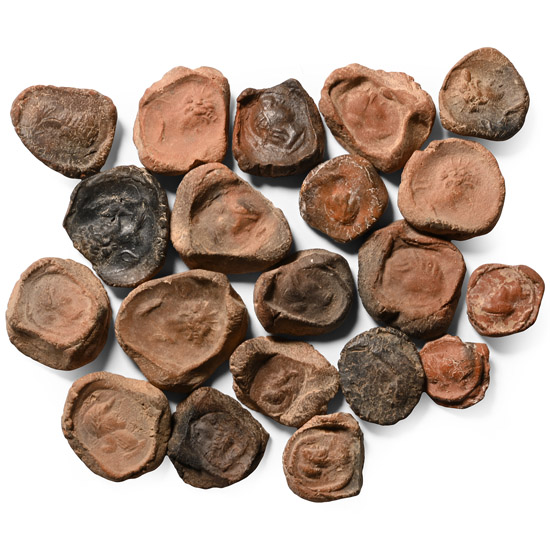
Roman Terracotta Bullae, Tesserae or Token Group
3rd century B.C.-1st century A.D.Sold for (Inc. bp): £85
A mixed group of ceramic bullae, tesserae or theatre tokens bearing low-relief motifs, mainly consisting of profile busts of deities. 30 grams total, 14-22 mm
From the private collection of a European gentleman (1942-2024), formed since the 1970s.
The term 'tessera' was used in Roman times to convey the Greek term σύμβολον (token). Small tiles are known as tokens, often shaped like coins, made of metal (copper, lead, iron), clay, bone, wood, or glass, stamped as well as engraved. The tokens, however, are not exclusively coin-shaped, as the Latin term 'tessera' refers to a four-sided shape. Tokens and tesserae seem to have been used both in Athens and Rome for the distribution of goods. According to written sources, the term ‘token’ is identified with credentials of the official authorities. They have also been interpreted as tokens of identity, as entrance tickets to theatre performances, tribunals or assemblies of citizens, archival material of seal engraving, as pawns in games, Charon’s obols and even as amulets. -
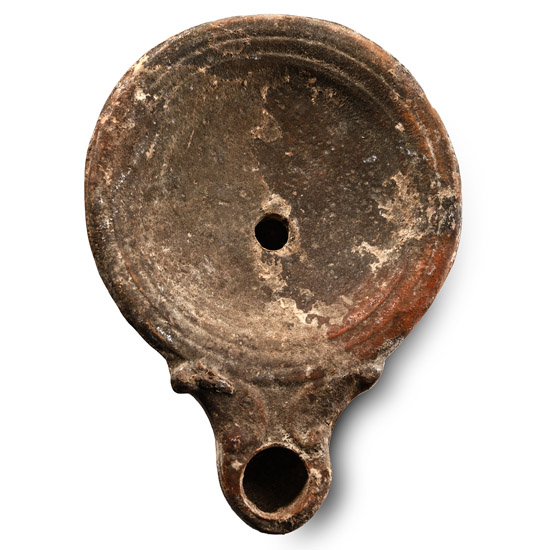
Roman Voluted Terracotta Oil Lamp
1st-2nd century A.D.Sold for (Inc. bp): £33
Piriform in plan with short spout flanked by volutes, segmented shoulder and dished discus, basal ring. 39.4 grams, 91 mm
From a UK private collection since at least 1946. Property of a West London, UK, gentleman.

