-
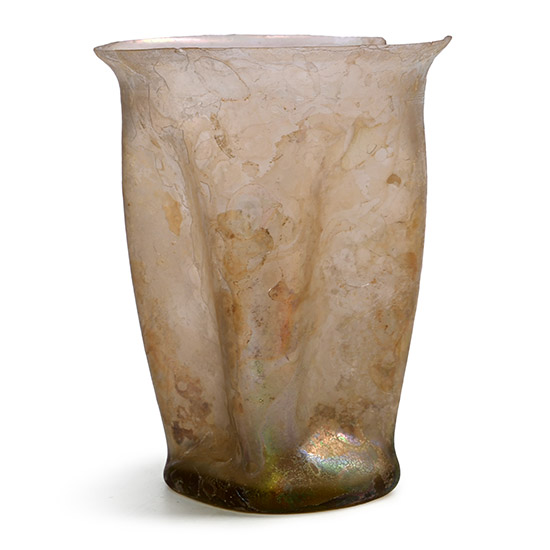
Roman Iridescent Glass Pinched Beaker
Circa 2nd-3rd century A.D.Sold for (Inc. bp): £78
Flat base and a conical body with an everted rim; rim chipped. 53 grams, 10.3 cm
From the collection of a late Norfolk, UK gentleman's collection, formed from the late 1960s-1970s. -
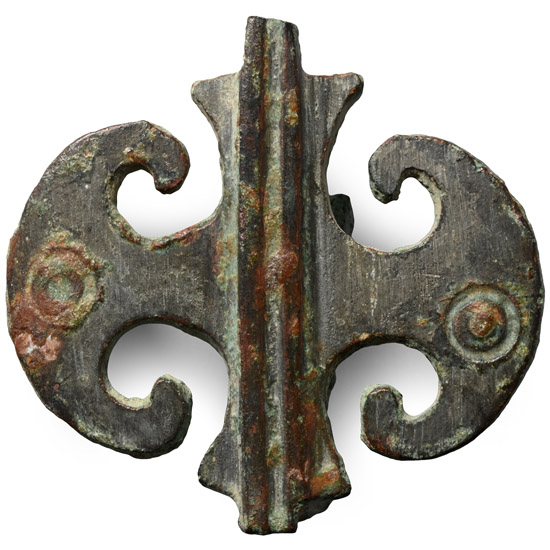
Roman Bronze Double Axe Plate Brooch
2nd-3rd century A.D.Sold for (Inc. bp): £111
Plate brooch with raised vertical shaft and lateral crescent blades, each with an incised ring-and-dot motif; pin-lugs and partial pin on the reverse. 10.1 grams, 33 mm
From the private coin collection of a West London, UK, gentleman, formed since the mid 1980s. -
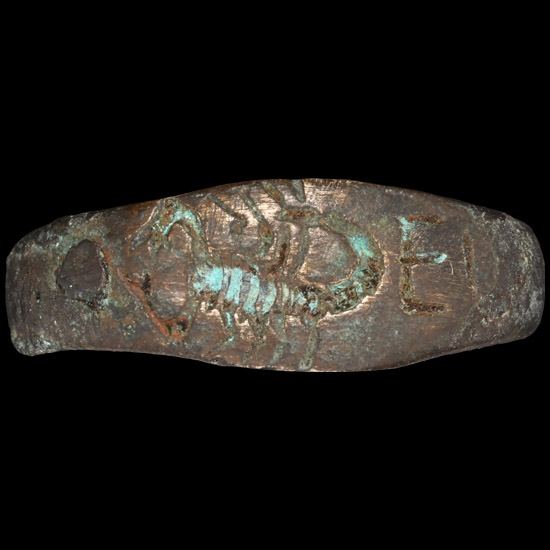
Roman Bronze Ring with Scorpion and EI
1st-2nd century A.D.Sold for (Inc. bp): £143
Featuring a flat-section hoop and a bezel with a scorpion with a raised tail and the letters 'EI'. 2.23 grams, 19.41 mm overall, 16.06 x 13.49 mm internal diameter (approximate size British H, USA 3 3/4, Europe 6.18, Japan 6)
From the private collection of a European gentleman (1942-2024), formed since the 1970s.
It is possible that the ring was carried by a Pretorian guardsman, as the scorpion was one of their emblems. -
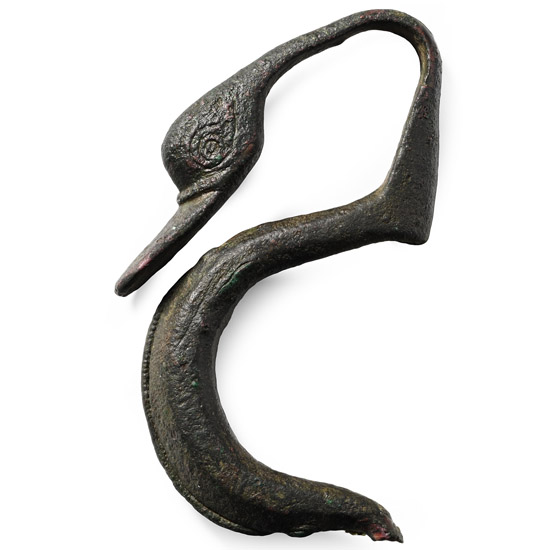
Romano-Celtic Bronze Swan-Necked Bow Brooch
1st-2nd century A.D.Sold for (Inc. bp): £117
Comprising a deep bow with a raised ridge, an integral catchplate extending to a curving swan-neck, the head with detailed eyes and a ribbed raised band at the junction of the head and beak. 32.6 grams, 65 mm
From the private coin collection of a West London, UK, gentleman, formed since the mid 1980s. -
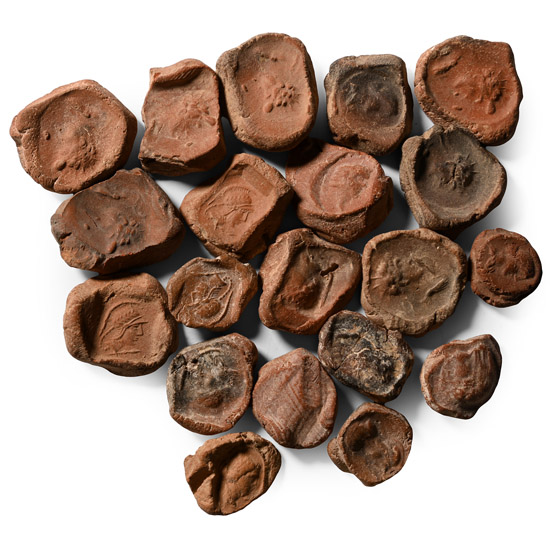
Roman Terracotta Bullae, Tesserae or Token Group
3rd century B.C.-1st century A.D.Sold for (Inc. bp): £130
A mixed group of ceramic bullae, tesserae or theatre tokens bearing low-relief motifs, mainly consisting of profile busts of deities. 33.6 grams total, 13-22 mm
From the private collection of a European gentleman (1942-2024), formed since the 1970s.
The term 'tessera' was used in Roman times to convey the Greek term σύμβολον (token). Small tiles are known as tokens, often shaped like coins, made of metal (copper, lead, iron), clay, bone, wood, or glass, stamped as well as engraved. The tokens, however, are not exclusively coin-shaped, as the Latin term 'tessera' refers to a four-sided shape. Tokens and tesserae seem to have been used both in Athens and Rome for the distribution of goods. According to written sources, the term ‘token’ is identified with credentials of the official authorities. They have also been interpreted as tokens of identity, as entrance tickets to theatre performances, tribunals or assemblies of citizens, archival material of seal engraving, as pawns in games, Charon’s obols and even as amulets. -
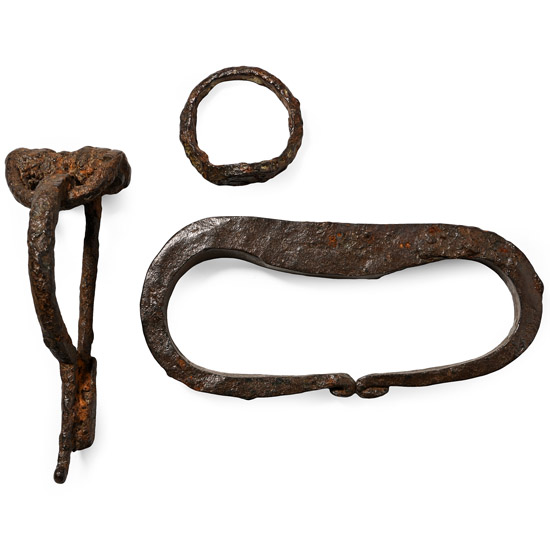
Roman Iron Artefact Collection
1st-4th century A.D.Sold for (Inc. bp): £33
Comprising: a firesteel, a ring, and a bow brooch. 81 grams total, 25-80 mm
Ex German art market, 2000s. Acquired from an EU collector living in London. From the collection of a Surrey, UK, gentleman. -
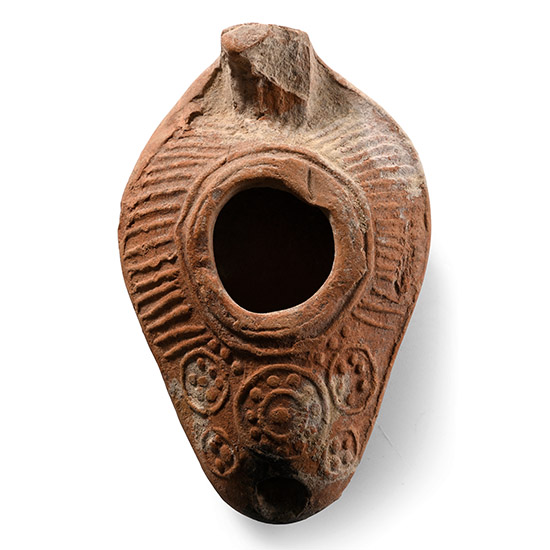
Roman Ovoid Oil Lamp with Low Relief Decoration
Holy Land, circa 2nd-3rd century A.D.Sold for (Inc. bp): £46
Stub handle to the rear, vertical ribs on the body and the nozzle with ring-and-dot motifs. 65 grams, 87 mm
Ex Ancient Art Shop, Windsor, UK, 1990s. Ex private West County, UK, collection. -
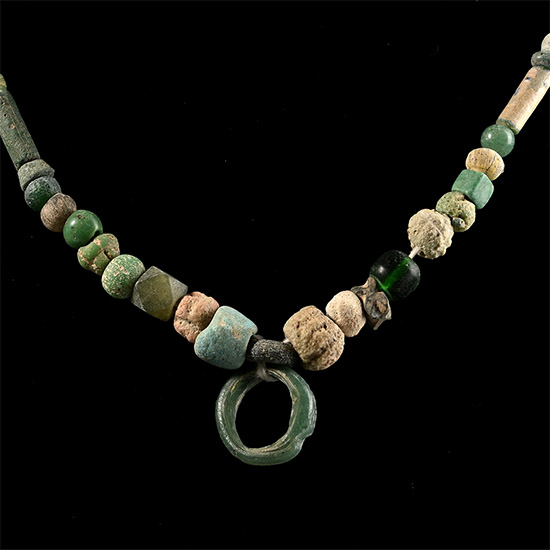
Roman Green Glass Bead Necklace String
1st-4th century A.D. and laterSold for (Inc. bp): £39
Composed of graduated beads including oblate, tubular, polygonal, and others, the central feature a large annular pendant, restrung. 24.7 grams, 41 cm
Acquired in the 1990s. Ex London, UK, collection. -
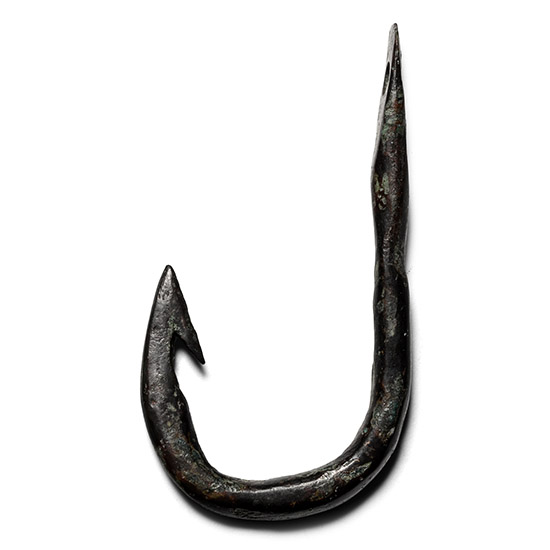
Roman Bronze Fishing Hook
1st-4th century A.D.Sold for (Inc. bp): £195
Barbed fishing hook with a suspension loop. 4.45 grams, 42 mm
Ex German art market, 2000s. Acquired from an EU collector living in London. From the collection of a Surrey, UK, gentleman. -
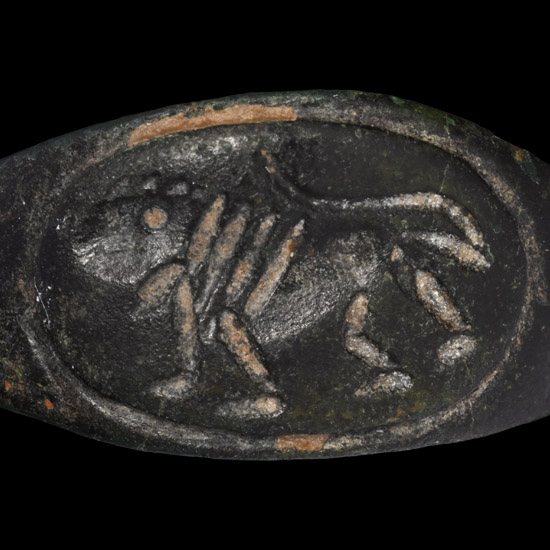
Roman Bronze Ring with Gladitorial Lion
Circa 1st-4th century A.D.Sold for (Inc. bp): £91
The hoop expanding towards the shoulders, with an oval bezel with an incuse image of a lion. 4.20 grams, 23.11 mm overall, 20.35 x 15.45 mm internal diameter (approximate size British M, USA 6, Europe 12.46, Japan 12)
Acquired on the UK art market. Private collection, Suffolk, UK. -
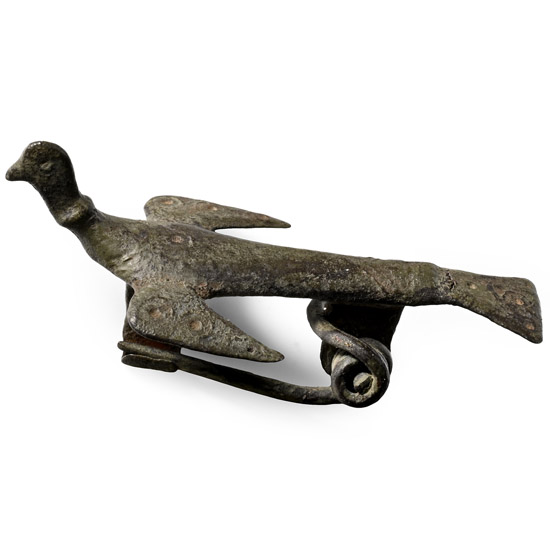
Roman Bronze Bird in Flight Plate Brooch
5th century A.D.Sold for (Inc. bp): £169
Depicting a bird with open wings and a fan-shaped tail, a springed pin, and a catchplate on the reverse. 5.89 grams, 41 mm
From the private coin collection of a West London, UK, gentleman, formed since the mid 1980s. -
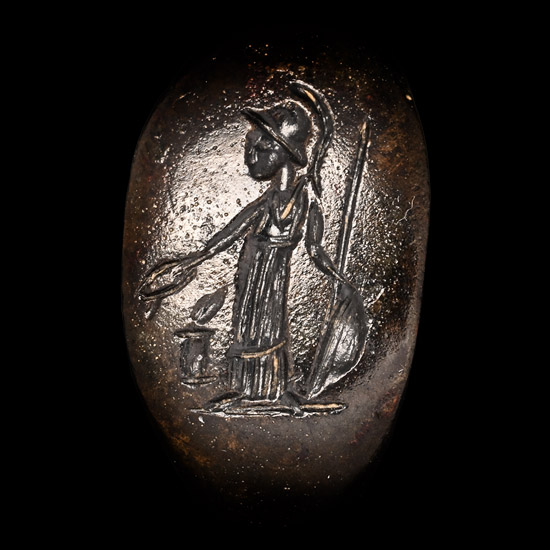
Roman Bronze Ring with Minerva Standing
1st-2nd century A.D.Sold for (Inc. bp): £195
With a slender D-section hoop expanding at the shoulders, the oval bezel with Minerva facing left, holding a spear and a shield in her left hand, and a wreath in her right hand, with a flaming altar to the side. 3.88 grams, 21.28 mm overall, 18.70 mm internal diameter (approximate size British R, USA 8 1/2, Europe 18 3/4, Japan 18)
Ex German art market, 2000s. Acquired from an EU collector living in London. From the collection of a Surrey, UK, gentleman.

