
Ancient Art, Antiquities, Books, Natural History, Stamps & Coins
Days 1-5
Open For Bidding
Open For Bidding

-
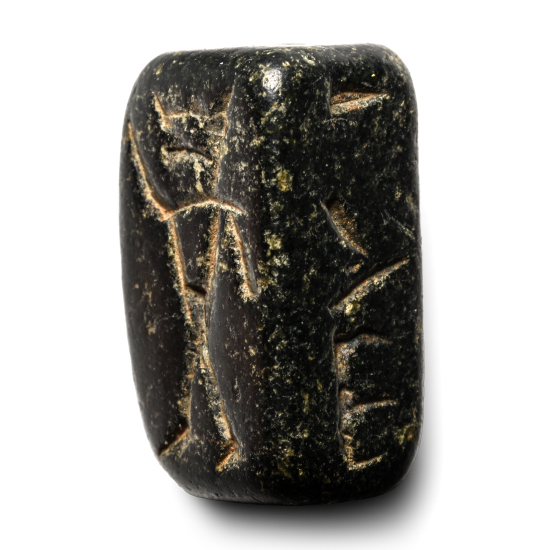
Assyrian Steatite Four-Sided Seal with Figures and Magical Symbols
Circa 600-400 B.C.Estimate: £40 - 60 (+bp*)
Bids: 1 | Current Bid: £5
Rectangular in plan with longitudinal piercing, incuse decoration to the long faces: advancing figure with canine mask; undulating line (serpent); standing figure in flounced robe with arms raised; three glyphs or symbols; usage wear, 7.46 grams, 22 mm
From the private collection of Mr Brian Edwards, New Malden, Surrey, UK, formed from the late 1970s-early 1980s; thence by descent. Accompanied by the original collector's data sheet(s) with reference no.A8. -
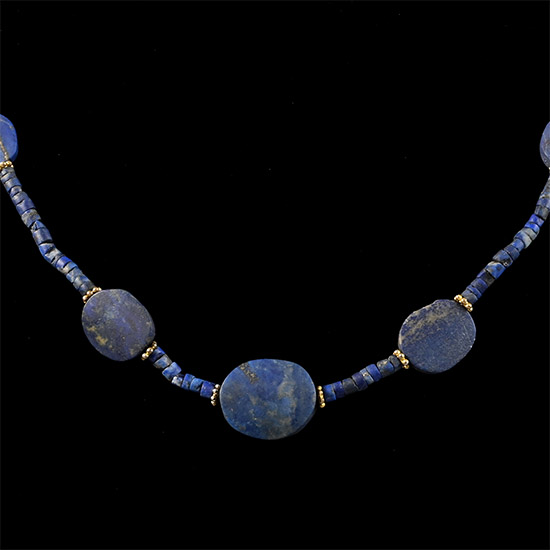
Bactrian Style Lapis Lazuli Bead Necklace String
20th century A.D.Estimate: £50 - 70 (+bp*)
Opening Bid: £5
Composed of coin-shaped and tubular beads interspersed with metal spacers, restrung. 33.8 grams, 49 cm
Acquired in the 1990s-early 2000s. Ex London, UK, collection. -
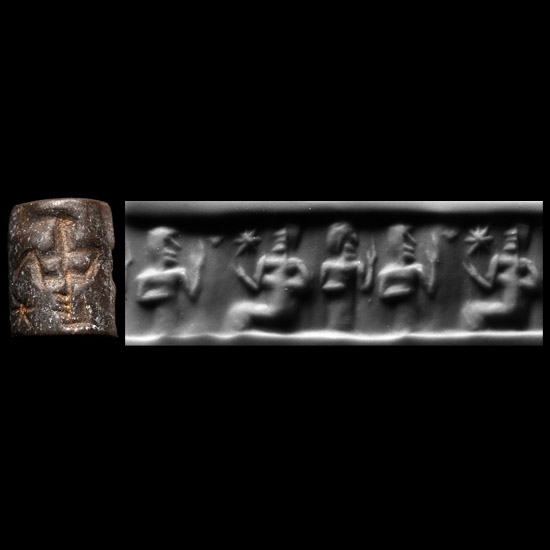
Syrian Haematite Cylinder Seal with Deity
Circa 2500-1800 B.C.Estimate: £100 - 140 (+bp*)
Bids: 1 | Current Bid: £5
A small seal with a deity on a throne, two worshippers before and a star as a filler motif; supplied with a museum-quality impression. 0.83 grams, 10 mm
From the private collection of a European gentleman (1942-2024), formed since the 1970s. Accompanied by a previous typed catalogue slip with collection no.30. -
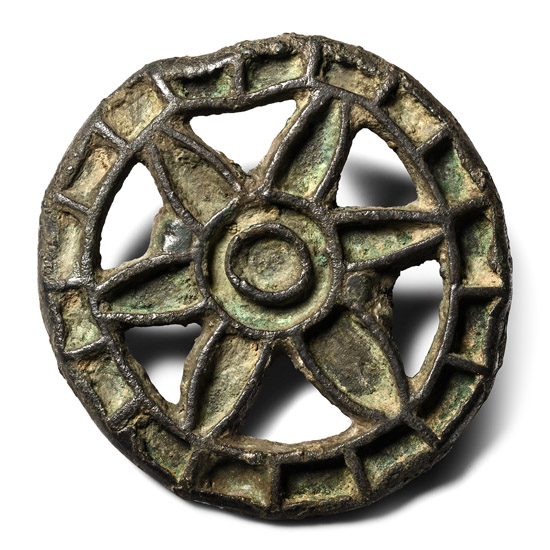
Large West Central Asian Bronze Six-Spoked Wheel Seal Matrix
Circa 2300-2000 B.C.Estimate: £100 - 140 (+bp*)
Opening Bid: £50
Openwork seal formed as a spoked wheel, accompanied by an old scholarly note, typed and signed by W.G. Lambert, late Professor of Assyriology, University of Birmingham, 1970-1993, which states: 'Stamp Seal of Bronze, 43 x 43 x 12 mm. This is round, with flat face and flat back, on which a loop handle is mounted. The design, which is both compartmented and open-work, consists of a rosette, with six 'rays' off a central small circular band, and a plain outer band surrounded the whole, divided into 17 segments. This comes from west central Asia and dates to c. 2300-2000 B.C. There is some wear and denting, but the piece is generally in fair condition, the metal having been conserved.' 27.9 grams, 45 mm
Acquired in the late 1980s-early 1990s. Ex property of a West London businessman. Academically researched and catalogued by the late Professor Lambert in the early 1990s. Accompanied by a copy of a scholarly report, numbered T-871, typed and signed by Professor Wilfrid George Lambert. -
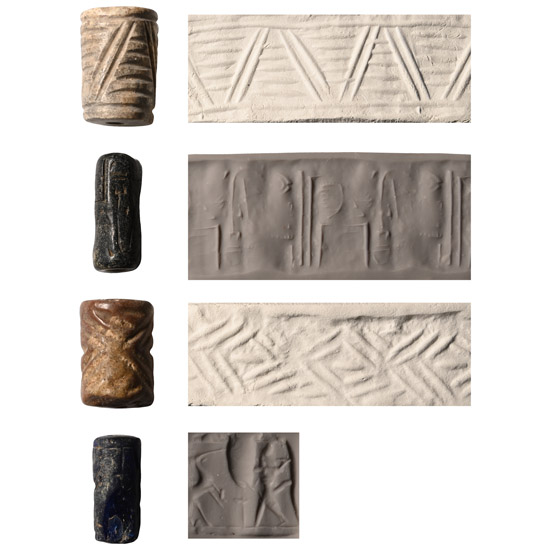
Western Asiatic Stone Cylinder Seal Group
3rd-2nd millennium B.C.Estimate: £80 - 100 (+bp*)
Opening Bid: £5
Comprising: a brown serpentine seal with a geometric pattern; a cream serpentine seal with a geometric pattern; a black steatite seal with a figure in a fringed dress with the hood over the head, a small table and two corn-ears as a divider; a blue glass seal with a standing figure and a rearing quadruped; supplied with museum-quality impressions. 27.1 grams total, 22-24 mm
From the private collection of a European gentleman (1942-2024), formed since the 1970s. Accompanied by previous typed catalogue slips with collection nos.4, 5, 28, and one handwritten. -
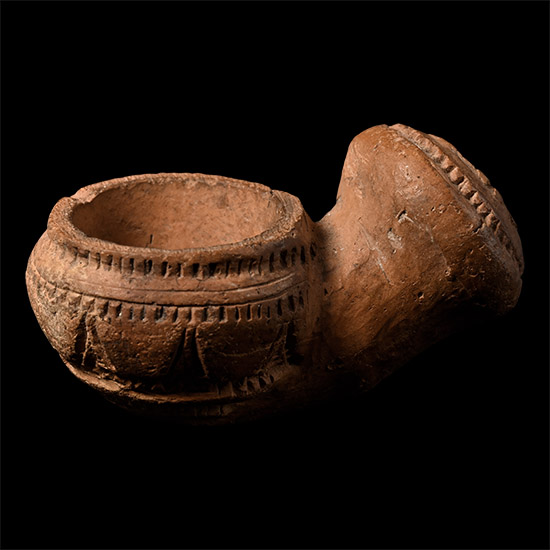
Western Asiatic Ceramic Tobacco Pipe Bowl
17th-18th century A.D.Estimate: £20 - 30 (+bp*)
Opening Bid: £5
Bowl with carinated shoulder, impressed rouletting, angled joint with bulbous mouth. 24.7 grams, 53 mm
From the private collection of Mr Brian Edwards, New Malden, Surrey, UK, formed from the late 1970s-early 1980s; thence by descent. -
.jpg)
Western Asiatic Variated Green Stone Cylinder Seal with Cuneiform Inscription
1400-1300 B.C.Estimate: £150 - 200 (+bp*)
Bids: 1 | Current Bid: £5
An unfinished court scene with seated figure in profile wearing a tall headdress facing a kneeling figure with arms bent; lightly incised, with space for cuneiform text; supplied with a museum-quality impression. 16.41 grams, 32 mm
From the private collection of a European gentleman (1942-2024), formed since the 1970s. -
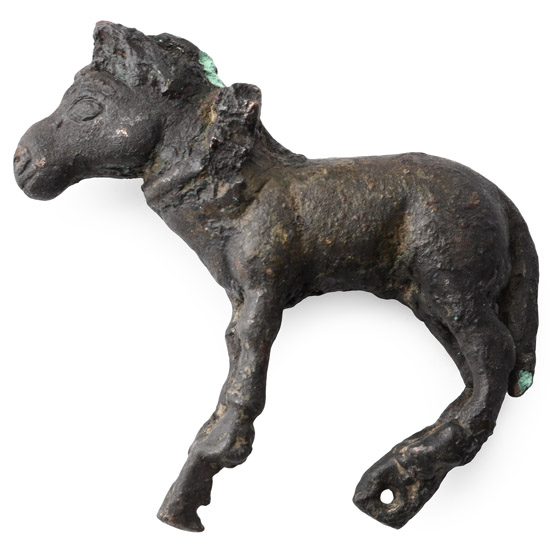
Western Asiatic Bronze Horse Statuette
2nd-3rd century A.D.Estimate: £200 - 300 (+bp*)
Opening Bid: £5
Modelled in the round as a stocky horse or a mule with pierced lugs beneath the hooves, a looped neck harness around the neck. 106 grams, 66 mm
From the private coin collection of a West London, UK, gentleman, formed since the mid 1980s. -
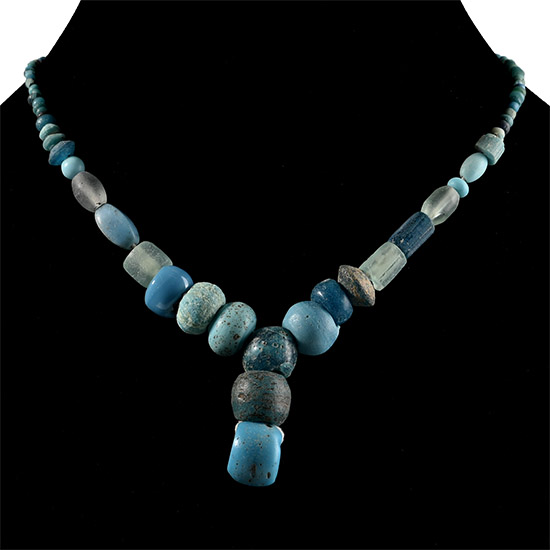
Achaemenid Turquoise Glass and Other Bead Necklace String
Mid 1st millennium B.C. and laterEstimate: £50 - 70 (+bp*)
Opening Bid: £5
Composed of small oblate beads with larger oblate and oval beads as the central feature, restrung. 29 grams, 35 cm
Acquired in the 1990s. Ex London, UK, collection. -
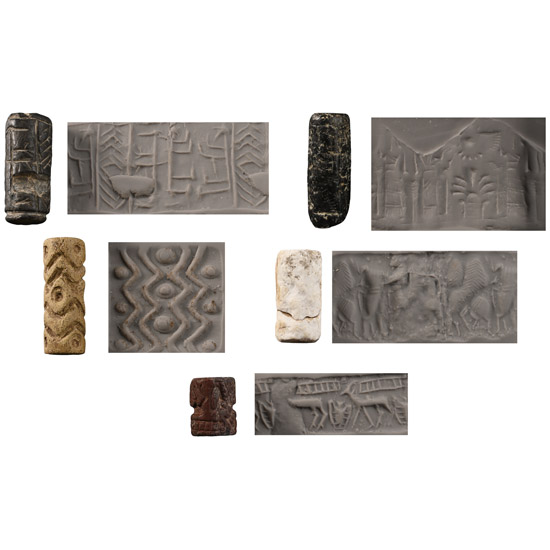
Western Asiatic Stone Cylinder Seal Group
2nd-1st millennium B.C.Estimate: £150 - 200 (+bp*)
Opening Bid: £5
Comprising: frieze of standing figure and winged opponent, cracked and repaired; frieze with faravahar above a hearth, standing figures, top partly absent; linear representation of oxen in a field with band of concentric lozenges (river?); advancing ibexes with ladder motif above; bilinear zigzags with interstitial bosses; four supplied with a museum-quality impression. 46.7 grams total, 18-37 mm
From the private collection of a European gentleman (1942-2024), formed since the 1970s. -
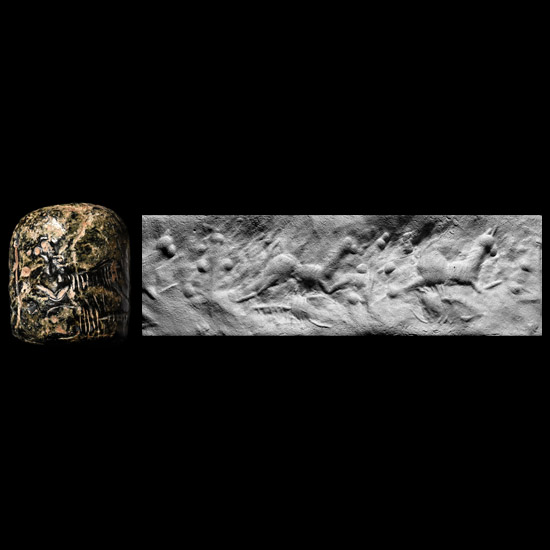
Western Asiatic Steatite Cylinder Seal with Deer and Scorpion
Circa 1500-1300 B.C.Estimate: £100 - 140 (+bp*)
Opening Bid: £5
Barrel-shaped with incuse frieze of a leaping deer and a scorpion, pellets in the field; supplied with an old dealer's ticket and a museum-quality impression. 13 grams, 22 mm
From the private collection of a European gentleman (1942-2024), formed since the 1970s. Accompanied by a previous handwritten catalogue note card. -
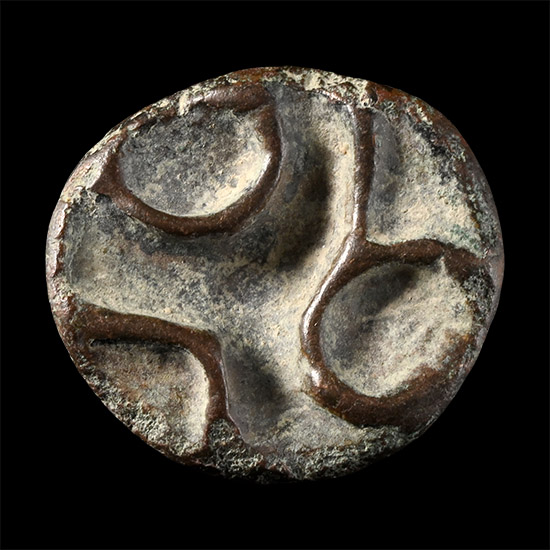
West Central Asian Bronze Chess Piece Type Seal Matrix with Interlocking Design
Circa 2200-1800 B.C.Estimate: £60 - 80 (+bp*)
Opening Bid: £5
Discoid stamp seal with segmented face and tall handle; accompanied by an old scholarly note, typed and signed by W.G. Lambert, late Professor of Assyriology, University of Birmingham, 1970-1993, which states: 'Stamp Seal of Bronze 19 x 18 x 34 mm. This was originally round, with flat face and slightly convex back on which is mounted a tall stalk handle with ridges around it and an oval loop on the top. The design, done in raised lines, consists of two interlocking pairs of strokes, each with a curve in it, and some short strokes act as fillers. This comes from west central Asia and dates to c. 2200-1800 B.C. About two thirds of the rim are now missing, and the handle is worn down, but a fair amount remains and is in good condition.' 9.76 grams, 23 mm
Acquired in the late 1980s-early 1990s. Ex property of a West London businessman. Academically researched and catalogued by the late Professor Lambert in the early 1990s. Accompanied by a copy of a scholarly report, numbered T-849, typed and signed by Professor Wilfrid George Lambert.
