
Ancient Art, Antiquities, Books, Natural History, Stamps & Coins
Days 1-5
Open For Bidding
Open For Bidding

-
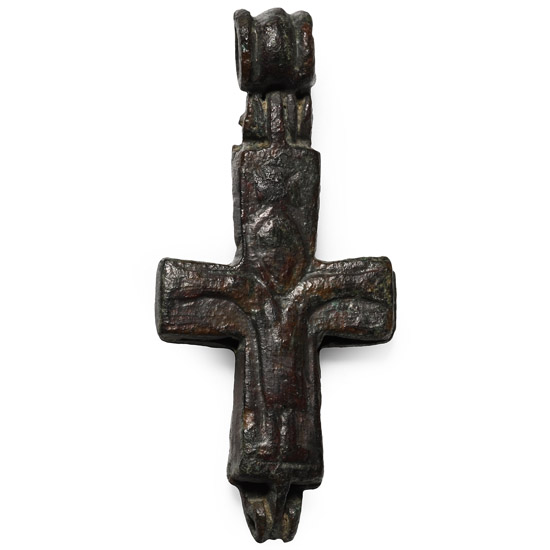
Byzantine Bronze Reliquary Cross Pendant
Circa 10th-12th century A.D.Estimate: £100 - 140 (+bp*)
Opening Bid: £50
Enkolpion with hinged loop, nimbate figure in orans pose to obverse, Corpus Christi with a small cross above the head to reverse. 12.26 grams, 49 mm
Ex German art market, 2000s. Acquired from an EU collector living in London. From the collection of a Surrey, UK, gentleman. -
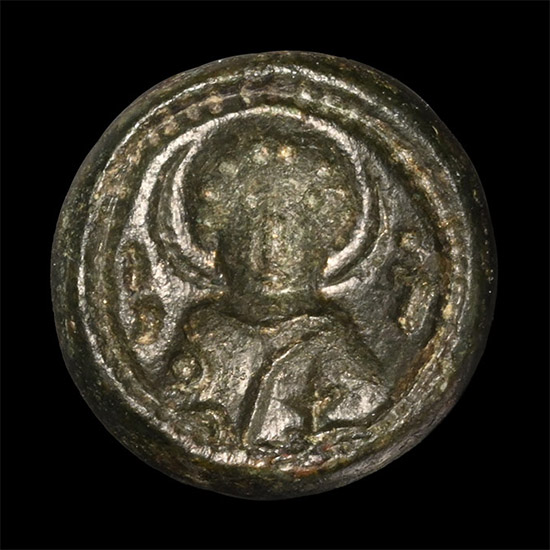
Byzantine Bronze Seal with Saint
8th-10th century A.D.Estimate: £60 - 80 (+bp*)
Bids: 1 | Current Bid: £5
Collared loop above, underside with facing bust of a nimbate saint holding a cross. 6.34 grams, 18 mm
Ex German art market, 2000s. Acquired from an EU collector living in London. From the collection of a Surrey, UK, gentleman. -
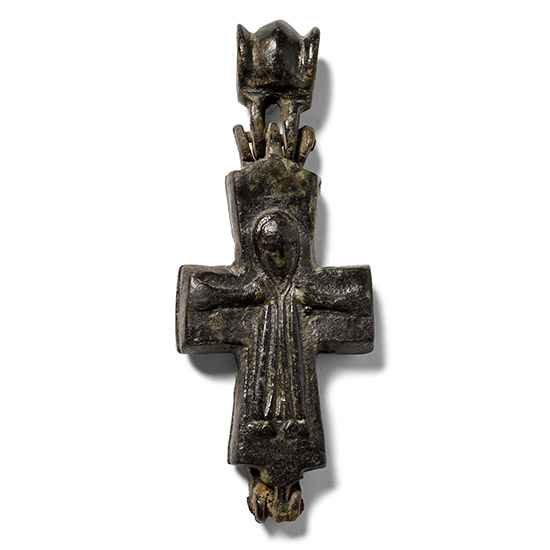
Byzantine Bronze Reliquary Cross Pendant with Saints
Circa 10th-12th century A.D.Estimate: £100 - 140 (+bp*)
Bids: 1 | Current Bid: £5
Enkolpion with hinged loop, nimbate figure in orans pose to reverse, Corpus Christi to obverse. 22.9 grams, 60 mm
From the private coin collection of a West London, UK, gentleman, formed since the mid 1980s. -
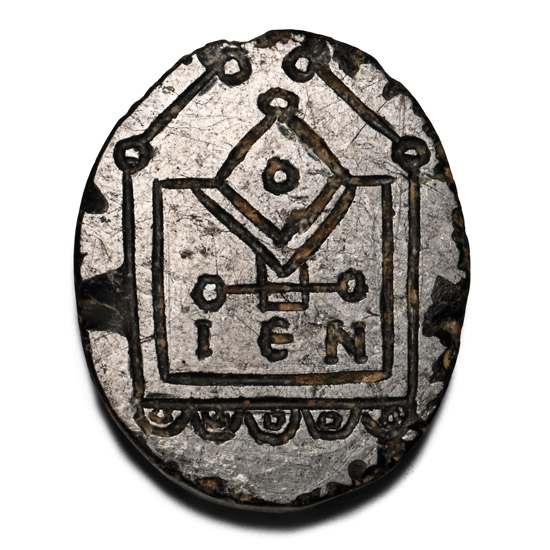
Byzantine Stone Bifacial Amulet with Church Designs
Circa 2th-14th century A.D.Estimate: £30 - 40 (+bp*)
Bids: 1 | Current Bid: £5
Bifacial plaque with geometric designs: Side A - lozenge bisecting the upper edge of a square with 'o' to the centre, 'IEN' below, horseshoe motifs to the edge; Side B - pentagonal panel with lozenge to the upper edge, 'α' above 'Π' and similar border. 2.91 grams, 24 mm
From the private collection of a European gentleman (1942-2024), formed since the 1970s. -
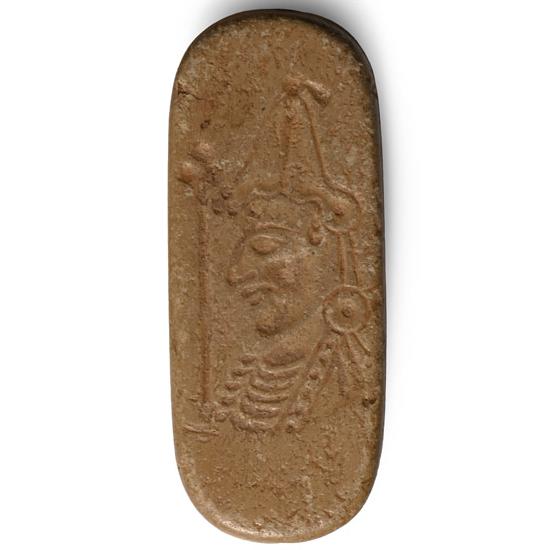
Byzantine Inscribed Bone Plaque
Circa 6th-10th century AD.Estimate: £80 - 100 (+bp*)
Opening Bid: £44
Obverse with low-relief bust wearing conical headgear, with trefoil sceptre and hatched robe; reverse with legend 'ΚΕΒΟΗΙΤΟ' ('T' inverted). 3.12 grams, 38 mm
Ex Essex gentleman's collection, 2000s. -
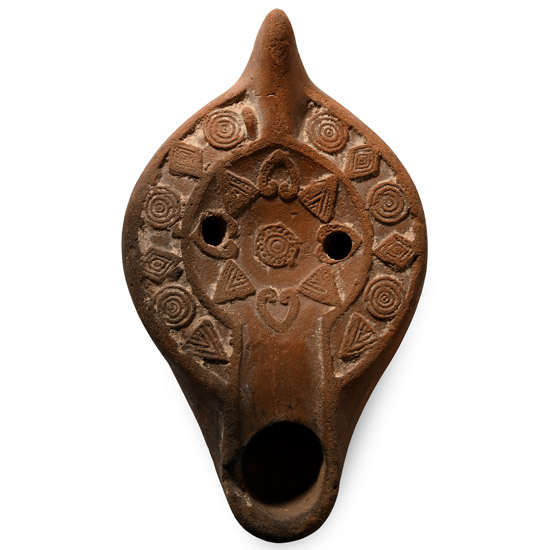
Byzantine Terracotta Oil Lamp with Concentric Motifs
Circa 5th-6th century A.D.Estimate: £120 - 170 (+bp*)
Opening Bid: £60
Large oil lamp with stub handle to the rear, wide rim with concentric rings and lozenges, the discus with concentric triangles and volutes, a low basal ring. 213 grams, 14 cm
From an important collection of lamps, Germany, 1970s. -
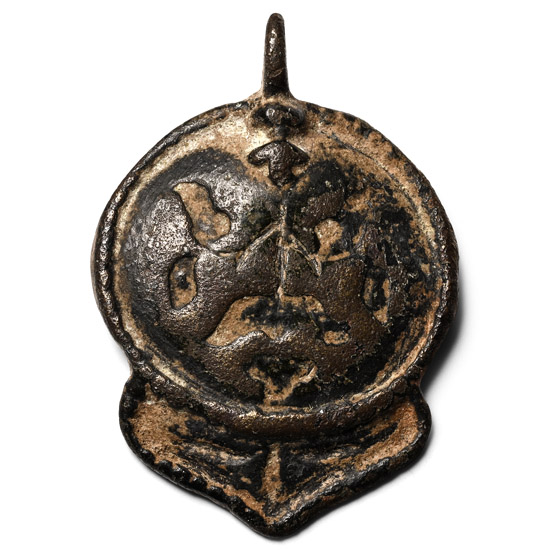
Eastern Roman Bronze Horse Harness Pendant
Circa 15th century A.D.Estimate: £20 - 30 (+bp*)
Opening Bid: £5
Comprising a slightly domed disc with raised border and triangular flange to the lower edge; suspension loop above and remains of slider bar to reverse; incuse foliage design. 10.4 grams, 45 mm
From the private collection of a European gentleman (1942-2024), formed since the 1970s. -
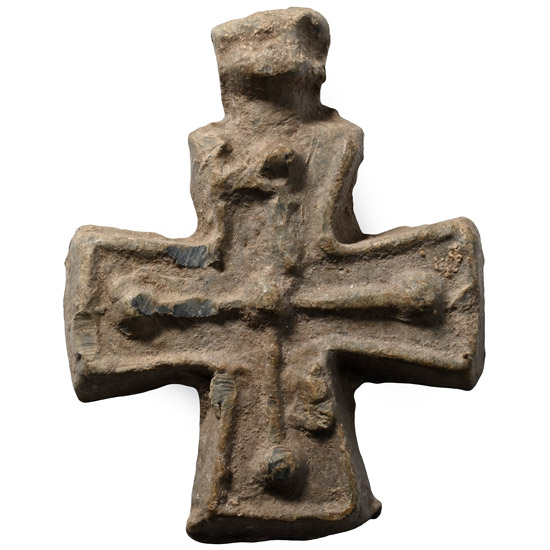
Byzantine Lead Cross Pendant
Circa 6th-8th century A.D.Estimate: £40 - 60 (+bp*)
Opening Bid: £5
Heavy equal-armed cross with raised borders and a raised central cross motif, integral loop. 27.8 grams, 40 mm
From the private coin collection of a West London, UK, gentleman, formed since the mid 1980s. -
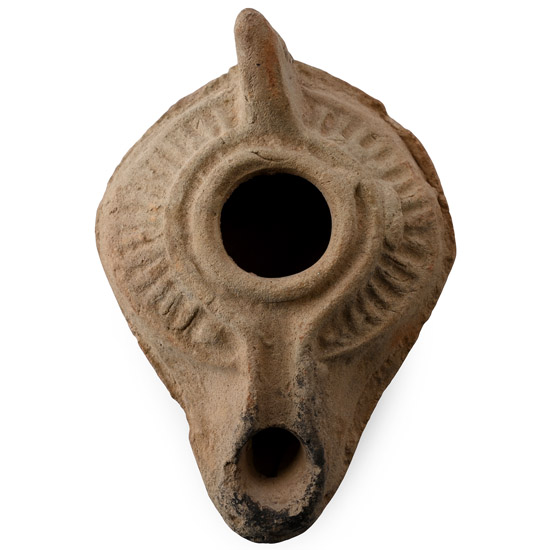
Byzantine Terracotta Oil Lamp with Stub Handle
Circa 7th-8th century A.D.Estimate: £50 - 70 (+bp*)
Opening Bid: £5
Small lamp with linear decoration on the shoulder, tapering handle to the rear and low basal ring. 73 grams, 84 mm
From the collection of a Cambridge, UK, gentleman, by direct descent from his father, who acquired the items in London in circa 1960. -
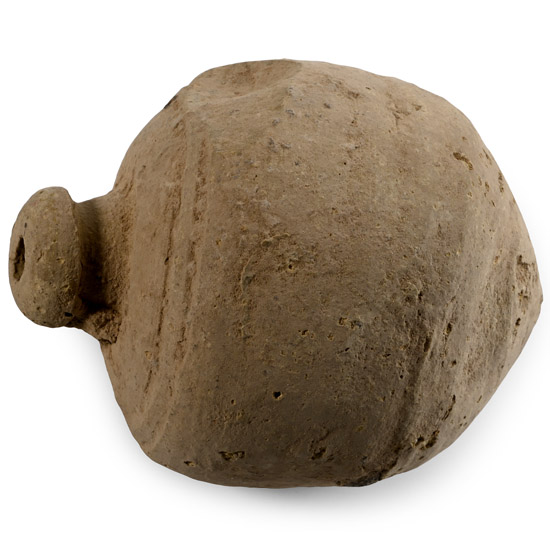
Byzantine 'Greek Fire' Ceramic Fire Bomb or Hand Grenade
9th-11th century A.D.Estimate: £80 - 100 (+bp*)
Opening Bid: £5
Bulbous body with pointed base and domed mouth, two circumferential bands on the shoulder; intended to be filled with explosive liquid and a wick, and used as a hand grenade. 378 grams, 10.3 cm
From an important specialist collection, London, UK, 1990s. Accompanied by an academic paper by military specialist Dr Raffaele D'Amato, dated 15 July 2019 and titled 'Eastern Roman Empire - Greek Fire Bomb or Hand Grenade (μεσαίον kακάβιον) 9th-11th century AD'.
Apart from the use of siphons or manual flame-throwers called cheirosiphona, special corps of Roman soldiers employed terracotta grenades, in the form of small jars, abundantly evidenced in archaeological excavations. They were called μεσαία kακαβιά or κυτροκακάβια, where the former had a bulbous shape and the latter a more cylindrical form. -
.jpg)
Byzantine Bronze Ring with Warrior Saint
12th-13th century A.D.Estimate: £60 - 80 (+bp*)
Opening Bid: £5
D-section hoop with keeled shoulders, polygonal bezel with a stylised nimbate figure. 6.65 grams, 23.80 mm overall, 18.91 mm internal diameter (approximate size British Q 1/2, USA 8 1/4, Europe 18.12, Japan 17)
Acquired on the UK and EU art market before 2000. From the private collection of a Surrey, UK, gentleman.
This category of rings had a hexagonal-rounded chaton raised above the link. Conforming to the iconography of the Orthodox countries under the influence of Byzantium, the possible decoration was related to military saints. -
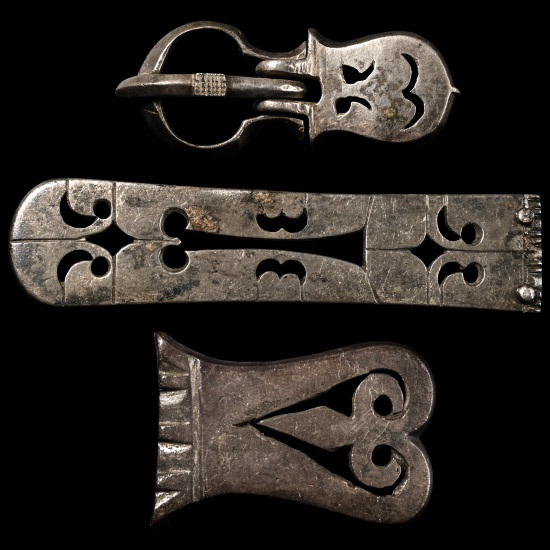
Early Byzantine Silver Belt Fittings with Openwork Decoration
6th-7th century A.D.Estimate: £300 - 400 (+bp*)
Opening Bid: £150
Comprising: two strap ends with openwork decoration of bifurcated scrolls and volutes; a buckle with an arched loop and cast tongue mounted on a shield-shaped plate decorated in a similarly abstract vegetal scheme. 51.5 grams total, 47-89 mm
Acquired on the European art market.
The high quality of execution, formal consistency, and use of silver suggest these fittings once adorned the belt of a military or aristocratic figure within a frontier or provincial context. Their design is representative of the transitional material culture of the early Byzantine world, in which classical motifs were abstracted and reinterpreted through regional aesthetic idioms. This ensemble belongs to the broader category of Early Byzantine personal dress fittings, and is closely related to the Martynivka Hoard—a group of silver artefacts discovered near Kanev (modern Cherkasy Oblast, Ukraine) before 1909. Now divided between the British Museum and the National Museum of the History of Ukraine, the hoard includes strap ends and buckles of closely comparable design and manufacture. While their precise cultural attribution remains debated, the prevailing scholarly consensus situates them within the orbit of Byzantine provincial production, possibly influenced by or intended for Slavic, nomadic, or client populations in the Pontic steppe region. Similar artefacts have been recovered from Kerch in Crimea, further supporting the view that such belt fittings were widely disseminated in Byzantine-controlled or influenced regions along the northern Black Sea during the 6th and 7th centuries. Their function was not merely practical; richly decorated belts of this kind were important signifiers of rank, allegiance, and imperial favour.
