
Ancient Art, Antiquities, Books, Natural History, Stamps & Coins
Days 1-5
Open For Bidding
Open For Bidding

-
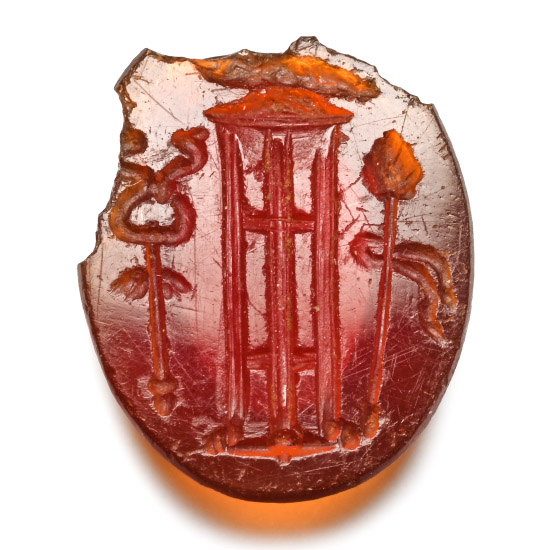
Roman Carnelian Gemstone with Tripod and Sceptres of Bacchus and Mercury
2nd-3rd century A.D.Estimate: £80 - 100 (+bp*)
Bids: 1 | Current Bid: £5
Intaglio design of fasces, caduceus and other items. 0.28 grams, 9 mm
From the private collection of a European gentleman (1942-2024), formed since the 1970s. -
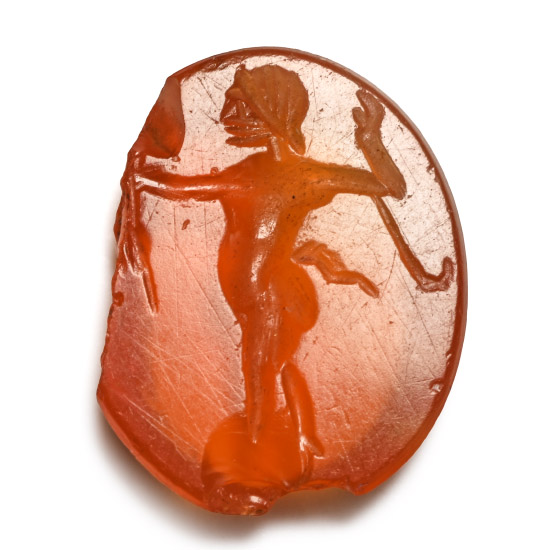
Roman Carnelian Gemstone with Faun
2nd-3rd century A.D.Estimate: £60 - 80 (+bp*)
Opening Bid: £5
Ellipsoid type with incuse design of a faun advancing with small dorsal tail and garlands round the wrists; supplied with a museum-quality impression. 0.45 grams, 11 mm
From the private collection of a European gentleman (1942-2024), formed since the 1970s. -
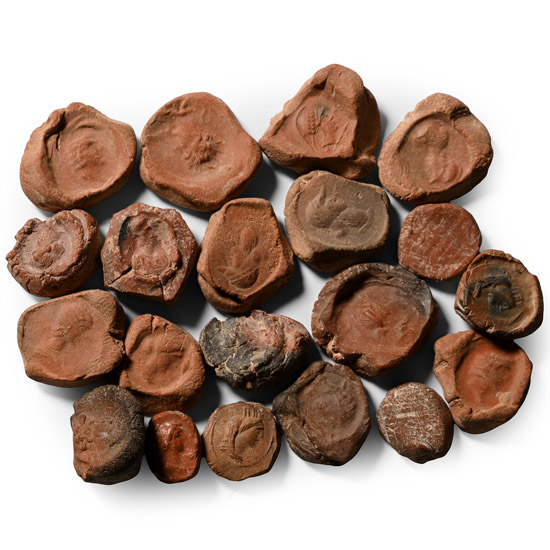
Roman Terracotta Bullae, Tesserae or Token Group
3rd century B.C.-1st century A.D.Estimate: £100 - 140 (+bp*)
Opening Bid: £5
A mixed group of ceramic bullae, tesserae or theatre tokens bearing low-relief motifs, mainly consisting of profile busts of deities. 33.9 grams total, 12-21 mm
From the private collection of a European gentleman (1942-2024), formed since the 1970s.
The term 'tessera' was used in Roman times to convey the Greek term σύμβολον (token). Small tiles are known as tokens, often shaped like coins, made of metal (copper, lead, iron), clay, bone, wood, or glass, stamped as well as engraved. The tokens, however, are not exclusively coin-shaped, as the Latin term 'tessera' refers to a four-sided shape. Tokens and tesserae seem to have been used both in Athens and Rome for the distribution of goods. According to written sources, the term ‘token’ is identified with credentials of the official authorities. They have also been interpreted as tokens of identity, as entrance tickets to theatre performances, tribunals or assemblies of citizens, archival material of seal engraving, as pawns in games, Charon’s obols and even as amulets. -
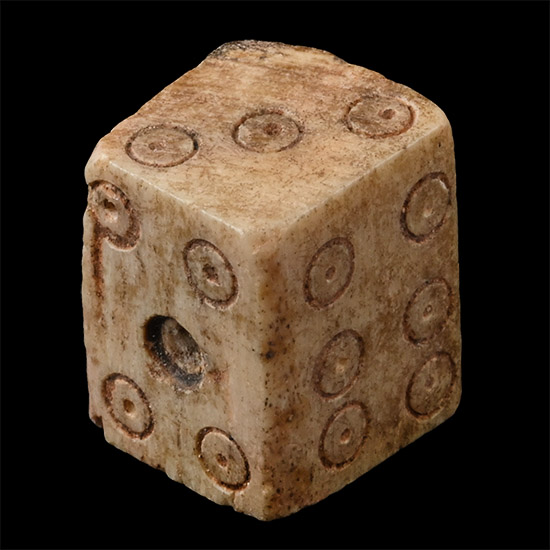
Roman Bone Gaming Die
Circa 1st-4th century A.D.Estimate: £70 - 90 (+bp*)
Opening Bid: £5
Polygonal with ring-and-dot markings arranged 1:6, 2:3, 4:5. 1.63 grams, 11 mm
Ex Cambridgeshire, UK, collection, 1990s. -
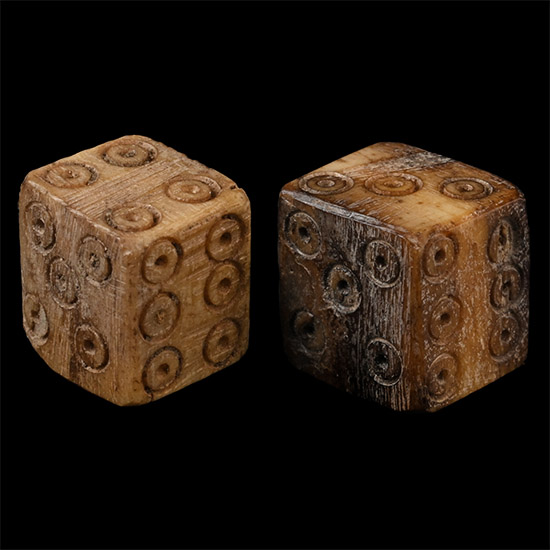
Roman Bone Gaming Dice Pair
Circa 1st-4th century A.D.Estimate: £80 - 100 (+bp*)
Opening Bid: £5
Two cuboid dice with ring-and-dot markings disposed 1:6,2:5, 3:4. 2.31 grams total, 8-9 mm
Ex gentleman collector of antique and antiquity games from Berkshire, UK, having collected for over 20 years. -
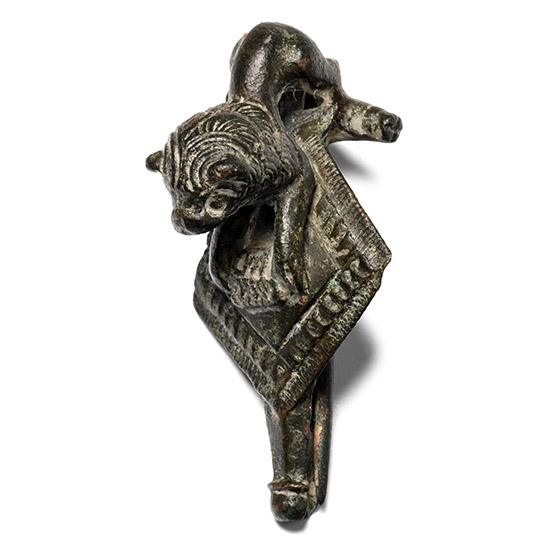
Roman Bronze Lion on Bow Brooch
2nd-3rd century A.D.Estimate: £80 - 100 (+bp*)
Opening Bid: £5
Lozengiform plaque with tiered design, bow formed as a reclining lion with forepaws flanking a casket; hinged pin above and catch to the reverse. 12.9 grams, 40 mm
Acquired at the York Fair. Property of a Lancashire, UK, collector. -
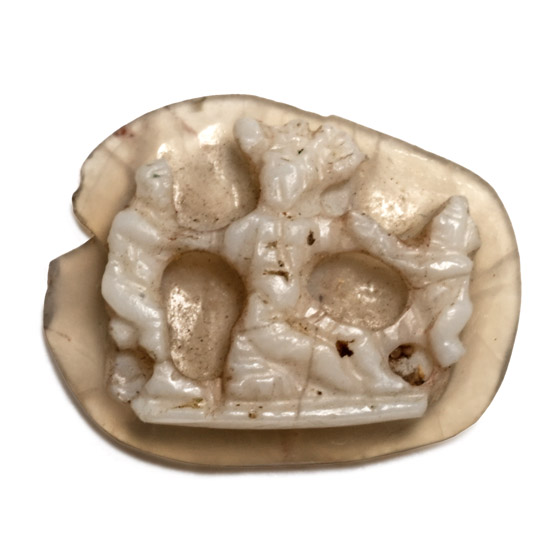
Roman Agate Cameo with Figures
Circa 2nd century A.D.Estimate: £300 - 400 (+bp*)
Opening Bid: £5
Carved from two-toned stone showing a raised image of a seated figure flanked by two smaller figures reaching towards the central figure. 0.17 grams, 9 mm
From the private collection of a European gentleman (1942-2024), formed since the 1970s. -
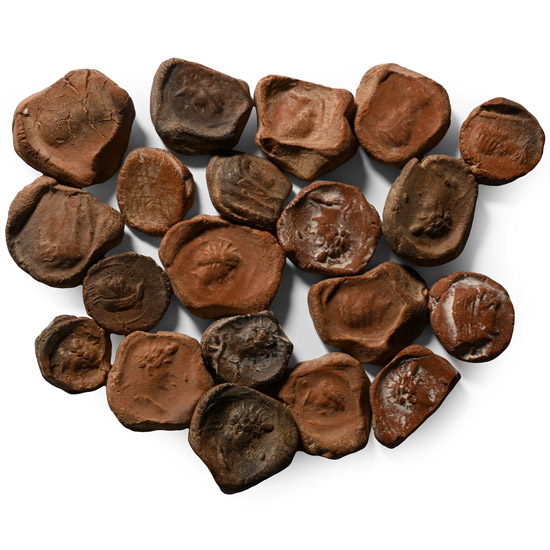
Roman Terracotta Bullae, Tesserae or Token Group
3rd century B.C.-1st century A.D.Estimate: £100 - 140 (+bp*)
Opening Bid: £5
A mixed group of ceramic bullae, tesserae or theatre tokens bearing low-relief motifs, mainly consisting of profile busts of deities. 35.6 grams total, 14-22 mm
From the private collection of a European gentleman (1942-2024), formed since the 1970s.
The term 'tessera' was used in Roman times to convey the Greek term σύμβολον (token). Small tiles are known as tokens, often shaped like coins, made of metal (copper, lead, iron), clay, bone, wood, or glass, stamped as well as engraved. The tokens, however, are not exclusively coin-shaped, as the Latin term 'tessera' refers to a four-sided shape. Tokens and tesserae seem to have been used both in Athens and Rome for the distribution of goods. According to written sources, the term ‘token’ is identified with credentials of the official authorities. They have also been interpreted as tokens of identity, as entrance tickets to theatre performances, tribunals or assemblies of citizens, archival material of seal engraving, as pawns in games, Charon’s obols and even as amulets. -
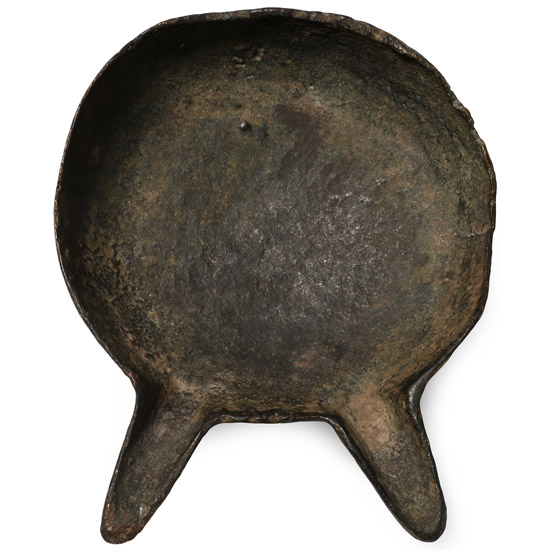
Late Roman Bronze Open Oil Lamp
Circa 6th century A.D.Estimate: £100 - 140 (+bp*)
Opening Bid: £50
Circular oil lamp with low walls and two projecting nozzles, a low basal ring, and an inked collector's note 'AR2' on the base. 106 grams, 85 mm
From an important collection of lamps, Germany, 1970s. -
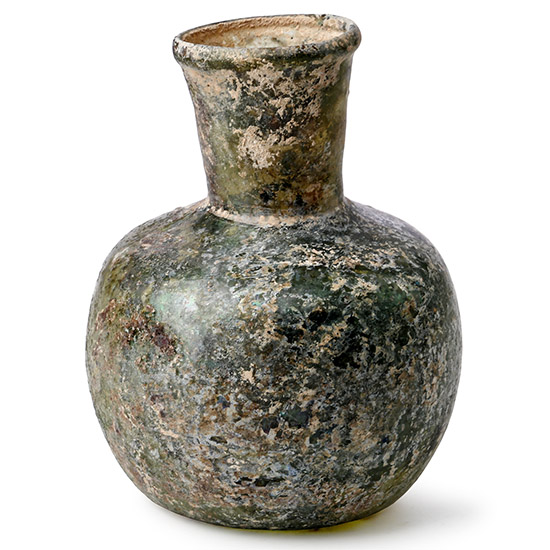
Roman Green Glass Bottle
Circa 3rd-4th century A.D.Estimate: £100 - 140 (+bp*)
Bids: 1 | Current Bid: £5
Bulbous body with dimple base and tubular neck with thickened rim. 80.4 grams, 10.2 cm
From the collection of a late Norfolk, UK gentleman's collection, formed from the late 1960s-1970s. -
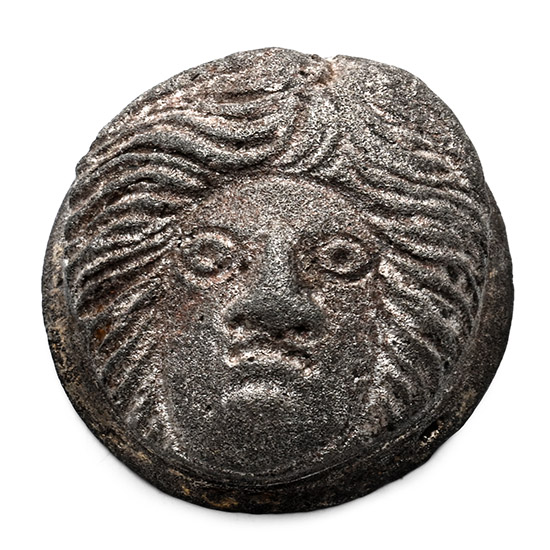
Roman Silver Appliqué with Head of Medusa
2nd-3rd century A.D.Estimate: £200 - 300 (+bp*)
Opening Bid: £5
Discoid in plan with a gorgoneion motif; hollow to reverse. 9.03 grams, 19 mM
Property of a European gentleman, acquired from the estate of a London collector (formed before 2000). -
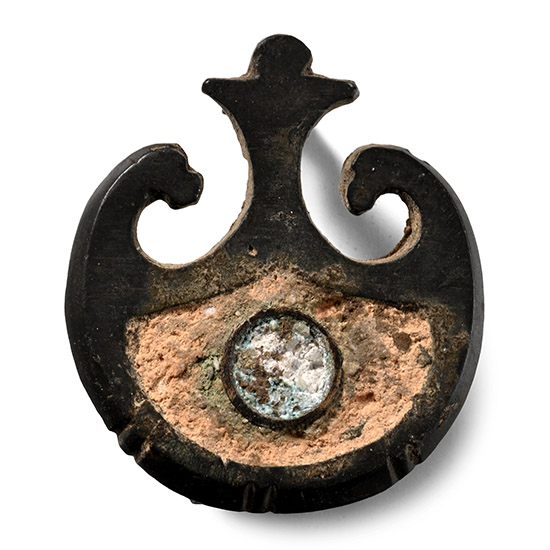
Roman Enamelled Bronze Plate Brooch
2nd-3rd century A.D.Estimate: £80 - 100 (+bp*)
Opening Bid: £5
Pelta-shaped with trefoil finial to the vertical lobe, recessed D-shaped cell with enamel fill, central roundel with enamel fill; integral box fitting to reverse housing the chord and pin, catch to lower end. 24 grams, 40 mm
Ex German art market, 2000s. Acquired from an EU collector living in London. From the collection of a Surrey, UK, gentleman.
