-
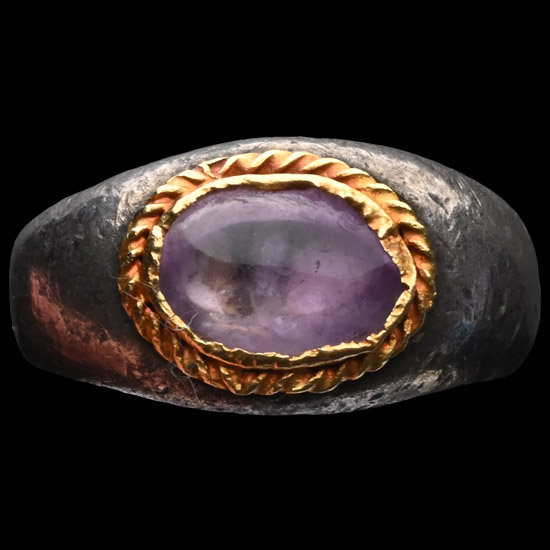
Late Roman Silver Ring with Amethyst Cabochon
Circa 4th-6th century A.D.Sold for (Inc. bp): £780
D-section hoop with a gold collar surrounding the amethyst cabochon. 5.68 grams, 21.84 mm overall, 17.04 x 13.14 mm internal diameter (approximate size British H, USA 3 3/4, Europe 6.18, Japan 6)
Acquired on the UK art market. Private collection, Suffolk, UK. -
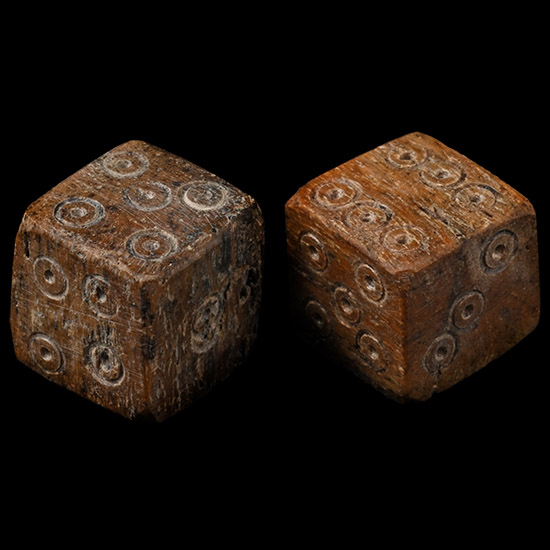
Roman Bone Gaming Dice Pair
Circa 1st-4th century A.D.Sold for (Inc. bp): £247
Pair of cuboid dice with ring-and-dot markings disposed 1:6, 2:5, 3:4. 4.2 grams total, 10 mm each
Ex Cambridgeshire, UK, collection, 1990s. -
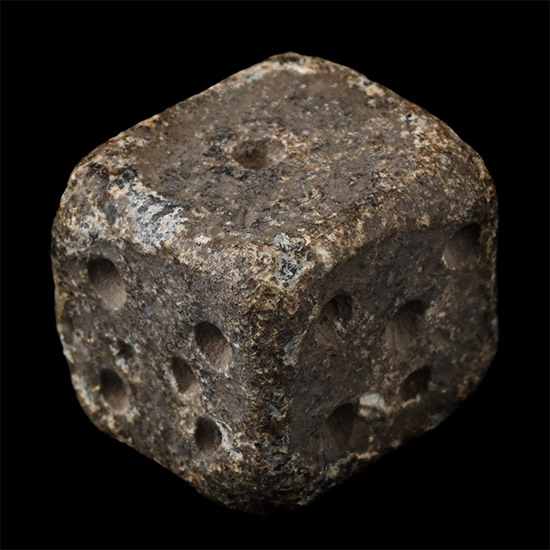
Roman Lead Gaming Die
Circa 1st-4th century A.D.Sold for (Inc. bp): £65
Cuboid dice with impressed markings unusually disposed 1:6, 2:5, 3:5. 12.1 grams, 11 mm
Ex gentleman collector of antique and antiquity games from Berkshire, UK, having collected for over 20 years. -
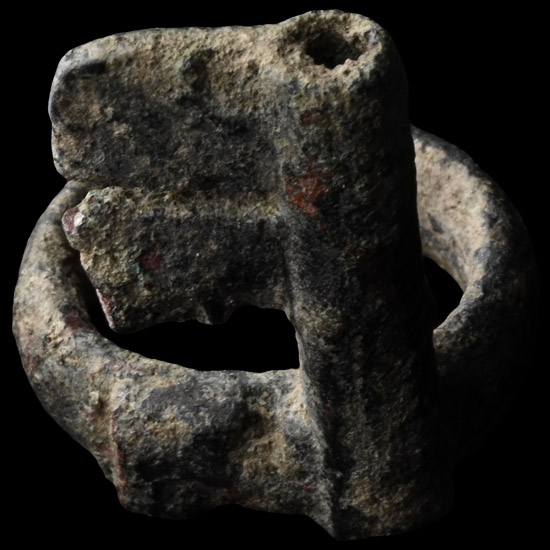
Roman Bronze Key Ring
1st-4th century A.D.Sold for (Inc. bp): £26
Lentoid-section hoop with barrel-type key to the bezel, bit with separate wards. 16.07 grams, 29.98 mm
From the private collection of Mr Brian Edwards, New Malden, Surrey, UK, formed from the late 1970s-early 1980s; thence by descent. -
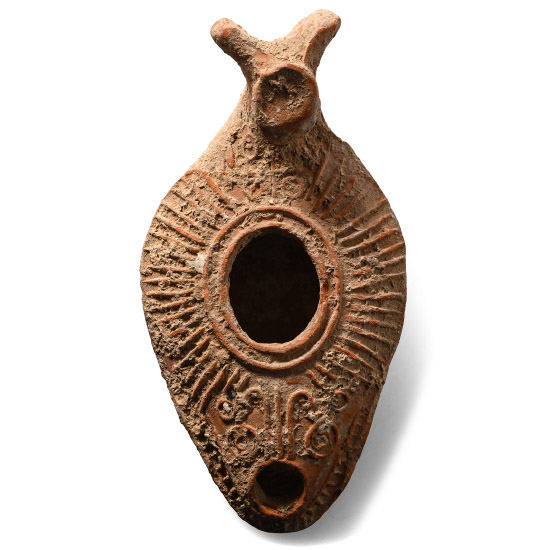
Late Roman Terracotta Slipper Oil Lamp with Animal Head Handle
Holy Land, circa 5th-7th century A.D.Sold for (Inc. bp): £85
Handle to the rear with two large lateral projections, radiating ribs surrounding the filler hole, scroll motifs on the nozzle; low basal ring with scroll motifs. 73 grams, 10.6 cm
Ex Ancient Art Shop, Windsor, UK, 1990s. Ex private West County, UK, collection. -
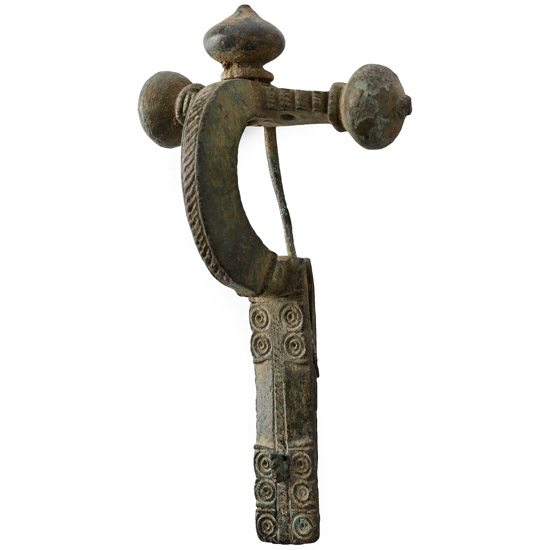
Roman Decorated Bronze Crossbow Brooch
4th century A.D.Sold for (Inc. bp): £221
Substantial crossbow brooch with onion-knop finials and keeled bow with a hatched panel, a ribbed collar above the junction and a wide rectangular footplate with ring-and-dot motifs, pin and integral catchplate on the reverse. 87 grams, 96 mm
Acquired before 1980. Private collection, Suffolk. -
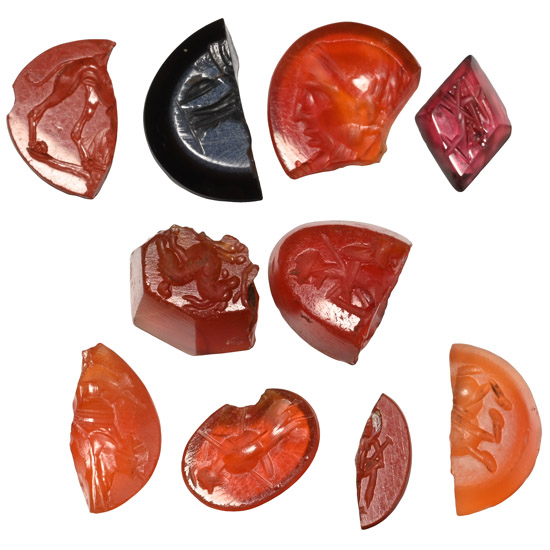
Roman Gemstone Group
2nd-3rd century A.D.Sold for (Inc. bp): £117
Including advancing rear legs of a lion, profile bust, Minerva with spear and other types; each supplied with a museum-quality impression. 3 grams total, 8-12 mm
From the private collection of a European gentleman (1942-2024), formed since the 1970s. -
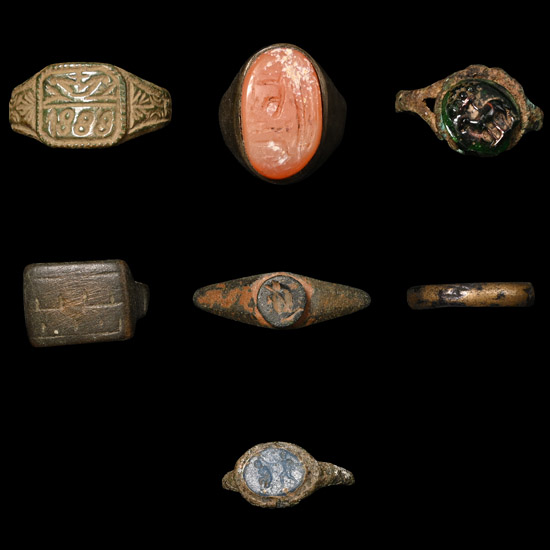
Roman and Later Bronze and Silver Ring Group
1st-19th century A.D.Sold for (Inc. bp): £442
Mixed group of rings comprising: a D-section ring; a ring with angled shoulders and raised circular bezel; a ring with slender hoop and bezel set with a blue intaglio with two figures; a large ring with rectangular bezel with '1888' with a cross above; a ring with large rectangular bezel with faint remains of an inscription; a ring with forked shoulders and the bezel set with a dark green glass intaglio with a low-relief image of a doe before a tree; a ring with an oval pale orange carnelian intaglio bearing an inscription. 32 grams total, 19-28 mm
From the private collection of a European gentleman (1942-2024), formed since the 1970s. -
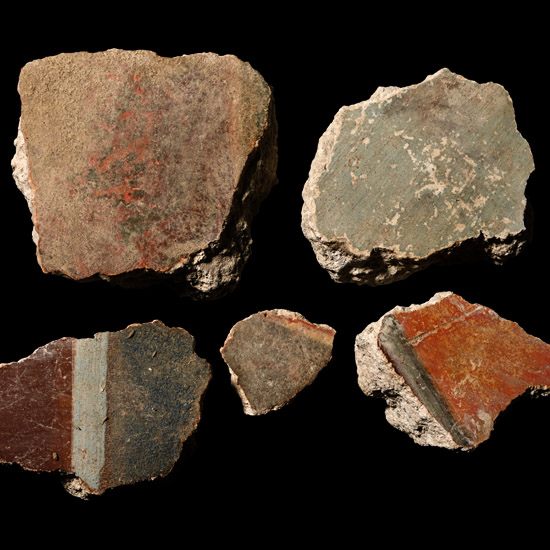
Roman Fresco Wall Plaster Collection
1st century A.D.Sold for (Inc. bp): £338
Fragments of wall plaster with rendered surface painted with mainly Pompeii red, pale blue and white detailing; some with impression of timber laths to the reverse. 601 grams total, 4.5-10.6 cm
Acquired in the 19th century. Ex Jeger collection, Switzerland. UK gallery, early 2000s.
These small fragments, for analogies with the fragments of Pompeii, seem to belong to the second style of Roman painting, red panels representing highlight and shadow, decorated with vegetal interlaces. Some panels were probably framed by a red grenade fillet. A fragment shows alternate blue and red colour over a cream background, maybe pertinent to a socle. -
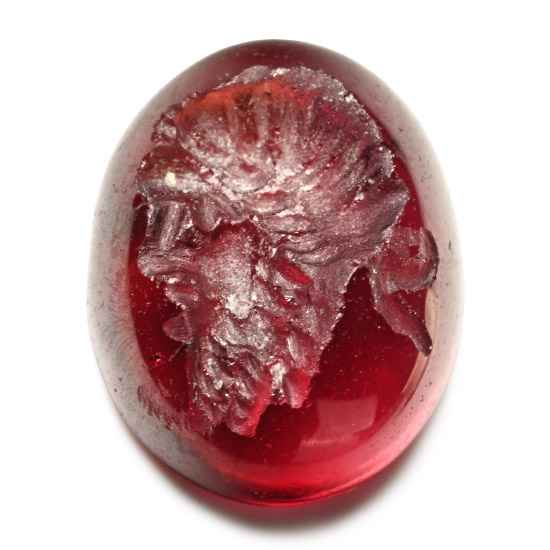
Roman Garnet Gemstone with Youthful Portrait
2nd-3rd century A.D.Sold for (Inc. bp): £65
Plano-convex type with incuse design of a profile portrait bust of a youthful male; supplied with a museum-quality impression. 0.43 grams, 8 mm
From the private collection of a European gentleman (1942-2024), formed since the 1970s. -
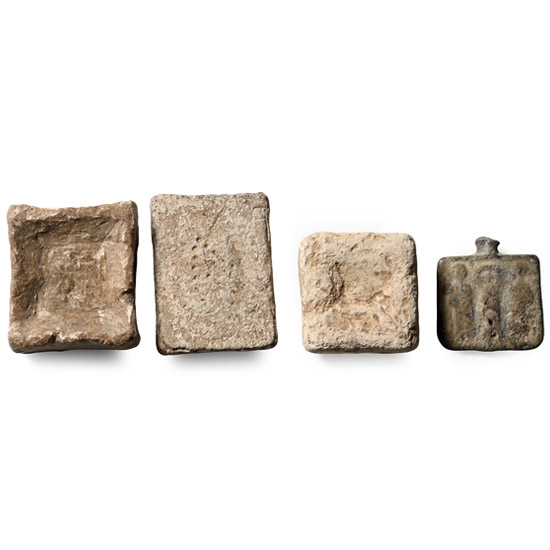
Roman Lead and Bronze Trade Weight Collection
Circa 2nd-4th century A.D.Sold for (Inc. bp): £39
Comprising: three rectangular weights, one barrel-shaped with two symbols on one end, and a tabular bifacial plaque with four standing figures on one side and the other with three figures. 72 grams total, 14-22 mm
Acquired on UK art market. Property of a Middlesex gentleman. -
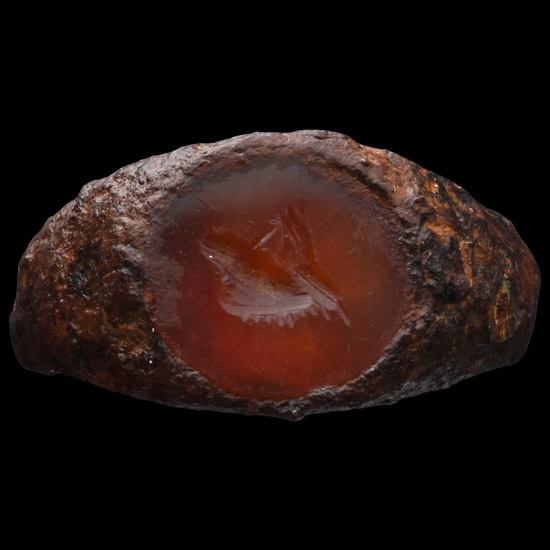
Roman Iron Military Ring with Carnelian Horse Head Gemstone
Circa 2nd century A.D.Sold for (Inc. bp): £143
Lentoid-section hoop with discoid bezel, inset carnelian cloison with incuse profile horsehead with bridle. 3.30 grams, 19.78 mm overall, 16.70 mm internal diameter (approximate size British J, USA 4 3/4, Europe 8.69, Japan 8)
From the private collection of Mr Brian Edwards, New Malden, Surrey, UK, formed from the late 1970s-early 1980s; thence by descent. Accompanied by the original collector's data sheet(s) with reference no.A108.

