-
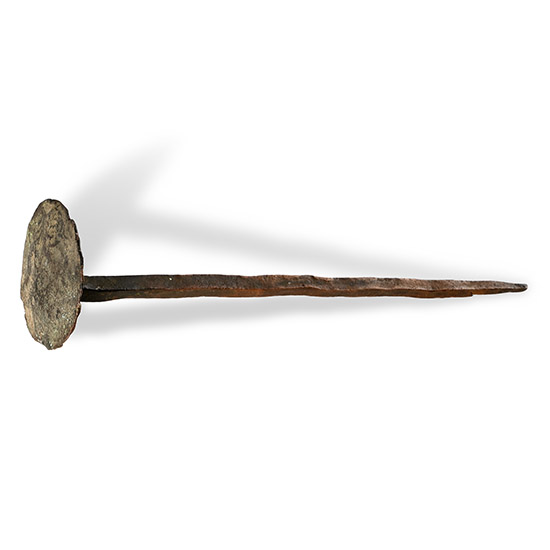
Roman Bronze Crucifixion Nail
Circa 1st century A.D.Sold for (Inc. bp): £3,380
Comprising a rectangular-section body and a round, discoid finial. 29.5 grams, 14 cm
Acquired on UK art market. Property of a Middlesex gentleman. -
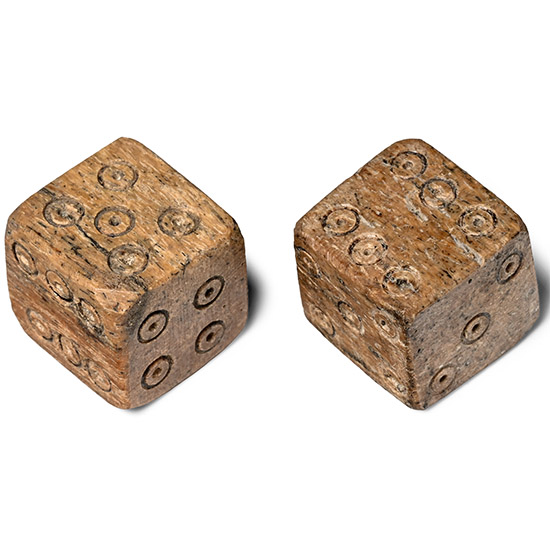
Roman Bone Gaming Dice Pair
Circa 1st-4th century A.D.Sold for (Inc. bp): £286
Cuboid with ring-and-dot markings arranged 1:6, 2:5, 3:4. 6.84 grams total, 12 mm each
Ex Cambridgeshire, UK, collection, 1990s. -
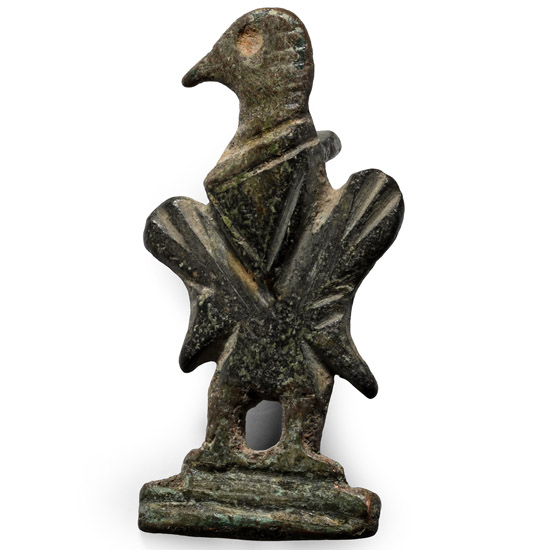
Roman Bronze Eagle Plate Brooch
2nd-3rd century A.D.Sold for (Inc. bp): £78
Formed as a standing eagle facing left, with notched detailing on the body and wings, a pin and catchplate on the reverse. 7 grams, 37 mm
From the private coin collection of a West London, UK, gentleman, formed since the mid 1980s. -
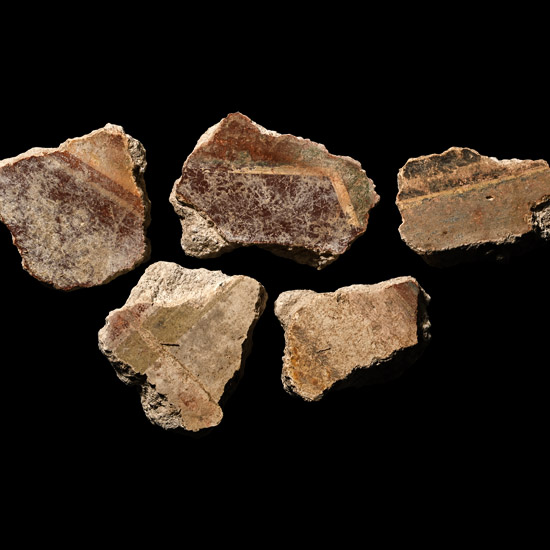
Roman Fresco Wall Plaster Collection
1st century A.D.Sold for (Inc. bp): £130
Fragments of wall plaster with rendered surface painted with mainly Pompeii red, pale blue and white detailing; some with impression of timber laths to the reverse. 499 grams total, 69-85 mm
Acquired in the 19th century. Ex Jeger collection, Switzerland. UK gallery, early 2000s.
These small fragments, for analogies with the fragments of Pompeii, seem to belong to the second style of Roman painting, red panels representing highlight and shadow, decorated with vegetal interlaces. Some panels were probably framed by a red grenade fillet. A fragment shows alternate blue and red colour over a cream background, maybe pertinent to a socle. -
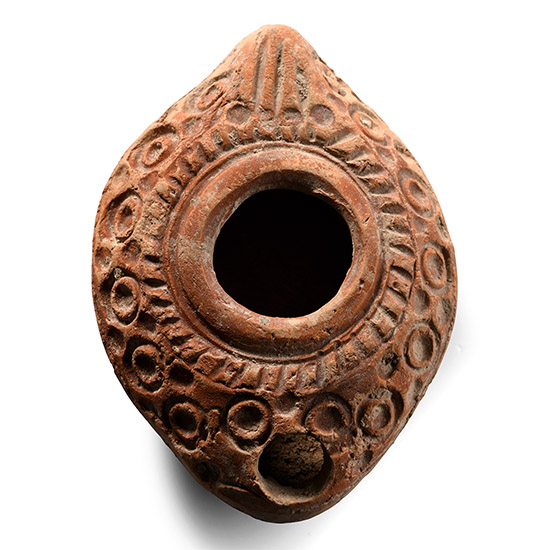
Roman Ovoid Lamp with Annular Decoration
Holy Land, circa 3rd-4th century A.D.Sold for (Inc. bp): £46
Low body with a large filler hole and ribbed thumb-pad, the body decorated with low-relief annulets. 59 grams, 81 mm
Ex Ancient Art Shop, Windsor, UK, 1990s. Ex private West County, UK, collection. -
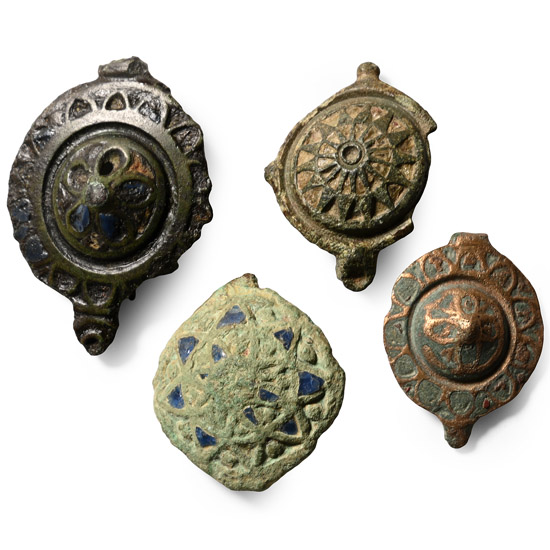
Roman Enamelled Bronze Umbonate Brooch Group
Circa 2nd-4th century A.D.Sold for (Inc. bp): £65
Including one with pin to reverse, one with enamel fill to cells and other types. 27.3 grams total, 29-40 mm
From the private collection of Mr Brian Edwards, New Malden, Surrey, UK, formed from the late 1970s-early 1980s; thence by descent. Accompanied by two original collector's data sheet(s) with reference no.A52 & A62. -
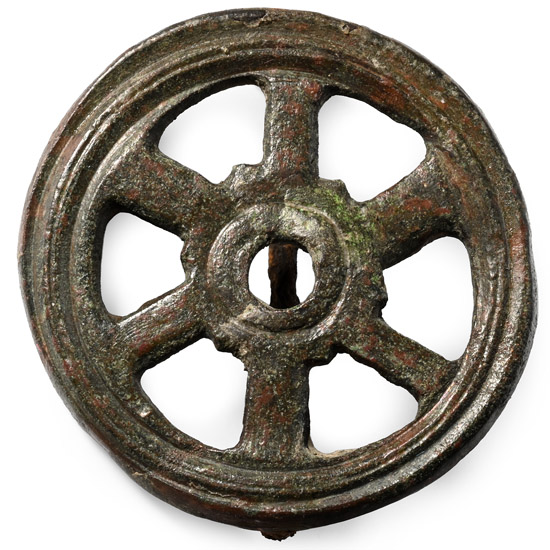
Roman Bronze Chariot Wheel Plate Brooch
3rd century A.D.Sold for (Inc. bp): £98
Openwork brooch formed as a six-spoked wheel, with a pin and catch on the reverse. 15.7 grams, 37 mm
From the private coin collection of a West London, UK, gentleman, formed since the mid 1980s. -
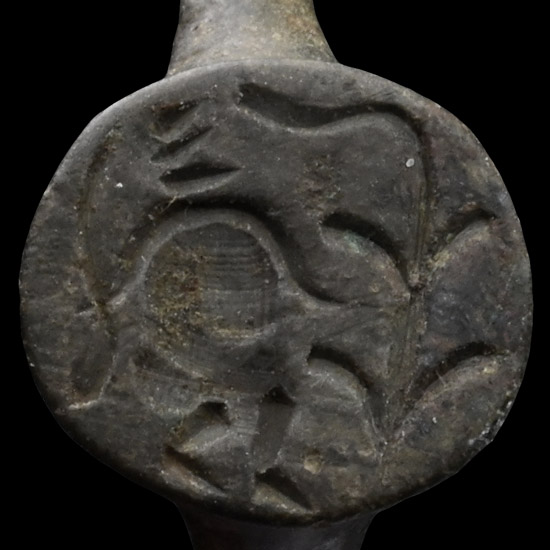
Roman Bronze Ring with Standing Figure and Tree
3rd-4th century A.D.Sold for (Inc. bp): £33
With a slender hoop and a raised circular bezel with a stylised figure beside a tree. 3.12 grams, 22.89 mm overall, 18.65 mm internal diameter (approximate size British Q, USA 8, Europe 17.49, Japan 16)
From a UK collection formed in the 1980s. Property of an Essex, UK, gentleman. -
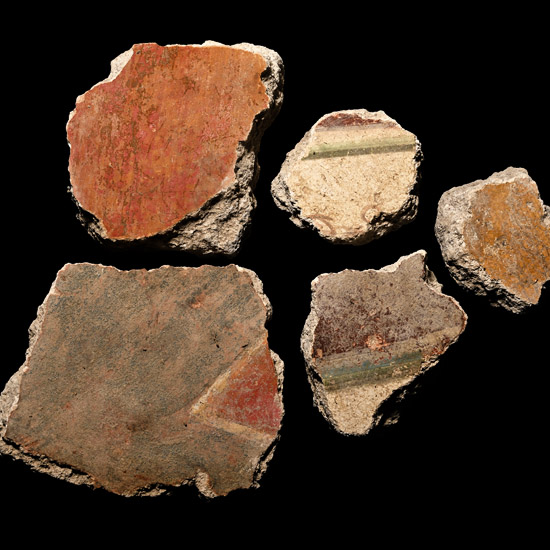
Roman Fresco Wall Plaster Collection
1st century A.D.Sold for (Inc. bp): £104
Fragments of wall plaster with rendered surface painted with mainly Pompeii red, pale blue, brown, cream and white detailing; some with an impression of timber laths to the reverse. 1.28 kg total, 7.3-13.4 cm
Acquired in the 19th century. Ex Jeger collection, Switzerland. UK gallery, early 2000s.
These small fragments, for analogies with the fragments of Pompeii, seem to belong to the second style of Roman painting, red panels representing highlight and shadow, decorated with vegetal interlaces. A red grenade fillet probably framed some panels. A fragment shows alternate blue and red colours over a cream background, maybe pertinent to a socle. -
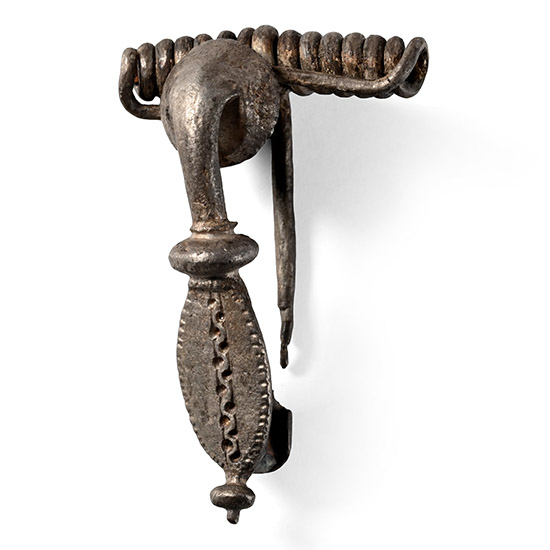
Roman Silver Bow Brooch
1st-2nd century A.D.Sold for (Inc. bp): £111
With chord, spring and pin attached to the trumpet-shaped headplate; collar to bow and lentoid panel below with notched edges and reserved meander to the vertical axis; catchplate projecting from the reverse. 4.46 grams, 32 mm
Acquired London, UK, circa 1974. Property of an Essex, UK, gentleman. -
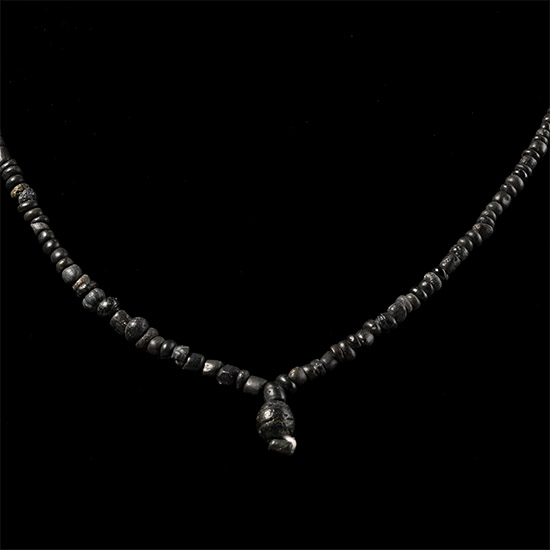
Roman Black Glass Bead Necklace String
1st-4th century A.D. and laterSold for (Inc. bp): £65
Composed mainly of oblate beads with a larger bead as a central feature, restrung. 8.1 grams, 44.7 cm
Acquired in the 1990s. Ex London, UK, collection. -
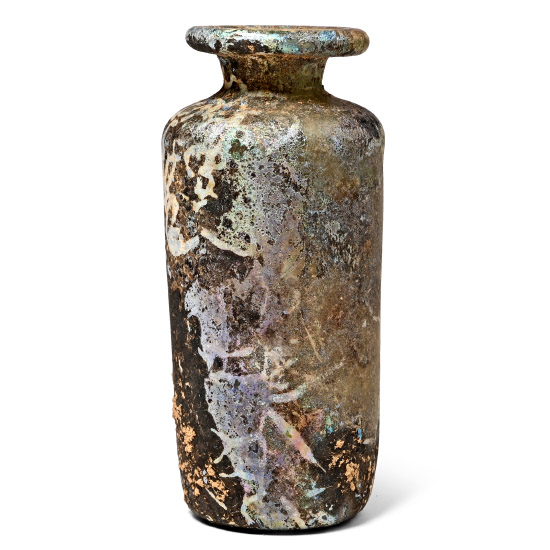
Roman Iridescent Glass Storage Vessel
2nd century A.D.Sold for (Inc. bp): £260
Tubular body with a narrow neck and a thick rim, dimple base. 30 grams, 94 mm
Acquired in the 1990s from London dealerships and auction houses. From the Lonson collection.

