
Ancient Art, Antiquities, Books, Natural History, Stamps & Coins
Days 1-5
Open For Bidding
Open For Bidding

-
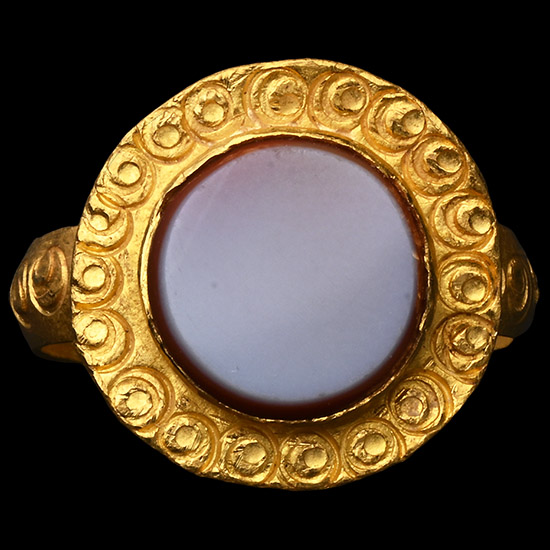
Roman Gold Ring with Nicolo Gemstone
Circa 3rd century A.D. or laterEstimate: £500 - 700 (+bp*)
Opening Bid: £250
Comprising a D-section hoop with pairs of punched ring-and-dot motifs, a discoid flange to the bezel with similar decoration and a central cell with inset replacement nicolo cloison. 4.67 grams, 20.33 mm overall, 17.70 x 15.02 mm internal diameter (approximate size British K 1/2, USA 5 1/2, Europe 10.58, Japan 10)
Ex property of a London gentleman; acquired by his father in the 1970s; thence by descent. Private collection, Suffolk, UK. -
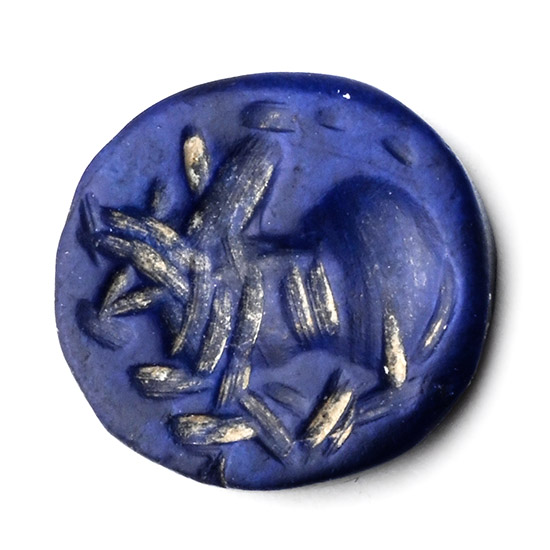
Eastern Roman Dark Blue Gemstone with Rider to Left
2nd-3rd century A.D.Estimate: £60 - 80 (+bp*)
Bids: 1 | Current Bid: £5
Discoid in plan with an incuse horseman figure. 0.26 grams, 9 mm
Property of a European gentleman, acquired from the estate of a London collector (formed before 2000). -
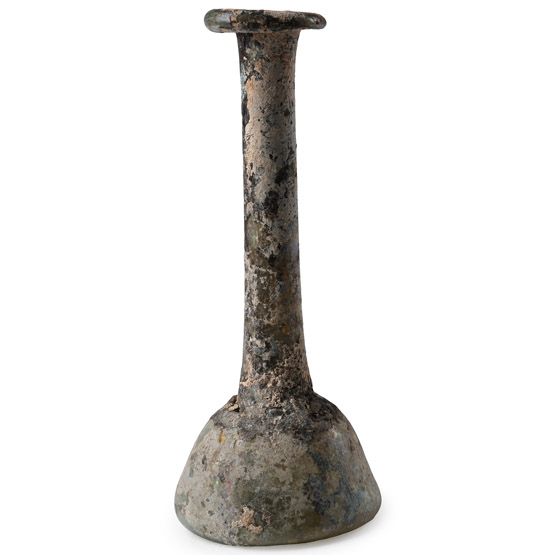
Roman Tall Glass Flask
Circa 1st-4th century A.D.Estimate: £80 - 100 (+bp*)
Opening Bid: £44
Comprising a squat conical body with a dimple at the base, long tubular neck with everted rolled rim. 29.3 grams, 12.8 cm
From a London, UK, collection of glass, 1970-2000s. -
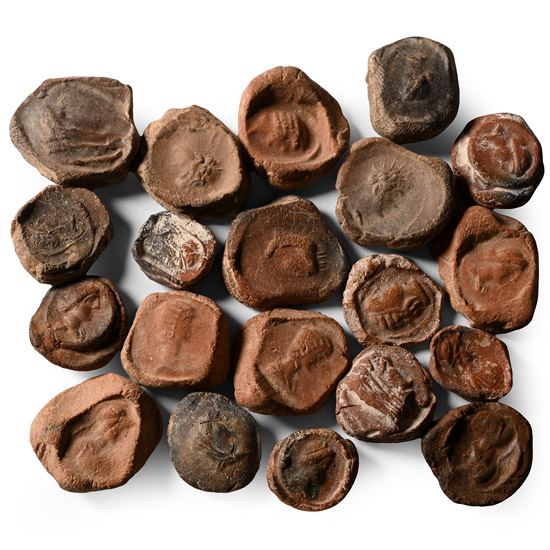
Roman Terracotta Bullae, Tesserae or Token Group
3rd century B.C.-1st century A.D.Estimate: £100 - 140 (+bp*)
Opening Bid: £5
A mixed group of ceramic bullae, tesserae or theatre tokens bearing low-relief motifs, mainly consisting of profile busts of deities. 30.9 grams total, 12-20 mm
From the private collection of a European gentleman (1942-2024), formed since the 1970s.
The term 'tessera' was used in Roman times to convey the Greek term σύμβολον (token). Small tiles are known as tokens, often shaped like coins, made of metal (copper, lead, iron), clay, bone, wood, or glass, stamped as well as engraved. The tokens, however, are not exclusively coin-shaped, as the Latin term 'tessera' refers to a four-sided shape. Tokens and tesserae seem to have been used both in Athens and Rome for the distribution of goods. According to written sources, the term ‘token’ is identified with credentials of the official authorities. They have also been interpreted as tokens of identity, as entrance tickets to theatre performances, tribunals or assemblies of citizens, archival material of seal engraving, as pawns in games, Charon’s obols and even as amulets. -
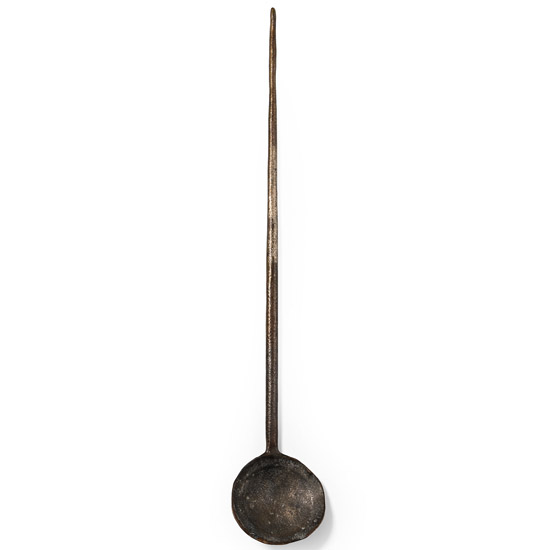
Roman Tinned Bronze Cochlear Spoon
Circa 2nd-3rd century A.D.Estimate: £60 - 80 (+bp*)
Opening Bid: £5
Featuring a long, pointed handle and a round bowl. 6.91 grams, 13.5 cm
From the private collection of a South London, UK, gentleman, formed since the early 1970s; thence by descent 2006. Accompanied by an old clipping from a colour sales catalogue. -
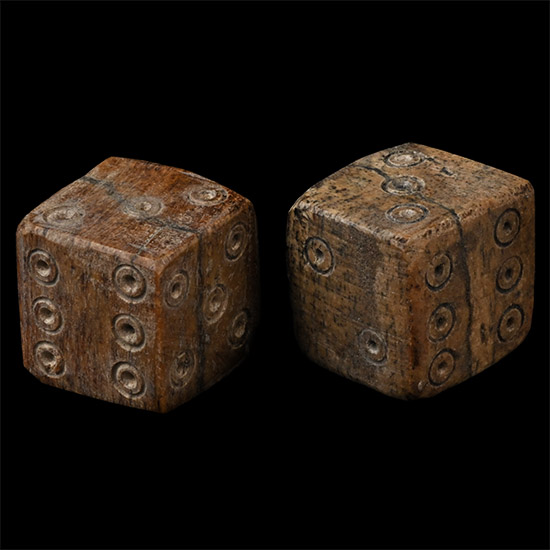
Roman Bone Gaming Dice Pair
1st-4th century A.D.Estimate: £80 - 100 (+bp*)
Opening Bid: £5
Pair of cuboid dice with ring-and-dot markings disposed 1:6, 2:5, 3:4. 7.97 grams total, 13 mm each
Ex German art market, 2000s. Acquired from an EU collector living in London. From the collection of a Surrey, UK, gentleman. -
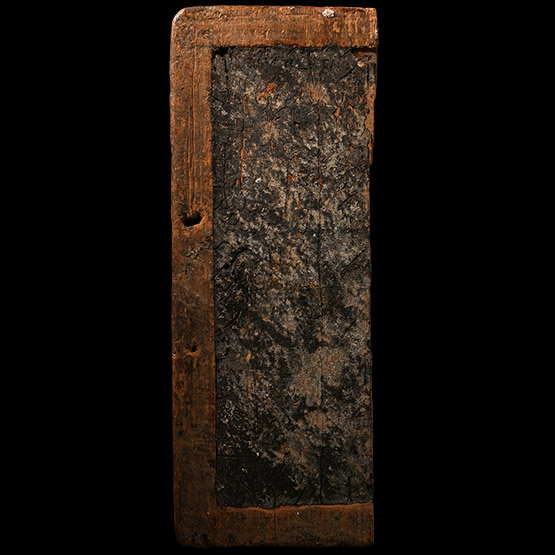
Roman Wooden Wax Tablet Fragment Written in Greek
Circa 3rd-4th century A.D.Estimate: £300 - 400 (+bp*)
Bids: 1 | Current Bid: £5
Part of a wax tablet with two holes in the frame for fastening, Greek writing. 45.45 grams, 18.6 x 7.2 cm
Property of a North London gentleman; previously in the Dean family collection since 1975.
Wax tablets written in Greek or Latin, were used by Romans as account registers (codices accepti et expensi); for transactions (for example, the tablets of the banker Lucius Caecilius Iucundus found in Pompeii); for lists of goods, inventories, and notes to be kept and archived; for Roman magistrates to annotate the salient events of their bureaucratic activities; for writing letters; for drawing up legal texts of various kinds: legacies, declarations of births and citizenship, reports of trials and diplomata militaria. -
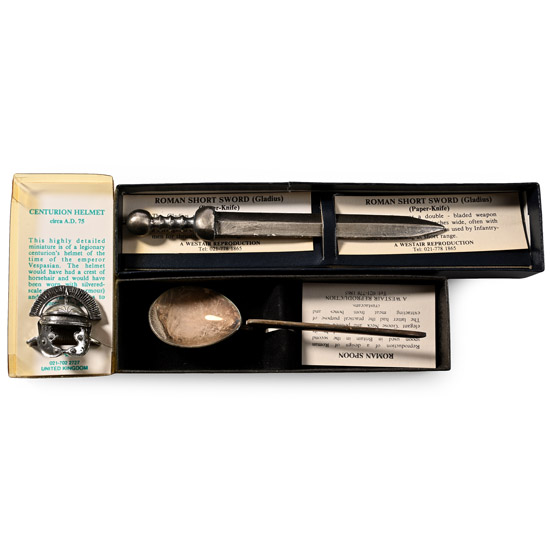
Roman Artefact Reproduction Group
20th century A.D.Estimate: £20 - 30 (+bp*)
Opening Bid: £5
Comprising: a miniature Centurion helmet, a miniature gladius, and a small goose-neck spoon; each with information cards. 108 grams total, 7.8-17 cm including case
From the private collection of Mr Brian Edwards, New Malden, Surrey, UK, formed from the late 1970s-early 1980s; thence by descent. -
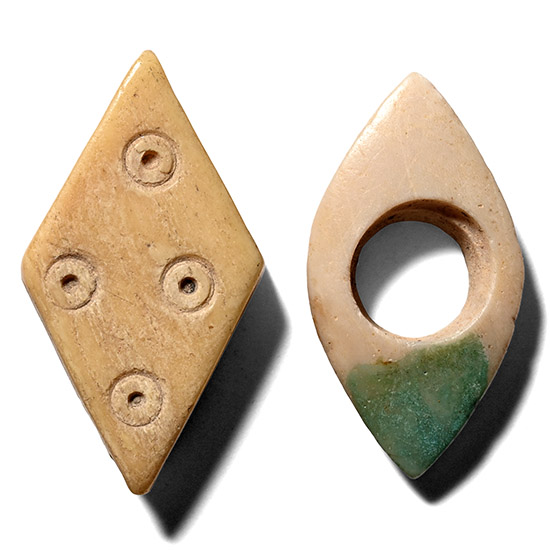
Roman Bone Mount and Bead
Circa 1st-4th century A.D.Estimate: £20 - 30 (+bp*)
Opening Bid: £5
Comprising: a lozenge-shaped bead with four ring-and-dot motifs on both sides, remains of a loop at each end; an eye insert with drilled pupil. 2.2 grams total, 20-22 mm
Ex Cambridgeshire, UK, collection, 1990s. -
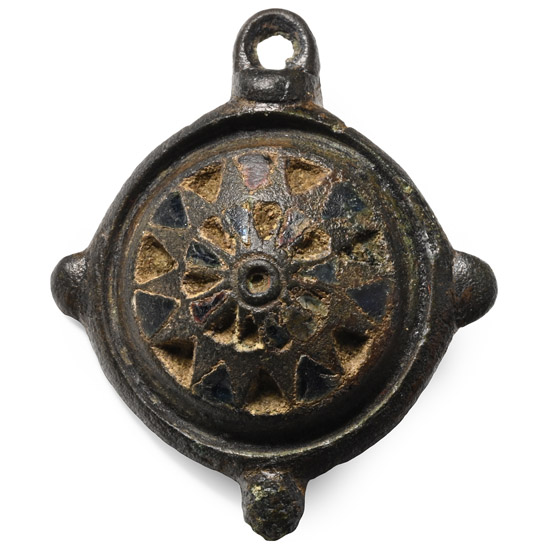
Roman Enamelled Bronze Umbonate Brooch
2nd century A.D.Estimate: £50 - 70 (+bp*)
Opening Bid: £5
Domed body decorated with two concentric circles of narrow, inward-pointing triangles with traces of blue enamel, small bosses and a loop to the outer rim; pin-lugs and a pin on the reverse, and an inked collector's number 'L1986.3 109'. 7.9 grams, 33 mm
From the private coin collection of a West London, UK, gentleman, formed since the mid 1980s. -
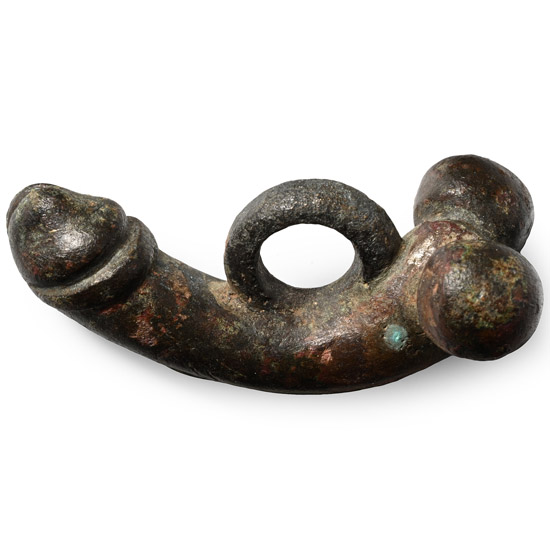
Roman Bronze Phallic Pendant
1st-3rd century A.D.Estimate: £100 - 140 (+bp*)
Opening Bid: £5
Formed in the round with a raised seam on the underside and a large loop on the top. 17.7 grams, 35 mm
From the private coin collection of a West London, UK, gentleman, formed since the mid 1980s. -
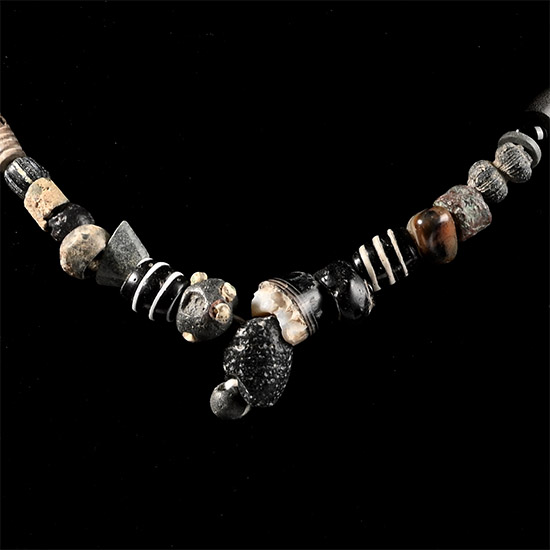
Roman Black Glass and Other Bead Necklace String
1st-4th century A.D. and laterEstimate: £50 - 70 (+bp*)
Opening Bid: £5
Composed of mixed beads, including oblate, tubular, and two with white spiral decoration, restrung. 17.4 grams, 26 cm
Acquired in the 1990s. Ex London, UK, collection.
