-
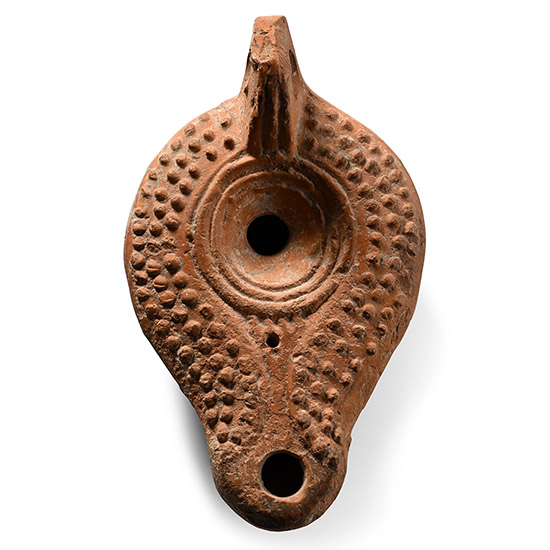
Late Roman Terracotta Oil Lamp with Stipple Decoration
5th-6th century A.D.Sold for (Inc. bp): £98
Comprising a rounded nozzle with a low channel and a recessed discus with a filler hole, the body decorated with three rows of raised pellets, with a loop handle to the rear and a low basal ring. 137 grams, 12.6 cm
By descent to the son of a late Hertfordshire gentleman collector, whose collection was formed from the 1960s. -
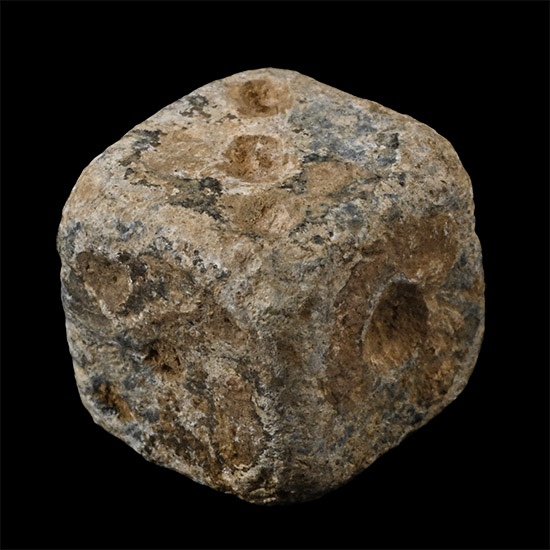
Roman Lead Gaming Die
Circa 1st-4th century A.D.Sold for (Inc. bp): £59
Cuboid dice with impressed markings disposed 1:6, 4:3, 2:5. 8 grams, 10 mm
Ex gentleman collector of antique and antiquity games from Berkshire, UK, having collected for over 20 years. -
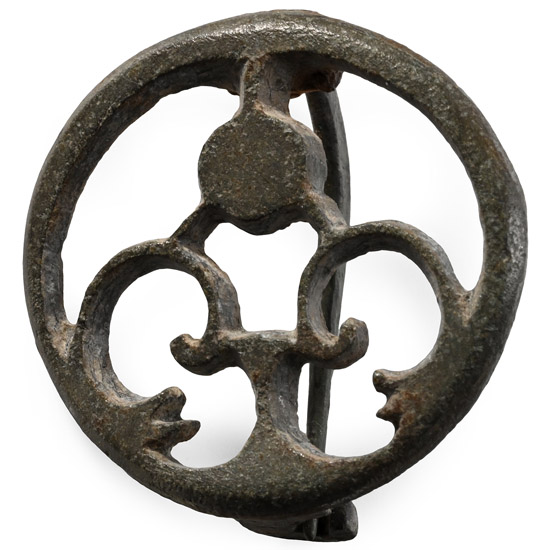
Roman Bronze Plate Brooch with Trumpets
2nd-3rd century A.D.Sold for (Inc. bp): £85
Circular frame enclosing two opposing trumpet-shaped motifs, with a pin and catch on the reverse. 11.12 grams, 34 mm
From the private coin collection of a West London, UK, gentleman, formed since the mid 1980s. -
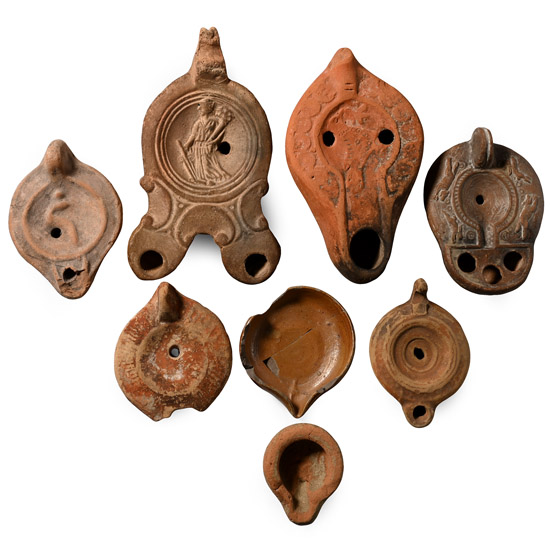
Roman Terracotta Oil Lamp Collection
1st century B.C.-6th century A.D.Sold for (Inc. bp): £416
Mixed group of eight oil lamps, including one with a triple nozzle and dogs chasing hares on the shoulder, a double-spouted oil lamp with Abundantia holding a cornucopia, one with a bird in profile holding a branch in its beak, and others. 743 grams total, 5.5-14.8 cm
From an important collection of lamps, Germany, 1970s. -
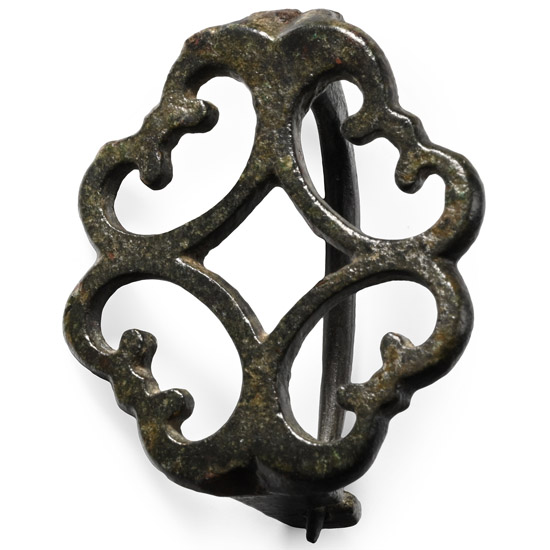
Roman Bronze Openwork Plate Brooch
2nd-3rd century A.D.Sold for (Inc. bp): £130
Openwork body composed of four pelta-shaped motifs radiating from a central lozenge; pin and catch on the reverse. 10.6 grams, 37 mm
From the private coin collection of a West London, UK, gentleman, formed since the mid 1980s. -
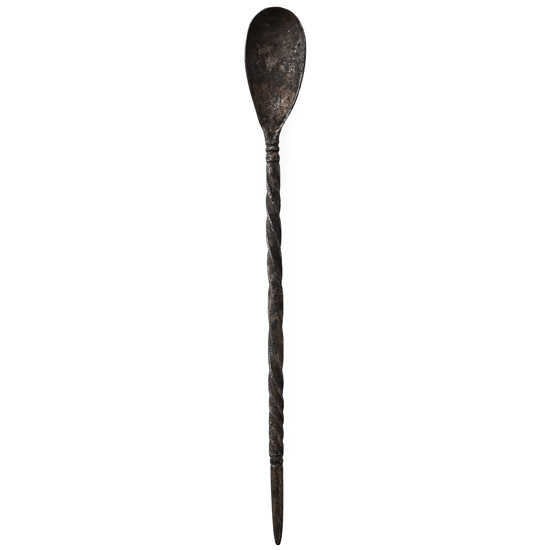
Roman Silver Spoon with Twisted Handle
4th-5th century A.D.Sold for (Inc. bp): £208
Ligula with a twisted tapering handle with a sharp finial and a shallow piriform bowl. 8.13 grams, 12.4 cm
Private collection, 1965-1975. Acquired on the UK art market. Private collection, Suffolk. -
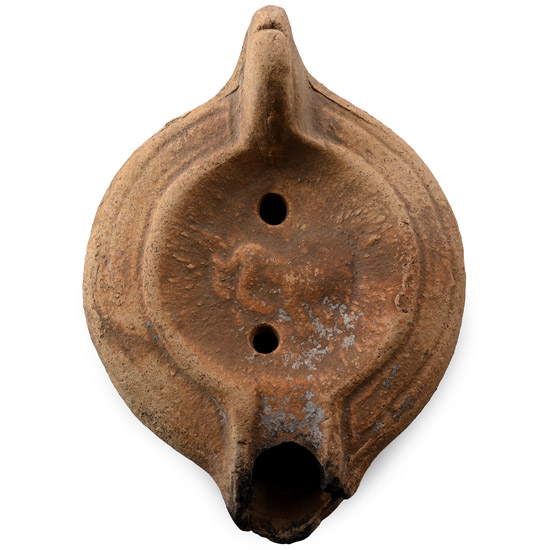
Roman Ceramic Oil Lamp with Gladiatorial Lion
2nd century A.D.Sold for (Inc. bp): £111
Shallow discus with an advancing lion in relief, wide shoulder with linear decoration, lug handle to the rear, inked collector's number '320' on the base. 112 grams, 11.2 cm
From a UK collection formed in the 1980s. Property of an Essex, UK, gentleman. -
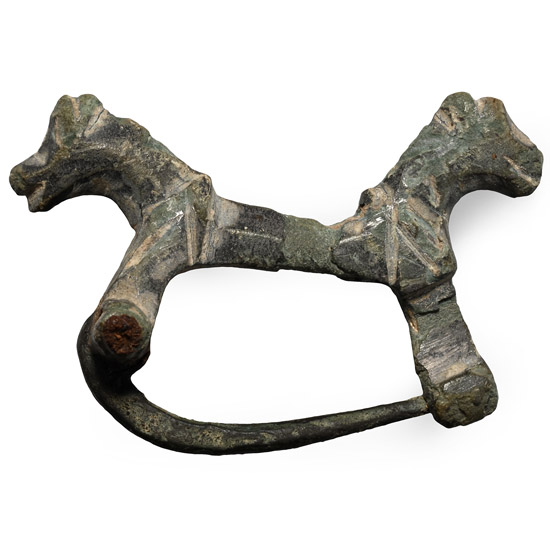
Roman Bronze Double-Horse Brooch
4th-5th century A.D.Sold for (Inc. bp): £111
Bow brooch formed as an arch with addorsed horse-heads with notched detailing, pin and catchplate below. 8.78 grams, 38 mm
From the private coin collection of a West London, UK, gentleman, formed since the mid 1980s. -
.jpg)
Roman Bronze Bowl Mount with Face
1st-2nd century A.D.Sold for (Inc. bp): £111
Discoid in plan and domed in profile with facing mask of Medusa and strap above with lateral ribs. 9.8 grams, 30 mm
Found Norfolk, UK. -
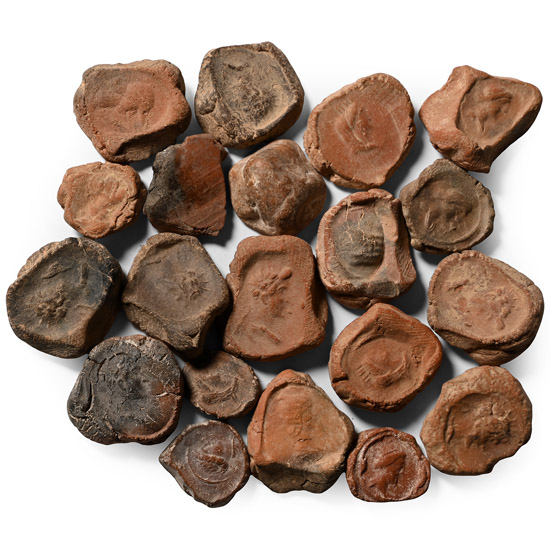
Roman Terracotta Bullae, Tesserae or Token Group
3rd century B.C.-1st century A.D.Sold for (Inc. bp): £312
A mixed group of ceramic bullae, tesserae or theatre tokens bearing low-relief motifs, mainly consisting of profile busts of deities. 36.2 grams total, 13-22 mm
From the private collection of a European gentleman (1942-2024), formed since the 1970s.
The term 'tessera' was used in Roman times to convey the Greek term σύμβολον (token). Small tiles are known as tokens, often shaped like coins, made of metal (copper, lead, iron), clay, bone, wood, or glass, stamped as well as engraved. The tokens, however, are not exclusively coin-shaped, as the Latin term 'tessera' refers to a four-sided shape. Tokens and tesserae seem to have been used both in Athens and Rome for the distribution of goods. According to written sources, the term ‘token’ is identified with credentials of the official authorities. They have also been interpreted as tokens of identity, as entrance tickets to theatre performances, tribunals or assemblies of citizens, archival material of seal engraving, as pawns in games, Charon’s obols and even as amulets. -
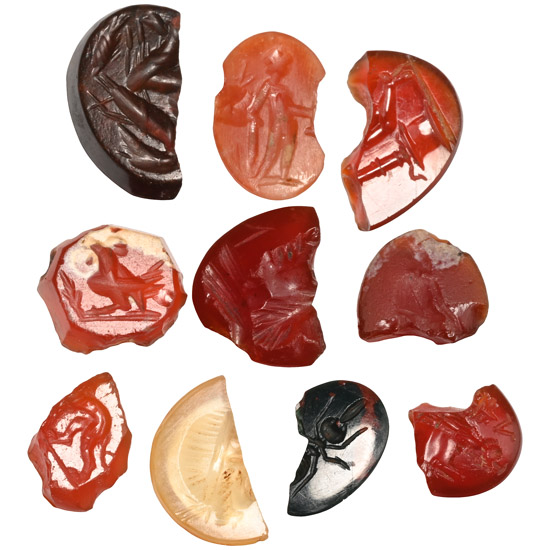
Roman Gemstone Group
2nd-3rd century A.D.Sold for (Inc. bp): £124
Including nude standing female, altar with pediment, profile bust, ant and other types; each supplied with a museum-quality impression. 3.38 grams total, 9-13 mm
From the private collection of a European gentleman (1942-2024), formed since the 1970s. -
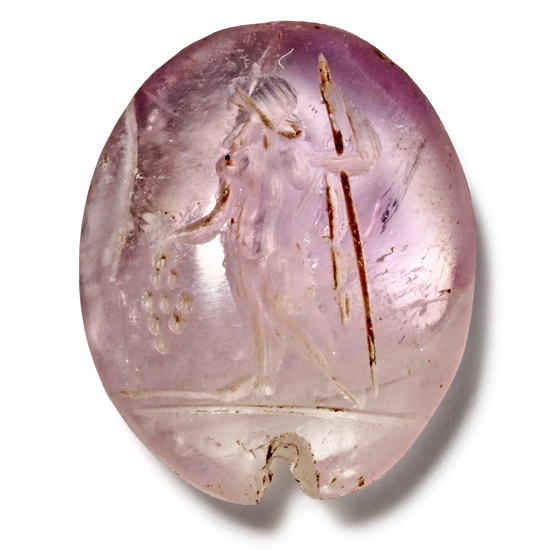
Roman Chalcedony Gemstone with Bacchus
2nd-3rd century A.D.Sold for (Inc. bp): £111
Biconvex type with incuse design on the underside of nude Bacchus holding a bunch of grapes and a staff; supplied with a museum-quality impression. 0.64 grams, 12 mm
From the private collection of a European gentleman (1942-2024), formed since the 1970s.

