-
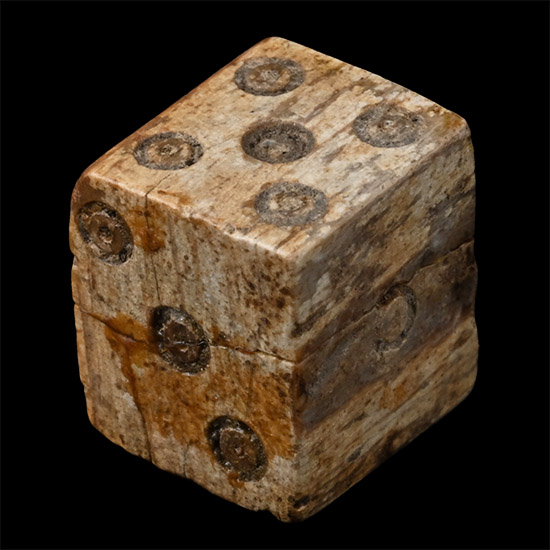
Roman Bone Gaming Die
Circa 1st-4th century A.D.Sold for (Inc. bp): £195
Cuboid dice with ring-and-dot markings disposed 1:6,2:5, 3:4. 1.02 grams, 8 mm
Ex gentleman collector of antique and antiquity games from Berkshire, UK, having collected for over 20 years. -
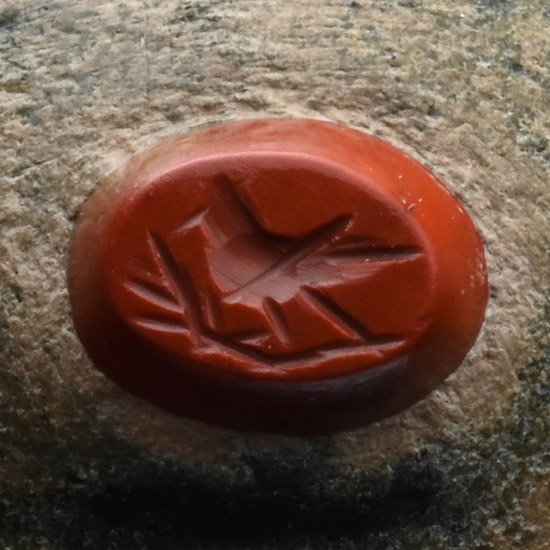
Roman Bronze Ring with Jasper Gemstone Depicting an Eagle
1st-2nd century A.D.Sold for (Inc. bp): £85
Broad hoop with an oval jasper gemstone with perching eagle on a frond or wreath. 3.92 grams, 18.78 mm overall, 15.66 mm internal diameter (approximate size British G 1/2, USA 3 1/2, Europe 5.55, Japan 5)
Property of a European gentleman, acquired from the estate of a London collector (formed before 2000). -
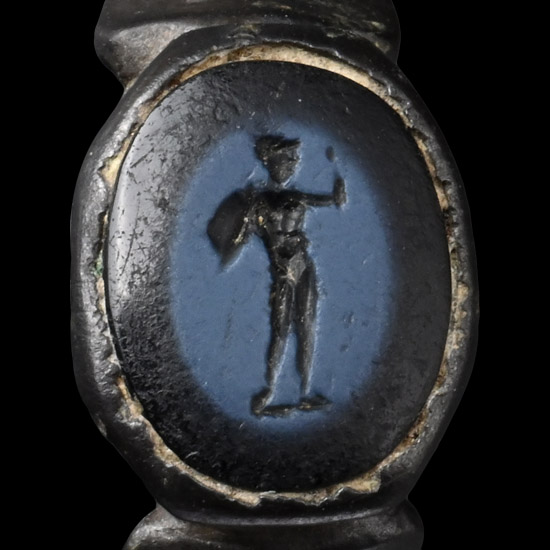
Roman Bronze Ring with Nicolo Mercury Gemstone
Circa 3rd-4th century A.D.Sold for (Inc. bp): £520
Carinated hoop with stepped shoulders, ellipsoid cell with inset nicolo intaglio of Mercury standing. 8.18 grams, 25.28 mm overall, 17.53 x 14.71 mm internal diameter (approximate size British J, USA 4 3/4, Europe 8.69, Japan 8)
From the private collection of Mr Brian Edwards, New Malden, Surrey, UK, formed from the late 1970s-early 1980s; thence by descent. Accompanied by the original collector's data sheet(s) with reference no.A104. -
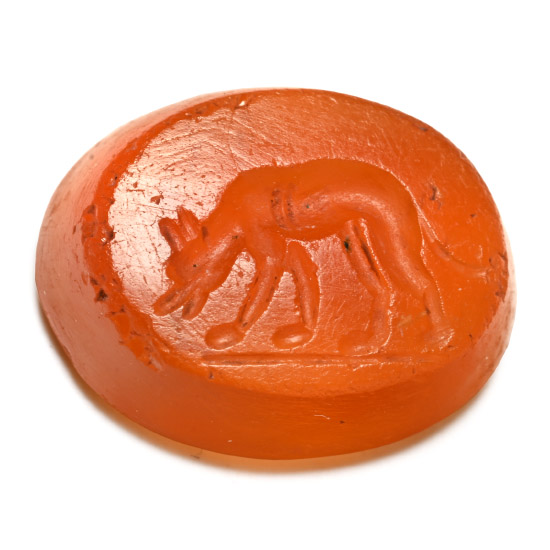
Roman Carnelian Gemstone with Wolf
2nd-3rd century A.D.Sold for (Inc. bp): £182
With intaglio lupa she-wolf advancing on a baseline. 0.79 grams, 12 mm
From the private collection of a European gentleman (1942-2024), formed since the 1970s. -
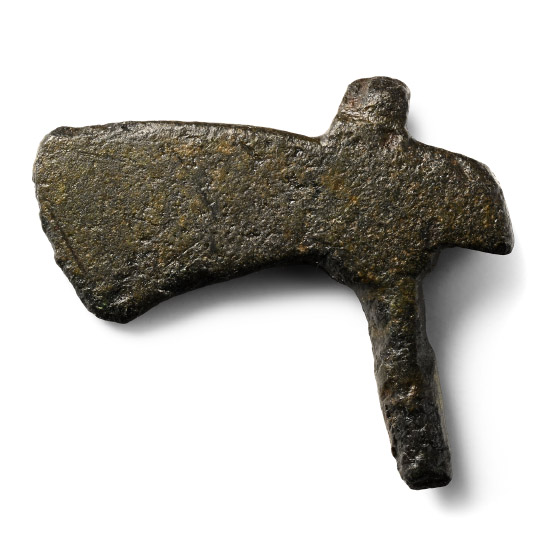
Romano-British Votive Miniature Axehead
England, 1st-3rd century A.D.Sold for (Inc. bp): £52
With curved blade stepped at the socket and short shaft beneath. 4.19 grams, 23 mm
Found Slipton, Northamptonshire, UK. Recorded with UKDFD no.36185. -
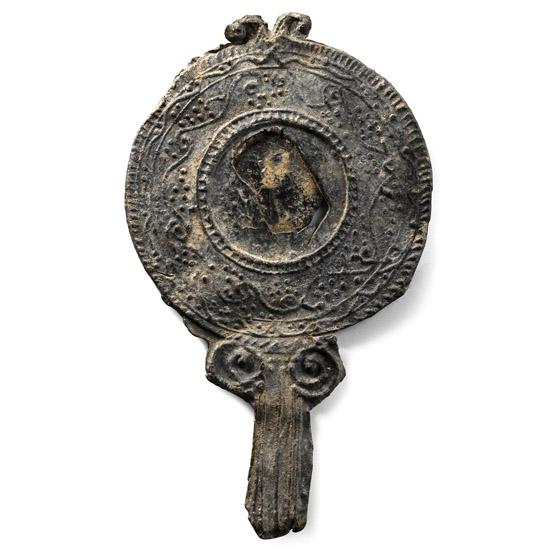
Roman Lead Votive Mirror
3rd century A.D.Sold for (Inc. bp): £111
Discoid with a grapevine decoration around the rim, two large scrolls flanking the ribbed handle. 32.5 grams, 90 mm
Ex German art market, 2000s. Acquired from an EU collector living in London. From the collection of a Surrey, UK, gentleman. -
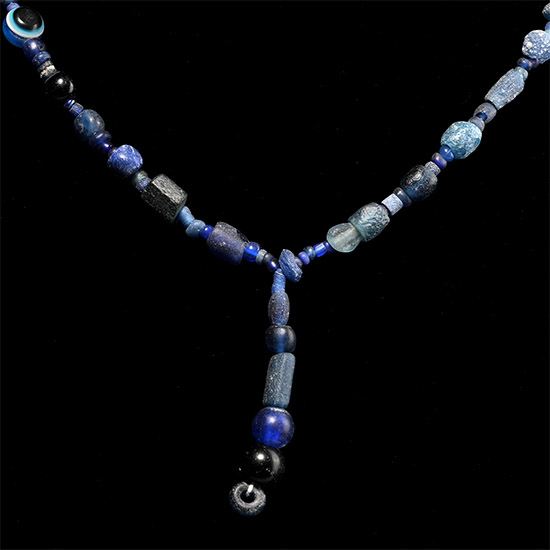
Roman Blue Glass and Other Bead Necklace String
1st-4th century A.D. and laterSold for (Inc. bp): £59
Composed of mixed beads, including two modern 'eye' beads, restrung. 10.4 grams, 33.3 cm
Acquired in the 1990s. Ex London, UK, collection. -
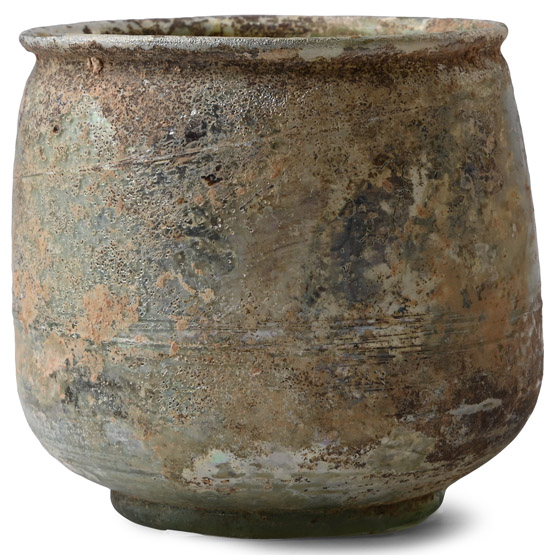
Roman Iridescent Glass Cup with Trail
Circa 1st-4th century A.D.Sold for (Inc. bp): £312
Drum-shaped body on a low basal ring and everted rim, bands to the outer face; iridescent surface. 33.8 grams, 71 mm
From a London, UK, collection of glass, 1970-2000s. -
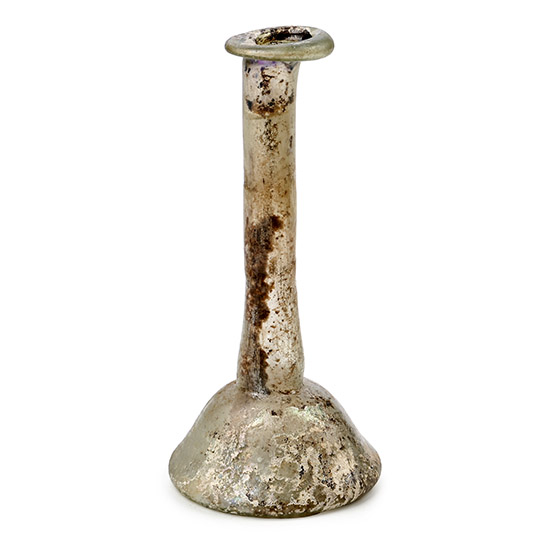
Roman Pale Green Glass Tall Unguentarium
Circa 2nd-3rd century A.D.Sold for (Inc. bp): £72
Bell-shaped body with tubular neck and rolled rim. 26.6 grams, 11.6 cm
Acquired from Shirley Warren Antique Glass, Surrey, UK. From the collection of a Bedfordshire, UK, lady. -
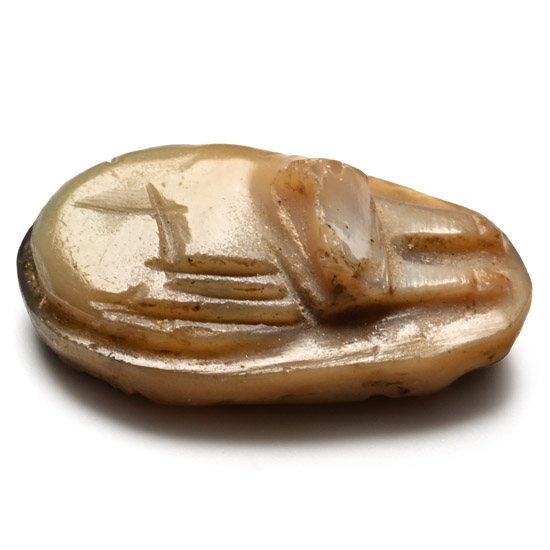
Roman Agate Cameo with Sleeping Dog
Circa 2nd century A.D.Sold for (Inc. bp): £390
Pear-shaped cameo with a raised image of a reclining hound resting its head on its front paws. 0.84 grams, 15 mm
From the private collection of a European gentleman (1942-2024), formed since the 1970s. -
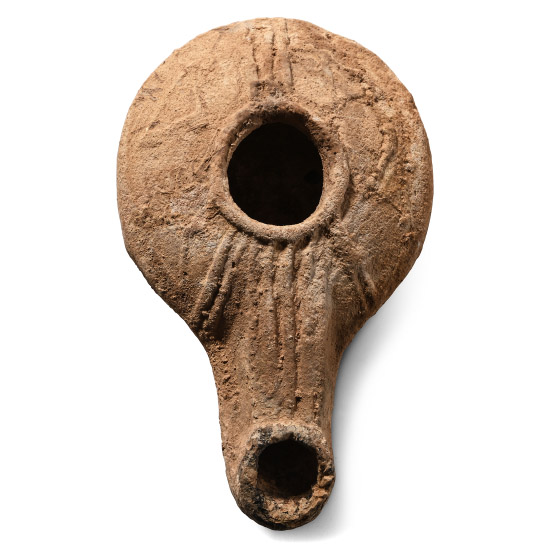
Roman Terracotta Oil Lamp with Extended Nozzle
Holy Land, circa 4th-7th century A.D.Sold for (Inc. bp): £72
Round body with an elongated nozzle, raised ribs extending from the rear of the lamp to the edge of the nozzle. 64.2 grams, 94 mm
Ex Ancient Art Shop, Windsor, UK, 1990s. Ex private West County, UK, collection. -
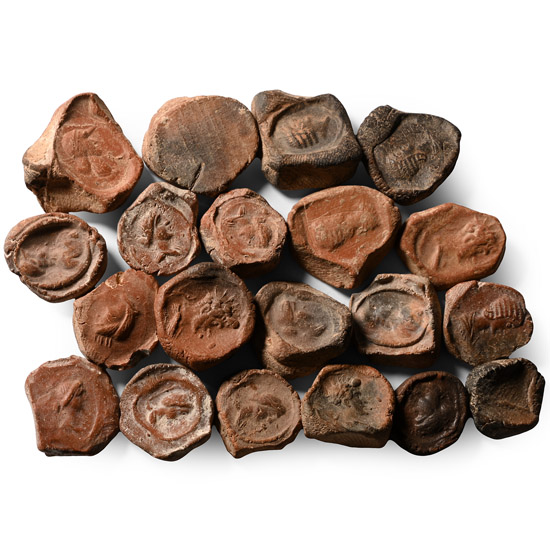
Roman Terracotta Bullae, Tesserae or Token Group
3rd century B.C.-1st century A.D.Sold for (Inc. bp): £234
A mixed group of ceramic bullae, tesserae or theatre tokens bearing low-relief motifs, mainly consisting of profile busts of deities. 32 grams total, 14-22 mm
From the private collection of a European gentleman (1942-2024), formed since the 1970s.
The term 'tessera' was used in Roman times to convey the Greek term σύμβολον (token). Small tiles are known as tokens, often shaped like coins, made of metal (copper, lead, iron), clay, bone, wood, or glass, stamped as well as engraved. The tokens, however, are not exclusively coin-shaped, as the Latin term 'tessera' refers to a four-sided shape. Tokens and tesserae seem to have been used both in Athens and Rome for the distribution of goods. According to written sources, the term ‘token’ is identified with credentials of the official authorities. They have also been interpreted as tokens of identity, as entrance tickets to theatre performances, tribunals or assemblies of citizens, archival material of seal engraving, as pawns in games, Charon’s obols and even as amulets.

