
-
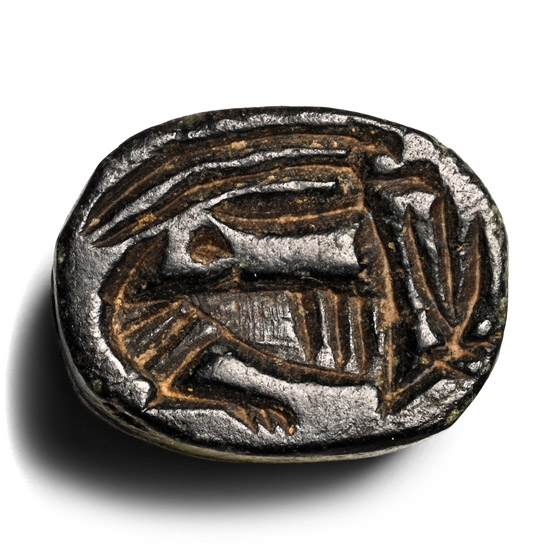
Egyptian Black Stone Scarab
Late Period, 664-332 B.C.Sold for (Inc. bp): £117
Lightly incised detailing to the carapace, underside with a crouching ibex in profile; supplied with a museum-quality impression. 3.05 grams, 16 mm
From the private collection of a European gentleman (1942-2024), formed since the 1970s. -
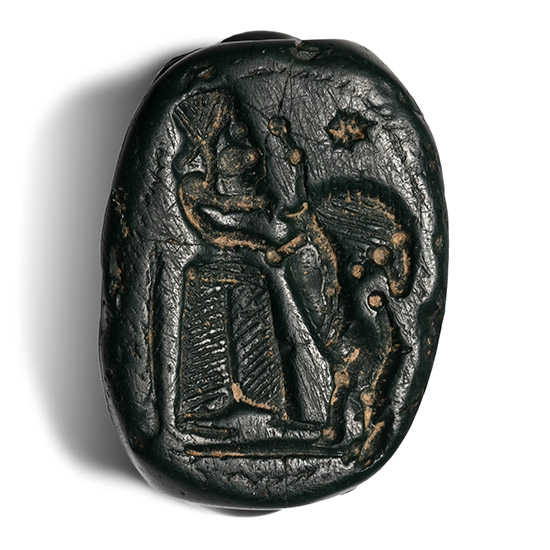
Phoenician Green Stone Scarab with Man Fighting Lion
5th-4th century B.C.Sold for (Inc. bp): £312
Modelled with incised detailing, pierced longitudinally, the underside with a bearded king in Assyrian attire, wearing a long, striated garment and tall headdress, grasping the forelegs of a rearing lion, its head turned back, a star above. 2.63 grams, 18 mm
Private collection, 1990s-early 2000s.
The motif of the Egyptian king overcoming an enemy, whether human or animal, is well attested in the New Kingdom and was later adopted by non-Egyptian artisans for scarabs and seals. -
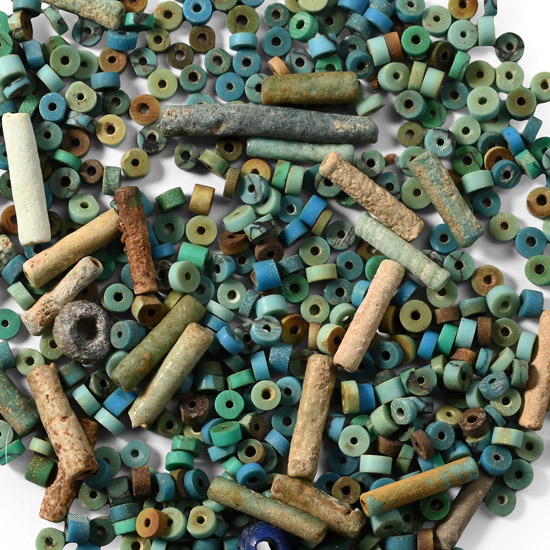
Egyptian Mixed Loose Faience Bead Group
Late-Ptolemaic Period, 664-30 B.C.Sold for (Inc. bp): £143
Comprising mainly tubular and annular beads in blue, cream, green and turquoise colours. 11 grams total, 2-13 mm
Ex early 20th century collection, London, UK. -
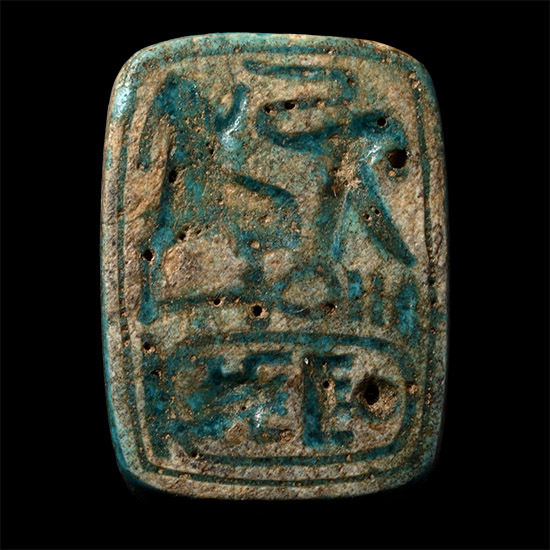
Egyptian Bifacial Steatite Amuletic Plaque with Cartouches for Tuthmoses III
New Kingdom, circa 1479-1425 B.C.Sold for (Inc. bp): £169
Amuletic bead, bifacial with designs: Side A - cartouche for Tuthmoses III with ankh, lion couchant, crown and other motifs; Side B - cartouche as on Side A with perching birds above and below. 2.93 grams, 18 mm
Ex John Cummings Ltd., Lincolnshire, UK. From the private collection of a Canadian gentleman living in Essex, UK, formed since the 1920s-circa 1990. Property of an Essex lady until the late 1990s; thence by descent. From the private collection of an Essex gentleman since the late 1990s. Accompanied by an old information card. -
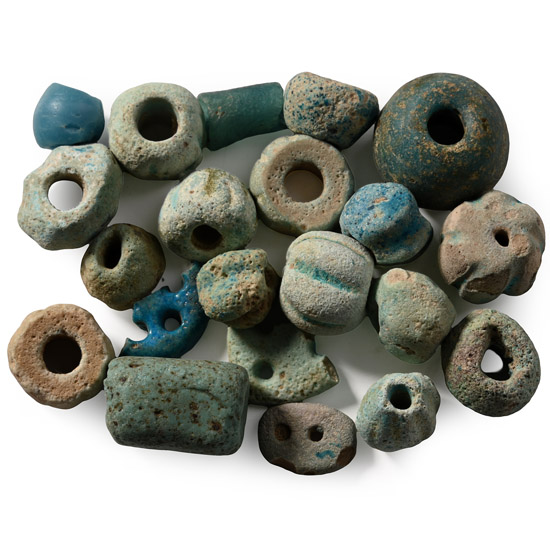
Romano-Egyptian Melon and Other Faience Beads
Roman Period, 30 B.C.-323 A.D.Sold for (Inc. bp): £52
Comprising blue and green glazed beads, mainly melon types. 39 grams total, 10-19 mm
Ex London, UK, art market, 1990s. -
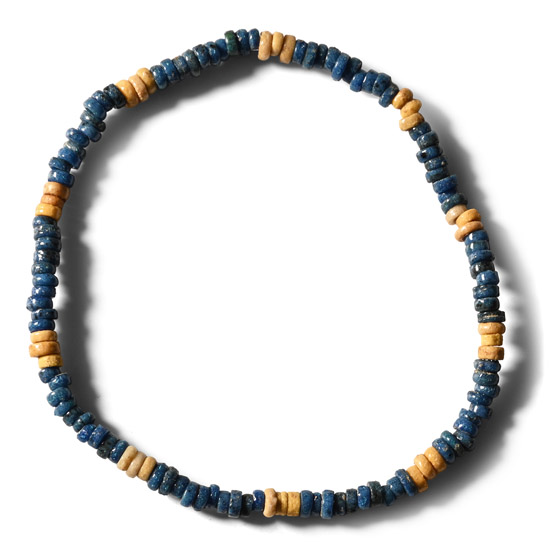
Egyptian Faience Mummy Bead Bracelet
Late Period, 664-332 B.C.Sold for (Inc. bp): £143
Composed of alternating blue and cream annular beads, restrung with an elasticated string. 2.18 grams, 18 cm
Ex Ancient Art Shop, Windsor, UK, 1990s. Ex private collection. -
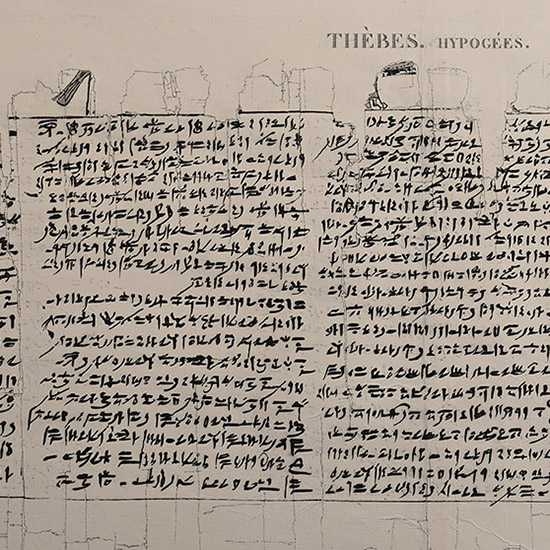
Very Large Egyptian Expedition Lithograph of the Hypogees Papyrus Manuscript from Thebes
Early 19th century A.D.Estimate: £80 - 100 (+bp*)
Proof etching on laid paper of plate 66 from Vol.II of Description de l'Égypte : ou, Recueil des observations et des recherches qui ont été faites en Égypte pendant l'expédition de l'armée française entitled Thèbes. Hypogées. Manuscrit sur papyrus. 230 grams, 102 x 69 cm
From the collection of a North American priest. Acquired between 1981-1996. Property of a North American collector.
Produced between February 1802 and 1830 on the orders of Napoleon Bonaparte; published between 1809 and 1828. Just 1,000 copies were distributed to various institutions, printed on laid paper with an 'Égypte ancienne et moderne' watermark. The book is subtitled Recueil des observations et des recherches qui ont été faites en Égypte pendant l’expédition de l’Armée française, publié par les ordres de Sa Majesté l’Empereur Napoléon le Grand (Gathering of observations and discoveries which were made in Egypt during the expedition of the French army, published on the orders of His Majesty the Emperor Napoleon the Great). It was the world's first encyclopedia devoted exclusively to the remains of ancient Egypt. The plates of this book are the first to present the archaeological sites of Thebes (Luxor). The papyrus manuscript was recovered from an underground tomb chamber (hypogeum). The text is written in hieratic, a cursive form of hieroglyphs, often used for religious papyrus documents. -
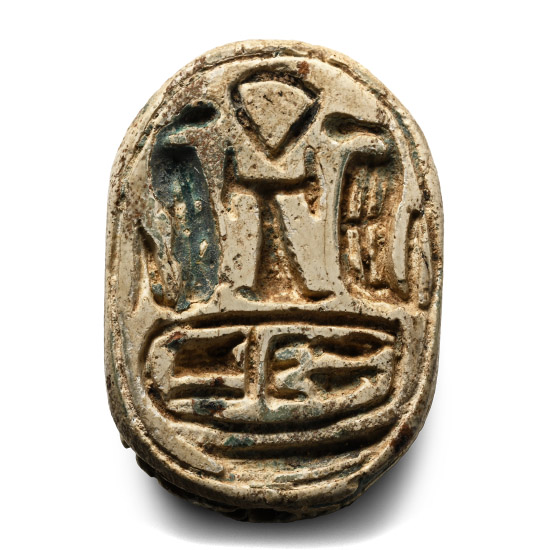
Egyptian Steatite Scarab with Cartouche
Late Period, 664-332 B.C.Sold for (Inc. bp): £117
With detailing to the carapace, mouth and legs, underside with cartouche, ankh and other symbols. 2.98 grams, 18 mm
From the private collection of a European gentleman (1942-2024), formed since the 1970s. -
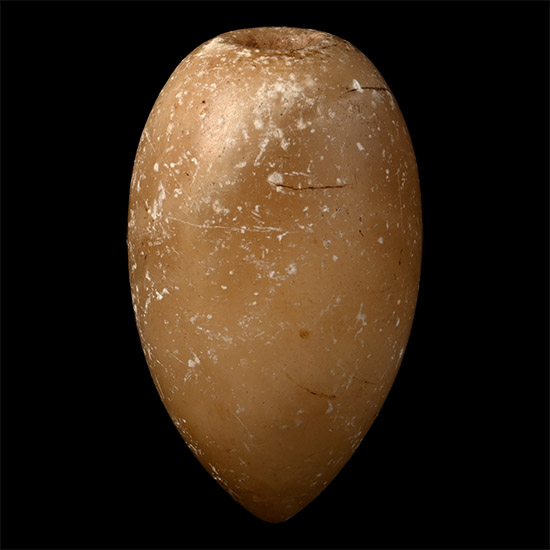
Egyptian Alabaster Miniature 'Torpedo' Flask
Middle Kingdom, 2nd millennium B.C.Sold for (Inc. bp): £98
Ovoid in profile with a pointed base, narrow opening, and hollowed interior. 62.6 grams, 57 mm
From a UK private collection since at least 1946. Property of a West London, UK, gentleman.
Ancient Egyptian cosmetics included volatile essential oils, animal fats, or scented plant resins. The ‘torpedo’ shape of the vessel required it to be positioned horizontally, ensuring the fluid remained in contact with the stopper or seal to prevent it from drying out or leaking. -
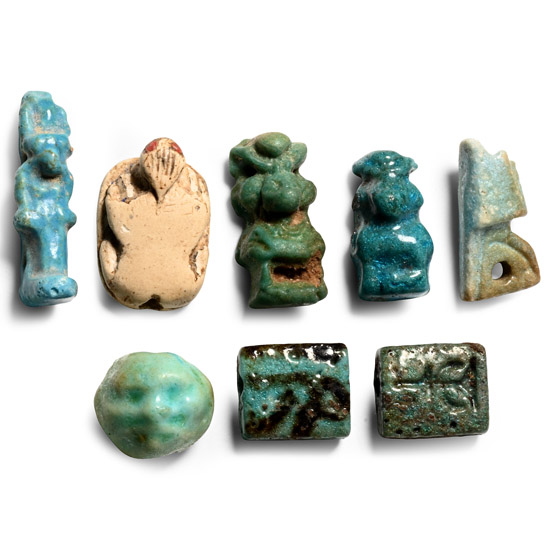
Egyptian Mixed Faience Amulet Collection
Late Period-Ptolemaic Period, circa 664-30 B.C.Sold for (Inc. bp): £247
Comprising: a face bead; two rectangular wedjat-eye beads with black detailing; an amulet depicting the Deshret crown of Lower Egypt; two seated baboon amulets; an amulet of a standing figure, possibly Sekhmet; a scaraboid with a small raised head. 4.93 grams total, 10-20 mm
From a 20th century UK collection. -
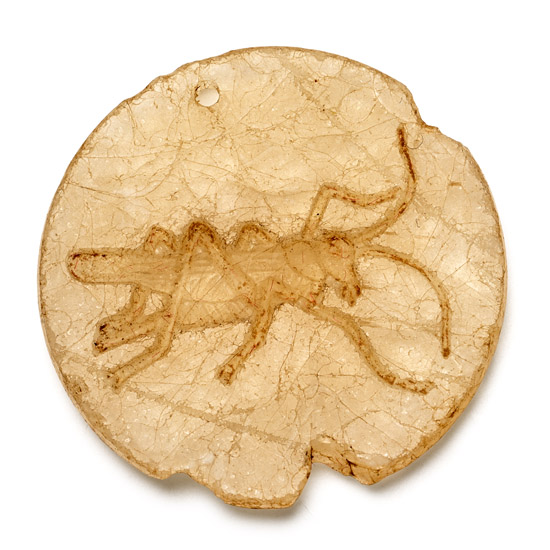
Egyptian Ptolemaic Alabaster Amulet with Locust
1st century B.C.Sold for (Inc. bp): £85
Translucent disc with an engraved locust with anatomical detailing, pierced through the upper edge. 4.45 grams, 30 mm
From the private collection of a European gentleman (1942-2024), formed since the 1970s. -
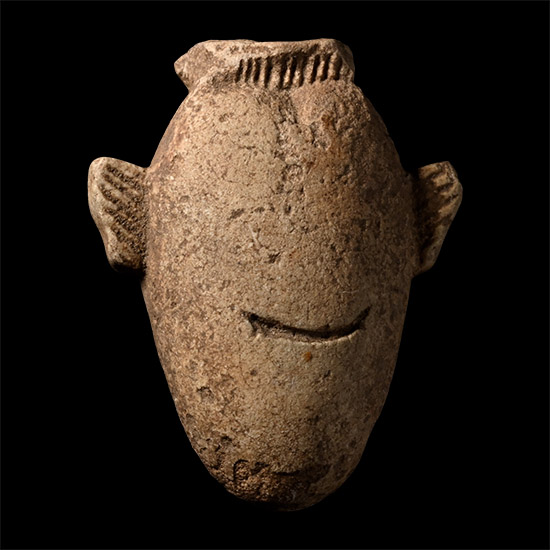
Large Egyptian Faience Heart Amulet
Late Period, 664-332 B.C.Sold for (Inc. bp): £117
Modelled in the round with a piriform body and two lateral projections with striations. 7.66 grams, 30 mm
Ex N. Thomas private collection, UK, 1980s-1990s. Accompanied by a previous dealer's sales ticket.

