-
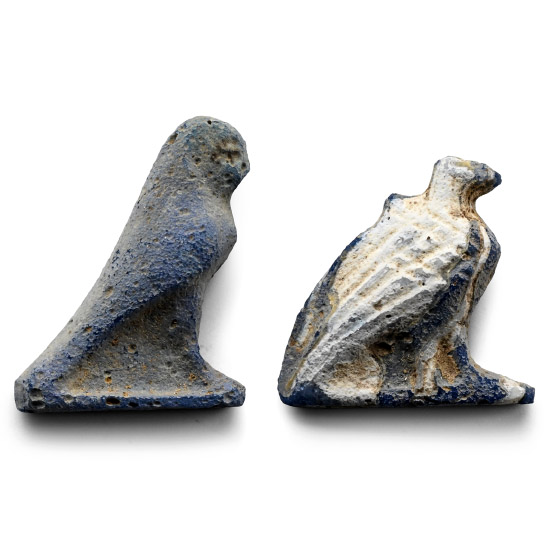
Egyptian Glass Pair of Bird Inlays
Late Period, 664-332 B.C.Sold for (Inc. bp): £234
Comprising: a standing hawk in cobalt blue glass, a standing vulture in white and blue glass with feather detailing on the wings. 4.76 grams total, 20-22 mm
From a 20th century UK collection. -
.jpg)
Egyptian Steatite Scarab Collection
Hyksos Period and New Kingdom, 18th-13th century B.C.Sold for (Inc. bp): £910
Each with a domed carapace, two with a figure on the underside surrounded by hieroglyphs, two inscribed with hieroglyphic signs. 15 grams total, 18-24 mm
Acquired in Europe before 1992. Ex private collection, UK.
The term ‘Hyksos’ comes from the Egyptian phrase ‘heka khasuwt’, which means ‘rulers of foreign (hill) lands’. The 15th Dynasty was governed by these Hyksos during the Second Intermediate Period. They were not of Egyptian origin but were believed to be Canaanites, and their names were carved on their scarabs. -
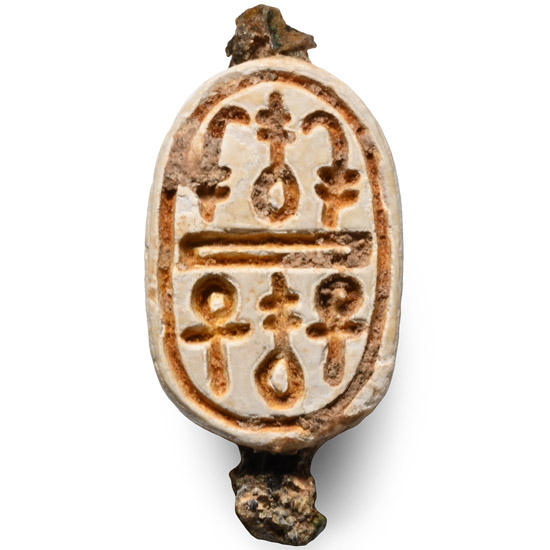
Egyptian Faience Scarab
2nd millennium B.C.Sold for (Inc. bp): £104
Anatomical detailing on the head and legs, with the underside featuring sedge plant (swt), ankh, and nefer symbols. 0.89 grams, 18 mm
Private collection, 1990s-early 2000s.
Scarabs featuring this design arrangement have been found in numerous sites in Palestine and were inspired by Middle Kingdom prototypes. -
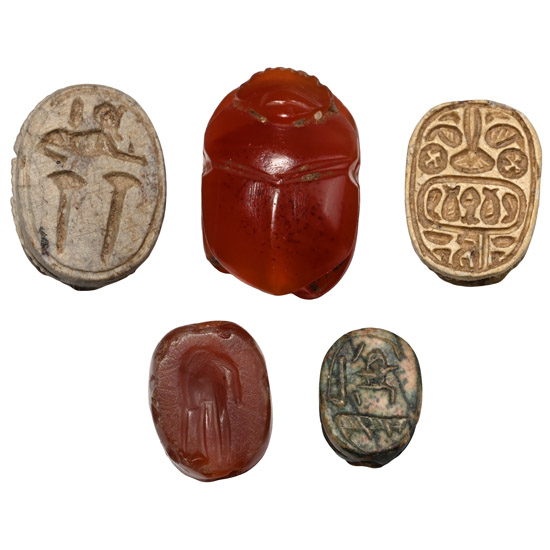
Egyptian Stone Scarab Group
Second Intermediate Period-Ptolemaic Period, circa 1600-30 B.C.Sold for (Inc. bp): £391
Comprising: carnelian type with plain underside; similar with incuse hand symbol; small greenstone type with scarab beetle and other signs; grey stone type with sphinx, indistinct hes- vase above, and two papyrus stalks below; another with a decorative cartouche panel and other signs; two supplied with a museum-quality impression. 7.12 grams total, 10-17 mm
From the private collection of a European gentleman (1942-2024), formed since the 1970s. -
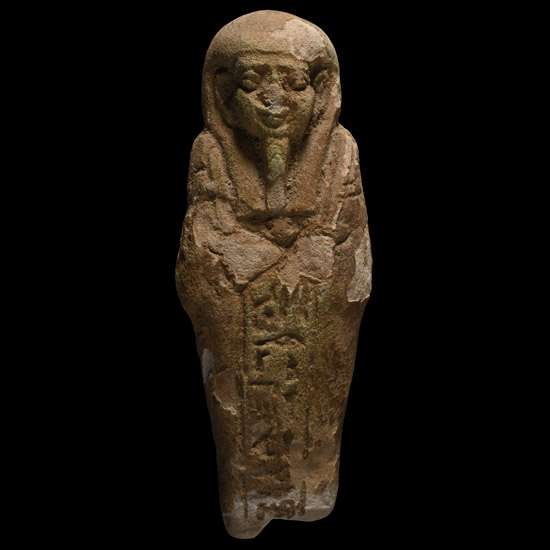
Egyptian Faience Hierogyphic Shabti
Late Period, 664-332 B.C.Sold for (Inc. bp): £221
With moulded facial features, tripartite wig, agricultural tools in the crossed hands and a seed-bag to the left shoulder; dorsal pillar; vertical panel to lower body with impressed hieroglyphic inscription: 'The illuminated one, the Osiris, the Controller of the Estates.... (sḥḏ wsı͗r ḫrp-ḥwwt....); lower legs absent. 56.3 grams, 95 mm
From the private collection of a Canadian gentleman living in Essex, UK, formed since the 1920s-circa 1990. Property of an Essex lady until the late 1990s; thence by descent. From the private collection of an Essex gentleman since the late 1990s. -
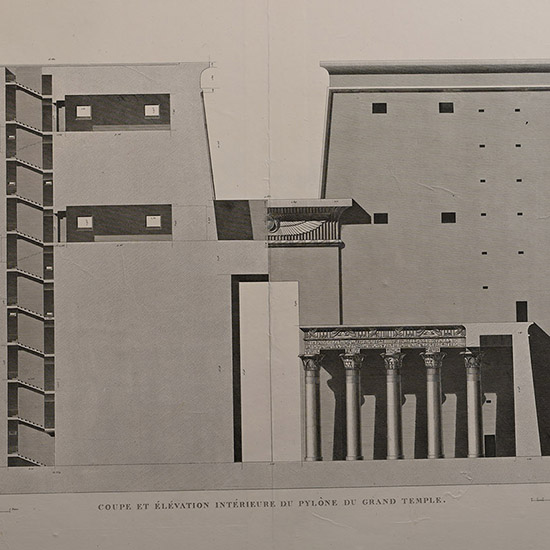
Very Large Egyptian Expedition Lithograph of the Temple of Edfou
Early 19th century A.D.Sold for (Inc. bp): £94
Proof etching on laid paper of plate 52 from Vol.I of Description de l'Égypte : ou, Recueil des observations et des recherches qui ont été faites en Égypte pendant l'expédition de l'armée française, titled Edfou (Apollinopolis Magna) Coupe et élévation intérieure du pylône du grand temple. 230 grams, 105.5 x 69 cm
From the collection of a North American priest. Acquired between 1981-1996. Property of a North American collector.
Produced between February 1802 and 1830 on the orders of Napoleon Bonaparte; published between 1809 and 1828. Just 1,000 copies were distributed to various institutions, printed on laid paper with an 'Égypte ancienne et moderne' watermark. The book is subtitled Recueil des observations et des recherches qui ont été faites en Égypte pendant l’expédition de l’Armée française, publié par les ordres de Sa Majesté l’Empereur Napoléon le Grand (Gathering of observations and discoveries which were made in Egypt during the expedition of the French army, published on the orders of His Majesty the Emperor Napoleon the Great). It was the world's first encyclopedia devoted exclusively to the remains of ancient Egypt. The plates of this book are the first to present the archaeological sites of Thebes (Luxor). The temple at Edfu in Upper Egypt is dedicated to Horus and was built during the Ptolemaic Period. It remains one of the best-preserved temples in Egypt. -
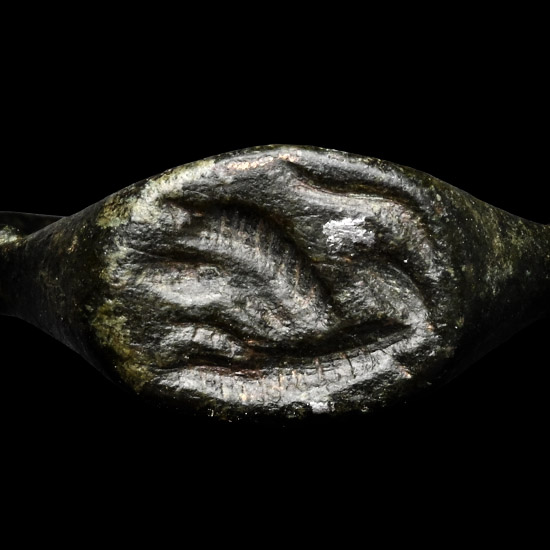
Large Greek Bronze Ring with Leaping Lion
Hellenistic, circa 2nd-1st century B.C.Sold for (Inc. bp): £52
Comprising a slender hoop and a thick oval bezel with a stylised lion motif. 5.50 grams, 26.35 mm overall, 20.90 mm internal diameter (approximate size British V 1/2, USA 10 3/4, Europe 24.4, Japan 23)
From a UK collection formed in the 1980s. Property of an Essex, UK, gentleman. -
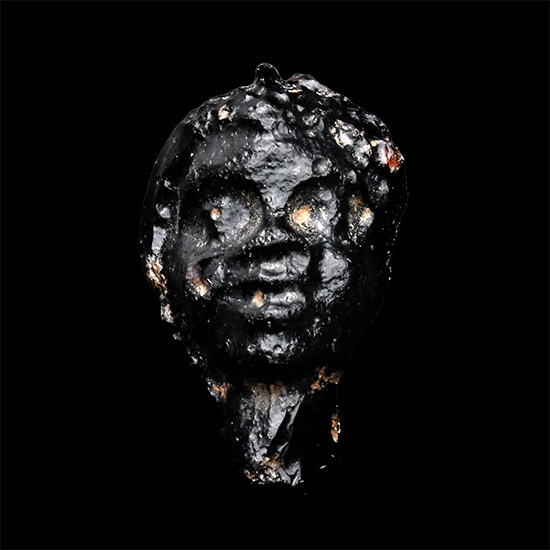
Greek Glass Head of an African Male
Carthaginian, 2nd century B.C.Sold for (Inc. bp): £117
Moulded in the round in black glass with short hair, casting seam around the edges. 1.57 grams, 17 mm
Ex private collection of the late Mr S.M., London, UK, acquired 1979-1999, thence by descent. Accompanied by a previously illustrated catalogue card with provenance. -
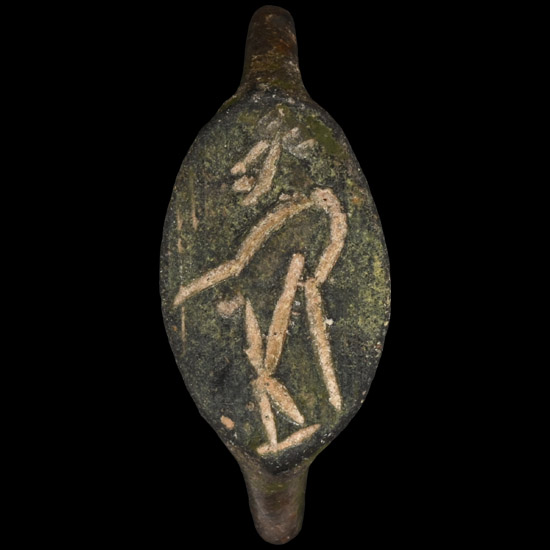
Greek Bronze Ring with Standing Figure
Circa 3rd-2nd century B.C.Sold for (Inc. bp): £39
Featuring a round-section hoop and a lentoid bezel with a stylised standing figure facing left, leaning on a short staff. 2.52 grams, 24.36 mm overall, 19.83 x 18.11 mm internal diameter (approximate size British S, USA 9, Europe 20, Japan 19)
From the private collection of a European gentleman (1942-2024), formed since the 1970s. -
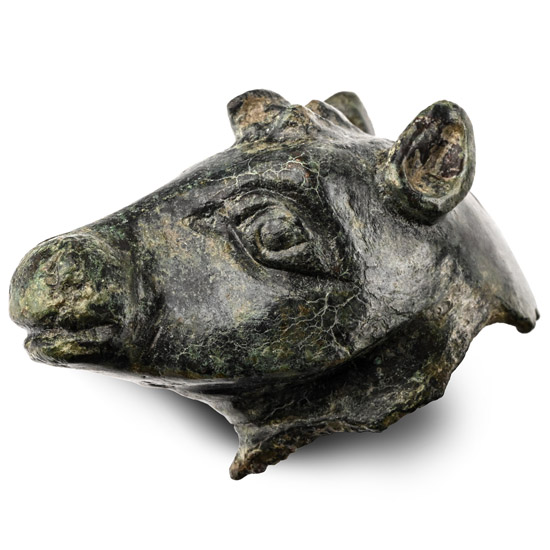
Greek Bronze Horse Head Mount
Circa 4th-3rd century B.C.Sold for (Inc. bp): £208
Modelled in the round with large almond-shaped eyes and pricked ears. 34.8 grams, 38 mm
Ex German art market, 2000s. Acquired from an EU collector living in London. From the collection of a Surrey, UK, gentleman. -
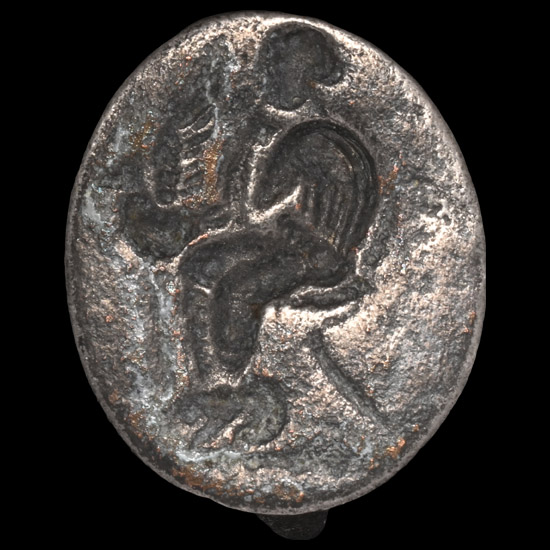
Greek Silver Ring with Seated Goddess Holding a Dove
Hellenistic, 4th-2nd century B.C.Sold for (Inc. bp): £260
Featuring a round-section hoop and a large oval bezel with a seated goddess holding a dove with open wings. 6.35 grams, 23.20 mm overall, 19.55 x 12.60 mm internal diameter (approximate size British I, USA 4 1/4, Europe 7.44, Japan 7)
From the private collection of a European gentleman (1942-2024), formed since the 1970s. -
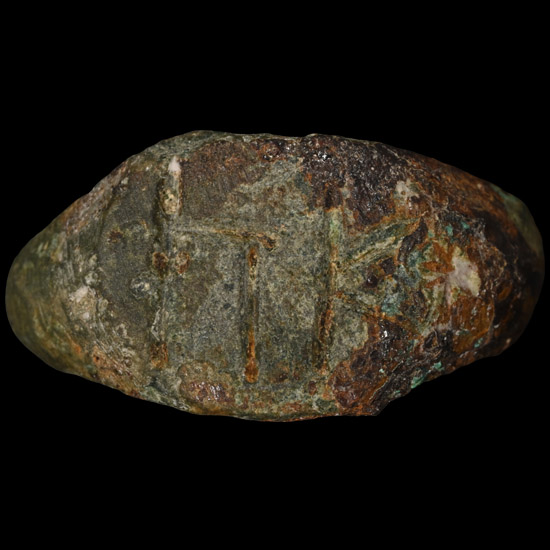
Graeco-Roman Bronze Ring with Inscription
1st century B.C.-1st century A.D.Sold for (Inc. bp): £33
A substantial ring with expanding shoulders, a large oval bezel with 'ΠK'. 9.03 grams, 26.58 mm overall, 18.68 x 16.06 mm internal diameter (approximate size British M, USA 6, Europe 12.46, Japan 12)
From the private collection of a European gentleman (1942-2024), formed since the 1970s.

