-
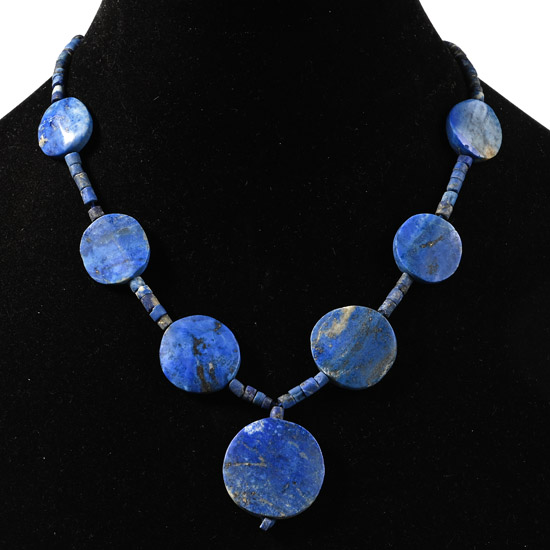
Bactrian Style Lapis Lazuli Bead Necklace String
Sold for (Inc. bp): £33
Composed of coin-shaped and tubular beads with a large coin-shaped pendant, restrung. 41.9 grams, 32 cm
Acquired in the 1990s-early 2000s. Ex London, UK, collection. -
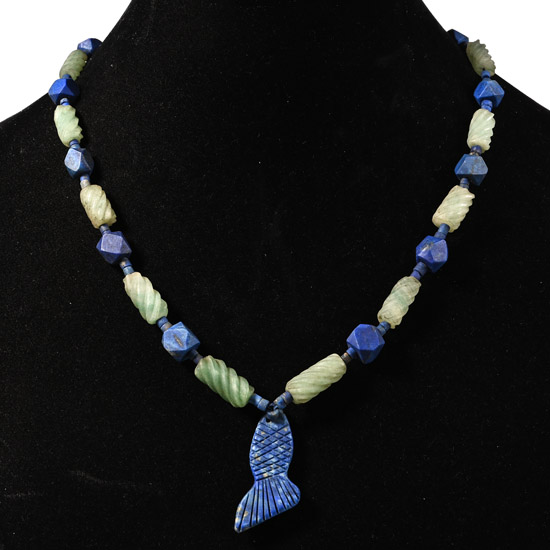
Bactrian Style Lapis Lazuli and Glass Bead Necklace String
Sold for (Inc. bp): £33
Composed of spherical beads interspersed with barley twist beads and a large fish-shaped bead at the centre; restrung. 47.5 grams, 41 cm
Acquired in the 1990s-early 2000s. Ex London, UK, collection. -
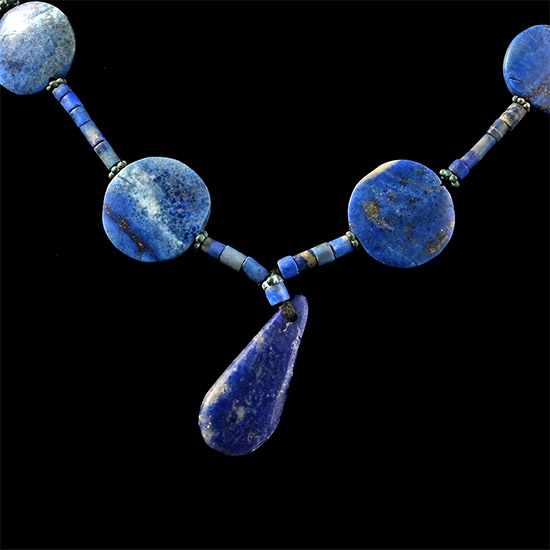
Bactrian Style Lapis Lazuli Bead Necklace String
Sold for (Inc. bp): £20
Composed of coin-shaped and tubular beads with a teardrop-shaped pendant, restrung. 30.8 grams, 33.5 cm
Acquired in the 1990s-early 2000s. Ex London, UK, collection. -
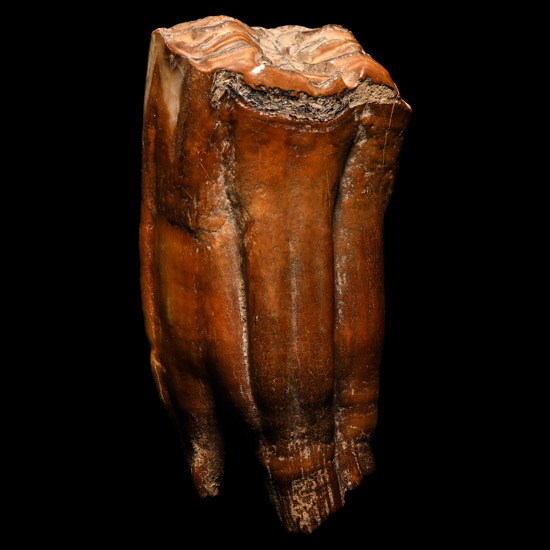
Ice Age Fossilised Horse Tooth
Pleistocene Epoch, circa 2.6 million-11,700 years B.P.Sold for (Inc. bp): £104
Molar tooth with some root present. 72 grams, 71 mm
From a UK private collection since at least 1946. Property of a West London, UK, gentleman. -
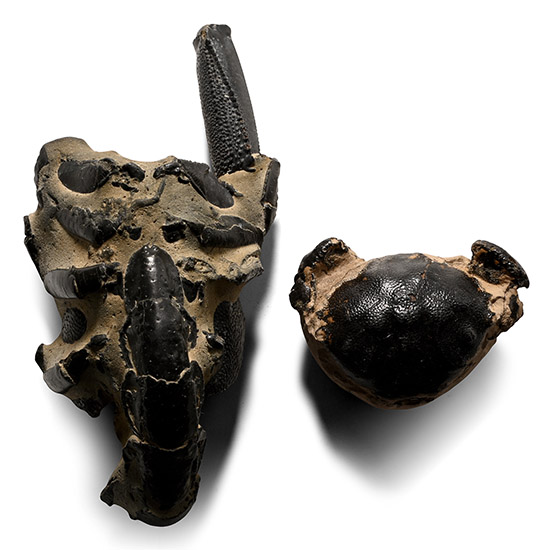
Fossil Lobster and London Clay Crab Group
Cretaceous Period, circa 100-66 million years B.P.Sold for (Inc. bp): £91
Comprising: the body of a crab with remnants of the front claw; a large section of a fossilised lobster. 184 grams total, 5-11.3 cm
From the private collection of Kenneth Machin (1936-2020), Buckinghamshire, UK; his collection of antiquities and natural history was formed since 1948; thence by descent. -
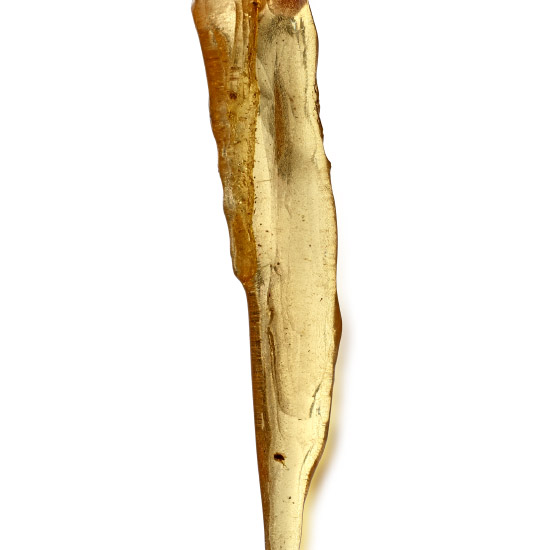
Polished Copal 'Spike' with Insects
Carboniferous Period, circa 3 million years B.P.Sold for (Inc. bp): £20
Tapering specimens with some small insect and other inclusions. 6.93 grams, 87 mm
From a Cambridgeshire, UK, collection. -
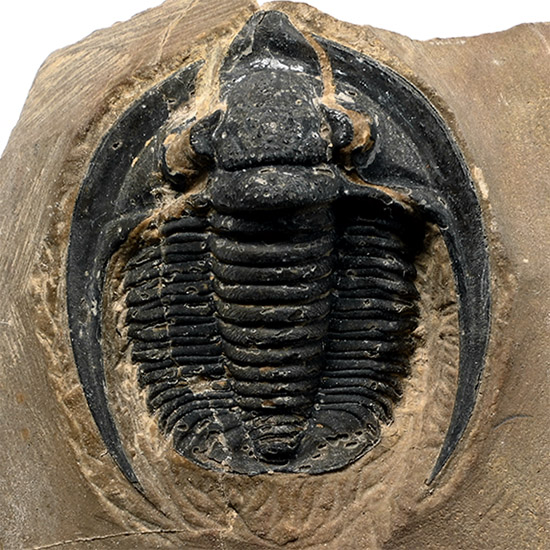
Fossil Harpes Trilobite in Matrix
Middle Devonian Period, circa 380 million years B.P.Sold for (Inc. bp): £143
Roughly semicircular head, and the genal roll with genal prolongations. 117 grams, 77 mm
From the private collection of Kenneth Machin (1936-2020), Buckinghamshire, UK; his collection of antiquities and natural history was formed since 1948; thence by descent. -
![Group of Eleven [11] Cut Malachite Slices](https://timelineauctions.com/upload/images/items/small/256031-s.jpg)
Group of Eleven [11] Cut Malachite Slices
Sold for (Inc. bp): £13
Comprising eleven cut slices showing contrasting green banding. 845 grams total, 5.5-16.8 cm
From the Democratic Republic of the Congo. Ex Mineral Imports, London, UK. Gregory, Bottley & Lloyd (Gregory's), Harwich, UK. -
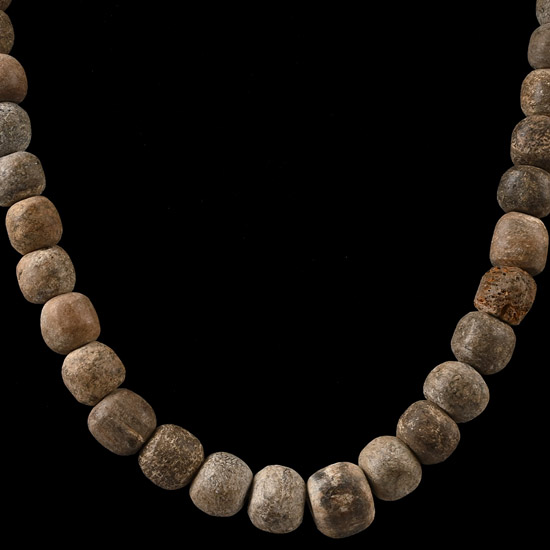
Woolly Mammoth Bone Bead Necklace String
Pleistocene Epoch, 2.6 million-11,700 years B.P.Sold for (Inc. bp): £52
Restrung, using recently polished Mammuthus primigenius spherical bone beads. 155 grams, 58 cm
Ex Ancient Art Shop, Windsor, UK, 1990s. Ex private West County, UK, collection.
The mammoth lineage branched from the Asian elephant around 6 million years ago, and later on, the Woolly Mammoth, Mammuthus primigenius, evolved in eastern Siberia. Woolly mammoths, being slightly smaller than living African elephants, were foragers and ate grass, as well as small, nutritious flowering plants that flourished in the environment where they lived. They may also have used their curved tusks to dig through snow and eat plants that other foragers were unable to reach. -
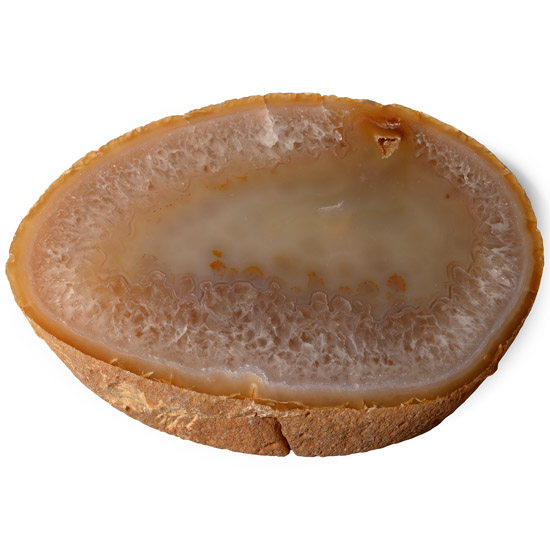
Large Cut and Polished Yellow Agate Crystal Geode Slice Artefact Base
Sold for (Inc. bp): £26
Oval section of light brown agate geode showing some quartz crystal formations. 824 grams, 18.7 cm
From Brazil. Ex Mineral Imports, London, UK. Gregory, Bottley & Lloyd (Gregory's), Harwich, UK. -
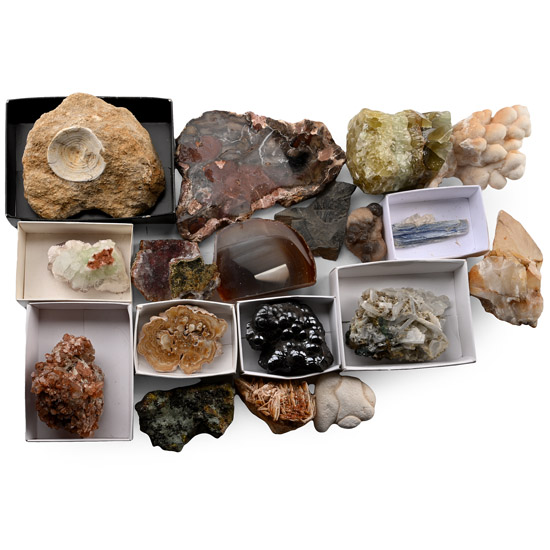
Mixed Fossil, Crystal and Mineral Collection
Sold for (Inc. bp): £20
Comprising: hematite, kyanite, agate, fossilised wood, a geode section, calcite, fossilised vertebra, and others. 3.1 kg total including tray, 4.4-15 cm
From a Cambridgeshire, UK, collection. -
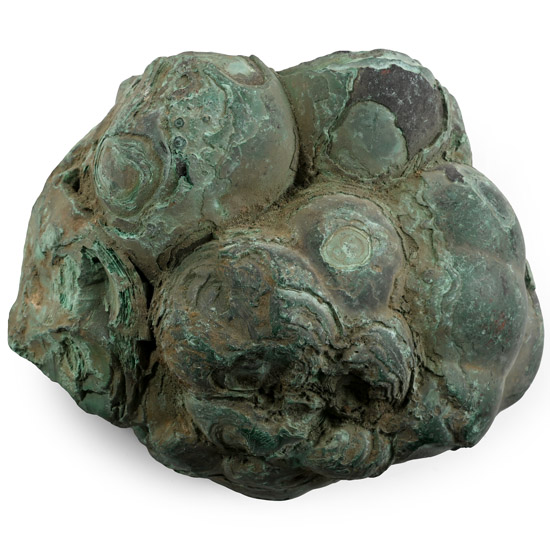
Large Natural Raw Malachite Specimen
Sold for (Inc. bp): £13
Botryoidal specimen showing characteristic banding. 1.75 kg, 13.1 cm
From the Democratic Republic of Congo, Central Africa. Ex Mineral Imports, London, UK. Gregory, Bottley & Lloyd (Gregory's), Harwich, UK.

