
-
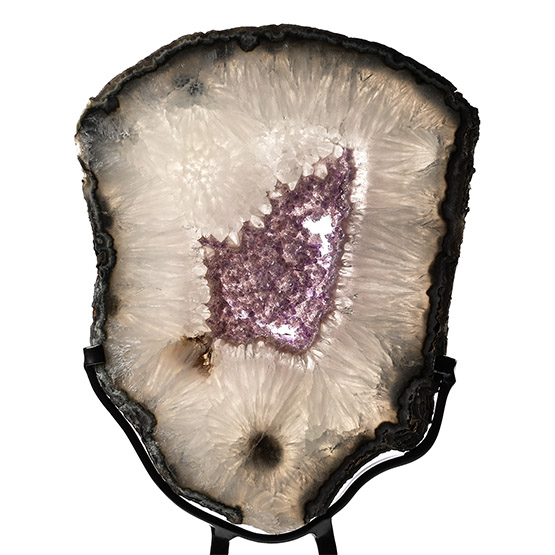
White Quartz Geode Slice with Amethyst Core
Circa 140-120 million years B.P.Estimate: £800 - 1,000 (+bp*)
Cut and polished slice showing dense intergrown layer of white quartz crystals, the centre with groups of small lavender-coloured amethyst crystals; mounted on a custom-made display stand. 4.54 kg, 34 x 25 x 2cm, 52 cm including stand
From Artigas, Uruguay. Property of a London lady. -
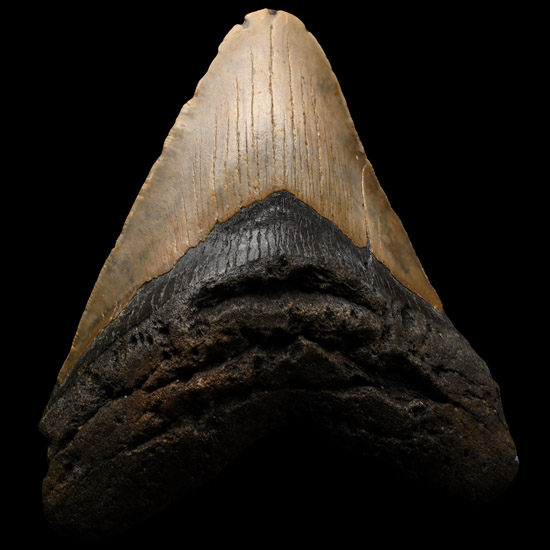
Very Large Megalodon Extinct Giant Shark's Fossil Tooth
Pliocene Epoch, circa 5.6 million years B.P.Sold for (Inc. bp): £494
A Carcharocles megalodon shark tooth, with serrations and polished tooth enamel. 351 grams, 14.5 cm
From a Lincolnshire, UK, collection.
Carcharodon megalodon is regarded as one of the largest and most powerful marine predators in vertebrate history and likely had a profound impact on the structuring of the marine communities. Fossil remains indicate that this giant shark reached a length of more than 16 metres (52 ft) and also affirm that it had a cosmopolitan distribution. Scientists suggest that in life, it looked like a stockier version of the great white shark, Carcharodon carcharias. -
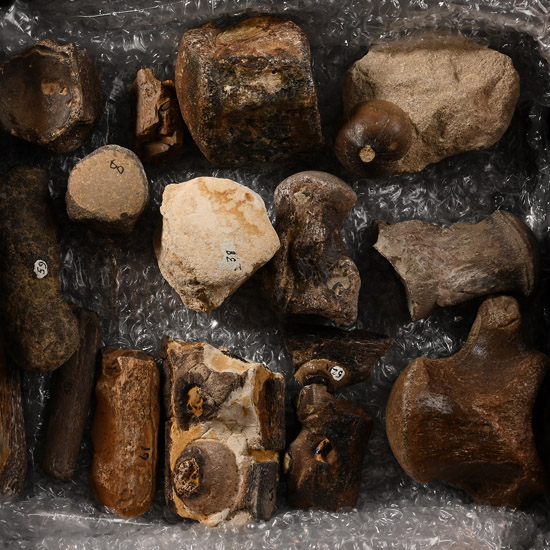
Mosasaur 'Marine Dinosaur' Fossil Bone and Tooth Collection
Cretaceous Period, circa 145-65 million years B.P.Sold for (Inc. bp): £59
Comprising various bones and jaw fragments with partial teeth, a coprolite, and others, each with an inked collector's number. 1.85 kg total, 33-99 mm
From the private collection of Kenneth Machin (1936-2020), Buckinghamshire, UK; his collection of antiquities and natural history was formed since 1948; thence by descent.
The Mosasaur is an extinct, large marine reptile dinosaur with an elongated body, long snout and paddle-like limbs. Found worldwide, they competed with other well-known sea predators of the Late Cretaceous, such as plesiosaurs and ichthyosaurs, for food, existing primarily on a diet of ammonoids, cuttlefish and fish. -
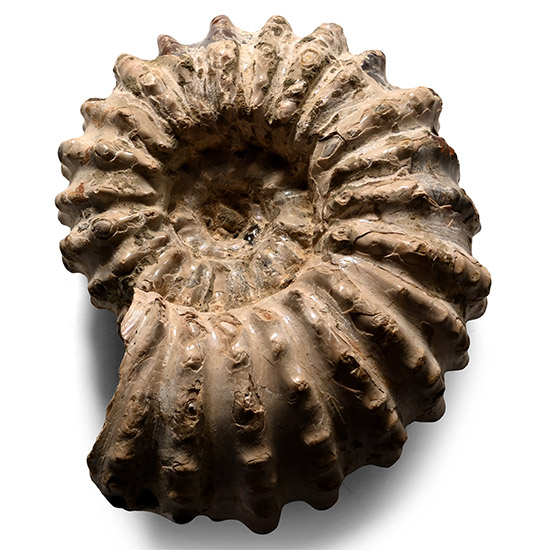
Fossil Douvilleiceras Mammilatum Ammonite
Cretaceous Period, circa 113-100 million years B.P.Sold for (Inc. bp): £26
Showing prominent ribbing and some iridescence. 167 grams, 71 mm
From the private collection of Kenneth Machin (1936-2020), Buckinghamshire, UK; his collection of antiquities and natural history was formed since 1948; thence by descent. -
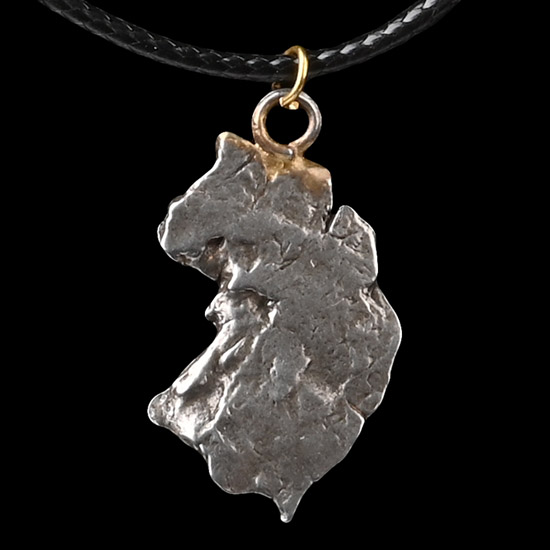
Campo del Cielo Meteorite Necklace
Fell 6000-5000 years B.P.Sold for (Inc. bp): £221
A nickel-iron meteorite (IAB) with a suspension loop and cord for wearing. 6.21 grams, pendant: 28 mm
From a Cambridgeshire, UK, collection.
A crater field of roughly 26 craters was found in the vicinity of this crater, which is estimated to date to 4-5 thousand years BP. The age of the meteorite itself is thought to be c.4.5 billion years, formed as part of the development of this solar system. The largest two fragments, the 30.8-ton Gancedo and 28.8-ton El Chaco, are among the heaviest meteorite masses ever recovered on Earth. In 1576, the governor of a province in Northern Argentina commissioned the military to search for a large mass of iron, which it was believed the local people claimed had fallen from the sky and which they used for their weapon production. The expedition discovered a large mass of metal, which was assumed to be an iron mine, and brought back a few samples, which were described as being of unusual purity. Following the legends, in 1774, Don Bartolomé Francisco de Maguna rediscovered the iron mass. He himself did not believe that the stone had fallen from the sky and assumed that it had formed by a volcanic eruption. However, he sent the samples to the Royal Society of London. In 199,0 it became protected by law. -
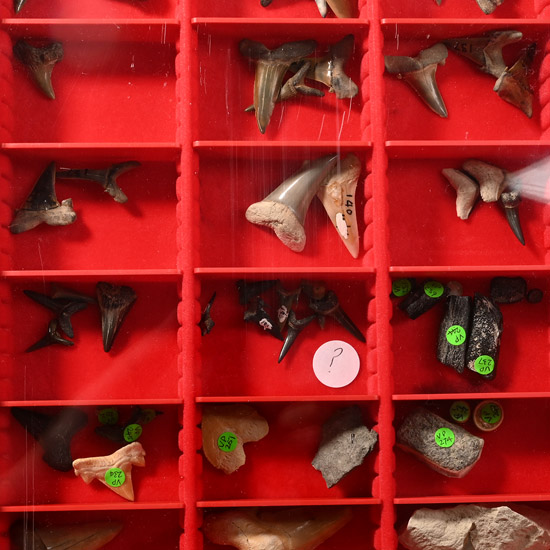
Collection of Extinct Fossilised Shark Teeth in Collector's Display Box
Eocene-Pleistocene Period, circa 56 million-11,700 years B.P.Sold for (Inc. bp): £117
Large collection of shark teeth, including Odontapsis, Lamna oblirua, Charcharodon auriculatus, Striatolamia, and others; most with an inked collector's number or a numbered sticker. 973 grams total, 30.5 x 24 cm including box
From the private collection of Kenneth Machin (1936-2020), Buckinghamshire, UK; his collection of antiquities and natural history was formed since 1948; thence by descent. Accompanied by a list with collection numbers describing each species, dates, and provenances. -
![Group of Twenty Eight [28] Pyrite (Fools Gold) Specimens](https://timelineauctions.com/upload/images/items/small/255965-s.jpg)
Group of Twenty Eight [28] Pyrite (Fool's Gold) Specimens
Sold for (Inc. bp): £20
Comprising twenty-eight specimens of small intergrown pyrite crystals, some with characteristic striations. 2.56 kg total, 37-67 mm
From Brazil. Ex Mineral Imports, London, UK. Gregory, Bottley & Lloyd (Gregory's), Harwich, UK. -
![Group of Ten [10] Cut and Polished Agate Geode Slices](https://timelineauctions.com/upload/images/items/small/256014-s.jpg)
Group of Ten [10] Cut and Polished Agate Geode Slices
Sold for (Inc. bp): £78
Comprising ten polished slices showing contrasting banding, six in enhanced green colour. 1.08 kg total, 10.5-13.3 cm
From Brazil. Ex Mineral Imports, London, UK. Gregory, Bottley & Lloyd (Gregory's), Harwich, UK. -
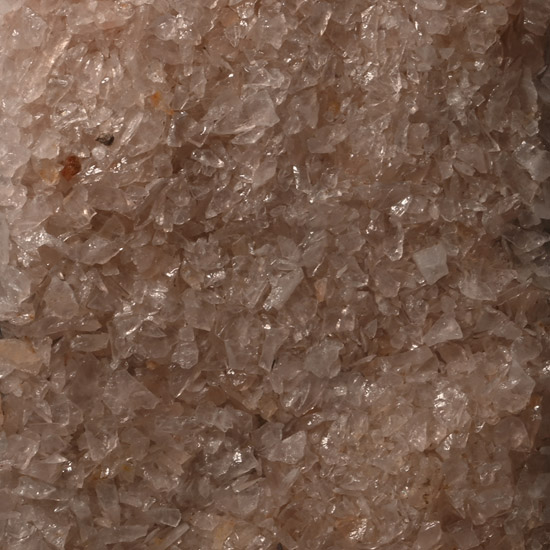
Rose Quartz Fragments
Sold for (Inc. bp): £7
Large quantity of pale pink rose quartz chips. 556 grams total, 1-35 mm
Ex Mineral Imports, London, UK. Gregory, Bottley & Lloyd (Gregory's), Harwich, UK. -
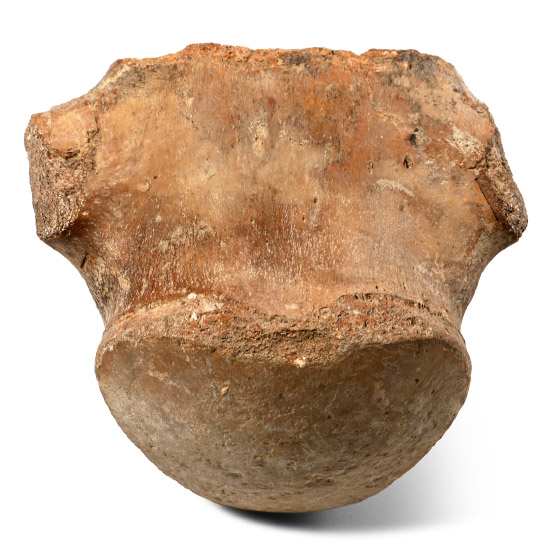
Fossil Tylosaurus Marine Dinosaur Vertebra
Late Cretaceous Period, circa 92-66 million years B.P.Sold for (Inc. bp): £52
The main body of a vertebra with two raised ridges underneath, likely a pygal or caudal vertebra; old inked collector's number 'VR26'. 622 grams, 96 mm
From near Harlan County Dam, Nebraska, USA. From the private collection of Kenneth Machin (1936-2020), Buckinghamshire, UK; his collection of antiquities and natural history was formed since 1948; thence by descent.
Tylosaurus was an apex marine predator during the Late Cretaceous period, and is classified in the superfamily Mosasauroidea. -
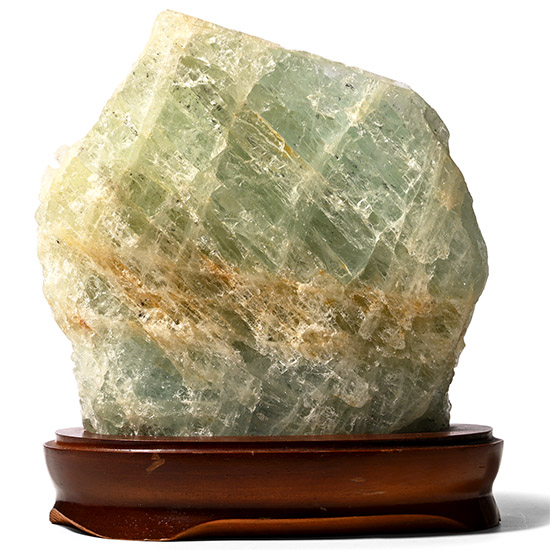
Large Rough Aquamarine Crystal on Plinth
Sold for (Inc. bp): £91
Sub-translucent formation of greenish-blue aquamarine set on a wooden display stand. 3.42 kg total, 22 cm high including stand
From the private collection of a Devon, UK, lady. -
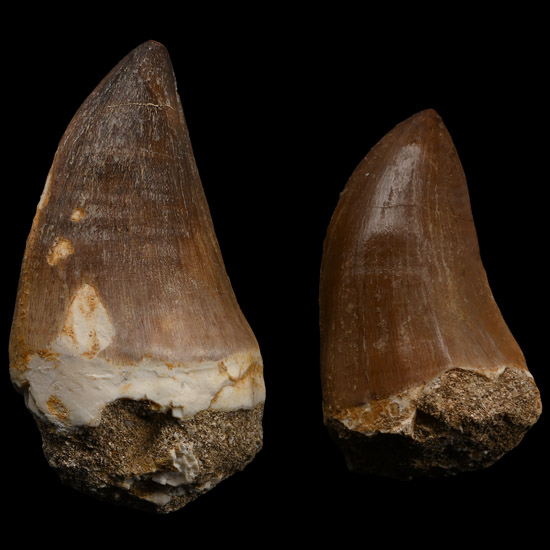
Fossil Mosasaur 'Marine Dinosaur' Teeth
Cretaceous Period, circa 145-65 million years B.P.Sold for (Inc. bp): £260
Comprising two thick teeth with dark brown enamel. 77 grams total, 51-65 mm
From a Lincolnshire, UK, collection.
The Mosasaur is an extinct, large marine reptile dinosaur with an elongated body, long snout and paddle-like limbs. Found worldwide, they competed with other well-known sea predators of the Late Cretaceous, such as plesiosaurs and ichthyosaurs, for food, existing primarily on a diet of ammonoids, cuttlefish and fish.

