
-
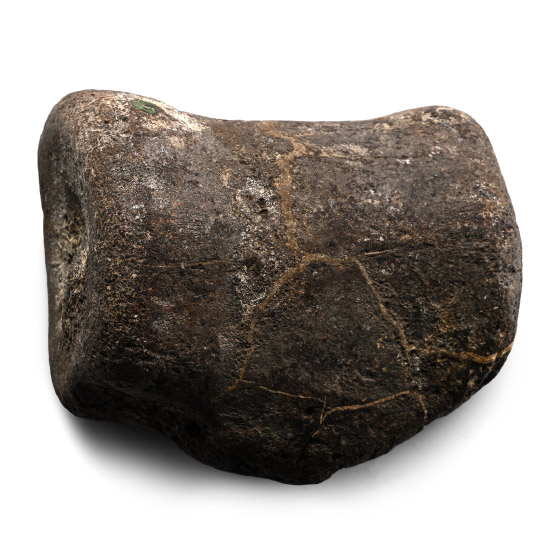
Fossil Iguanadon Dinosaur Vertebra
Early Cretaceous Period, circa 126-122 million years B.P.Sold for (Inc. bp): £20
Caudal vertebra with an elongated body. 880 grams, 94 mm
From Wealden, Bedfordshire, UK. From the private collection of Kenneth Machin (1936-2020), Buckinghamshire, UK; his collection of antiquities and natural history was formed since 1948; thence by descent.
Iguanadon was a large herbivore with a distinctive thumb-spike and long prehensile fifth fingers that helped with foraging for food. It was the second dinosaur to be formally named based on fossil specimens, and was one of the three genera originally used to define dinosauria. -
![Group of Fifty [50] Natural Rough Garnet Crystals Totalling 250 Carats](https://timelineauctions.com/upload/images/items/small/255981-s.jpg)
Group of Fifty [50] Natural Rough Garnet Crystals Totalling 250 Carats
Sold for (Inc. bp): £33
Large quantity of uncut purple-red pyrope-almandine garnet specimens. 100 grams total, 10-18 mm
Ex Mineral Imports, London, UK. Gregory, Bottley & Lloyd (Gregory's), Harwich, UK. -
.jpg)
Collection of Cabochon Rubies
Estimate: £120 - 170 (+bp*)
Comprising six polished cabochons, some lead glass-filled. 5.15 grams total, 8-11 mm
Private collection, London, UK. -
![Group of Fifty [50] Rock Crystal Point Display Specimens](https://timelineauctions.com/upload/images/items/small/256048-s.jpg)
Group of Fifty [50] Rock Crystal Point Display Specimens
Sold for (Inc. bp): £33
Comprising fifty prismatic points, most with pyramidal terminations. 1.34 kg total, 39-69 mm
From Brazil. Ex Mineral Imports, London, UK. Gregory, Bottley & Lloyd (Gregory's), Harwich, UK. -
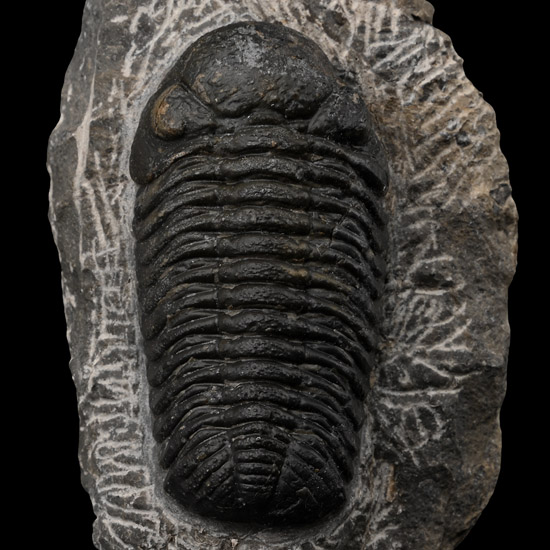
Fossil Phacops Trilobite on Matrix
Devonian Period, circa 444-439 million years B.P.Sold for (Inc. bp): £65
The aquatic arthropod showing good detail in the carapace, resting on an irregular matrix; superb example. 230 grams, 94 mm
From a Cambridgeshire, UK, collection. -
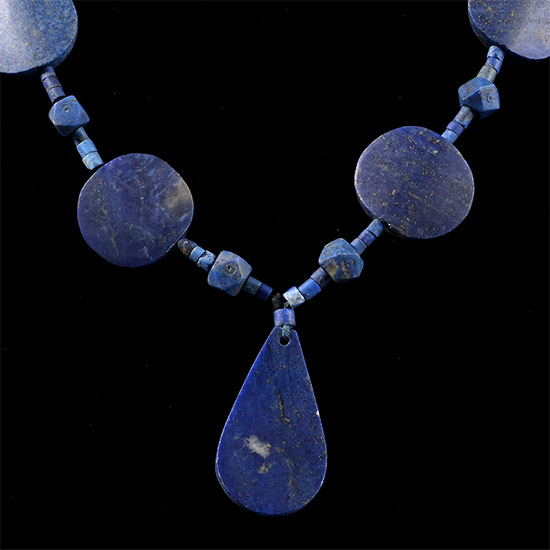
Bactrian Style Lapis Lazuli Bead Necklace String
Sold for (Inc. bp): £39
Composed of tubular, polygonal, and coin-shaped beads with a teardrop-shaped pendant, restrung. 70.9 grams, 40 cm
Acquired in the 1990s-early 2000s. Ex London, UK, collection. -
![Group of Six [6] Fossilised Coral Specimens](https://timelineauctions.com/upload/images/items/small/255980-s.jpg)
Group of Six [6] Fossilised Coral Specimens
Sold for (Inc. bp): £7
Comprising six brown specimens showing the structure of polyps. 1.73 kg total, 7.5-12.6 cm
Ex Mineral Imports, London, UK. Gregory, Bottley & Lloyd (Gregory's), Harwich, UK. -
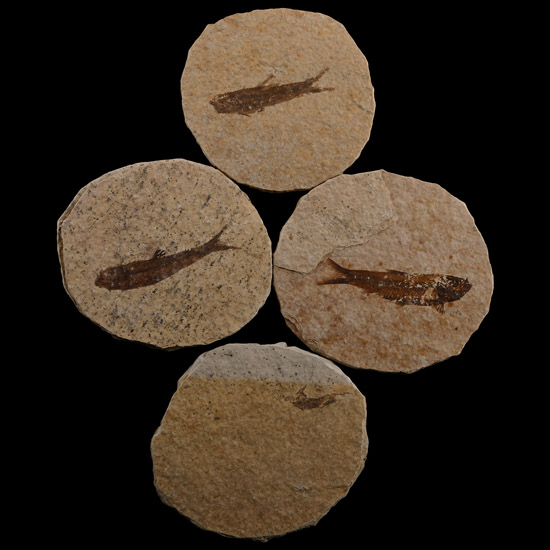
Knightia Fossil Fish Plate Group
Eocene Period, circa 58-36 million years B.P.Sold for (Inc. bp): £52
Comprising three circular plates, each with a Knightia alta fish, and a fourth plate with small remains of one. 165 grams total, 71-80 mm
From Wyoming, USA. From a Lincolnshire, UK, collection.
In southwest Wyoming (and parts of Colorado and Utah), in the Green River Formation, are found some of the world's most outstanding specimens of fossil fish. The Green River system was composed of three lakes: Lake Uinta, Lake Gosiute and Fossil Lake. These Eocene lakes lay in a series of intermountain basins formed by geological events that uplifted the Rocky Mountains during the early Tertiary time. The climate was much different from the desert-like climate of this area today. Both the fauna (crocodiles, alligators, boa constrictors and some subtropical fish families) and the flora (such as large palm trees) indicate a climate much like that found along the Gulf Coast today. Large amounts of ash found in the sediments indicate that volcanoes were particularly active at this time. -
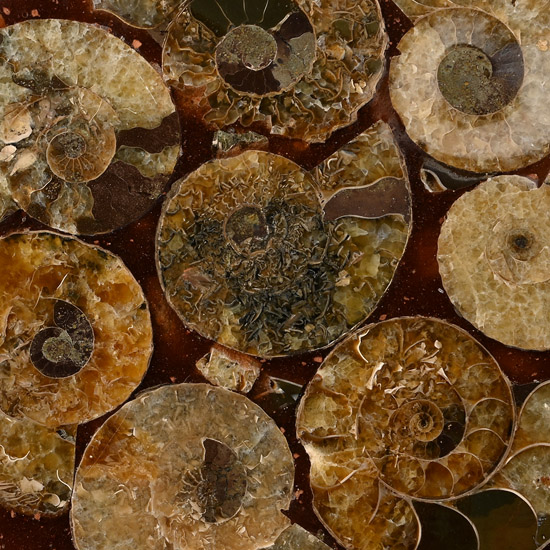
Polished Fossil Ammonite Plate
Jurassic Period, circa 199-145 million years B.P.Sold for (Inc. bp): £20
Composite plate with cut ammonite slices set in resin. 163 grams, 11.9 cm
From a Lincolnshire, UK, collection. -
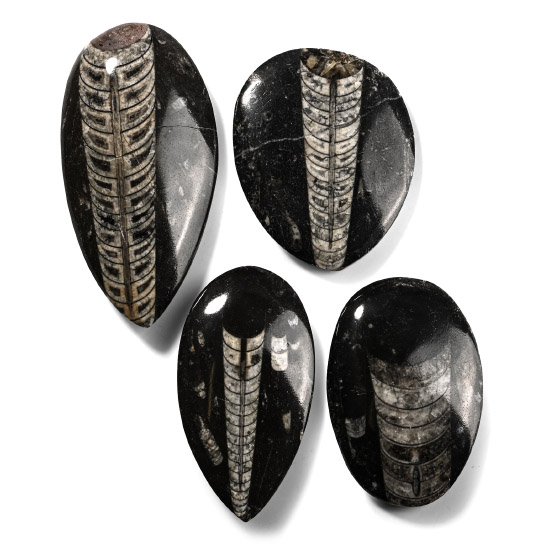
Polished Fossil Orthoceras Specimen Collection
Devonian Period, circa 417-354 million years B.P.Sold for (Inc. bp): £33
Comprising four polished specimens showing partial Orthoceras specimens. 456 grams total, 8.4-11.5 cm
From the private collection of Kenneth Machin (1936-2020), Buckinghamshire, UK; his collection of antiquities and natural history was formed since 1948; thence by descent. -
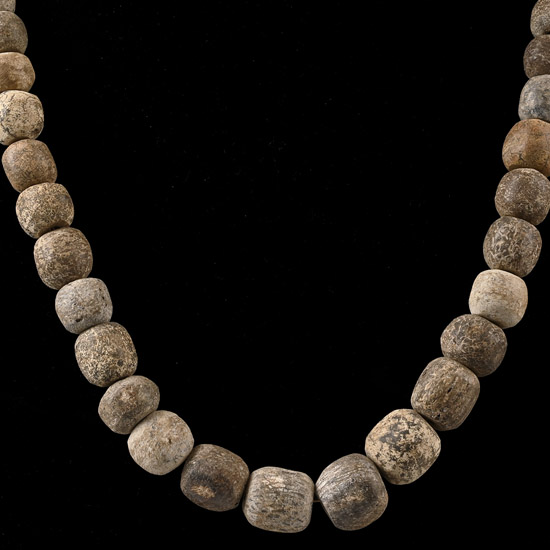
Woolly Mammoth Bone Bead Necklace String
Pleistocene Epoch, 2.6 million-11,700 years B.P.Sold for (Inc. bp): £59
Restrung, using recently polished Mammuthus primigenius spherical bone beads. 160 grams, 60 cm
Ex Ancient Art Shop, Windsor, UK, 1990s. Ex private West County, UK, collection.
The mammoth lineage branched from the Asian elephant around 6 million years ago, and later on, the Woolly Mammoth, Mammuthus primigenius, evolved in eastern Siberia. Woolly mammoths, being slightly smaller than living African elephants, were foragers and ate grass, as well as small, nutritious flowering plants that flourished in the environment where they lived. They may also have used their curved tusks to dig through snow and eat plants that other foragers were unable to reach. -
![Group of Ten [10] Meteorite Crater Tektite Specimens](https://timelineauctions.com/upload/images/items/small/256051-s.jpg)
Group of Ten [10] Meteorite Crater Tektite Specimens
Sold for (Inc. bp): £59
Comprising ten irregular, rounded pieces with typical surface indentations. 45 grams total, 16-33 mm
Ex Mineral Imports, London, UK. Gregory, Bottley & Lloyd (Gregory's), Harwich, UK.
Tektites are lumps of black or dark grey natural glass produced from melted crustal rocks caused by large hypervelocity meteorite impacts on sediments.

