-
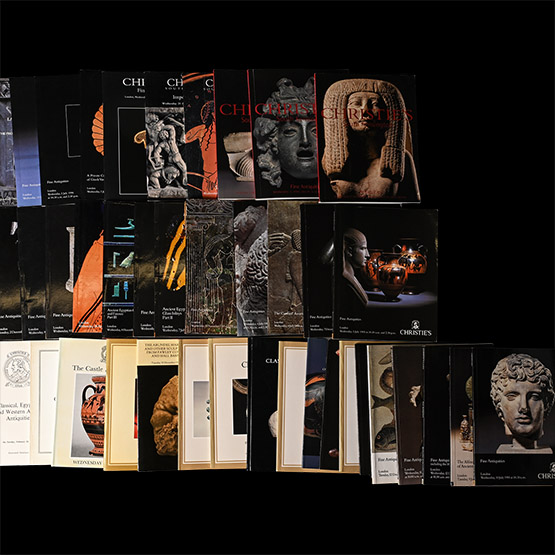
Christie's London Antiquities and Ancient Art Auction Catalogue Group - 40 Titles
1970-2001 A.D.Sold for (Inc. bp): £520
CHRISTIE’S: Classical, Egyptian and Western Asiatic Antiquities on Tuesday February 24, 1970; Important Classical Antiquities, Saturday, May 5, 1979; The Castle Ashby Vases, Wednesday 2 July 1980; Fine Antiquities, Tuesday 10 December 1985; The Arundel Marbles and other sculpture from Fawley Court and Hall Barn, Tuesday 10 December 1985; Fine Antiquities, Wednesday 16 July 1986; Fine Antiquities Friday 10 July 1987; Classical sculpture formerly from Marbury Hall, Friday 10 July 1987; Fine Antiquities, Wednesday 8 June 1988; The Collection of the Late Henning Throne-Holst, Wednesday 8 June 1988; The Erlenmeyer collection of Cretan Seals, Monday 5 June 1989; Fine Antiquities, Tuesday 6 June 1989; The Erlenmeyer collection of ancient Near Eastern Stamp Seals and Amulets, Tuesday 6 June 1989; Fine Antiquities, Tuesday 12 December 1989; Fine Antiquities, 11 July 1990; Fine Antiquities, including the Mrs. Albert D. Lasker Collection, Wedsneday, 12 December 1990; The Alfred Wolkenberg Collection of Ancient Glass, Tuesday 9 July 1991; Fine Antiquities, Wednesday 10 July 1991; Fine Antiquities, Monday 2 December 1991; Fine Antiquities, Wednesday 8 July 1992; Fine Antiquities, Wedsneday 9 December 1992; A private collection of Important Greek Vases, Wednesday 28 April 1993; Ancient Egyptian Glass and Fayence Part III, Wednesday 8 December 1993; Fine Antiquities, Wednesday 7 July 1993; Ancient Egyptian Glass Inlays Part II, Wednesday 7 July 1993; Fine Antiquities, Wednesday 8 December 1993; Fine Antiquities, Wednesday 6 July 1994; The ‘Canford’ Assyrian reliefs, Wednesday 6 July 1994; Fine Antiquities, Wedsneday 7 December 1994; Fine Antiquities, Wedsneday 5 July 1995; The Lansdowne Sculptures , the Property of the Earl of Shelburne, Wedsneday 5 July 1995; Fine Antiquities, Wednesday 13 December 1995; Fine Antiquities, Wednesday 3 July 1996; A private collection of Greek Vases and Terracottas, Wednesday 3 July 1996; Fine Antiquities, Wedsneday 11 December 1996; Fine Antiquities, Wedsneday 21 April 1999; Important Antiquities, Wedsneday 20 October 1999; Antiquities, Thursday 5 October 2000; Fine Antiquities, Wedsneday 25 April 2001; Fine Antiquities, Wedsneday 7 November 2001. 16.7 kg total, 25.2 x 20 - 26.1 x 21 cm
Property of a London, UK, gentleman. -
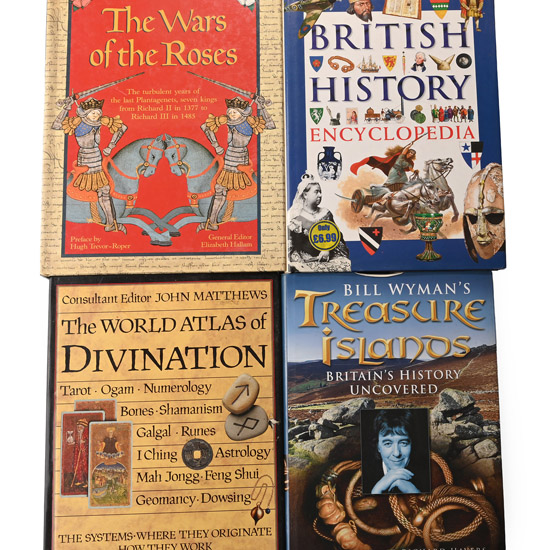
Books on British History - 4 Titles
1992-2005 A.D.Sold for (Inc. bp): £7
Bill Wyman and Richard Havers - Bill Wyman's Treasure Islands, Britain's History Uncovered, 2005, hardback with dustjacket, 299 pp, colour images; The World Atlas of Divination, London, 1992, hardback with dustjacket, 224 pp, colour images; British History Encyclopedia. From early man to present day, 1999, hardcover with dustjacket, 256 pp, colour images; The Chronicles of The War of the Roses, Surrey, 1996, hardcover with dustjacket, 320 pp, colour images. 5.57 kg total, 27 x 20.5 - 30.5 x 23 cm
Property of a Nottinghamshire, UK, gentleman. -
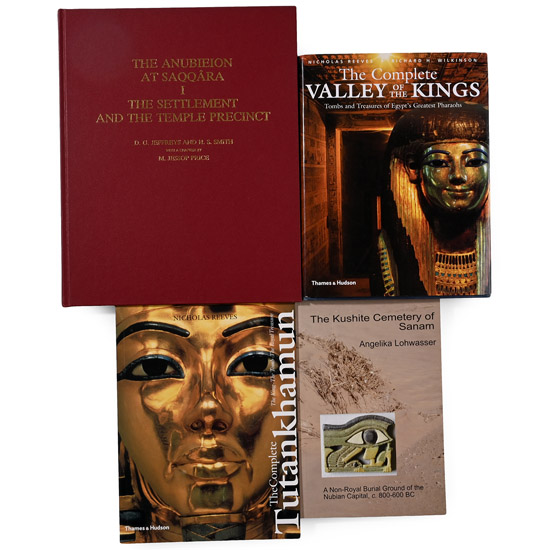
Books on Excavations and Discovery in Ancient Egypt - 4 Titles
1988-2008 A.D.Sold for (Inc. bp): £20
Reeves, N., The Complete Tutankhamun. The King. The Tomb. The Royal Treasure, London, 2008, 224 pp, card covers, colour and monochrome; Jeffreys, D.G., Smith. H.S., The Anubieion at Saqqâra I. The Settlement and the Temple Precinct, London, 1988, 115 pp, 51 plates, hardback, monochrome; Reeves, N., Wilkinson, R.H., The Complete Valley of the Kings, London, 1997, 224 pp, hardback with dust jacket, monochrome; Lohwasser, A., The Kushite Cemetery of Sanam: A Non-Royal Burial Ground of the Nubian Capital, c. 800-600 BC, London, 2010, 150 pp, card covers, monochrome. 3.59 kg total, 23.5 x 15.6 - 31.8 x 25.6 cm
Ex libris a Hertfordshire gentleman. -
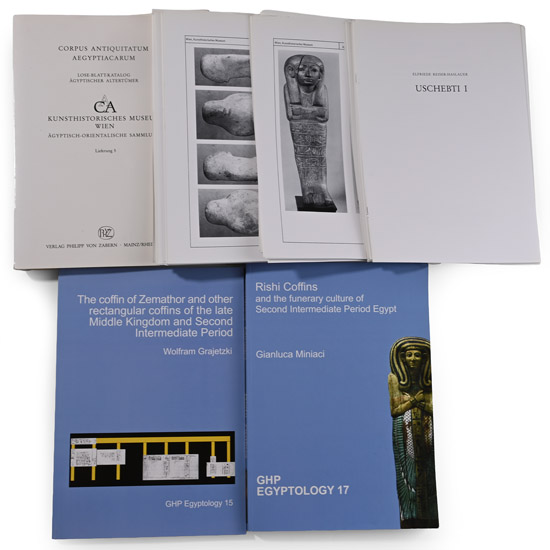
Books on Ancient Egyptian Funerary Equipment - 3 Titles
1990-2011 A.D.Sold for (Inc. bp): £26
Grajetzki, W., The coffin of Zemathor and other rectangular coffins of the late Middle Kingdom and Second Intermediate Period, London, 2010, 124 pp, card covers, monochrome; Miniaci, G., Rishi Coffins and the funerary culture of Second Intermediate Period Egypt, London, 2011, 318 pp, 8 plates, card covers, colour and monochrome; Reiser-Haslauer, E., Uschebti I, Kunsthistorisches Mueum Wien Ägyptisch-Orientalische Sammlung, Mainz-Rhein, 1990, 157 loose leaf pp, card covers, monochrome. 3.33 kg total, 21 x 29.7 - 22 x 29.7 cm
Ex libris a Hertfordshire gentleman. -
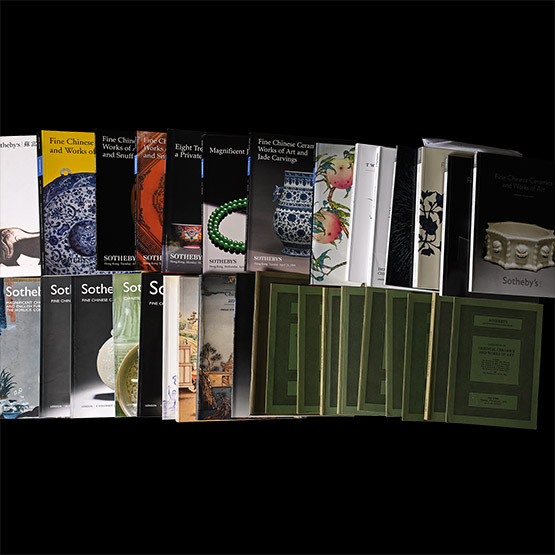
Sotheby's Chinese and Asian Art Auction Catalogue Group - 33 Titles
1976-2021 A.D.Sold for (Inc. bp): £195
SOTHEBY'S TAIPEI: A Private Collection of Yixing Teapots from the Chen Yang Foundation, 19 October 1997; SOTHEBY'S LONDON: Catalogue of Oriental Ceramics and Works of Art, including the property of Mrs May Wilson, the property of Mrs J Fitzgerald, the property of J Critchley, Esq, the property of M J Huggett, Esq, the property of F P Acres, esq, and the property of J Payne, Esq, 27 January 1976; Catalogue of Important Chinese Ceramics and Works of Art, including the property of John D Green, Esq, the property of Madame Raymond L Larcier, the property of His Excellency Hugo Wistrand, the property of Dr Gunnar O C Santesson and the property of Robert Bourne, Esq, 6 April 1976; Catalogue of Oriental Ceramic and Works of Art, including the property of the Countess Beck- Friis, the property of Dr C Wynn Parry, the property of R C Joubert, Esq, the property of Mrs May Wilson and the property of Mrs E A Elgar, 20 April 1976; Catalogue of Oriental Ceramics and Works of Art, the property of G Soultis, esq, the property of Mrs M L E Potter, the property of Miss D M Hepworth, the proerty of T S Morgan, Esq, the property of P B Dyer, esq and the property of Peter Kromer, Esq, 4 May 1976; Catalogue of Chinese Works of Art, also Ming and Ch'ing Porcelain, the property of C and V Howard, 18 May 1976; Catalogue of Fine Chinese Export Porcelain , jades and Other Works of Art, including the property of Her Royal Highness Princess Alice, Duchess of Glouycester, GCB, CI, GCVO, GBE, the property of Monsieur Guy Van Den Broek, the property of Lady Carola Lenanton, Esq, the property of F W Tingle, Esq and the property of The Trustees of The Sir Victor Sassoon Chinese Ivories Trust, 29 June 1976; Catalogue of Important Chinese Ceramics and Works of Art, including the property of L Velik, Esq, the property of E Allen, Esq, the property of Sven Mossige-Norheim, Esq, the property of Clarence Reutersward, Esq, the property of Folke Stenbeck, Esq, the property of R C Joubert, esq, and the property of Mrs R H R Palmer, 6 July 1976; Catalogue of Chinese Ceramics and Works of Art, including the property of Sir Miles Stapleton, the property of Col. T A Buchanan, the property of Mrs D R Spencer, the property of Miss E M Wakley, the property of D J Manning, esq, and the property of the Countess of Minto, 28 September 1976; Catalogue of Chinese Ceramics and Works of Art, including the property of Dr P A Toller, the proerty of J Jay, esq, the property of Mrs D I Oakley, the property of J R Johnson, Esq, the property of Dr R B Byrne, and the property of Mrs W Tompkin, 2 November 1976; Chinese Export Porcelain, 16 July 1985; Chinese Decorative Arts and Export Porcelain, 27 October and 1 November 1989; Chinese Decorative Arts and Export Porcelain, 30 October and 3 November 1987; Fine Chinese Export Porcelain, The Hervouet Collection, Part II, 3 November 1987; Fine Chinese Ceramics and Works of Art, 13 July 2005; Chinese Ceramics and Works of Art, 8 November 2006; Fine Chinese Ceramics and Works of Art, 8 November 2006; Fine Chinese Ceramics and Works of Art, 16 May 2007; The Horlick Collection, 5 June 2007; Fine Chinese Ceramics and Works of Art, 13 may 2009; Fine Chinese Ceramics and Works of Art, 4 November 2009; Fine Chinese Ceramics and Works of Art, 10 november 2010; Song- a Japanese Collection, 11 May 2011; Important Chinese Art, 3 November 2021; Two Americans in Pariis; The Sam and Myrna Myers Collection of Asian Art, 4 November 2021; SOTHEBY'S HONG KONG: Highly Important Ming and Qing Imperial Porcelain from a Private Collection, 29 April 1997; Fine Chinese Ceramics and Works of Art and Jade Carvings, 28 April 1998; Magnificent Jadeite Jewels, 29 April 1998; Eight Treasures from a Private Collection, 2 November 1998; Fine Chinese Ceramics, Works of Art, Jade Carvings and Snuff Bottles, 2 November 1998; Fine Chinese Ceramics, Works of Art, Jade Carvings and Snuff Bottles, 27 April 1999; Fine Chinese Ceramics and Works of Art, 1 November 1999; Literati / Curiosity II, 5 April 2016. 18.6 kg total, 24.2 x 18.2 - 27.6 x 21.5 cm
Property of a London, UK, gentleman. -
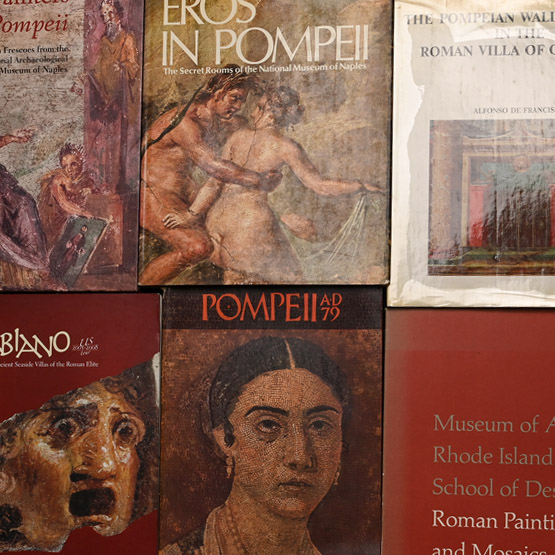
Books on Pompeii and Other Roman Villas, Art and Archaeology - 6 Titles
1975-2021 A.D.Sold for (Inc. bp): £78
Mario Grimaldi - The Painters of Pompei - New York, 2021, hardback, 186 pp, colour; Michael Grant - Eros in Pompei - New York, 1974, hardback with dustwrapper, 170 pp, colour; Alfonso de Franciscis - The Pompeian Wall Paintings in the Roman Villa of Oplontis - Recklinghausen, 1975, hardback with dustwrapper, 16 pp, 39 colour plates; In Stabiano: Exploring the Ancient Seaside Villas of the Roman Elite - Naples, 2005, card covers, 160 pp, colour; Pompei II AD 79 - Boston, 1978, card covers, 111 pp, monochrome and colour; Rolf Winkes (ed) Museum of Art Rhpode Island: Roman Paintings and Mosaics - Providence, 1982, card covers, 80 pp, monochrome. 5.25 kg total, 29 x 21 - 33.5 x 24.7 cm
Property of a London, UK, gentleman. -
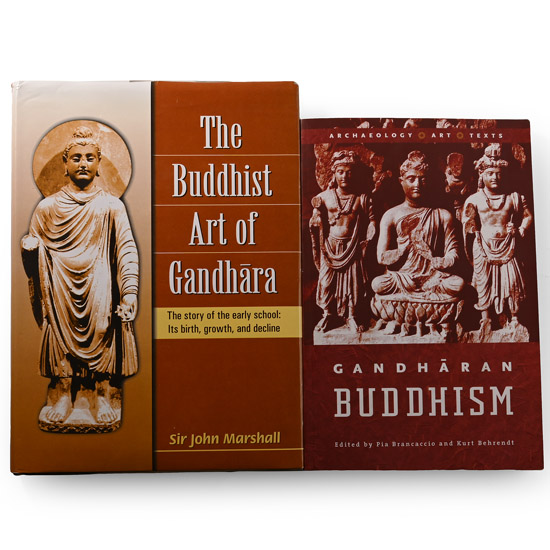
Ancient Gandharan Antiquities Books - 2 Titles
2006-2016 A.D.Sold for (Inc. bp): £13
Pia Brancaccio and Kurt Behrendt (eds.) - Gandharan Buddhism, Archaeology, Art, Texts, 2006, card covers, 313 pp, black-and-white illustrations; Sir John Marshall - The Buddhist Art of Gandhara. The story of the early school: Its birth, growth, and decline, 2016, hardcover with dustjacket, 118 pp, 11 black-and-white plates. 1.34 kg total, 23 x 15.2 - 25.4 x 18.5 cm
Property of a North London, UK, gentleman. -
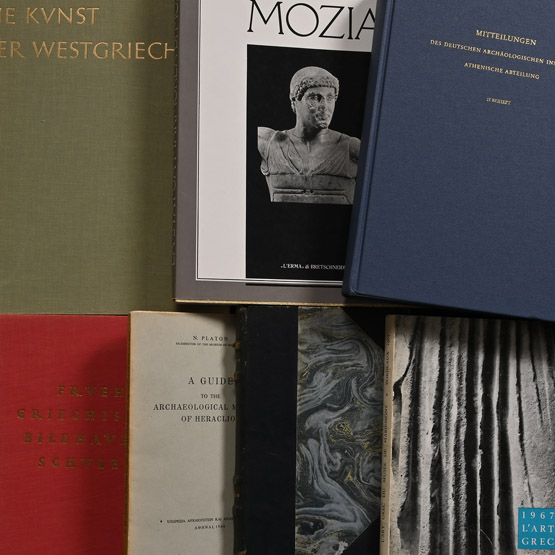
Books on Greek Antiquities, Ancient Art and Archaeology - 7 Titles
1930-1996 A.D.Sold for (Inc. bp): £52
N. Platon - A Guide to the Archaeological Museum of Heraclion, fifth edition, Athens, 1964, 161 pp, 16 black and white plates; Charles Dugas - Aison et La Peinture Ceramique a Athenes A L'Epoque De Pericles, Paris, 1930, hardcover, 125 pp, black and white images; Pierre Leveque & Guy Donnay - L'Art Grec du Musee de Mariemont Belgique, Bordeaux, 1967, in French, cardcovers, 212 pp, black and white images; Ernst Langlotz - Fruehgriechische Bildhauerschulen, Roma, 1967, hardcover, 99 black and white plates; Andreas Scholl - Die Attischen Bildfeldstelen Des 4. JHS. V. CHR. Untersuchungen zu den kleinformatigen Grabreliefs im spätklassischen Athen, Berlin, 1996, in German, hardcover, 393 pp, 48 black and white tables; La Statua Marmorea Di Mozia, e la Scultura di Stile Severo in Sicilia, Atti Della Giornata di Studio Marsala, 1 giugno 1986, Roma, 1988, in Italian, cardcovers, 150 pp, 48 black and white tables; Ernst Langlotz - Die Kunst Der Westgriechen in Sizilien und Unteritalien, in German, 1963, hardcover, 108 pp, 168 colour and black and white images. 6.43 kg total, 21 x 14.5 - 31 x 24.5 cm
Property of a London, UK, gentleman. -
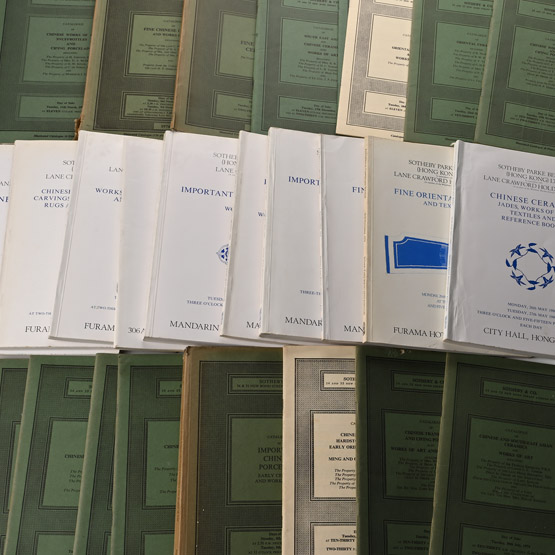
Sotheby's and Sotheby Parke Bernet Chinese and Asian Art Auction Catalogue Group - 27 Titles
1974-1981 A.D.Sold for (Inc. bp): £442
SOTHEBY & CO: Oriental Ceramics, 30 April 1974; Chinese Ch'ing Porcelain, 7 May 1974; Early Chinese and South-East Ceramics, 28 May 1974; Chinese Ch'ing Porcelain and Works of Art, 11 June 1974; Important Chinese Porcelain, Early Ceramics and Works of Art, 8-9 July 1974; Chinese Transitional and Ch'ing Porcelain, also Works of Art and Snuffbottles, 16 July 1974; Chinese and South-East Asian Ceramics, and Works of Art, 30 July 1974; Chinese Jade and Hardstone Carvings, Early Oriental Ceramics and Ming and Ch'ing Porcelain, 8 October 1974; Oriental Ceramics, 22 October 1974; Chinese Works of Art and Ch'ing Porcelain, 19 November 1974; Fine Chinese Ceramics and Works of Art, 2-3 December 1974; Fine Chinese Ceramics, 3 December 1974; South East Asian and Chinese Ceramics, also Works of Art, 17 December 1974; Chinese Works of Art and Ch'ing Porcelain, 14 January 1975; Oriental Ceramics and Works of Art, 28 January 1975; Chinese Works of Art, Snuffbottles and Ch'ing Porcelain, 11 March 1975; SOTHEBY PARKE BERNET (HONG KONG): Chinese Ceramics and Jade Carvings, 26-27 December 1976; Chinese Ceramics, Jade Carvings and Reference Books, 19-20 May 1977; Important Chinese Ceramics and Works of Art, 29 November 1977; Fine Nineteenth Century Chinese Porcelain, Earlier Ceramics, Furniture, Works of Art and Reference Books, 1-2 December 1977; Important Chinese Ceramics and Works of Art, 23-24 May 1978; Fine Oriental Carpets and Textiles, 4 December 1978; Fine Oriental Carpets and Textiles, 26 November 1979; Chinese Ceramics, Jades, Works of Art, Textiles and Reference Books, 26-27 May 1980; Fine Chinese Ceramics and Works of Art, 20 May 1981; Chinese Ceramics, Hardstone Carvings, Works of Art, Textiles, Rugs and Reference Books, 23-24 May 1981; Chinese Ceramics, Works of Art, Jades, Textiles, Rugs and Reference Books, 26-27 November 1981. 6.3 kg total, 24.4 x 15.2 - 24.4 x 18.1 cm
Property of a London, UK, gentleman. -
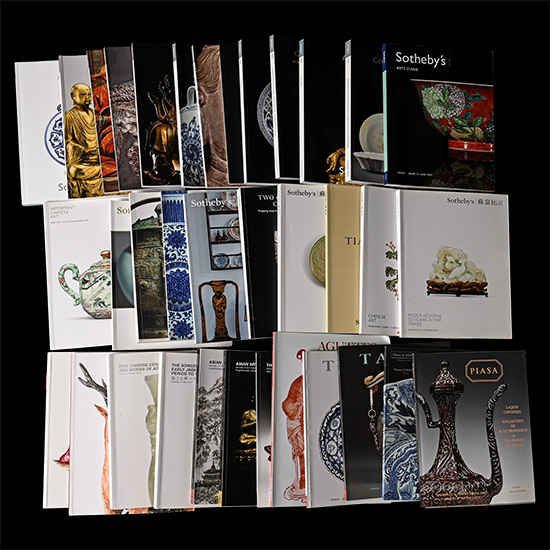
Sotheby's and Other Chinese and Asian Art Auction Catalogue Group - 35 Titles
2007-2019 A.D.Sold for (Inc. bp): £72
PIASA: Laques Chinoises, Collection de M Le Professeur & Mme Robert de Strycker, 5 December 2007; THIERRY DE MAIGRET: Ceramiques - Arts Asiatiques, Exceptionnel Ensemble de Porcelaine de Chine, 27 June 2008; TAJAN: Arts D'Asie, 7 june 2010; Arts D'Asie, 12 June 2007; AGUTTES: Arts d'Asie Ceramiques Europennes, 26 May 2010; BONHAMS, NEW YORK: The Zuiun Collection, 15 March 2017; BONHAMS, LONDON: Asian Art, 8-9 May 2017; Asian Art, 14-15 May 2018; BONHAMS, HONG KONG: The Songzhutang Collection of Early Jades from the Neolithic Period to the Yuan Dynasty, 30 May 2017; Fine Chinese Ceramics and Works of Art, 29 May 2018; UPPSALA AUKTIONSKAMMARE: Internationell Kvalitetsauktion, 15 June 2018; PALCIO DO CORREIO VELHO: Leilao de Antiguidades Arte Moderna e Contemporanea, April 2016; SOTHEBY'S, HONG KONG: Roger Keverne 50 years in the Trade, 5 October 2016; Chinese Art, 31 May - 1 June 2018; The Tianminlou Collection, 30 May 2019; Chinese Art, 30-31 May 2019; SOTHEBY'S, LONDON: Two Great Scottish Collections, Property from the Forbeses of Pitsligo and the Marquesses of Lothian, 28 March 2017; Collections, 2 May 2017; Important Chinese Art, 16 May 2018; SOTHEBY'S, NEW YORK: Important Chinese Art, 13-14 September 2016; Important Chinese Art, 21 March 2018; Asia Week, 15-24 March 2018; SOTHEBY'S, PARIS: Arts D'Asie, 14 June 2007; Ceramiques Chinoises Provenant de Deux Collections Europeennes, 12 June 2008; Arts D'Asie, 12 June 2008; Collection D'un Amateur I, Rouen 1680-1740 : de la Premiere Porcelaine a l'Age d'or de la Faience, 18 June 2008; Arts D'Asie, 18 December 2008; Marques D'Empereurs, 18 December 2008; Arts D'Asie, 11 June 2009; Arts D'Asie, 18 December 2009; Arts D'Asie, 9 June 2010; Histoire Naturelle, 5 October 2010; A Travers Les Styles I, Une Collection Privee de Mobilier, Orfevrerie et Tableux, 15 December 2010; Arts D'Asie, 16 December 2010; Arts D'Asie, 9 June 2011. 26.5 kg total, 27 x 21.1 - 30 x 22 cm
Property of a London, UK, gentleman. -
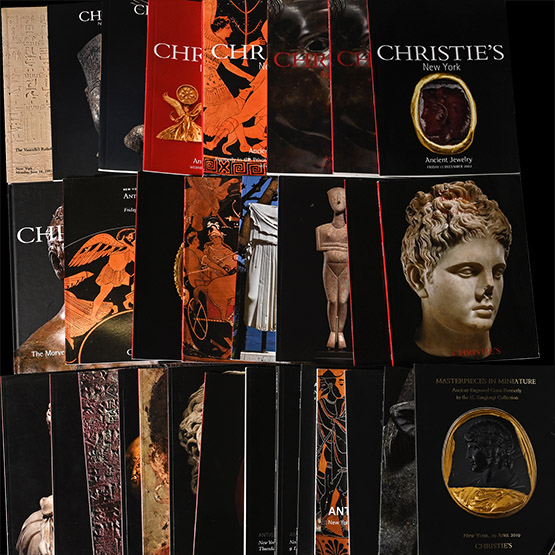
Christie's New York Antiquities, Ancient Art and Ancient Jewelry Auction Catalogue Group - 30 Titles
1993-2019 A.D.Sold for (Inc. bp): £364
Antiquities, New York, 14 June 1993; The Vaucelles Relief, New York, 14 June 1993; Antiquities, New York, 18 December 1997; Antiquities, New York, 5 June 1998; Ancient Jewelry, New York, 8 December 1999; Ancient Greek Vases, New York, 12 June 2000; Antiquities, New York, 12 June 2002 (2 copies); Ancient Jewelry, New York, 13 December 2002; The Morven Collection of Ancient Art, New York, June 2004; Antiquities, New York, 11 December 2009; Ancient Jewelry, New York, 11 December 2009; Antiquities, New York, 10 June 2010; Antiquities, New York, 9 December 2010; The Schuster Master, A Cycladic Marble Masterpiece, New York, 9 December 2010; Ancient Jewelry, New York, 9 December 2010; Antiquities, New York, 9 June 2011; Antiquities, New York, 5 December 2012; Ancient Jewelry, New York, 5 December 2012; Antiquities, New York, 13 December 2013; Ancient Jewelry, New York, 13 December 2013; Antiquities, New York, 5 June 2014; Antiquities, New York, 11 December 2014; Ancient Jewelry, New York, 11 December 2014;; Antiquities, New York, 4 June 2015; Antiquities, New York, 9 December 2015; Antiquities, New York, 12 April 2016; Antiquities, New York, 25 April 2017; Antiquities, New York, 25 October 2017; Masterpieces in Miniature, Ancient Engraved Gems Formerly in the G. Sangiorgi Collection, New York, 29 April 2019; Antiquities, New York, 18 April 2018. 15.55 kg total, 26.7 x 21 - 27.3 x 21.5 cm
Property of a London, UK, gentleman. -
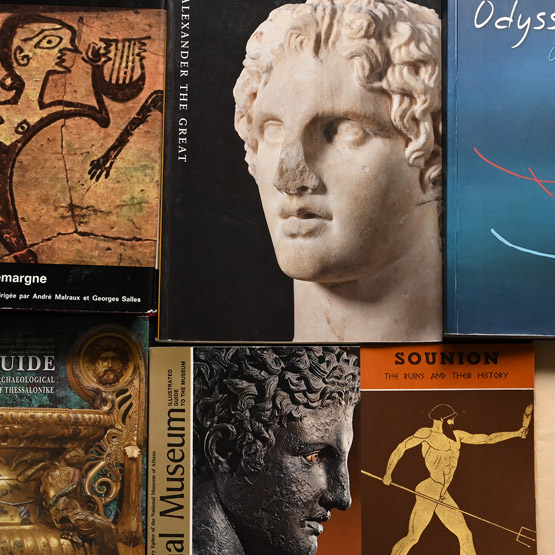
Books on Ancient Greek Ancient Art, Antiquities and Archaeology - 7 Titles
1955-2017 A.D.Sold for (Inc. bp): £20
P. Demargne - Naissance de l'Art Grec - Paris, 1964, hardback with dustwrapper, 453 pp, monochrome and colour plates, maps, fold-out plates; D. andermalis - Alexander the Great: treasures from an Epicera of Hellenism - New York, 2004, card covers, 150pp, colour plates; M. Lagogianni-Georgokarakos - Odysseys - Athens, 2017, card covers, 512 pp, colour; National Museum of Athens - Illustrated Guide - Athens, 1985, card covers, 173 pp, colour; Archaeological Museum of Thessalonike - Guide - Athens, 1996, card covers, 253 pp, colour; A. Gavrilis -Sounion: The Ruins and Theie History -Athens, 1964, card covers, monochrome; H. Rolland - Glanum: Notice Archéologique - St.remy-de-Provence, 1955, card covers, 24 pp, monochrome plates, fold-out map. 6.71 kg total, 18.5 x 13.7 - 30 x 23 cm
Property of a London, UK, gentleman.

