-
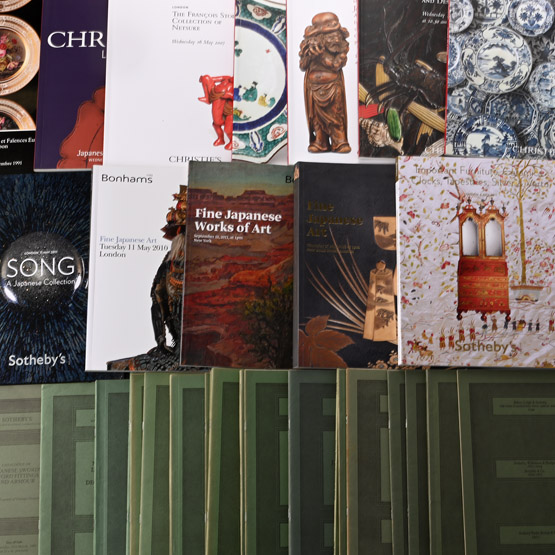
Sotheby's, Christie's and Bonhams Japanese Art Auction Catalogue Group - 36 Titles
1975-2012 A.D.Sold for (Inc. bp): £20
SOTHEBY'S: Netsuke, Inro, Lacquer Wares and Decorative Works of Art, 11 July 1975; Japanese Swords, Armour and Sword Fittings, 28 July 1975; Netsuke, Inro, Lacquer and Other Decorative Japanese Works of Art, 10 September 1975; Fine Netsuke, Inro and Lacquer Wares, 29 October 1975; Japanese Swords, Armour and Sword Fittings, 12 November 1975; Netsuke, Inro, Lacquer Wares and Decorative Works of Art, 17 December 1975; Japanese Works of Art comprising Netsuke in Wood, ivory and Various Materials, Inro, Tonkotsu and Lacquer Wares, 21 April 1976; Japanese Swords, Armour and Sword Fittings, 7 June 1976; Fine Netsuke and Inro, 23 June 1976; Netsuke and Inro, 20 September 1976; Japanese Swords, Sword Fittings, Armour and Reference Books, 26 October 1976 (2 copies); Fine Japanese Works of Art, 9 November 1976; Netsuke, Inro and Other Japanese Works of Art, 9 March 1977; Netsuke, Inro and Other Japanese Works of Art, 25 April 1977; Japanese Netsuke, 23 May 1977; Japanese Swords, Sword Fittings and Armour, 31 May 1977; Fine Japanese Swords, Sword Fittings, Armour and Reference Books, 7 July 1977; Japanese Sword and Sword Fittings, 13 October 1977; Japanese Swords, Armour and Sword Fittings, 2 December 1977; Japanese Netsuke, Inro, Lacquer Wares and Works of Art, 21 December 1977; Good Japanese Swords, Sword Fittings, Armour and Books, 29 March 1978; Japanese Netsuke, Inro, Lacquer Wares and Works of Art, 5 April 1978; Japanese Swords, Sword Fittings and Armour, 26 March 1980; Song - A Japanese Collection, 11 May 2011; Important Furniture, Ceramics, Clocks, Tapestries, Silver & Vertu, 6 July 2011; BONHAMS: Fine Japanese Art, London, 11 May 2010; Fine Japanese Works of Art, New York, 13 September 2011; Fine Japanese Art, London, 17 May 2012; CHRISTIE'S, MONACO: Porcelaines et Faiences Europeennes, Chine et Japon, 7 December 1991; CHRISTIE'S, LONDON: Japanese Art & Design, 19 June 2002; The Francois Storno Collection of Netsuke, 16 May 2007; Japanese Art and Design, 16 May 2007; CHRISTIE'S, SOUTH KENSINGTON: Japanese Art and Design, 4 November 2009; Japanese Art and Design, 12 May 2010; Japanese Art and Design, 10 November 2010. 9.9 kg total, 27 x 21 -27.8 x 21.6 cm
Property of a London, UK, gentleman. -
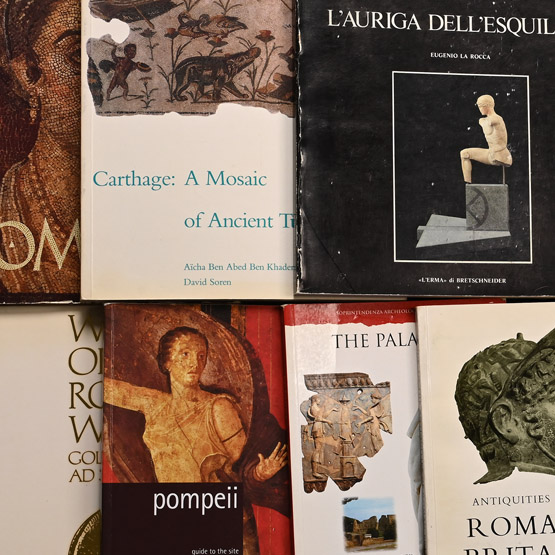
Books on Ancient Roman Antiquities, Ancient Art and Archaeology - 7 Titles
1971-2013 A.D.Sold for (Inc. bp): £78
Guide to the Antiquities of Roman Britain, The Trustees of the British Museum, 1964, London, cardcover, 86 pp, black and white images; The Palatine, Soprintendenza Archeologica di Roma, 1998, cardcover, 82 pp, black and white and colour images; Pompeii, Guide to the Site, 2013, cardcover, 159 pp, colour images; J.P.C. Kent and K.S. Painter (eds.) - Wealth of the Roman World AD 300-700, London, 1977, cardcovers, 192 pp, colour and black and white images; Eugenio La Rocca - L'Auriga Dell'Esquilino, Rome, 1987, cardcovers, 84 pp, black and white images; Aicha Ben Abed Ben Khader and David Soren - Carthage; A Mosaic of Ancient Tunisia, New York, 1987, cardcovers, 238 pp, colour and black and white images; Pompeii AD 79, 1978, hardcover with dustwrapper, 215 pp, colour and black and white images. 4.3 kg total, 21.6 x 14 - 29.5 x 21.5 cm
Property of a London, UK, gentleman. -
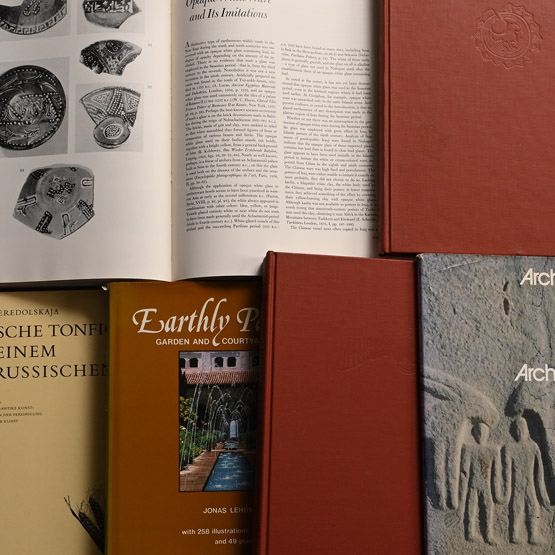
Books on Ancient Islamic and Near Eastern Antiquities, Ancient Art and Archaeology - 6 Titles
1964-1985 A.D.Sold for (Inc. bp): £33
Archaeology in the United Arab Emirates, Vol II-III, 1978-1979, cardcovers, 95 pp, in French and English, colour and black and white images; Jonas Lehrman - Earthly Paradise, Garden and Courtyard in Islam, 1980, hardcover with dustwrapper, 240 pp, black and white images; Anna A Peredolskaja - Attische Tonfiguren Aus Einem Sudrussischen Grab, 1964, hardcover, 32 pp, black and white images; Donald S. Whitcomb - Before the Roses and Nightingales, Excavations at Qasr-i Abu Nasr, Old Shiraz, 1985, hardcover, 270 pp, black and white illustrations; Prudence O. Harper - Silver Vessels of the Sasanian Period, Volume One: Royal Imagery, 1981, hardcover, 256 pp, black and white images; Charles K. Wilkinson - Nishapur: Pottery of the Early Islamic Period, hardcover, 374 pp, black and white images. 7.17 kg total, 28 x 20.5 - 32 x 24 cm
Property of a London, UK, gentleman. -
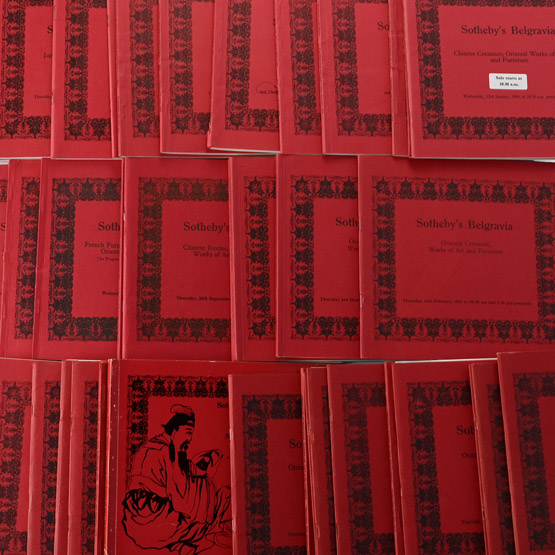
Sotheby's Belgravia Chinese and Asian Art Auction Catalogue Group - 40 Titles
1974-1982 A.D.Sold for (Inc. bp): £221
Oriental Ivories and Works of Art, 23 May 1974; Oriental Ceramics and Furniture, 4 July 1974; Oriental Ivories and Works of Art, 18 July 1974; Oriental Ceramics and Furniture, 19 September 1974; Oriental Ivories and Works of Art, 24 October 1974; Nineteenth Century Chinese Ceramics and Works of Art, 4 November 1974; Oriental Ceramics and Works of Art, 28 November 1974; Oriental Furniture, Works of Art and Ivories, 30 January 1975; Oriental Ceramics, 2 April 1975; Oriental Furniture, Works of Art and Ivories, 8 May 1975; Oriental Ceramics, 5 June 1975; Oriental Works of Art and Ivories, 30 July 1975; Oriental Ceramics, Works of Art and Furniture, 4 September 1975; Oriental Ceramics and Works of Art, 2 October 1975; Oriental Ivories and Works of Art, 4 December 1975; Oriental Works of Art, Furniture and Ceramics, 8 January 1976; Oriental Ceramics, 26 February 1976; Oriental Furniture and Works of Art, 8 April 1976; Oriental Ivories and Works of Art, 29 April 1976; Oriental Ceramics, 3 June 1976; Oriental Works of Art, Furniture and Ceramics, 10 October 1979; Japanese Ceramics and Works of Art, 10 November 1977; Oriental Ivories, lacquer and Shibayama, 2 November 1979; Japanese Ceramics and Works of Art, 8 November 1979; Costume and Textiles 1500-1960, 7 November 1980; Railwana, Tinplate Trains and Locomotives, Live Steam Model Locomotives, Stationary Steam Engines, other Models and Toys, 6 April 1979; Various Oriental Works of Art and Furniture and Chinese Ceramics, 2 May 1979; Japanese Ceramics and Works of Art, 24 May 1979; Oriental Ivories, Shibayama and Works of Art, 27-28 June 1979; Oriental Works of Art and Furniture, 18 July 1979; Oriental Ceramics, 19 July 1979; Oriental Ceramics and Works of Art, 29 November 1979 (2 copies); Chinese Ceramics, Oriental Works of Art and Furniture, 23 January 1980; Japanese Ceramics, Works of Art and Furniture, 8 May 1980; Oriental Ivories, Ceramics, Works of Art and Furniture, 23 April 1981; French Furniture, Clocks and works of Art, Oriental Ceramics and Furniture, 3 June 1981; Oriental Ivories, Ceramics, Works of Art and Furniture, 16 July 1981; Chinese Ivories, Oriental Ceramics, Works of Art and Furniture, 24 September 1981; Japanese Ivories, Ceramics, Works of Art and Furniture, 29-30 October 1981; Oriental Ivories, Ceramics, Works of Art and Furniture, 3 December 1981; Oriental Ceramics, Works of Art and Furniture, 11 February 1982. 8.3 kg total, 21 x 19.7 cm each
Property of a London, UK, gentleman. -
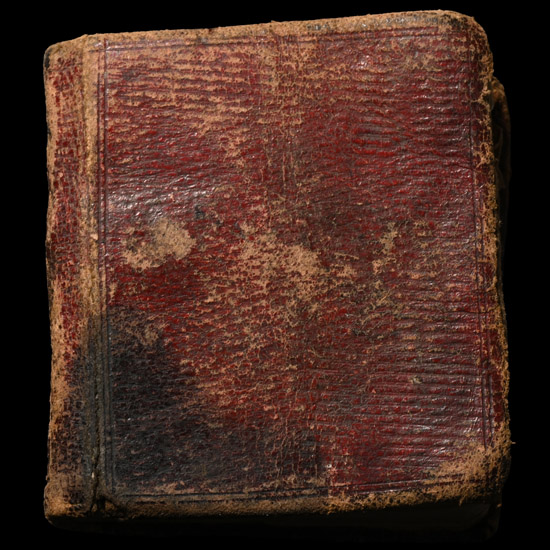
Pictures of Grecian History in Miniature Book
1810 A.D.Sold for (Inc. bp): £124
Designed by Alfred Mills, printed in London, original leather binding, 96 pages with black-and-white illustrations; part of a series of Alfred Mills’s Miniature Historic Library. 35.2 grams, 64 mm high
Private collection, UK. -
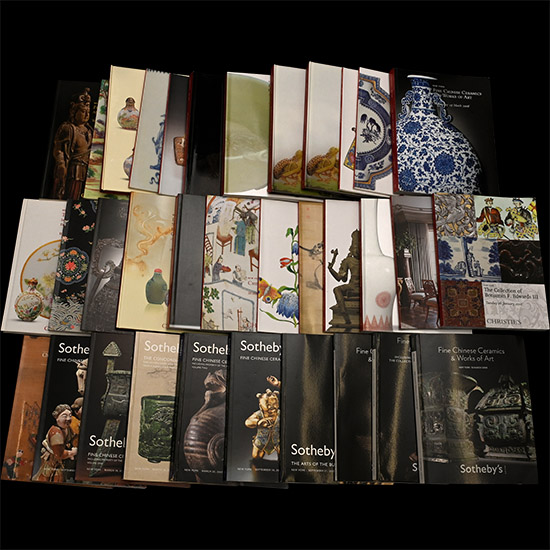
Christie's and Sotheby's Chinese and Asian Art Auction Catalogue Group - 34 Titles
1985-2010 A.D.Sold for (Inc. bp): £169
CHRISTIE'S: Fine Chinese Ceramics and Works of Art, New York, 19 September 2006; The Hodroff Collection, New York, 24 January 2007; Important Chinese Snuff Bottles from the J & J Collection, Part IV, New York, 22 March 2007; Chinese Export Art, New York, 23 January 2007; Art for the Way of Tea: An Important Private Collection, New York, 20 March 2007; Fine Chinese Ceramics and Works of Art, New York, 22 March 2007; Fine Chinese Ceramics Jades and Works of Art, New York, 19 September 2007; The Meriem Collection: Important Chinese Snuff Bottles, New York, 19 September 2007 (2 copies); The Hodroff Collection, Part II, New York, 23 January 2008 (2 copies); Fine Chinese Ceramics and Works of Art, New York, 19 March 2008; The Meriem Collection: Important Chinese Snuff Bottles, Part II, New York, 19 March 2008; The Imperial Wardrobe: Fine Chinese Costume and Textiles from the Linda Wrigglesworth Collection, New York, 19 March 2008; Masterworks of Ancient and Imperial China, New York, 17 September 2008; Important Chinese Snuff Bottles from the J & J Collection, Part V, New York, 17 September 2008; Fine Chinese Ceramics and Works of Art, New York, 17 September 2008; Chinese Export Art, New York, 21 January 2009; The Hodroff Collection, Part III, New York, 21 January 2009; Fine Chinese Art from the Arthur M. Sacker Collections, New York, 18 March 2009; Indian and Southeast Asian Art, Including Highlights from the Star Collection, New York, 20 March 2009; Fine Chinese Ceramics and Works of Art Including Property from the Arthur M. Sackler Collections, New York, 14-15 Setember 2009; The William F. Reilly Collection, New York, 14 October 2009; The Collection of Benjamin F. Edwards III, New York, 26 January 2010; SOTHEBY'S: Chinese and Japanese Decorative Works of Art, New York, 2-3 October 1985; Fine Chinese Ceramics & Works of Art, New York, 21 September 2006; Fine Chinese Ceramics & Works of Art, Volume One, New York, 19 March 2007; The Concordia House Collection, New York, 19 March 2007; Fine Chinese Ceramics & Works of Art, Volume Two, New York, 20 march 2007; Fine Chinese Ceramics & Works of Art, New York, 18 September 2007; The Arts of Buddha, New York, 21 September 2007; Fine Chinese Ceramics & Works of Art, New York, 18 march 2008; Fine Chinese Ceramics & Works of Art, New York, 16 September 2008; Fine Chinese Ceramics & Works of Art, New York, 16 September 2009. 29 kg total, 27.2 x 21 cm each
Property of a London, UK, gentleman. -
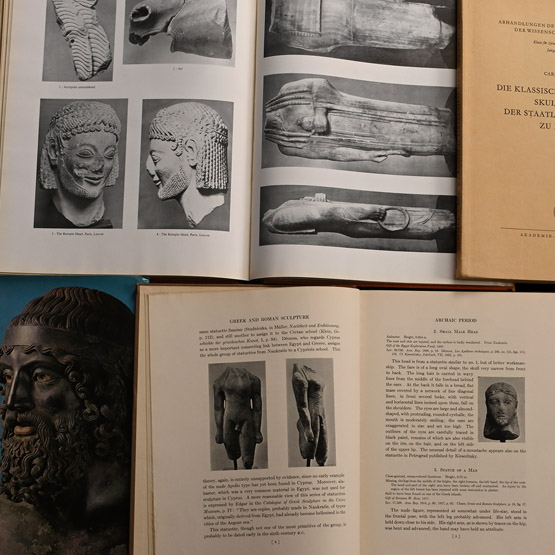
Books on Ancient Greek Marble and Bronze Sculpture, Ancient Art and Archaeology - 4 Titles
1925-1966 A.D.Sold for (Inc. bp): £33
L.D. Caskey - Catalogue of Greek and Roman Sculpture, Museum of Fine Arts, Boston, 1925, hardcover, 233 pp, black and white images; Carl Blumel - Die Klassisch Griechischen Skulpturen Der Staatlichen Museen Zu Berlin, 1966, cardcover, 111 pp, 204 black and white images; Alberto Busignani - Gli Eroi Di Riace Daimon E Techne, 1981, hardcover with dustwrapper, 159 pp, colour and black and white images; Humfry Payne & Gerard Young - Archaic Marble Sculpture from the Acropolis, 1950, hardcover, 79 pp, 140 plates. 4.89 kg total, 30 x 22 - 33.6 x 26 cm
Property of a London, UK, gentleman. -
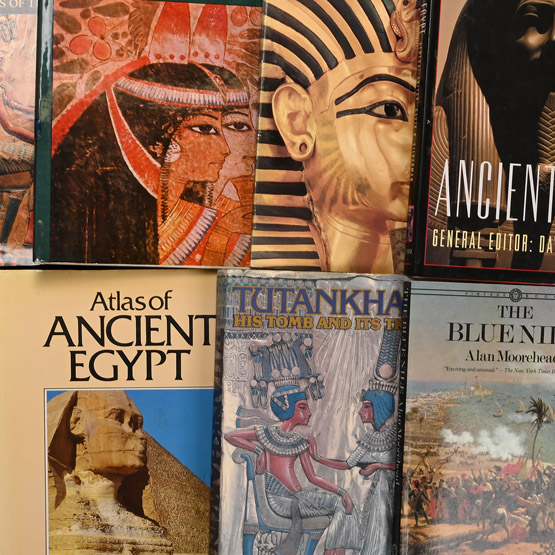
7 Books on Ancient Egypt, Egyptian Art and Egyptology - 7 Titles
1969-1997 A.D.Sold for (Inc. bp): £33
Alan Moorehead - The Blue Nile, 1983, card cover, 304 pp, black and white images; I.E.S. Edwards - Tutankhamun: His Tomb and Its Treasures, New York, 1976, hardcover with dustwrapper, black and white and colour images; John Baines & Jaromir Malek - Atlas of Ancient Egypt, New York, hardcover with dustwrapper, 24 pp, colour images; Steffen Wenig - The Woman in Egyptian Art, New York, 1969, hardcover with dustwrapper, 112 pp, colour and black and white images; Time-Life Books - What Life Was Like on the Banks of the Nile, Egypt 3050-30 BC, 1997, hardcover with dustwrapper, 192 pp, colour images; David P. Silverman (ed.) - Ancient Egypt, New York, 1997, hardcover with dustwrapper, 256 pp, colour images; Treasures of Tutankhamun, exhibition catalogue, 1976, cardcover, 176 pp, colour and black and white images. 7.63 kg total, 24.9 x 19 - 30.5 x 24 cm
Property of a London, UK, gentleman. -
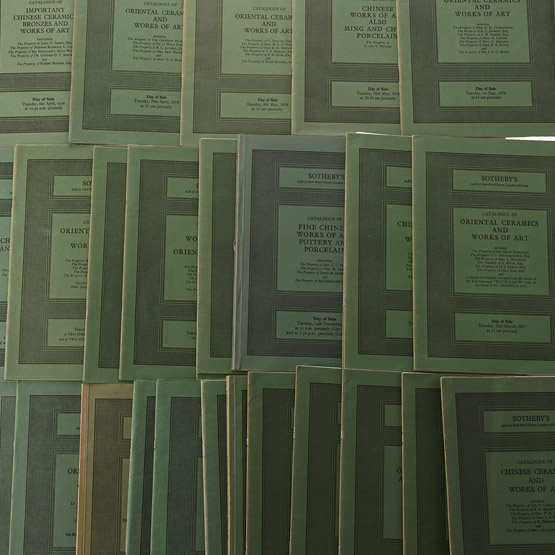
Sotheby's Chinese and Asian Art Auction Catalogue Group - 30 Titles
1975-1977 A.D.Sold for (Inc. bp): £598
Fine Chinese Ceramics and Works of Art, 25 March 1975; Chinese Porcelain, 29 April 1975; Oriental Ceramics and Works of Art, 13 May 1975; Fine Chinese Ceramics and Bronzes, 8 July 1975; South-East Asian and Chinese Ceramics, also Works of Art, 22 July 1975; Oriental Ceramics and Works of Art, 23 September 1975; Oriental Ceramics and Works of Art, 4 November 1975; Chinese Works of Art and Ch'Ing Porcelain, 25 November 1975; Chinese Works of Art and Ch'Ing Porcelain, 25 November 1975; Chinese Works of Art and Oriental Ceramics, 22 December 1975; Chinese Ch'Ing Porcelain, 13 January 1976; Oriental Ceramics and Works of Art, 27 January 1976; Chinese Ceramics and Works of Art, 9 March 1976; Chinese Ceramics and Works of Art, 23 March 1976; Important Chinese Ceramics, Bronzes and Works of Art, 6 April 1976; Oriental Ceramics and Works of Art, 20 April 1976; Oriental Ceramics and Works of Art, 4 May 1976; Chinese Works of Art, also Ming and Ch'Ing Porcelain, 18 May 1976; Oriental Ceramics and Works of Art, 1 June 1976; Important Chinese Ceramics and Works of Art, 6 July 1976; Oriental Ceramics and Works of Art, 20 July 1976; Chinese Ceramics and Works of Art, 28 September 1976; Chinese Works of Art and Oriental Ceramics, 12 October 1976; Chinese Ceramics and Works of Art, 2 November 1976; Oriental Ceramics and Works of Art, 30 November 1976; Fine Chinese Works of Art, Pottery and Porcelain, 14 December 1976; Chinese Works of Art, also Ming and Later Ceramics, 18 January 1977; Chinese Ceramics and Works of Art, 15 February 1977; Oriental Ceramics and Works of Art, 15 March 1977. 3.75 kg total, 24.4 x 18.1 cm each
Property of a London, UK, gentleman. -
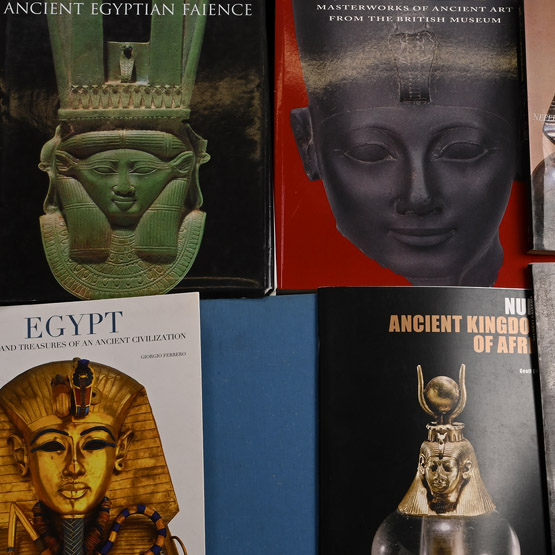
Books on Ancient Egypt, Egyptian Art and Egyptology - 7 Titles
1976-2011 A.D.Sold for (Inc. bp): £46
Geoff Emberling - Nubia, Ancient Kingdoms of Africa, New York, 2011, cardcover, black and white and colour images; Anna Maria Donadoni Roveri - Museo Egizio, Torino, 72 pp, black and white and colour images; Giorgio Ferrero - Egypt, History and Treasures of an Ancient Civilization, New York, 2010, cardcover, 207 pp, colour images; Exhibition Catalogue - Neferut Net Kemit: Egyptian Art from the Brooklyn Museum,1983-1984, cardcover, in English and Japanese, black and white and colour images; Herman De Meulenaere and Pierre MacKay - Mendes II, 1976, hardcover, 243 pp, 40 plates; Exhibition Catalogue - Eternal Egypt, Masterworks of Ancient Art from the British Museum, 2001-2004, cardcover, 288 pp, colour images; Flornce Dunn Friedman (ed.) - Gifts of The Nile, Ancient Egyptian Faience, 1998, hardcover with dustwrapper, 288 pp, colour and black and white images. 7.6 kg total, 24.2 x 21.7 - 31.2 x 24 cm
Property of a London, UK, gentleman. -
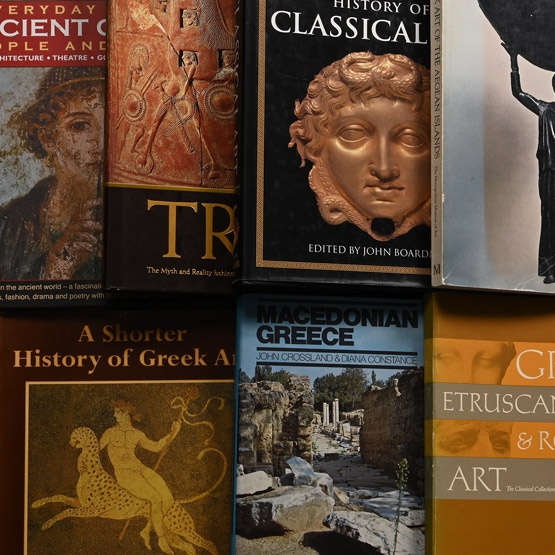
Books on Ancient Greek and Classical Works of Art and Archaeology - 7 Titles
1972-2004 A.D.Sold for (Inc. bp): £52
N.Rodgers - Everyday Life in Ancient Greece - London, 2010, hardback, 256 pp, colour; N. McCarty - Troy: The Myth and Reality behind the Epic Legend - London, 2004, hardback with dustwrapper, 125 pp, colour; J. Boardman (ed) - Oxford History of Classical Art - Oxfod, 1993, hardback with dustwrapper, 406 pp, colour and monochrome; Metropolitan Museum of Art - Greek Art of the Aegean Islands - New York, 1979, card covers, 238 pp, monochrome; M. Robertson - A Shoerter History of Greek Art - Cambridge, 1981, card covers, 240 pp, monochrome; G.H. Chase - Greek, Etruscan and Roman Art - Boston, 1972, card covers, 290 pp, monochrome; J. Crossland & D. Constance - macedonian Greece -New York, 1982, hadback with card covers, 189 pp, monochrome. 7.2 kg total, 21.5 x 17.6 - 30.5 x 23.5 cm
Property of a London, UK, gentleman. -
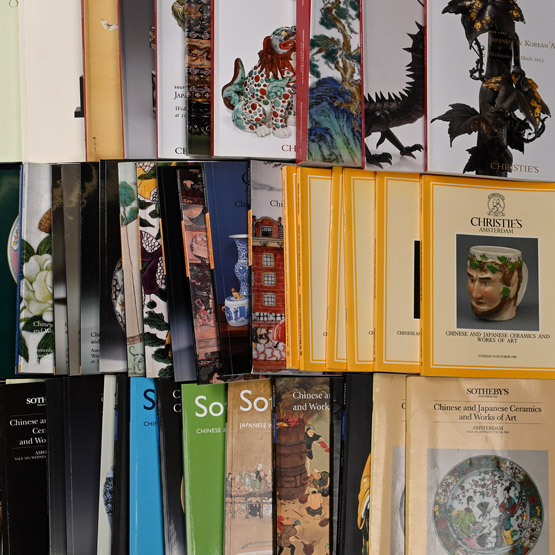
Sotheby's and Christie's Japanese and Chinese Art Auction Catalogue Group - 45 Titles
1988-2015 A.D.Sold for (Inc. bp): £286
SOTHEBY'S: Chinese and Japanese Ceramics and Works of Art, Amsterdam, 14 May 1997; Chinese and Japanese Ceramics and Works of Art, Amsterdam, 6 June 1988; Chinese and Japanese Ceramics and Works of Art, Amsterdam, 17 October 1988; Chinese and Japanese Ceramics and Works of Art, Amsterdam, 8-9 May 1989; Chinese and Japanese Ceramics and Works of Art, Amsterdam, 12 May 1998; Chinese and Japanese Ceramics and Works of Art, Amsterdam, 7 December 1998; Chinese and Japanese Ceramics and Works of Art, Amsterdam, 16 October 1990; Chinese and Japanese Ceramics and Works of Art, Amsterdam, 27 October 1993; Chinese and Japanese Ceramics and Works of Art, Amsterdam, 17 May 1994; Chinese and Japanese Ceramics and Works of Art, Amsterdam, 25 October 1994; Chinese and Japanese Ceramics and Works of Art, Amsterdam, 22 October 1996; Chinese and Japanese Ceramics and Works of Art, Amsterdam, 17 November 1997; Chinese and Japanese Ceramics & Works of Art, Amsterdam, 11 May 1999; Chinese and Japanese Works of Art, London, 10 March 2005; Chinese & Japanese Works of Art, London, 9-10 November 2005; Japanese Works of Art, Prints and Paintings, London, 10 November 2005; CHRISTIE'S: Chinese and Japanese Ceramics, Works of Art, Japanese Prints, Amsterdam, 31 May and 1 June 1988; Chinese and Japanese Ceramics and Works of Art, Amsterdam, 19-20 October 1988; Chinese and Japanese Ceramics and Works of Art, Amsterdam, 7 December 1988; Chinese and Japanese Ceramics and Works of Art, Amsterdam, 7 December 1988; Chinese and Japanese Ceramics and Works of Art, Amsterdam, 3 May 1989; Chinese and Japanese Ceramics and Works of Art, Amsterdam, 10 October 1989; Chinese and Japanese Ceramics, Furniture and Works of Art, Amsterdam, 19 May 1993; Chinese and Japanese Ceramics, Furniture and Works of Art, Amsterdam, 26 October 1993; Chinese and Japanese Ceramics and Works of Art, Amsterdam, 27 October 1994; Chinese and Japanese Ceramics and Works of Art, Amsterdam, 17 May 1995; Chinese, Japanese, indian, Himalayan and Southeast Asian Art, Amsterdam, 18 October 1995; Chinese and Japanese Ceramics and Works of Art, Amsterdam, 8 May 1996; Chinese and Japanese Ceramics and Works of Art, Amsterdam, 19 November 1996; Chinese and Japanese Ceramics and Works of Art, Amsterdam, 13 May 1997; Chinese and Japanese Ceramics and Works of Art, Amsterdam, 18 November 1997; Chinese and Japanese Ceramics and Works of Art, Amsterdam, 13 May 1998; Chinese and Japanese Ceramics and Works of Art, Amsterdam, 8 December 1998; Chinese and Japanese Ceramics and Works of Art, Amsterdam, 12 May 1999; Chinese and Japanese Ceramics and Works of Art, Amsterdam, 19 October 1999; Japanese Art & Design, South Kensington, 9 November 2011; Japanese & Korean Art, 21 March 2012; Japanese Art & Design, South kensington, 16 May 2012; Masterful Exuberance: Artistic Craftsmanship of Imperial Japan, South Kensington,18 May 2012; The Japanese Aesthetic, South Kensington, 7 November 2012; Important Chinese Ceramics and Works of Art, Hong Kong, 28 November 2012; Japanese Art & Design, New York, 20 March 2013; Japanese Art & Design, New York, 18 March 2014; The Joseph Collection of Japanese Art, king Street, 11 November 2015; Aesthetic Intuition: Collecting Japanese Art in Post War London, King Street, 11 November 2015. 22 kg total, 25.5 x 20 - 29.8 x 23.1 cm
Property of a London, UK, gentleman.

