-
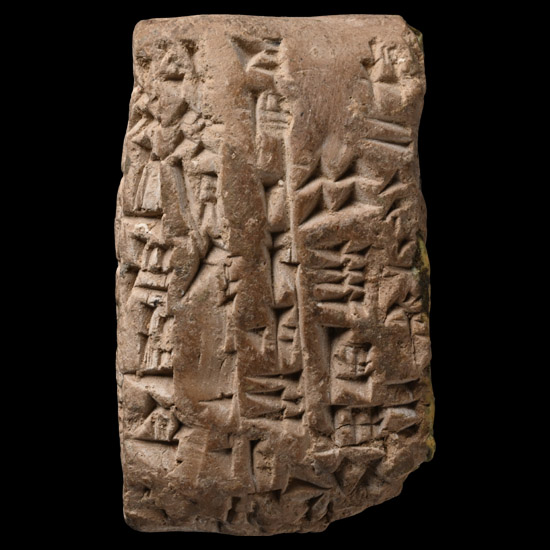
Old Babylonian Terracotta Cuneiform Tablet Section
2nd millennium B.C.Sold for (Inc. bp): £416
The narrow end of a pillow-shaped tablet with rows of cuneiform text on four sides. 33.5 grams, 44.5 mm
From the private collection of a European gentleman (1942-2024), formed since the 1970s. -
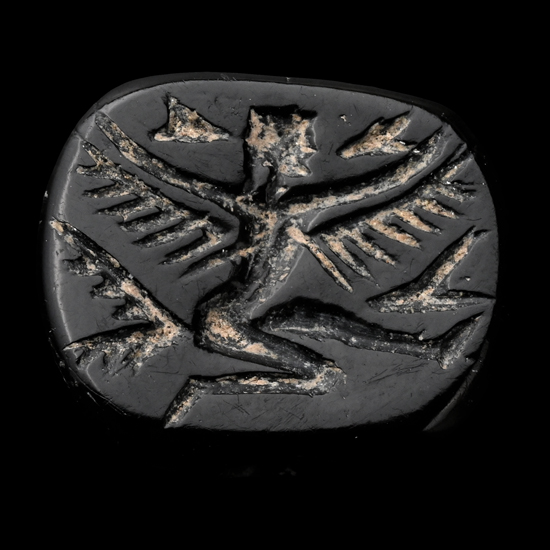
Achaemenid Black Stone Bead with Winged Goddess
Circa 5th century B.C.Sold for (Inc. bp): £65
With incuse figure kneeling with outstretched wings. 2.80 grams, 18.30 mm
From the private collection of a European gentleman (1942-2024), formed since the 1970s. -
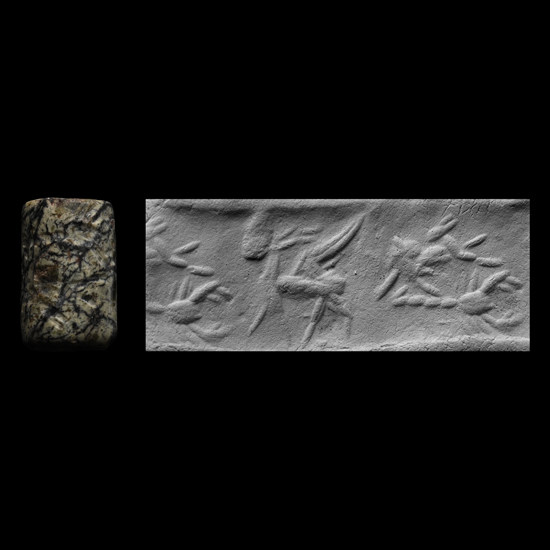
Western Asiatic Veined Stone Cylinder Seal with Animals
2nd-1st millennium B.C.Sold for (Inc. bp): £111
Frieze depicting an advancing gryphon, scorpion and bird; supplied with a museum-quality impression. 1.64 grams, 13.5 mm
From the private collection of a European gentleman (1942-2024), formed since the 1970s. -
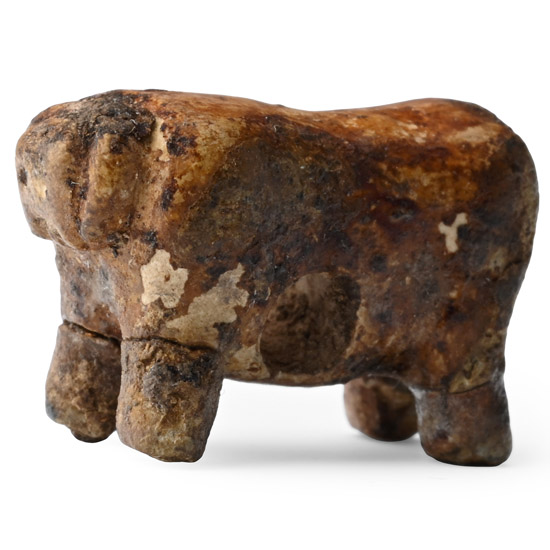
Western Asiatic Bone Animal Amulet
1st millennium B.C.Sold for (Inc. bp): £26
A stylised figure of a stocky animal with a small head, pierced through the body. 3.27 grams, 22.7 mm
From the private collection of a European gentleman (1942-2024), formed since the 1970s. -
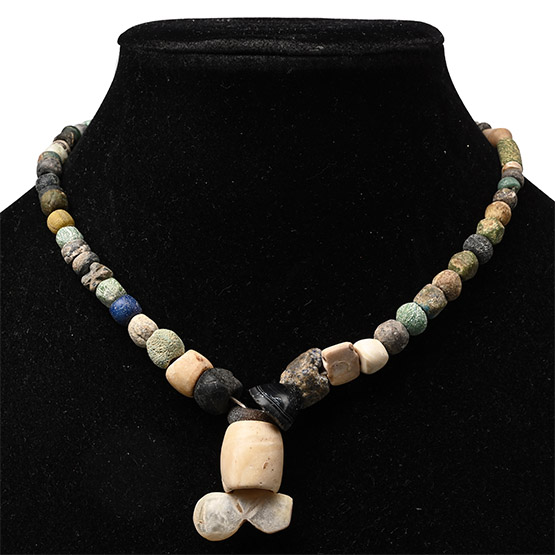
Western Asiatic Glass and Stone Bead Necklace String
1st millennium B.C. and laterSold for (Inc. bp): £26
Composed of oblate and other beads with a mother-of-pearl pendant, restrung. 40.4 grams, 39 cm
Ex London, UK, collection, 1990s. -
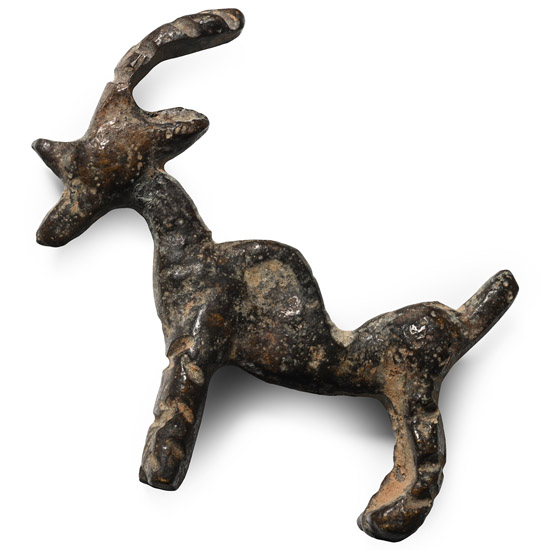
Luristan Bronze Figure of an Ibex
1st millennium B.C.Sold for (Inc. bp): £33
Modelled standing with raised tail and a large head with long, curving horns. 23.2 grams, 47 mm long
From the private collection of a European gentleman (1942-2024), formed since the 1970s. -
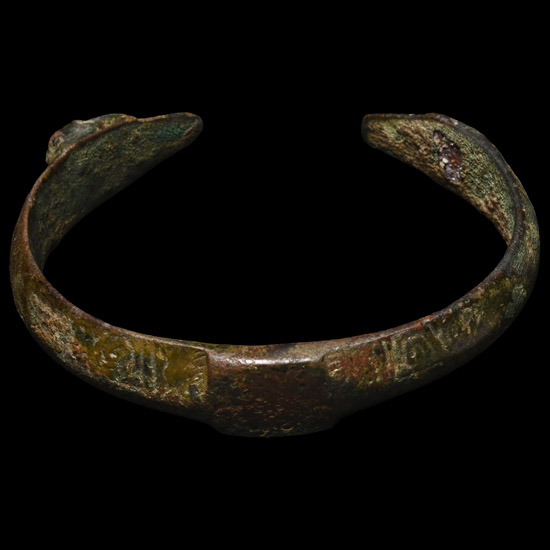
Western Asiatic Bronze Bracelet with Animal Head Terminals
1st millennium B.C.Sold for (Inc. bp): £72
Penannular body with keeled upper face and a central rectangular plaque flanked by bands of scrolls and linear motifs, finials formed as beast heads with large ears and slender muzzles. 38.6 grams, 64 mm
From the private collection of a European gentleman (1942-2024), formed since the 1970s. -
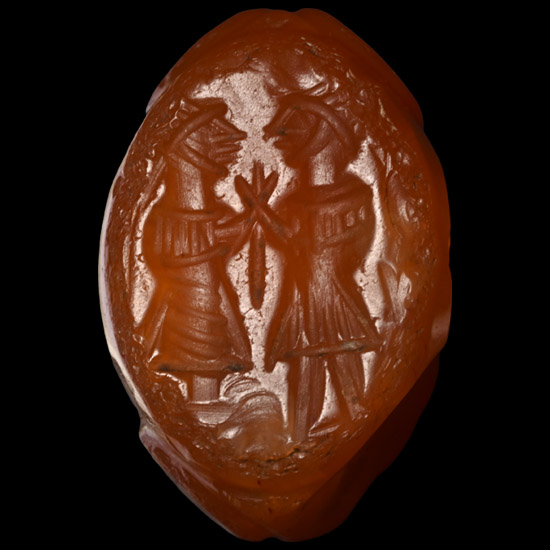
Sasanian Chalcedony Stamp Seal with Two Figures
Circa 3rd-7th century A.D.Sold for (Inc. bp): £182
With a segmented upper face, the underside with incuse image of two figures holding an object in their conjoined hands. 3.49 grams, 17.67 mm
From the private collection of a European gentleman (1942-2024), formed since the 1970s. -
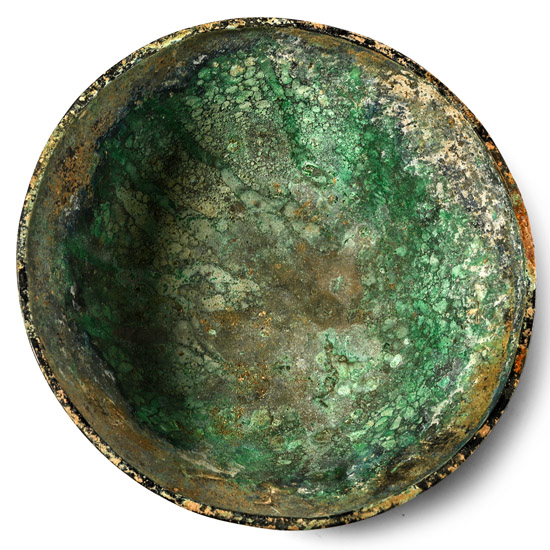
Western Asiatic Polished Bronze Bowl
Late 1st millennium B.C.Sold for (Inc. bp): £65
Conical, deep body with flattened base and thickened rim. 245 grams, 17 cm
Ex Abelita family collection, 1980s-2000s. -
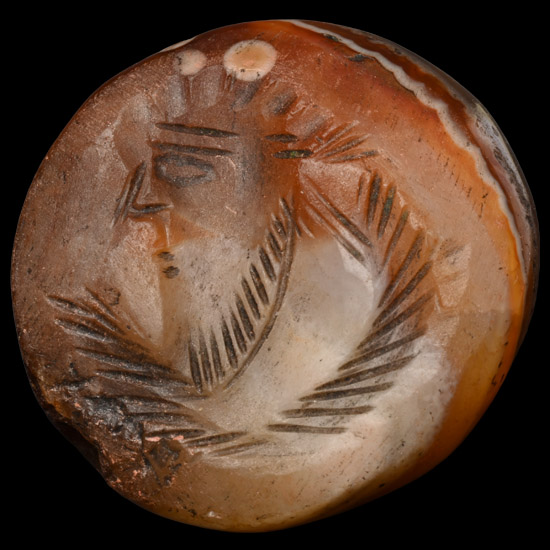
Sasanian Banded Agate Stamp Seal with Bust and Palm Fronds
Circa 4th-5th century A.D.Sold for (Inc. bp): £104
Plano-convex in section with incuse design to underside: profile bearded bust with brow-band and fronds beneath; supplied with a museum-quality impression. 13.59 grams, 26.74 mm
From the private collection of the late Mr W. Magee, Hartlepool, County Durham, UK, 1960s-1990s, thence by descent. -
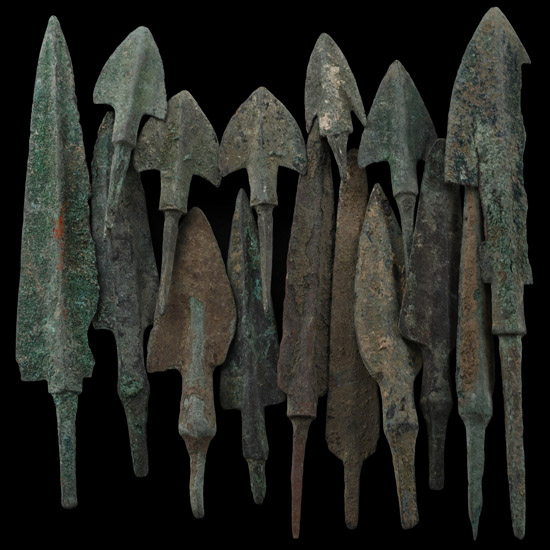
Western Asiatic Bronze Arrowhead Collection
2nd-1st millennium B.C.Sold for (Inc. bp): £247
Comprising tanged arrowheads, four with large elongated triangular blades and raised midrib, sharp central groove, one triangular type with barbed shoulders and flat tang, six with barbed shoulders and cylindrical stem with handle for the shaft; two with squared shoulders and rectangular stem with handle for the shaft, one with leafed blade, two with barbed shoulder and flat tang, one with flat blade, one with short triangular head and handle for the shaft, and another with short tang and trilobate blade with raised midrib. 221 grams total, 4.2-13.6 cm
London, UK, collection, 1990s.
Some of these arrowheads seem to belong to the type V, subcategory types A, B, C and D according to the classification of Khorasani and Negahban. In the four categories of triangular bronze arrowheads from Luristan, Marlik, and Northern Iran, individuated by Negahban, subtypes C and D of type V are larger arrow or javelin heads, C with barbed shoulders and D with round shoulders. Most of them were cast in moulds. -
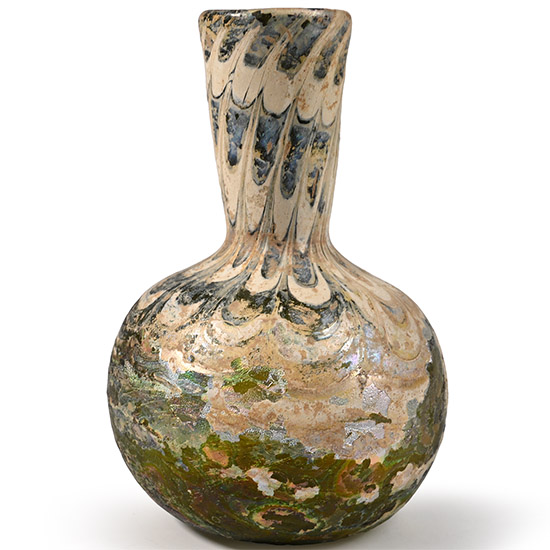
Western Asiatic Glass Bottle
10th-11th century A.D.Sold for (Inc. bp): £390
In iridescent glass with squat body and hexagonal-section mouth; dragged trail detailing. 36 grams, 83 mm
Ex collection M.W.A., Germany. Acquired in 1996. Private collection, Switzerland, by descent.

