-
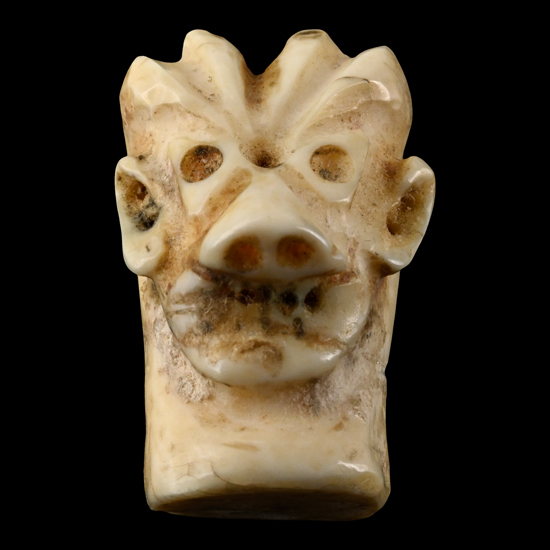
Western Asiatic Bone Pazuzu Amulet
1st millennium B.C.Sold for (Inc. bp): £312
Carved in the round grotesque head with angled snout, triangular eyes, ribbed upper head, frontally-placed ears; possibly Pazuzu. 5.10 grams, 25 mm
From the collection of a gentleman, acquired on the London art market in the 1990s. -
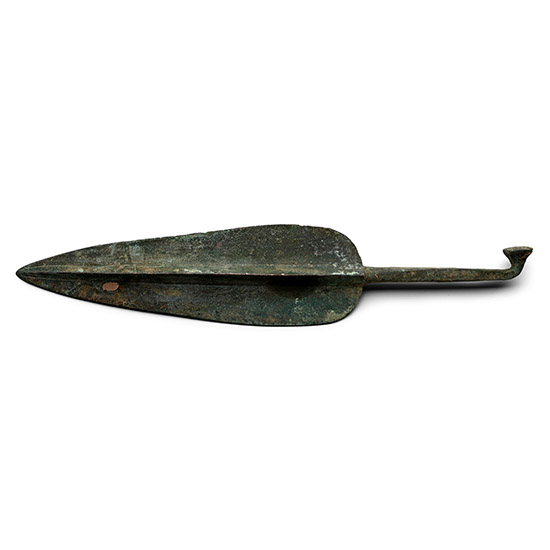
Western Asiatic Bronze Tanged Spearhead
14th-10th century B.C.Sold for (Inc. bp): £130
Leaf-shaped blade with triangular midrib and a rectangular-section tang. 213 grams, 27.1 cm
Ex Abelita family collection, 1980s-2000s.
Similar spearheads were excavated in the Marlik Royal cemetery by Dr. Negahban, see for example in tomb 47, Trench XXIIE. They were the evolution of a typology which began much earlier in Mesopotamia and the fertile crescent, the type 4 of the Stronach classification, with a straight tang and square section, usually thickened at the base with a button tang. The foliate blade was wide and exaggerated in some specimens excavated at Marlik. -
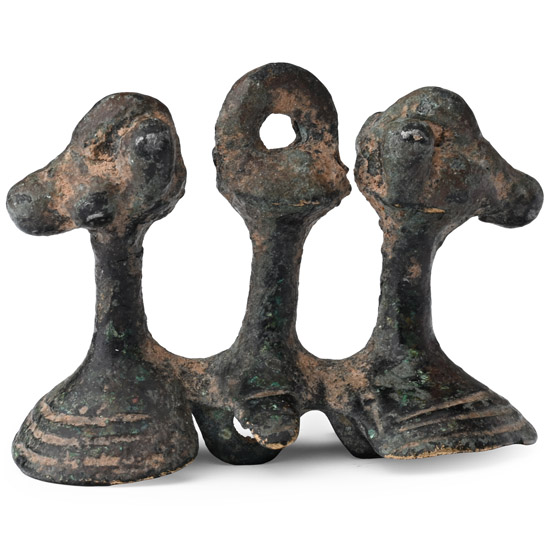
Western Asiatic Bronze Double Animal Mount
1st millennium B.C.Sold for (Inc. bp): £20
Comprising a short stem with pierced lug finial flanked by two addorsed beast-heads; mounted on a cupped base with attachment loops beneath. 22.47 grams, 44.29 mm
From the private collection of a European gentleman (1942-2024), formed since the 1970s. -
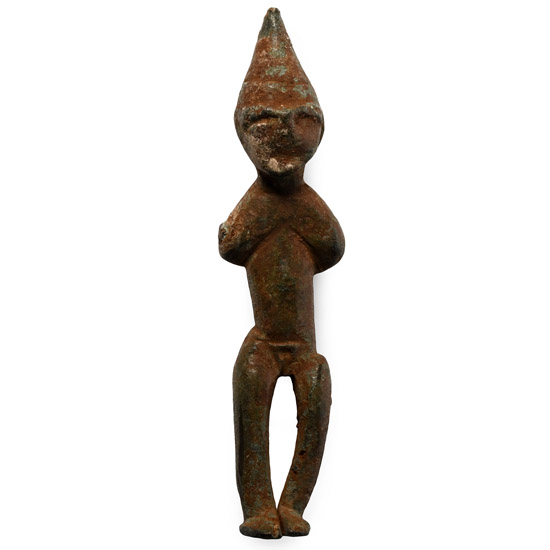
Syro-Hittite Bronze Helmetted Figure
2nd-1st millennium B.C.Sold for (Inc. bp): £316
Modelled as a standing nude figure wearing a tall conical helmet, arms pulled behind the back and forming two lugs. 76 grams, 93 mm
From the collection of a gentleman, acquired on the London art market in the 1990s. -
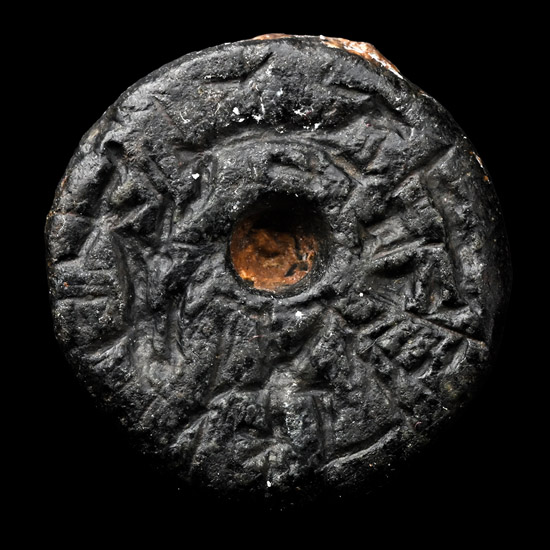
Western Asiatic Black Stone Stamp Seal with Animals
2nd-1st millennium B.C.Sold for (Inc. bp): £26
Conical in profile with segmented underside, bull-head goat and other motifs; supplied with a museum-quality impression. 8.41 grams, 22.64 mm
From the private collection of a European gentleman (1942-2024), formed since the 1970s. -
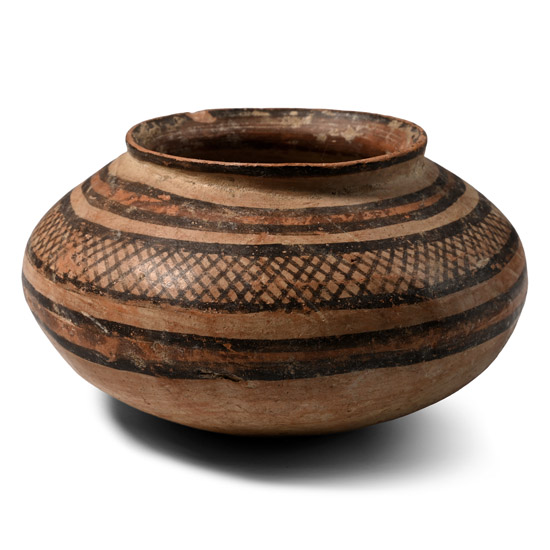
Iranian Decorated Terracotta Vessel
3rd-2nd millennium B.C.Sold for (Inc. bp): £234
Squat in profile with broad mouth and flared rim; concentric painted bands to the shoulder, with hatched detailing. 238 grams, 12.3 cm wide
Ex London, UK, gallery, 1971-early 2000s. London, UK, collection. -
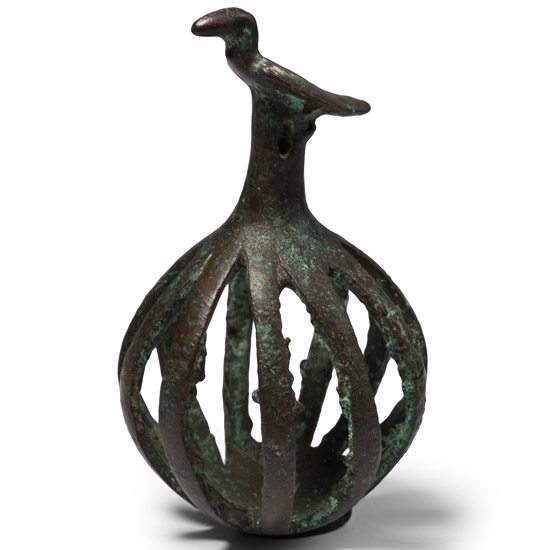
Luristan Bird-Headed Bell Harness Decoration
2nd-1st millennium B.C.Sold for (Inc. bp): £169
Comprising a bulb with a sidewall formed from vertical strips, surmounted by a perching bird; possibly a rumbler-bell. 65.75 grams, 80.24 mm
Ex Abelita family collection, 1980s-2000s. -
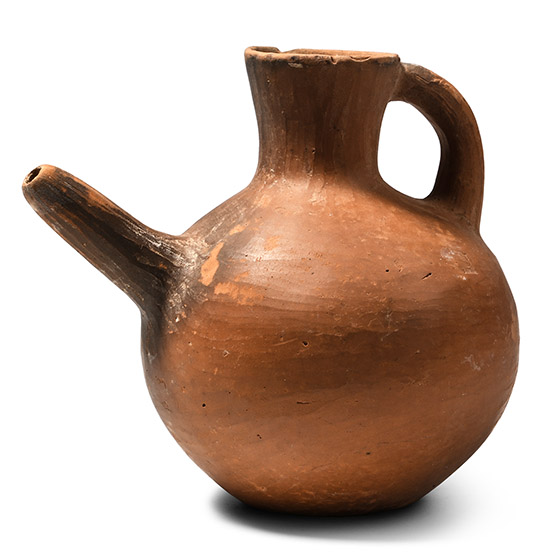
Western Asiatic Pottery Pouring Vessel
1st millennium B.C.Sold for (Inc. bp): £52
Globular in profile with slender angled spout, conical mouth and strap handle. 188 grams, 10 cm
From the collection of a gentleman, 1988-2000s. -
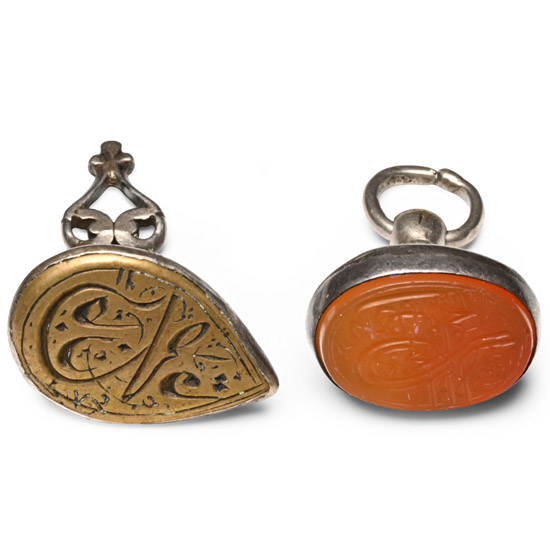
Western Asiatic Engraved Calligraphic Stamp Seal Group
Late 19th-20th century A.D.Sold for (Inc. bp): £52
Comprising two chess piece seal matrices, one set with a carnelian intaglio with densely arranged calligraphic inscription, the other with a bronze insert with an inscription; supplied with museum-quality impressions. 10.2 grams total, 24-27 mm
Acquired in the late 1980s-early 1990s. Private collection, London. -
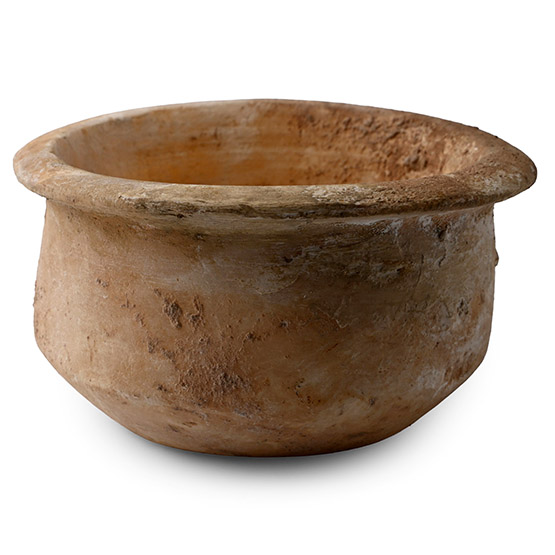
Mesopotamian Stone Vessel
1st millennium B.C.Sold for (Inc. bp): £39
Broad and squat in profile with carination to the equator, everted rim. 208 grams, 82 mm
From a collection formed before 1990. Ex Mayfair, London, UK, gallery, 2000s. -
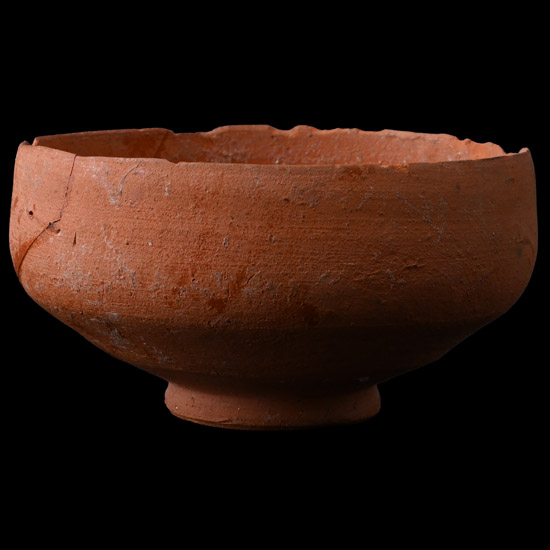
Nabataean Red Terracotta 'Eggshell' Bowl
Circa 1st century B.C.-1st century A.D.Sold for (Inc. bp): £20
A wide bowl with slightly inturned rim and low foot; repaired. 38.6 grams, 76 mm
From the collection of a Yorkshire, UK gentleman, items collected in the Holy Land in the 1960s. -
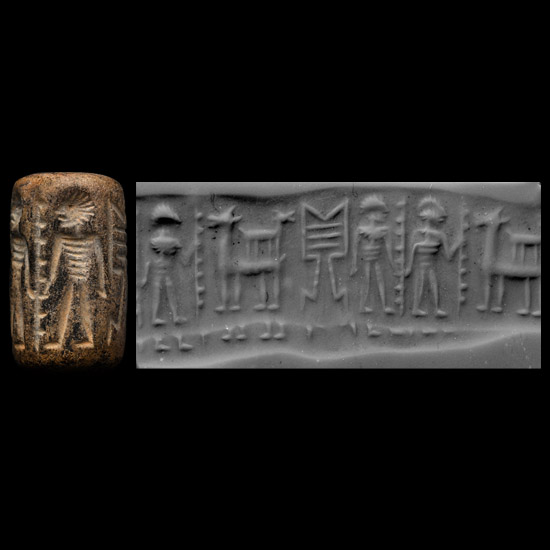
Western Asiatic Grey Stone Cylinder Seal with Figural Scene
2nd-1st millennium B.C.Sold for (Inc. bp): £260
Frieze with two facing figures with staffs, horse and foal, structure between; supplied with a museum-quality impression. 2.68 grams, 16.81 mm
From the private collection of a European gentleman (1942-2024), formed since the 1970s.

