-
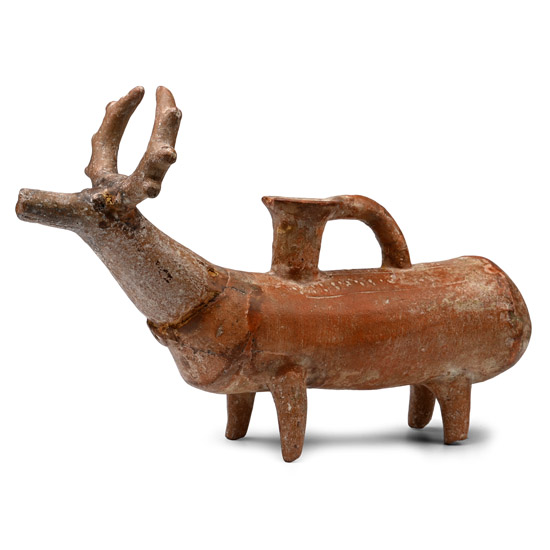
Amlash Terracotta Stag Rhyton
1st millennium B.C.Sold for (Inc. bp): £910
Comprising a tubular body with a domed rump and four stub legs, an angled neck to accept a separate neck and head with applied domed eyes and antlers with lateral spurs; a trumpet-shaped filler tube to the upper face and a strap handle to the rear; impressed longitudinal lines; and a pouring hole at the throat. 841 grams, 30.5 cm
with a London, UK gallery, 1971-early 2000s. Accompanied by an original thermoluminescence analysis report and photograph by Oxford Authentication with sample no.281z20 dated 16 June 1981. -
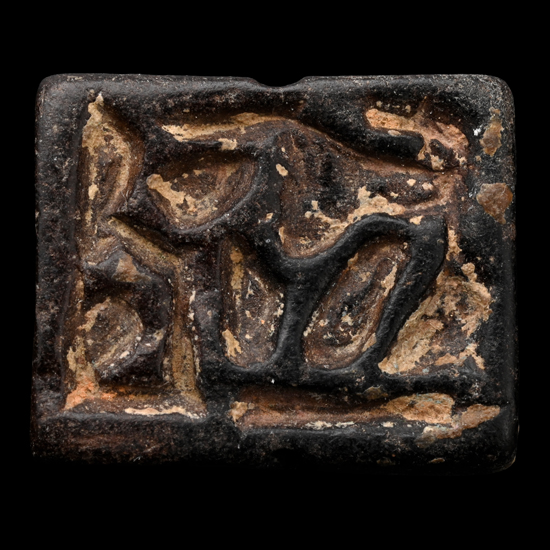
Western Asiatic Black Stone Bifacial Stamp Seal
2nd millennium B.C.Sold for (Inc. bp): £39
Rectangular bifacial type with pyramidal motifs to obverse, advancing bull to reverse. 7.16 grams, 31.76 mm
From the private collection of a European gentleman (1942-2024), formed since the 1970s. -
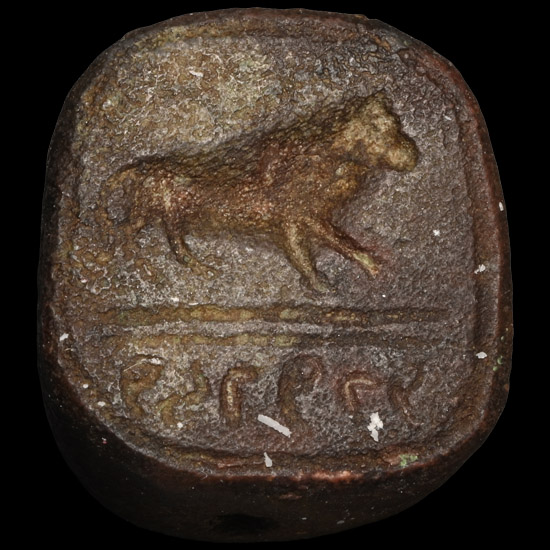
Western Asiatic Stone Amuletic Seal
1st millennium B.C.Sold for (Inc. bp): £117
Scaraboid with a domed upper face, underside with an advancing bull on a baseline, inscription below. 5.95 grams, 18 mm
From the collection of a gentleman, acquired on the London art market in the 1990s. -
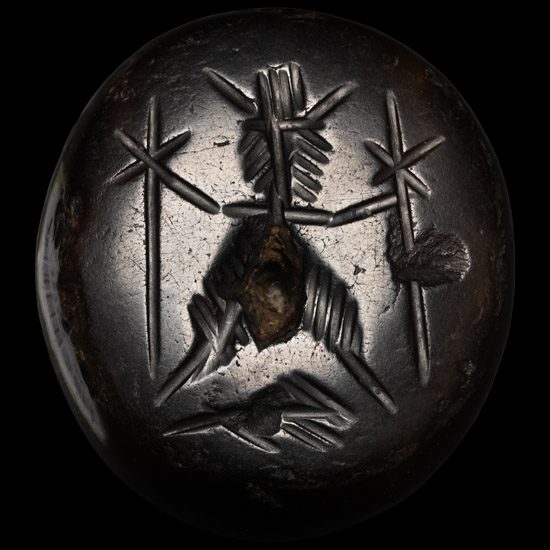
Large Sasanian Dark Agate Stamp Seal with Master of Animals
Circa 3rd-7th century A.D.Sold for (Inc. bp): £85
With stylised Master of Beasts figure holding two staves, animal below. 35.89 grams, 32.26 mm
From the private collection of a European gentleman (1942-2024), formed since the 1970s. -
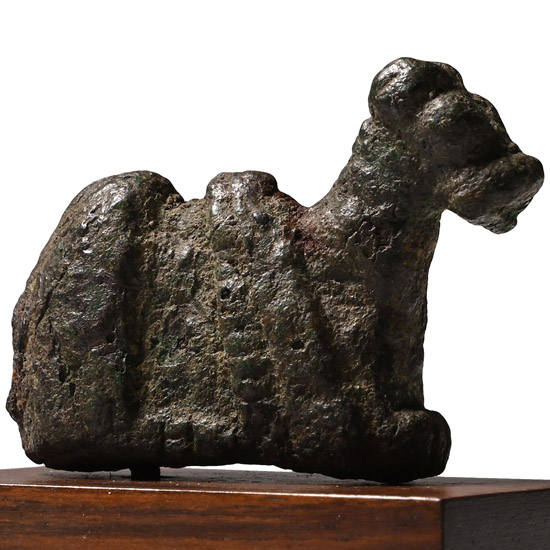
South Arabian Bronze Camel Statuette
Circa 1st century B.C.-1st century A.D.Sold for (Inc. bp): £111
Modelled in the round in a resting position with raised head; mounted on a custom-made display stand. 118 grams total, camel: 50.8 mm long
From the private collection of a European gentleman (1942-2024), formed since the 1970s. -
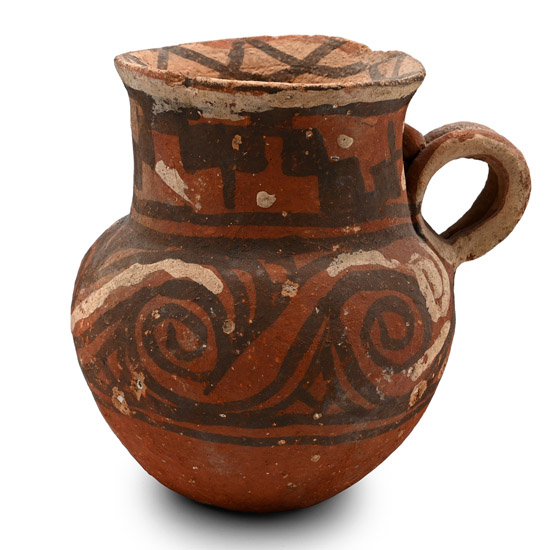
Western Asiatic Red-Painted Terracotta Vessel
8th-9th century A.D.Sold for (Inc. bp): £140
With broad shoulder and a wide neck, flared rim; ribbed loop handle with applied pellet above; polychrome painted scroll and mesh designs. 320 grams, 11.5 cm wide
UK collection, 1990s. Acquired on the UK art market, before 2000. Private collection, Mr M.V., a London-based businessman. -
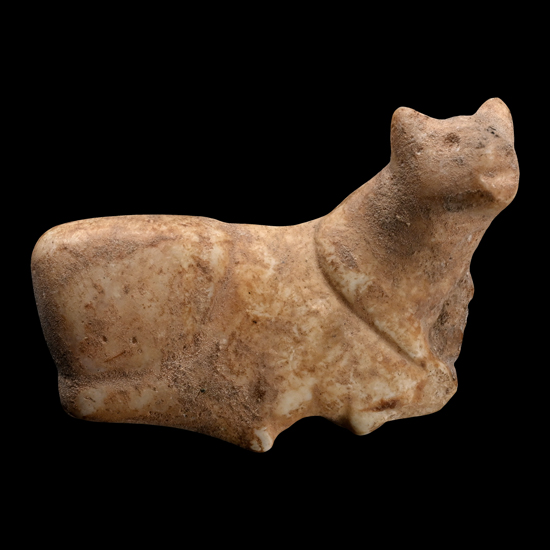
Western Asiatic Stone Bovine Amulet
3rd-2nd millennium B.C.Sold for (Inc. bp): £72
Modelled in the round, resting and with its head turned to the side, pierced through the body. 15 grams, 40.3 mm
From the private collection of a European gentleman (1942-2024), formed since the 1970s. -
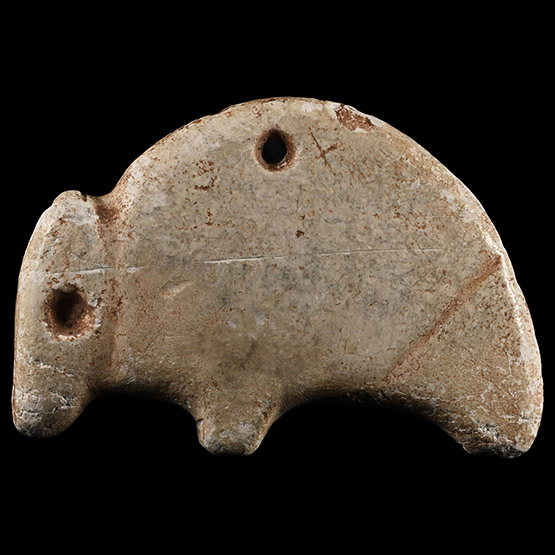
Large Sumerian Animal Amulet
3rd millennium B.C.Sold for (Inc. bp): £442
Carved bifacial amuletic pendant of an ox with incised detailing, sockets for inlaid eyes, suspension hole at shoulder. 62 grams, 74 mm
From the collection of a gentleman, acquired on the London art market in the 1990s. -
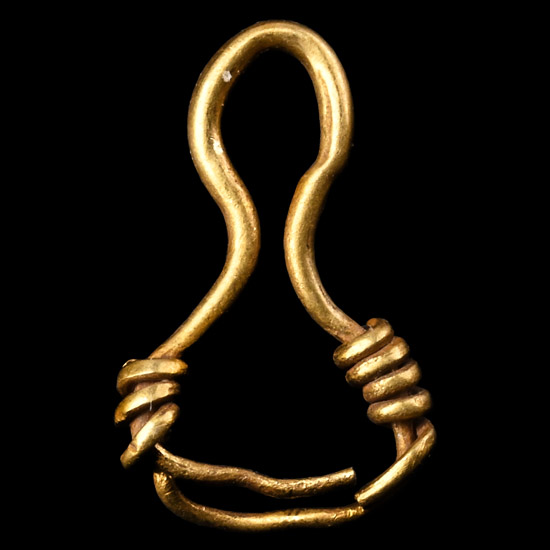
Western Asiatic Gold Wire Pendant
1st millennium B.C.Sold for (Inc. bp): £39
Formed from a single wire and the ends coiled around the body. 0.15 grams, 10 mm
Ex private British collection, formed in the 1980s. Property of a West Northamptonshire, UK, gentleman. -
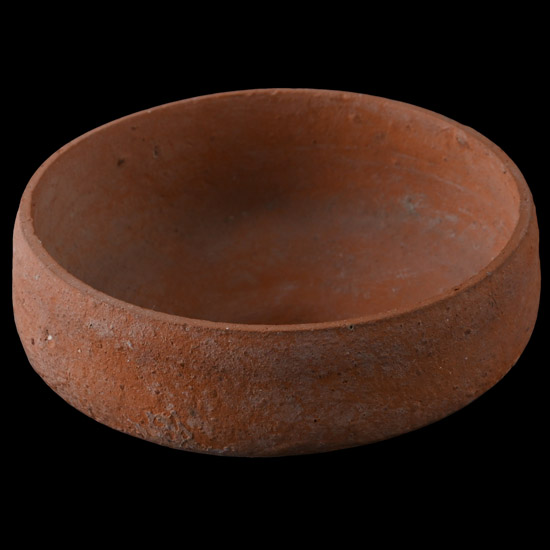
Nabataean Red Terracotta 'Eggshell' Bowl
Circa 1st century B.C.-1st century A.D.Sold for (Inc. bp): £39
A shallow dish with a low rim and foot. 37.7 grams, 69 mm wide
From the collection of a Yorkshire, UK gentleman, items collected in the Holy Land in the 1960s. -
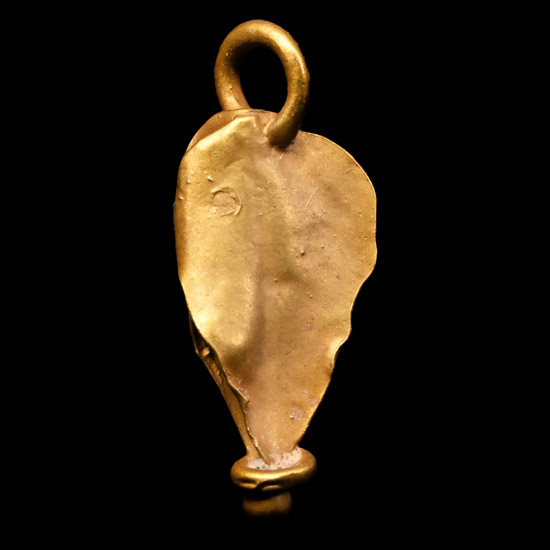
Western Asiatic Leaf-Shaped Gold Pendant
1st millennium B.C.Sold for (Inc. bp): £65
Formed of sheet-gold with an applied granule below and suspension loop above. 0.17 grams, 11 mm
Ex private British collection, formed in the 1980s. Property of a West Northamptonshire, UK, gentleman. -
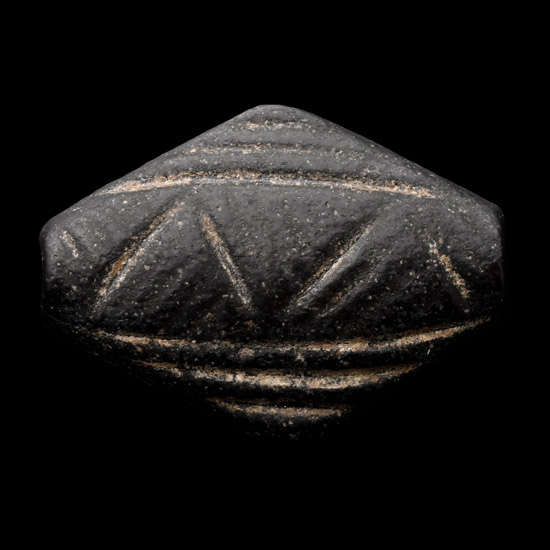
Western Asiatic Decorated Black Stone Bead
1st millennium B.C.Sold for (Inc. bp): £7
Lozengiform type with incised geometric motif. 3.09 grams, 24.40 mm
From the private collection of a European gentleman (1942-2024), formed since the 1970s.

