-
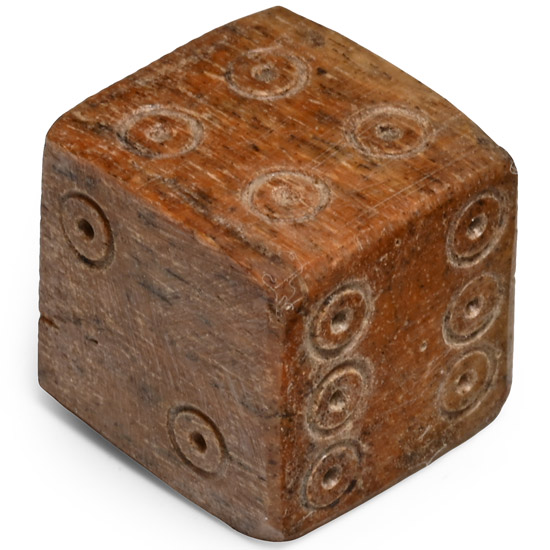
Large Roman Gaming Die
1st-2nd century A.D.Sold for (Inc. bp): £312
With ring-and-dot markings disposed 1:6, 2:5, 3:4. 2.66 grams, 11.59 mm
Ex Essex gentleman's collection, 2000s. -
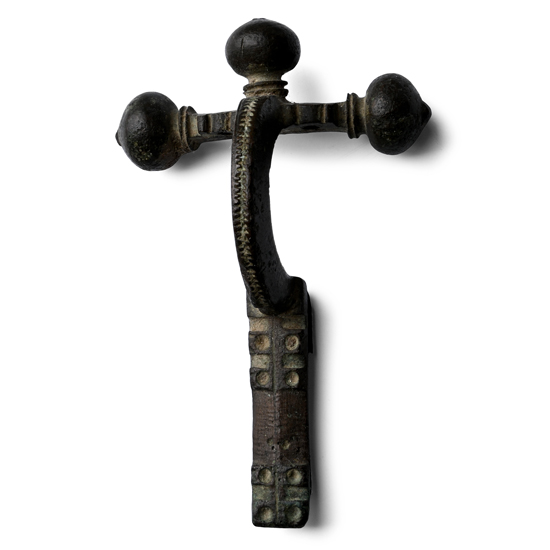
Roman Bronze Crossbow Brooch
4th century A.D.Sold for (Inc. bp): £59
With onion-knop finials, gusset to the bow, chamfered sections to the foot, and a hinged pin to the reverse. 45 grams, 78 mm
From the private collection of a European gentleman (1942-2024), formed since the 1970s. -
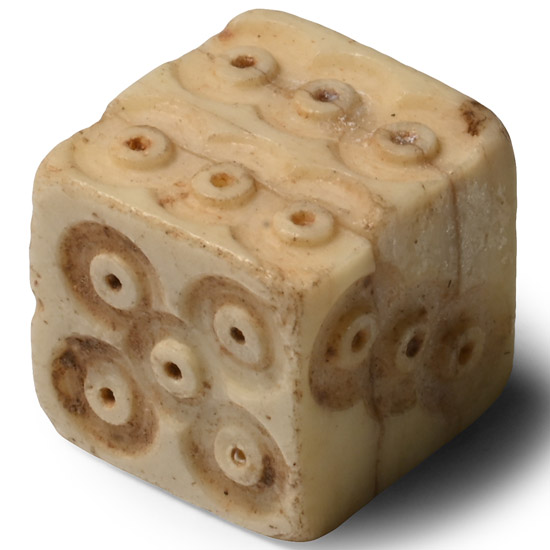
Large Roman Bone Gaming Die
1st-2nd century A.D.Sold for (Inc. bp): £208
With ring-and-dot markings disposed 1:6, 2:5, 3:4. 1.66 grams, 9 mm
Ex Essex gentleman's collection, 2000s. -
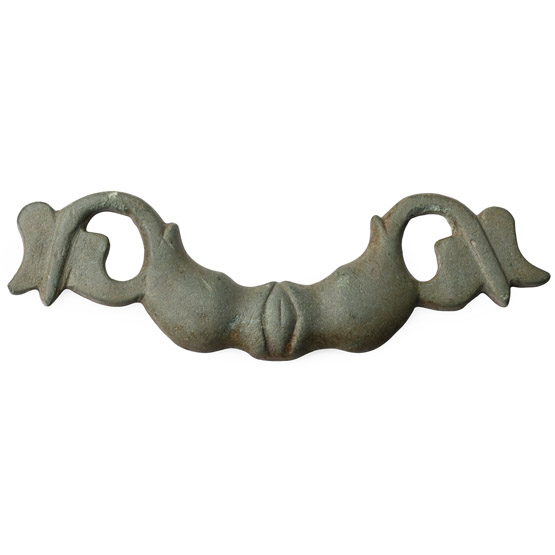
Roman Double Dolphin Handle
Circa 2nd century A.D.Sold for (Inc. bp): £130
Formed as two opposed dolphins with s-curved bodies terminating in vine leaves, vesica held between their open mouths; plano-convex in section with openwork. 59 grams, 12 cm
From an old English collection formed since 1960. -
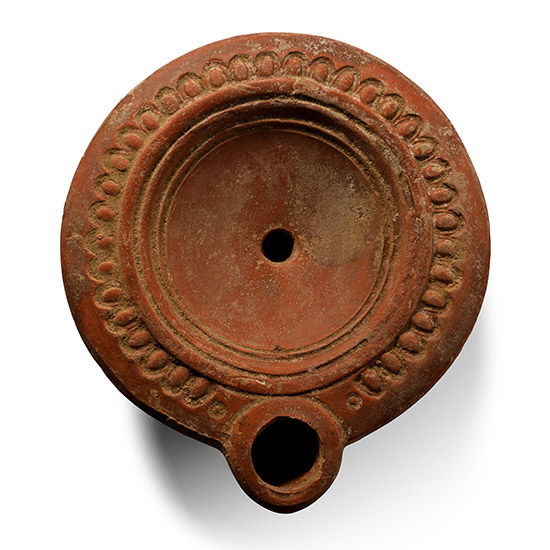
Roman Terracotta Oil Lamp
Cyprus, circa 2nd century A.D.Sold for (Inc. bp): £221
Round body with plain discus with pelletted border, label on the base '2nd c. AD M10'. 45.1 grams, 86 mm
Private collection, Oxfordshire, UK, by direct descent from the collection of Judge George Cyril Griffith-Williams (1893-1983), Supreme Court Judge of the Colony of Cyprus; items having been collected in the 1930s and 1940s in Cyprus during his tenure there. -
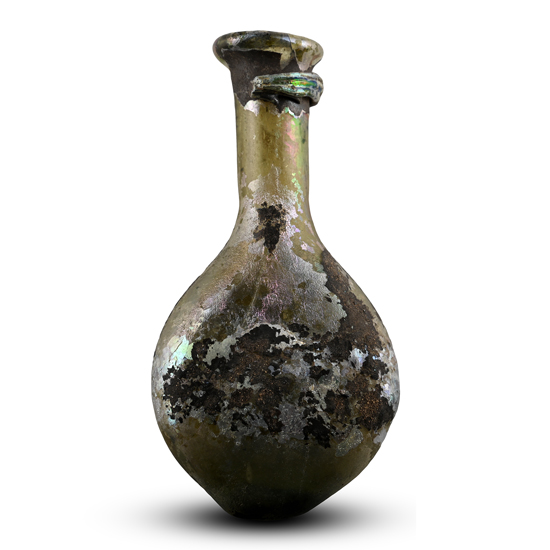
Roman Iridescent Green Glass Flask
1st-4th century A.D.Sold for (Inc. bp): £117
With flattened discoid body, pinched tubular neck with everted rolled rim with applied trail below, iridescent surface. 27.3 grams, 98 mm
Ex London, UK, art market 1990s. -
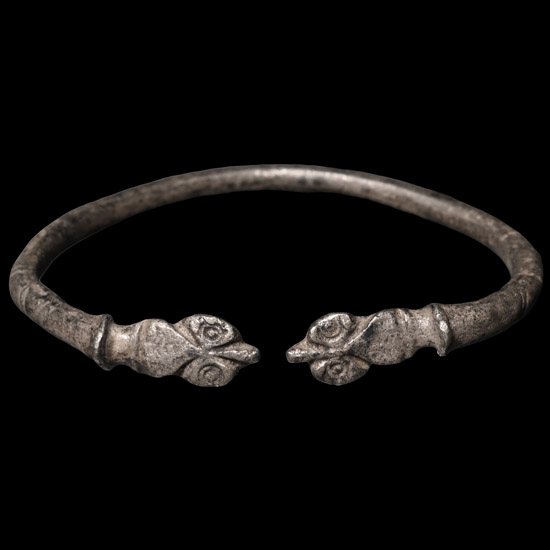
Roman Silver Bracelet with Animal Head Terminals
2nd-4th century A.D.Sold for (Inc. bp): £182
With a round-section penannular body with linear decoration on the terminals, the finials formed as stylised animal heads with large eyes. 13.6 grams, 56 mm
Acquired London Coin Fair. From a Buckinghamshire private collection. -
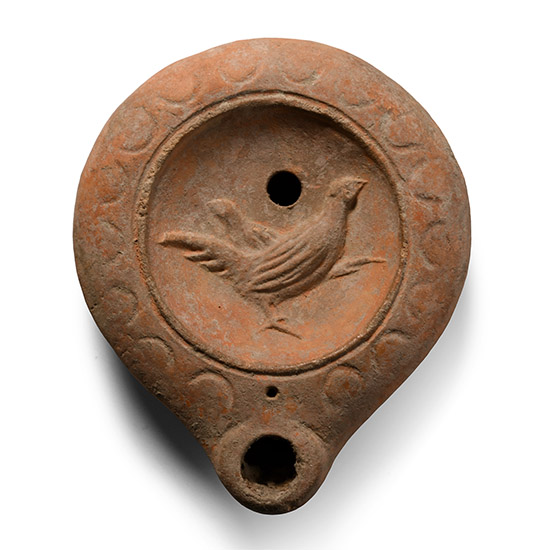
Roman Terracotta Oil Lamp with Cockerel
2nd-3rd century A.D.Sold for (Inc. bp): £442
Shallow body with impressed annulets framing the discus, a cockerel at the centre with its left leg raised and head extended upwards. 95 grams, 94 mm
Ex German art market, 2000s. Acquired from an EU collector living in London. From the collection of a Surrey, UK, gentleman. -
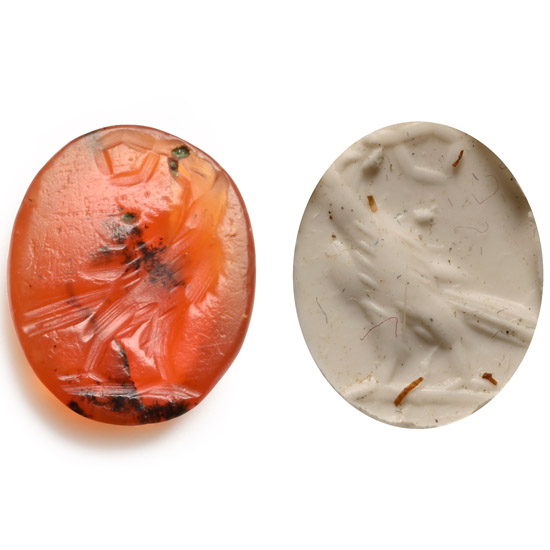
Roman Carnelian Gemstone with Eagle
2nd-3rd century A.D.Sold for (Inc. bp): £72
With intaglio eagle standing with head turned, wreath in the beak; supplied with a museum-quality impression. 0.44 grams, 11.61 mm
From the private collection of a European gentleman (1942-2024), formed since the 1970s. -
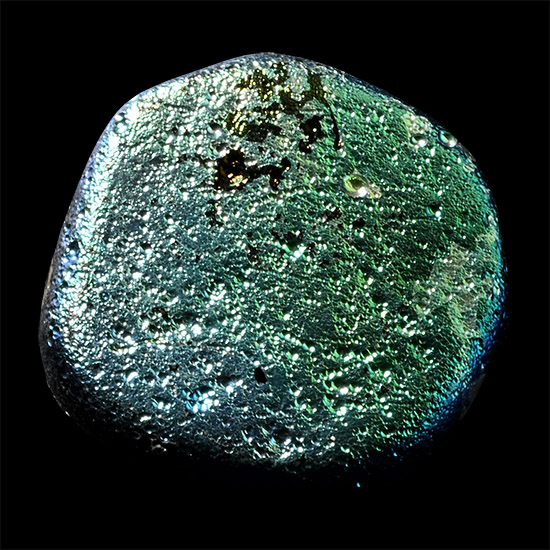
Roman Iridescent Glass Bead
1st-4th century A.D. or laterSold for (Inc. bp): £13
Plano-convex type with transverse piercing. 2.55 grams, 15 mm
From the London collection of the late Mr S.M., 1969-1999. -
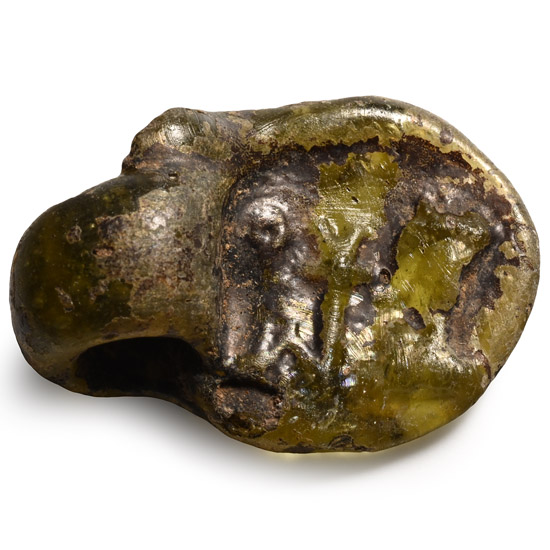
Roman Glass Pendant with Figures
2nd-3rd century A.D.Sold for (Inc. bp): £13
Light green pendant with impressed figures flanking a staff. 2.42 grams, 24.15 mm
From the private collection of a European gentleman (1942-2024), formed since the 1970s. -
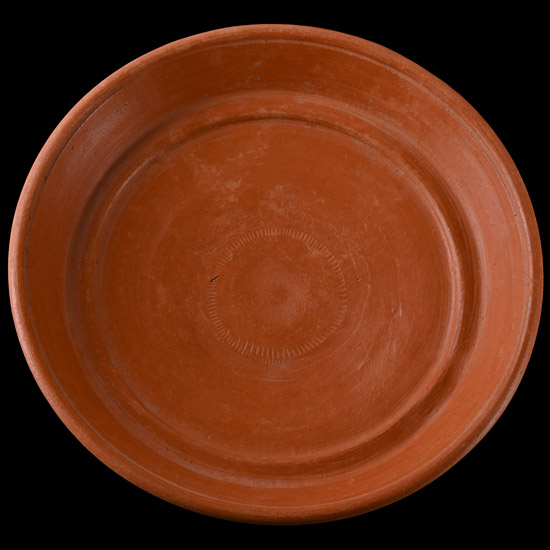
Roman Red Ware Decorated Dish
Circa 3rd-4th century A.D.Sold for (Inc. bp): £208
Shallow body with steep walls and thickened rim, circumferential groove beneath the rim and a hatched band at the centre. 210 grams, 16.2 cm
From the private collection of Mr Brian Edwards, New Malden, Surrey, UK, formed from the late 1970s-early 1980s; thence by descent. Accompanied by the original collector's data sheet with reference no.A28.

